Carrots are not only delicious and low in calories but also packed with numerous health benefits.
While they are commonly associated with improving vision, their benefits go far beyond that.
Including carrots in your diet, particularly during winter, is highly recommended. Here are several reasons why:
Four reasons why you should keep carrots in your diet
Boost your immune system: Carrots are rich in vitamin A, specifically beta-carotene,
which helps boost the immune system. This nutrient plays a crucial role
in strengthening the immune cells in the respiratory system, making it a
valuable asset in defending against viral infections. In the current
climate where viral diseases are prevalent, consuming at least one
carrot per day is advised. Even cooked or steamed carrots retain their
vitamin A content, so they can be enjoyed in various preparations.
Nourish your skin:
Vitamin A in carrots helps maintain skin moisture, which is especially
important during the dry winter months. Additionally, it aids in slowing
down the aging process, reducing acne, and minimizing pigmentation.
High concentrations of vitamin A derivatives are even used in acne
treatment medications.
Improve your night vision:
Vitamin A is not just essential for overall vision; it specifically
aids in adapting to low-light conditions. Carrots provide the necessary vitamin A
for a smooth transition from light to darkness, enabling us to see
clearly in any lighting environment. Incorporating carrot-based dishes,
like orange soups, into your winter diet can fulfill this requirement.
Carrots last long and are versatile in food:
Unlike some vegetables that lose nutritional value after being cut,
carrots retain their vitamins and can be prepared in advance without
compromising their benefits. Whether sliced into sticks or grated,
carrots stay crisp for days, making them an ideal addition to salads,
packed lunches, or even fruit salads.
Preparation of carrots with garlic and almonds (credit: Hila Kariv)
Bonus tip:
To enhance the absorption of plant-based vitamin A from beta-carotene,
it is recommended to consume it with a source of healthy fats, such as
quality oil or tahini. However, if your meal already includes fats from
eggs, nuts, or cheese, there is no need to add extra fat.
Dispelling concerns:
While vitamin A is fat-soluble and excessive consumption can result in
its storage in the body, it is important to note that an excess of
beta-carotene from plant sources, like carrots, is not dangerous.
Therefore, feel free to enjoy carrots as a snack throughout the day,
both generally and during a dietary regimen.
Carrots are Divine
THIS PAGE WAS POSTED BY SPUTNIK ONE OF THE SPUTNIKS ORBIT BLOG
SAD FMT modulates basal stress hormone corticosterone plasma levels.
(A) Basal plasma corticosterone is significantly reduced in the SAD group compared to HC
(B) The stress response timeline measured by plasma corticosterone collected at 30-min intervals over 90 min. There was a significantly lower concentration of plasma corticosterone at the basal timepoint (0 min) in the SAD compared to HC group and no significant effects at the 30-, 60-, or 90-min time points.
Credit: Proceedings of the National Academy of Sciences (2023). DOI: 10.1073/pnas.2308706120
A large team of medical, psychological and social researchers at University College Cork, in Ireland, working with a colleague from University Hospital Frankfurt, in Germany, has found that certain microbes in the gut biome may play a role in social anxiety disorder. In their study reported in the Proceedings of the National Academy of Sciences the group conducted experiments with fecal transplants in mice and tested them for anxiety.
Social anxiety disorder (SAD) is a condition in which a person experiences higher than normal levels of anxiety when exposed to people in a social setting, particularly people they don't know. Such settings can include parties, participating in classroom discussions or even standing in line at the grocery store.
Prior research has suggested that conditions in the gut microbiome can have an impact on emotions, which led the team on this new effort to wonder if certain microbes in the gut microbiome might play a role in SAD. To find out, they designed and carried out an experiment with lab mice.
The researchers gave the mice drugs to kill their gut microbiomes and then gave some of them fecal transplants from people with SAD. Others were given fecal transplants from people who did not have the disorder to serve as a control.
After administering the transplants, the researchers exposed the test mice to a variety of social environments, which included interacting with groups of mice they knew and groups that they did not know. They found that the test mice given the SAD fecal transplants displayed symptoms of SAD, while those given the control did not. They also noted that they saw no differences in anxiety between the groups when the mice were interacting with mice they already knew.
The research team also found what they describe as substantial differences in the mix of microbes in the microbiomes of the two groups—most specifically, they found lower numbers of three types of bacteria in the mice who had been given SAD fecal transplants. They also found different levels of brain chemicals (such as oxytocin) in the two groups, and differences that appeared to promote inflammation in the SAD group.
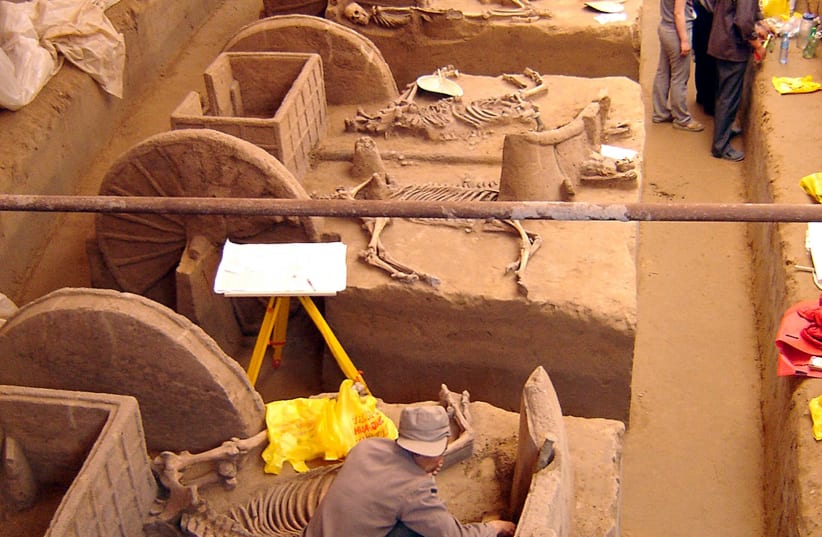
Chinese archaeologists work at the newly-discovered pits
of chariots and horses in the ruins of Yin, in Anyang city of central
China's Henan province, May 26, 2005. (photo credit: REUTERS)
Archeologists have discovered the remains of a 4,000-year-old palace in an ancient Chinese walled city at the archeological site of Xinmi, in Henan Province, central China, state-run news agency Xinhua reported.
The ancient walled city at Xinmi is thought to have been built during the Xia dynasty, between 2070 BCE and 1600 BCE.
Archaeologists
discovered the remains of this ancient city several years ago on the
eastern bank of the Zhenshui River, covering a rectangular area of
approximately 176,000 square meters.
This well-preserved walled city is associated with the Longshan
Culture, an ancient civilization that once inhabited the area covered by
modern Henan province and other neighboring regions of China.
The
remains of the palace consist of a foundation structure built with
rammed-earth construction techniques using compacted raw materials like
earth, chalk, or lime.
(credit: Shutterstock / DnDavis)
The
remains of the palace are approximately 60 by 30 meters and cover an
area of over 1,800 square meters. It is high at the center and low on
all four sides, with a flat surface and rows of evenly distributed
column holes.
Palace remains shed light on ancient construction styles
The holes in the structure
shed light on what the ancient complex once looked like. Li Bo, head of
the excavation team, told Xinhua that they believe the holes show that
“the foundation belonged to a housing complex with terraces in the south
and north, cloisters in the east and west, and a yard in the center.”
Other
archeological discoveries thought to date back to the Longshan Culture
and the Xia dynasty period were made in an ancient city in Zhoukou, also
located in Henan Province. Researchers found the remains of ash pits,
ditches, and other architectural remnants at the Zhuqui Temple site.
Outstanding among these discoveries were the remains of two circular buildings consisting of earth columns and adobe walls, likely used for grain storage.
Fang
Lixia, an archaeologist who led the excavation team in Zhoukhou told
Xinhua that these findings will shed light on ancient agricultural
practices in the region.
Henan Province is home to several archeological discoveries dating back to a variety of ancient Chinese dynasties.
Archaeologists unearthed a 4000 year old palace complex in China!
THIS PAGE WAS POSTED BY SPUTNIK ONE OF THE SPUTNIKS ORBIT BLOG
The gold jewelry found buried with a girl. (photo credit: EMIL ALADJEM/IAA)
During extensive building works carried out to make a solar energy plant in Rome,
67 skeletons in 57 ornate tombs were unexpectedly discovered, CNN
reported on January 2. The remains were thought to have been from
between the second and fourth centuries.
Adding
to the astonishing discovery, the skeletons were found wearing golden
jewlery and expensive footwear. It was reported that the tombs had also
been designed to resemble the homes of the deceased. Archaeologists told
CNN that where multiple shared a tomb, a familial link could be
established.
While Tarquinia, an area north of Rome, is known for archaeological treasures, CNN reported that authorities had been surprised by the findings.
More of the extravagant findings
include silver with amber and engraved initials, precious stones,
terracotta pottery, coins, shiny glasses, amulets, golden necklaces and
golden earrings.
The significance of the find
“We
found several skeletons still wearing their expensive stockings and
shoes,” Emanuele Giannini, lead excavation archaeologist at the site,
told CNN. “All these riches and the fact that the bones show no sign of
stress or physical labor, (leads us to believe) these weren’t local
farmers, but upper-crust members of Roman families coming from cities.”
A pendant with the sign of Luna, Roman goddess of the moon. (credit: EMIL ALADJEM/IAA)
“We
did have a faint idea that some treasure could lie there, as historical
sources mentioned the location of a postal station for travelers near
the site,” explained Giannini. “Many Romans would stop (here) for the
night to eat and rest, but the magnitude of the discovery is unmatched.”
“December
2022, in the locality of CARCARELLO (Tarquinia, VT), a few kilometers
away from the city of Tarquinia, preventive archaeological
investigations took place for the construction of a solar panel plant,
during which an imperial era necropolis (II-IV century AD) was found,”
the Soprintendenza Archaeolohia Belle Arti Paesaggio Eturia Meridionale
wrote on Facebook about the find. “The archaeological excavation,
carried out by the company Eos Arc S.r.l. between March and April 2023
showed 57 burials of various types (cappuccino graves, amphora, brick
crates or simple earth pits) some of which endowed with significant
beauty tracks that will, in part, come Restored exhibits in the
exhibition connected with the study day.
“In
addition to the necropolis, the investigations have revealed part of an
agricultural division, whose historical importance will be highlighted
during the conference.”
THIS PAGE WAS POSTED BY SPUTNIK ONE OF THE SPUTNIKS ORBIT BLOG
Food for thought: Best foods to improve brain performance
Orna Avidan, naturopath at
Maccabi Tivi: "Fueling your body with a nutritious breakfast, lunch, and
dinner is not just about satisfying hunger; it's a profound investment
in your overall well-being."
The occasion of the opening of the academic year has given reason for Orna Avidan, naturopath at Maccabi Tivi, to give recommendations on what to eat in order for us to concentrate and study better.
Avidan recommends these foods in particular:
1. Berries
Berries are packed with antioxidants, vitamins, and fiber.
Blueberries, in particular, have been linked to improved memory and
cognitive performance. Only a handful of berries is necessary for a
brain boost!
2. Dark leafy greens
Kale,
spinach, and other dark leafy greens are rich in vitamins, minerals,
and antioxidants. These nutrients support brain function and provide an
energy release that will be sustained throughout the day. These should
be eaten throughout the day to maximize benefits.
3. Nuts and seeds
Almonds, pumpkin seeds, and sunflower seeds are excellent sources of
vitamin E, which improve cognitive function. Additionally, nuts and
seeds provide a minerals such as magnesium and zinc, which support
overall brain health.
CITIZEN GARDEN. (credit: ZANTKERN MEDIA)
4. Whole grains
Whole
grains such as quinoa, brown rice, and oats provide a steady release of
sugars for the brain. These complex carbohydrates support sustained
energy levels and improve focus throughout the day. Whole grains offer a
more stable source of energy than refined carbohydrates like white
bread.
5. Turmeric
The
active compound in turmeric, curcumin, has anti-inflammatory and
antioxidant properties. Studies suggest that turmeric may have the
potential to benefit brain health.
6. Eggs
Eggs are a nutrient-rich food containing choline, which can improve mood and memory regulation.
7. Avocado
Avocados are rich in healthy monounsaturated fats and support healthy blood flow, which optimizes brain function.
8. Omega-3 fatty acids
Omega-3
fatty acids are crucial components of cell membranes in the brain.
Fatty fish (salmon, mackerel, and sardines), flaxseeds, chia seeds, and
walnuts all contain omega-3 fatty acids and should be included in your diet to improve cognitive function and overall brain health.
Examples of a daily menu
Orna
Avidan says, "Fueling your body with a nutritious breakfast, lunch, and
dinner is not just about satisfying hunger; it's a profound investment
in your overall well-being. These meals serve as the cornerstone of
vitality, providing essential nutrients that nourish not only your body
but also your mind. Each bite is an opportunity to support your immune
system, balance your energy levels, and cultivate a resilient foundation
for optimal health."
Breakfast
Meals
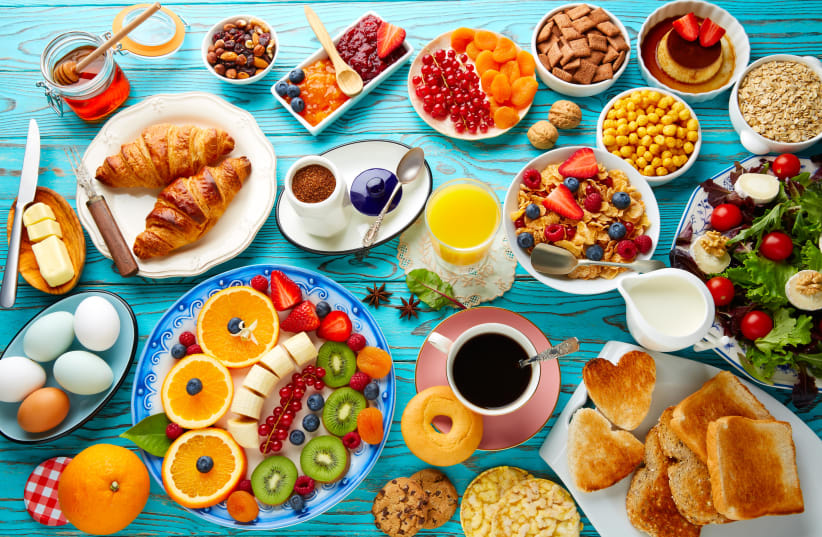
recommended for breakfast include oatmeal with berries and nuts, greek
yogurt with granola, nuts, and honey, and whole grain toast with avocado
and eggs.
Oats
provide complex carbohydrates for sustained energy, while berries offer
antioxidants and nuts contribute omega-3 fatty acids and vitamin E.
Greek
yogurt is rich in protein, promoting alertness, while the combination
of nuts and honey adds healthy fats and natural sweetness.
The whole grain toast, avocado and eggs combination provides complex carbohydrates, healthy fats, and protein.
Midday Meal
For
lunch, Avidan recommends a salmon quinoa bowl with vegetables, chicken,
and vegetables, or a sweet potato and chickpea salad.
Salmon
supplies omega-3 fatty acids, quinoa offers complex carbohydrates, and
vegetables provide essential vitamins and minerals.
Chicken
is a lean protein, which supports neurotransmitter function, while
vegetables offer a range of antioxidants and vitamins.
Sweet potatoes provide complex carbohydrates, and chickpeas offer protein and fiber for sustained energy.
Dinner
For
dinner, Avidan recommends a stuffed bell pepper with quinoa, black
beans, tomatoes and spices or grilled chicken and vegetable skewers. The
stuffed bell pepper dish combines plant-based protein, fiber, and
complex carbohydrates.
The skewers support neurotransmitter function and provide a range of vitamins and minerals.
Snack Ideas for Brain Breaks
Below are snack recommendations to improve brain health and performance:
1. Trail mix including nuts, seeds and dark chocolate.
2. Fresh fruit with nut butter provides a mix of carbohydrates, healthy fats, and protein for sustained energy.
3. Whole grain crackers with hummus offers complex carbohydrates and plant-based protein.
THIS PAGE WAS POSTED BY SPUTNIK ONE OF THE SPUTNIKS ORBIT BLOG
Diets that are higher in fat and significantly lower in carbohydrates are known to have a drastic effect on reducing the incidence of seizures in individuals with drug-resistant forms of epilepsy, particularly among children.
While it's becoming apparent the diet creates some sort of shift in the gut's microflora, the precise nature of those changes and their connection to the prevalence of seizures remains a mystery.
In a prospective study on children and experiments involving mice, researchers from the University of California, Los Angeles (UCLA) bring us a step closer to understanding how the foods we eat alter the functions of microbes in our digestive system, which in turn affect a variety of neurological functions suspected to play a role in epilepsy.
Around 50 million people around the world experience recurrent storms of electrical discharge across the brain in what is diagnosed as epilepsy, resulting in anything from moments of inattention to severe convulsions.
Most benefit from medication, yet for around 30 percent, their condition is regarded as refractory, or treatment-resistant.
Famously referred to as a keto diet, a balance of nutrition that restricts the daily intake of starches and sugars has been touted as a means of losing weight since the 1970s.
Studies estimate around 30 percent of children with treatment-resistant epilepsy become seizure-free while on the diet, while around 60 percent gain "substantial benefits" by having the frequency of their seizures more than halved.
Unfortunately, sticking to the diet can be a challenge. Children can be picky eaters as it is, without further restricting what they can eat. Throw in gastrointestinal issues, risk of kidney stones, and a variety of other side effects, and it's little wonder that all but a handful will stick to the keto diet over the years.
By learning how a particular mix of nutrients results in neurological changes that reduce the chance of a seizure, researchers hope they can devise new treatments that don't rely on such a tailored diet.
"Narrowing down the functions of the microbes that are beneficial toward seizure protection can potentially lead to new ways to enhance the efficacy of the ketogenic diet or to mimic its beneficial effects," says the study's lead author, UCLA molecular biologist Gregory Lum.
Working in the UCLA laboratory of biologist Elaine Hsaio, Lum led a team of researchers in an investigation that unveiled a critical network of interactions between the microbes in the guts of epileptic mouse models, the chemicals they produce, and the products of genes in the hippocampus.
After verifying the effects of a keto diet on the gut biomes of 10 children with pediatric refractory epilepsy at UCLA Mattel Children's Hospital, Lum and his team conducted an experiment in which they introduced the children's microflora into the guts of engineered mice.
Microflora samples collected from the children who had been on the keto diet for about a month proved to be more effective in reducing seizures in the mice than samples collected prior to the children commencing the diet.
The researchers also uncovered metabolic changes in both humans and mice related to energy production, amino-acid metabolism, and specific forms of oxidation of fatty acids.
Mice who received microbiomes altered by the keto diet were found to have changes in gene activity in the hippocampal area that have been previously linked to epilepsy.
Deducing how these changes specifically dampen conditions that give rise to seizures could point the way to drugs tailored to work where other medications have failed.
The stories we tell ourselves about the natural world can sometimes stretch far from the truth.
For years, visitors to the rainforests of Central and South America have been told of a tree that slowly ambles around on its stilted roots.
The lore of the so-called walking palm (Socratea exorrhiza) has persisted since at least 1980 when anthropologists John H. Bodley and Foley C. Benson detailed the plant's unbelievable behavior in a scientific paper.
According to Bodley and Benson, when toppled by falling trees or branches some palms in eastern Peru can "right themselves and "walk" out from under the obstacle", away from their point of germination.
The palms were said to chase sunlight through the forest using the dozen or so roots that spring from their elevated trunks.
Sometimes, these roots sit several meters above the ground, and as Bodley explained all those decades ago, when they break away or rot, newer legs can probe patches of soil that are slightly further away.
A diagram illustrating how the stilt roots of Socratea exorrhiza might move from the place of germination.
When you look at the evidence, it doesn't really have legs to stand on.
In 2005, tropical ecologist and palm expert Gerardo Avalos published a study that found S. exorrhiza does not actually wander from its spot of germination.
In the paper, Avalos and his colleagues agree that when the walking palm is knocked over, it can rapidly grow new roots to deal with the loss of stability, but it does not actually move very much at all.
In an interview with the Italian illustrator and writer, Elisa Paganelli, Avalos explains that the walking palm is fixed to its place of germination, although, like other rainforest plants, it can still stretch itself somewhat to seek the light.
Socratea exorrhiza, the walking tree in a jungle in Costa Rica.
(GaiBru_Photo/Getty Images)
The scientist admits that "it's kind of impressive and amazing to believe" that the walking palm can actually walk, but he says "it's just a legend."
"For one thing," Avalos points out in a correspondence with Benjamin Radford from the Skeptical Inquirer in 2009, "a large cone of stilt roots takes a long time to develop. Changes in canopy light conditions are more dynamic, with holes in the canopy being open at the same time that others are closed."
The idea that a walking palm could move fast enough to seek out these light gaps is unrealistic, Avalos argues.
The roots of Socratea exorrhiza.
(helovi/Getty Images)
In 2007, another study on the curious species came to the same conclusion as Avalos and his colleagues.
The real mystery that still persists, however, is why the walking palm has such long legs if not to walk.
Back in the 1960s, scientists thought these extreme roots evolved to cope with flooding events, but there's not a lot of convincing evidence to support that idea either.
In more recent years, researchers have argued that in dense rainforests, the stilt roots of walking palms allow the species to more easily increase its height and stability, exploiting light gaps in the canopy overhead without expending energy on a thicker trunk.
While many will no doubt continue to talk the talk about this tree, the evidence at this stage suggests the species does not actually walk the walk.
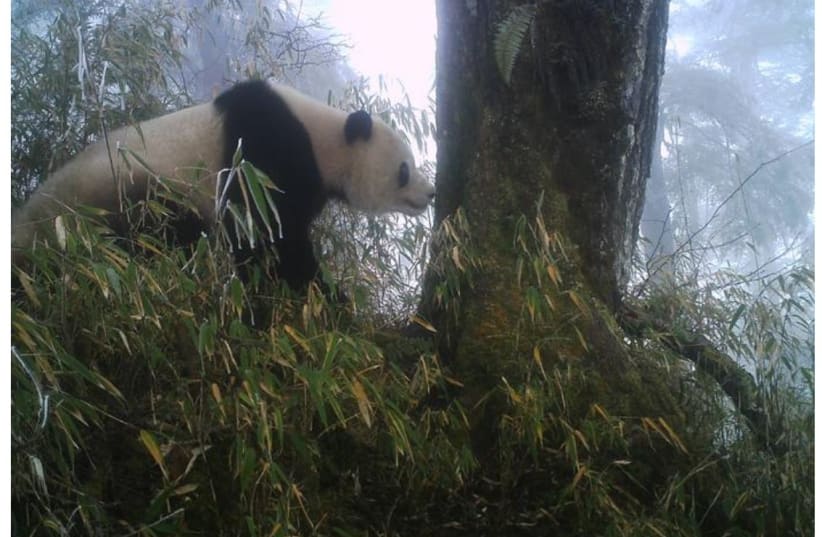
A giant panda in the Wolong nature reserve in China's
Szechuan Province checks on recent social postings on a scent-marking
tree. (photo credit: Courtesy of Jindong Zhang)
Scientists reveal that pandas use fecal matter on trees as a form of
social networking, according to a study recently published in the
peer-reviewed journal Ursus.
Pandas
have long been portrayed as solitary beasts. However, a recent study
shows that not only do they hang out with family and friends – they’re
also big users of social media. Scent-marking trees serve as a panda version of Facebook.
As
any dog owner knows, their pets love to smell objects to collect
information when taken for a walk. They also mark their scent on trees
and walls so they can remember where they have been, and so other dogs
can follow them.
Analyses of animal social networks
have traditionally been conducted on species that exhibit social
behaviors such as group living, but relatively less work has been done
on species that are thought of as solitary, cryptic, and that
communicate through scent-marking cues.
Fecal matter reveals key insights into panda social life
A recent article in the international journal Ursus
under the title “Social network analysis uncovers hidden social
complexity in giant pandas” paints a new lifestyle picture of the
beloved bears in China’s Wolong Nature Reserve. The lives of these
huggable-looking mammals are usually shielded from human eyes because
they’re shy, rare, and live in densely forested, remote areas. They use
scent marking to keep track of both family members and friends, leave
updates about life events, and check out the dating scene.
Lead
author Dr. Thomas Connor did this work for his Ph.D. from Michigan
State University’s Center for Systems Integration and Sustainability
(MSU-CSIS) by spending months hanging out in those forests, watching for
signs of pandas since sightings in the wild are much more uncommon. His
work was built on previous observations by other MSU-CSIS scientists
who suspected pandas likely weren’t the total loners everyone believed
them to be.
A giant panda eats bamboo inside an enclosure at the Moscow Zoo on a
hot summer day in the capital Moscow, Russia June 7, 2019. (credit:
REUTERS/TATYANA MAKEYEVA/FILE PHOTO)
The
researchers used noninvasive fecal genetic sampling, conducted from
March 2015 to February 2016, to identify individuals of one such
species, the giant panda (Ailuropoda melanoleuca), across a study population in southwestern China.
“Once you’ve gotten an eye for it, you can see on ridge tops and
different trails the scent-marking trees, which are stained with a waxy
substance – and the pandas seem to be doing this a lot,” Connor said.
“It was pretty evident they were exchanging information through scent
marking behavior.”
To
link the marked trees with an understanding of pandas' social
structure, nearby panda communities needed to be documented. To explore
that hunch, Connor teamed up with MSU Foundation Sociometrics Prof. Ken
Frank, an expert on social networks and a co-author of the article.
The
researchers didn’t have a camera on a bear every time it sniffs a tree.
“That’s a key part,” Frank said. “I told him that once he has data on
which bears are close to each other, we can use the techniques and
theories that apply to humans to understand their social networks, and
these scent trees are social media. Like Facebook, it’s asynchronous,
meaning you don’t have to be in the same place at the same time. It
allows one to broadcast to many, and it’s a record. A panda marking a
tree isn’t so different from a Facebook post."
To
determine which bears were close to each other, Connor dug into a
wealth of data he had collected in the form of fresh panda poop. Panda
feces are the gold standard of panda watching.
What pandas lack in obvious sociability, they make up for in poop
production – going some 90 times a day. That means they leave a reliable
trail. Connor was able to extract DNA from the fresh panda poop he and
his colleagues collected in a 46-square-kilometer area known as the
prime panda habitat.
Information
from the scat allowed them to identify specific pandas in the vicinity
of the scent-marking trees and showed if these pandas were related to
each other. That allowed them to combine that with the information from
their chosen communication method – the scent trees – to explore their
social network.
Pandas socialize in clique-like fashion
“We
defined two panda individuals within a certain distance from each other
as an association, Connor said. “Even if they’re not directly
communicating or running into each other physically, they can exchange
information in the chemical scent signature. That built up the social
network for the analysis.”
Frank
said that once they could determine the bears were in proximity, they
could apply the social network technique of community or clique
detection. “It’s pretty much like high school,” Frank said. “And like in
high school, cliques have lots of implications. There are strong norms
within a clique – and while encountering those outside a clique is rare,
the information can be very important.”
The
scent-marking trees are ripe with information, telling the sniffer who
the animal is if they’ve encountered them before. It also tells the
marker’s sex, an idea of how dominant and large the bear is, and whether
they’re ready to mate.
Connor said the most tantalizing information they gleaned is that in
non-mating seasons, the pandas seem to be hanging mostly with other
family members – but they seemed to branch out in mating seasons,
probably using the scent-marking trees as a territory map.
Connor
noted this result was preliminary and limited by small sample sizes but
was a tantalizing one that should be studied more.
“The
discoveries in this study shed new light on how pandas use their
habitat,” said Jianguo “Jack” Liu, a senior author of the article and
CSIS director. “Pandas are a part of coupled human and natural systems
where humans share their habitat. Anything we can learn about how they
live and what they need can ultimately help inform good conservation
policies and maybe understand our own behavior a little more,” he
concluded.
THIS PAGE WAS POSTED BY SPUTNIK ONE OF THE SPUTNIKS ORBIT BLOG