Thursday, 30 November 2023

Consumer Reports: Electric vehicles less reliable, on average, than conventional cars and trucks

Nov. 29, 2023, by Tom Krisher

A Chevrolet Bolt is displayed at the Philadelphia Auto Show, Jan. 27, 2023, in Philadelphia. Electric vehicles are far less reliable than gasoline-powered cars, trucks and SUVs, mainly because most automakers are still learning how to build a completely new power system, according to this year's auto reliability survey by Consumer Reports.
Credit: AP Photo/Matt Rourke, File

Electric vehicles have proved far less reliable, on average, than gasoline-powered cars, trucks and SUVs, according to the latest survey by Consumer Reports, which found that EVs from the 2021 through 2023 model years encountered nearly 80% more problems than did vehicles propelled by internal combustion engines.

Consumer Reports said EV owners most frequently reported troubles with battery and charging systems as well as flaws in how the vehicles' body panels and interior parts fit together. The magazine and website noted that EV manufacturers are still learning to construct completely new power systems, and it suggested that as they do, the overall reliability of electric vehicles should improve.

"This story is really one of growing pains," said Jake Fisher, senior director of auto testing at Consumer Reports. "It's a story of just working out the bugs and the kinks of new technology."

Still, Consumer Reports noted that lingering concerns about reliability will likely add to the issues that give many buyers pause when considering a switch to the new technology, joining concerns about higher costs, too few charging stations and long charging times.

The growth of electric vehicle sales has slowed sharply since last year. In June 2022, EV sales were growing about 90% year over year. By June of this year the 12-month growth rate had slowed to about 50%, and automakers have become increasingly fearful that the pace will weaken further.

Reflecting that concern, about 3,900 U.S. auto dealers this week signed a letter to President Joe Biden, asking him to rethink what the dealers called unrealistic fuel economy and emissions requirements that could require electric vehicles to reach 67% of total U.S. vehicle sales by 2032.

Consumer enthusiasm for EVs, their letter warned, has stalled.

"They are not selling nearly as fast as they are arriving at our dealerships, even with deep price cuts, manufacturer incentives and generous government incentives," the letter said.

The Consumer Reports survey also concluded that plug-in hybrids, which can travel on battery power before a gas-electric powertrain kicks in, are more problem-prone than fully electric vehicles. Plug-ins, Fisher pointed out, contain two separate and complex power systems in which glitches can arise. He also noted that brands that over time have proved less reliable, in general, such as Jeep and Volvo, have started mass-producing plug-in hybrids.

But tried-and-true integrated gas-electric hybrid systems are more reliable than gasoline vehicles, largely because they have been in use for about a quarter-century and the bugs have mostly been worked out, Fisher said.

Consumer Reports derived its survey data from subscribers who owned EVs from the 2021 through 2023 model years and compared them with other vehicle types. In calculating a vehicle's average problem rate, the organization assigned extra weight to serious problems such as battery or engine failures.

EVs from the 2021 and 2022 model years overall had more than twice the problem rates of internal combustion vehicles. The rates were more closely aligned in the 2023 model year: Those EVs had only 21% more problems than gasoline vehicles, Fisher said.

The Hyundai 2024 IONIQ 5 Disney 100 Platinum Edition is shown at the AutoMobility LA Auto Show, Nov. 16, 2023, in Los Angeles. Electric vehicles are far less reliable than gasoline-powered cars, trucks and SUVs, mainly because most automakers are still learning how to build a completely new power system, according to this year's auto reliability survey by Consumer Reports.
Credit: AP Photo/Damian Dovarganes, File

The narrower gap in problems between EVs and combustion vehicles in the 2023 model year, Fisher said, suggested that the reliability of EVs, in general, is improving. Still, he noted, newer vehicles tend to have lower problem rates that rise as they age.

Among the EV owners who have had problems with their vehicles is Michael Coram of Lockport, New York, near Buffalo. In July, intent on reducing his commuting costs, Coram bought a 2023 Chevrolet Bolt electric SUV, attracted by its sporty handling. Coram, 44, a heating and air conditioning technician, said he ran into one annoying problem: On a chilly day in mid-November, his Bolt wouldn't shift into drive.

Eventually, after Coram had turned the car on and off 10 or 12 times, the problem fixed itself, and he hasn't experienced it since. Other owners on a Bolt social media forum told Coram that he might have shifted into drive before the SUV's computer had finished its startup sequence.

"It kind of is a bit too much for the computer to handle," he said.

Now, Coram waits for all of the dashboard lights to go out before pushing the drive button. He said his dealer told him that mechanics will check the Bolt when a loaner car is available for him.

In 2021, General Motors recalled its popular electric Bolt from the 2017 through 2022 model years to replace the batteries because of manufacturing defects that could cause fires. Fisher said Bolt owners had to limit how much they charged the batteries and had to park them outdoors until replacement batteries became available. Repairs were still being made this year, Fisher said, causing some Bolt owners to report problems in the Consumer Reports survey.

In addition, owners of Hyundai's Ioniq 5 EV reported battery and charging issues related to a charging control computer, which, in some cases, caused the vehicles to stall.

Rivian, an upstart manufacturer of electric pickup trucks and SUVs, had trouble getting body panels to line up correctly and with broken interior parts, Fisher said.

Tesla, the EV sales leader, which now has years of experience building vehicles, showed improvement in reliability, Fisher said. This was largely because a high proportion of Tesla's sales involve the relatively small and less-expensive Model Y SUV and Model 3 cars. Those are simpler to build and lack the glitch-prone new technology that Telsa offers in its more expensive vehicles, the Models S and X.

Tesla ranked 14th out of 30 automotive brands in the 2023 survey, up from 19th in 2022.

Lexus, Toyota's luxury brand, was the most reliable in the survey, followed by Toyota, Mini, Acura and Honda. The five lowest-ranking brands were Jeep, Volkswagen, Rivian, Mercedes-Benz and Chrysler.

The most reliable segment of the market was compact cars, followed by sportscars, small pickups, midsize and large cars, luxury midsize and large cars. Electric cars, electric SUVs, full-size pickups, midsize pickups, and electric pickups had the worst reliability.

Consumer Reports says its survey of subscribers, representing 330,000 vehicles, took place last spring and summer. It asked owners of vehicles from the 2000 through 2023 model years, with a smattering of 2024 models, about problems they had experienced in the previous 12 months.


Recommend this post and follow
The birth of modern Man

Wind turbine blades: Inside the battle to overcome their waste problem

Nov. 29, 2023, by P. Deeney, K. Ruane and P. Leahy, The Conversation

Credit: Jem Sanchez from Pexels

Wind-farm owners in Europe are holding off on scrapping their old turbines to maximize the power they can generate from them. That's the latest news from a meeting we recently attended on the industry's future. Wind turbines are designed to last 25 years, but the calculus for owners appears to have shifted because of the surge in electricity prices due to the Ukraine war.

According to industry representative Wind Europe, only 454 megawatts (MW) of old turbines were decommissioned in 2022 compared to an expected 1.5 gigawatts (GW). That equates to more than 1,000 turbines whose lives have been extended in Europe.

Indeed, it is apparently the third year in a row in which decommissioning has undershot their expectations. Meanwhile North American turbine decommissioning fell year on year from 668MW to 276MW, we are told by the Global Wind Energy Council.

This creates a little more breathing room to solve a problem that has troubled recycling specialists for some time. Whereas most of a wind turbine can be recycled, blades cannot. They are mostly made from glass fiber or carbon-fiber reinforced plastic. Designed to be highly durable and hard, this material is very difficult to cut or grind.

At present, most old blades are either dumped in landfill or incinerated. There had been capacity at a German plant to process them into cement, but this was limited and placed a very low value on the blades.

Around 8,000 blades were expected to be retired in the US this year and another 4,000 in Europe, amounting to some 40,000 tons of material. The final figure may now be lower, depending on how many wind farms are able to extend their planning permission.

Looking ahead, the global forecast for annual blade waste a decade from now is about 200,000 tons.

Despite the current lull, that's a huge number of blades. And the figures will only increase in subsequent years as the current generation are much longer and heavier than the last, which only adds to the waste problem.

Aspiration and reality

Wind-turbine blades take a lot of punishment. Like aircraft wings, they work most efficiently when they are smooth, but can be damaged from sand in the air, as well as lightning and rain. This explains their limited lifetimes.

Europe and the US have agreed a hierarchy of priorities for dealing with them, among other materials. High priorities include keeping them in use, designing them to last longer and repurposing. Then comes recycling, followed by incineration and finally landfill at the bottom of the list.

At present, however, the alternatives to the worst two options are very limited. Europe is rapidly moving to stop putting blades in landfill, so mostly incinerates them, since this at least produces some energy.

Repurposing

Repurposing is a growth area. This means cutting up blades and using the pieces to make new products. Blades have been used to replace the steel girders in bridges, for instance. Researchers from numerous universities recently teamed up with Cork County Council to do this for a small pedestrian bridge for cyclists and walkers to the east of Cork city.

They used three 14-meter blades from an old turbine (much smaller than the 50m blades on today's onshore turbines). One blade was tested to destruction to estimate the strength of the other two, which then replaced the old girders.

The 5.5m bridge, which can support a 12-ton emergency vehicle, is the second of its kind, following another in Poland. There is also one in Draperstown, Northern Ireland and another being built in Atlanta, Georgia.

There is also research into how to make used blades into electricity poles. This takes advantage of the fact that the material doesn't impede phone or wifi signals. These structures don't need guy wires, meaning they take up less space and you don't need to rent so much land.

Among many other possibilities are animal-feeding troughs, bus and bicycle shelters, cattle partitions, glamping pods, housing materials, noise barriers, public furniture, railway ties/sleepers, thermal insulation and wave attenuators. Blades can also be re-purposed for building materials such as roofing and deep foundations, which happens to be our focus. We're always open to other possibilities, so do get in touch with suggestions.

New types of blades

There is a great deal of research into blade recycling. The big issue is separating the polymers from the binding resin. The two main methods involve heating them in an oxygen-free environment (pyrolysis) or separating out the resin using a solvent (solvolysis). Unfortunately, both produce fibers that are weaker than new ones and more expensive.

Manufacturers are developing resins that can be more easily recovered. There have recently been claims of success by Siemens Gamesa, General Electric and Vestas, yet none have given much detail about their methods, so the outlook is unclear just now.

Another possibility is to make blades from thermoplastic polymers—that is, plastics which can be made soft with heat. Unlike today's thermoset polymers, these would be easier to repair and to make into new blades. Potentially they could be manufactured on site to avoid transportation.

A 14-meter blade is being tested in the US, which is very promising, but this is less than one fifth the blade length of today's biggest onshore turbines (let alone offshore turbines). If the tests are successful and can be scaled up, this could be a gamechanger.

It's also important to emphasize that wind-turbine blades are only part of the problem. There is also a great deal of fiber-reinforced plastic material used in boats and planes. These are only being recycled to a very limited extent, so again there's a major waste problem.

For today's waste, the answer is push hard on repurposing. With any luck, the research into recycling will eventually make these problems a thing of the past.


Recommend this post and follow
The birth of modern Man

Study shows that inoculating soil with mycorrhizal fungi can increase plant yield by by up to 40%

Nov. 29, 2023, by M. Nyfeler, U. of Zurich

Credit: Pixabay/CC0 Public Domain

Farmland often harbors a multitude of pathogens which attack plants and reduce yields. A Swiss research team has now shown that inoculating the soil with mycorrhizal fungi can help maintain or even improve yields without using additional fertilizers or pesticides. In a large-scale field trial, plant yield increased by up to 40%.

Intensive use of fertilizers and pesticides on fields reduces biodiversity and pollutes the environment. There is, therefore, great interest in finding sustainable ways to protect yields without using agricultural chemicals. One example of alternative biologicals is mycorrhizal fungi, which are beneficial organisms that help plants acquire nutrients.

Yields improved by up to 40%

A team of researchers from the universities of Zurich and Basel, Agroscope, and the Research Institute of Organic Agriculture (FiBL) has now shown for the first time on a large scale that applying mycorrhizal fungi in the field works. The fungi were mixed into the soil before sowing crops on 800 trial plots at 54 maize farms in northern and eastern Switzerland.

"On a quarter of the plots, the mycorrhizal fungi enabled up to 40% better yields. That's huge," says the study's co-lead, Marcel van der Heijden, a soil ecologist at the University of Zurich and at Asgroscope. But there's a catch: on a third of the plots, the yield did not increase and sometimes even decreased. The research team was initially unable to explain why this happened.

Pathogens in the soil

In their search for the cause, the researchers analyzed a variety of chemical, physical, and biological soil properties, including the biodiversity of soil microbes. "We discovered that the inoculation functioned best when there were lots of fungal pathogens already in the soil," says co-first author Stefanie Lutz from Agroscope, the federal center of competence for Agricultural Research.

"The mycorrhizal fungi act as a kind of protective shield against pathogens in the soil that would weaken the plants." As a result, the normal yield can be maintained in fields where, without mycorrhizal fungi, there would have been losses. In contrast, mycorrhizal fungi had only a minor effect on fields that were not contaminated with pathogens.

"The plants there are strong anyway and grow excellently. The use of mycorrhizal fungi in such cases brings no additional benefits," says the other first author, Natacha Bodenhausen from the Research Institute of Organic Agriculture.

The aim of the study was to be able to predict the conditions under which mycorrhizal inoculation works.

"With just a few soil indicators—mainly soil fungi—we were able to predict the success of inoculation in nine out of 10 fields, and thus could also predict the harvest yield even before the field season," says the study's co-lead Klaus Schläppi of the University of Basel. "This predictability makes it possible to target the use of the fungi in fields where they will work. That's a crucial element for developing these technologies into a reliable agricultural method," says Schläppi.

Further research is still required to find out the easiest way to spread the fungi over large areas. Nevertheless, "the results of this field trial represent a big step toward a more sustainable agriculture," concludes Marcel van der Heijden.


Recommend this post and follow
The Life of Earth

Wednesday, 29 November 2023

Health and Wellness News: Want to look young? You need to change your shower habits


Want to look young? You need to change your shower habits

According to an anti-aging specialist, a small adjustment to your shower routine can reduce wrinkles, inflammation, and stress levels while improving sleep - and it doesn't have to be done every day.


When Fiction Feels Real: Scientists Discover That Lonely Brains Can’t Differentiate Between Fictional Characters and Real-Life Friends

By OHIO STATE U., Nov. 28, 2023


Recent research indicates that loneliness can blur the distinction between real and fictional characters in the brain, suggesting that lonely individuals may seek emotional connections with favorite fictional characters similarly to real-life friends.

New research sheds light on how friends, story characters are represented in the brain.

A recent study discovered that for individuals who often feel lonely, the distinction between actual friends and beloved fictional characters gets blurred in the part of the brain that is active when thinking about others, a new study found.

The study involved brain scans of “Game of Thrones” enthusiasts as they reflected on different characters from the series and their real-life friends. Prior to the study, all participants had undergone a loneliness assessment.

The difference between those who scored highest on loneliness and those who scored lowest was stark, said Dylan Wagner, co-author of the study and associate professor of psychology at The Ohio State University.

“There were clear boundaries between where real and fictional characters were represented in the brains of the least lonely participant in our study,” Wagner said.

“But the boundaries between real and some fictional people were nearly nonexistent for the loneliest participant.”

The results suggest that lonelier people may be thinking of their favorite fictional characters in the same way they would real friends, Wagner said.

Wagner conducted the study with Timothy Broom, a Ph.D. graduate of Ohio State who is now a postdoctoral researcher at Columbia University. It was published recently in the journal Cerebral Cortex.

Study Details and Procedures

Data for the study was collected in 2017 during the seventh season of the HBO series “Game of Thrones.” The study involved scanning the brains of 19 self-described fans of the series while they thought about themselves, nine of their friends, and nine characters from the series. (The characters were Bronn, Catelyn Stark, Cersei Lannister, Davos Seaworth, Jaime Lannister, Jon Snow, Petyr Baelish, Sandor Clegane, and Ygritte.)

Participants reported which “Game of Thrones” character they felt closest to and liked the most.

“Game of Thrones” was a fantasy drama series lasting eight seasons and concerning political and military conflicts between ruling families on two fictional continents. It was ideal for this study, Wagner said, because the large cast presented a variety of characters that people could become attached to.

For the study, the participants’ brains were scanned in an fMRI machine while they evaluated themselves, friends and “Game of Thrones” characters. An fMRI indirectly measures activity in various parts of the brain through small changes in blood flow.

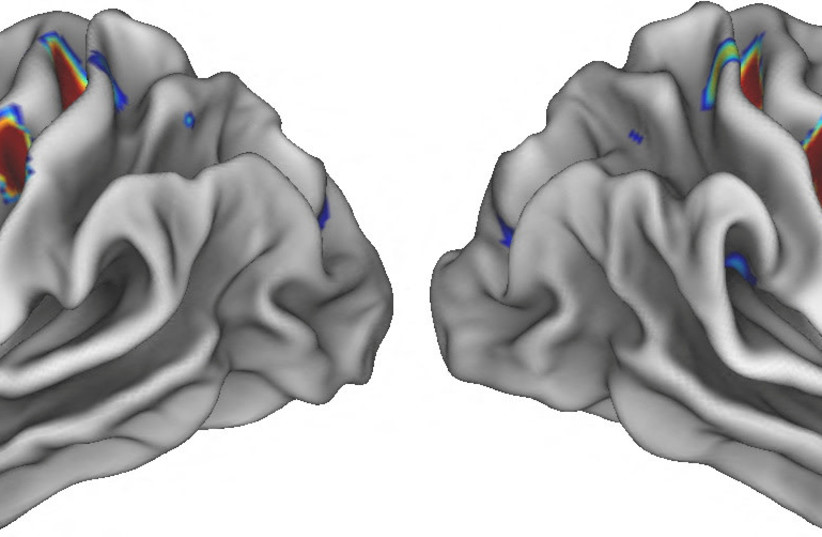
The researchers were particularly interested in what was happening in a part of the brain called the medial prefrontal cortex (MPFC), which shows increased activity when people think about themselves and other people.

While in the fMRI machine, participants were shown a series of names – sometimes themselves, sometimes one of their nine friends, and other times one of the nine characters from “Game of Thrones.”

Each name appeared above a trait, like sad, trustworthy, or smart.

Participants simply responded “yes” or “no” to whether the trait accurately described the person while the researchers simultaneously measured activity in the MPFC portion of their brains.
Observations and Implications

The researchers compared results from when participants were thinking about their friends to when they were thinking about the fictional characters.

“When we analyzed brain patterns in the MPFC, real people were represented very distinctly from fictional people in the non-lonely participants,” Wagner said.

“But among the lonelier people, the boundary starts breaking down. You don’t see the stark lines between the two groups.”

The findings suggest that lonely people may turn to fictional characters for a sense of belonging that is lacking in their real life, and that the results can be seen in the brain, Wagner said.

“The neural representation of fictional characters comes to resemble those of real-world friends,” he said.

But even the least lonely participants were affected by the characters they cared about most in “Game of Thrones,” the study found.

Results showed that the participants’ favorite characters in “Game of Thrones” looked more like their real friends in their brains than did other characters in the show. That was true for all people in the study, no matter how lonely and no matter who their favorite character was, Wagner said.

“Your favorite characters are more real to you, regardless of loneliness,” he said.


Recommend this post and follow
The Life of Earth

The way to better mental health may go through your stomach

Nov. 28, 2023, by Josh Barney, U. of Virginia

Yogurt could help your mood as well as your gut. UVA researchers say a bacterium in fermented foods may help change the way you feel, opening a realm of possible treatments for mental health and other medical issues.
 Credit: Emily Faith Morgan, University Communications.


University of Virginia School of Medicine researchers have discovered how Lactobacillus, a bacterium found in fermented foods and yogurt, helps the body manage stress and may help prevent depression and anxiety.

Their study is published in the journal Brain, Behavior, and Immunity. The findings open the door to new therapies to treat anxiety, depression and other mental health conditions.

UVA researcher Alban Gaultier and collaborators say the discovery is notable because it pinpoints the role of Lactobacillus, separating it out from all the other microorganisms that naturally live in and on our bodies.

The organisms are collectively known as the microbiota and scientists have increasingly sought to target them to battle disease and improve health. UVA's new research represents a major step forward in that effort, providing scientists an innovative new approach to understand the role of individual microbes that could aid in developing of new treatments and cures for a variety of diseases, both mental and physical.

"Our discovery illuminates how gut-resident Lactobacillus influences mood disorders, by tuning the immune system," said Gaultier, of UVA's Department of Neuroscience, its Center for Brain Immunology and Glia and the TransUniversity Microbiome Initiative. "Our research could pave the way toward discovering much-needed therapeutics for anxiety and depression."

Microbiota and depression

Our guts are naturally home to countless bacteria, fungi and viruses. There are more microorganisms living in and on us than there are cells in our bodies. That may sound disgusting, even alarming, but scientists say these tiny organisms and their interactions are critical to immune systems, health, mental health and other facets of well-being.

Disruptions of the microbiota, whether from illness, poor diet or other causes, are known to contribute to many diseases and even help cancer spread. So, researchers have been very excited in recent years about the potential to battle diseases by targeting the microbiota.

Early attempts to manipulate the gut flora with beneficial bacteria, called probiotics, have produced mixed results. A big part of the problem has been the sheer complexity of the microbiome, which is estimated to include 39 trillion microorganisms. Trying to understand what specific bacteria or fungi do—much less how they interact with all the other microorganisms and their host—can be like trying to count grains of sand on the beach.

Gaultier and his team took an innovative approach to focus on Lactobacilli in specific. Prior research from Gaultier's lab suggested that the bacteria could reverse depression in lab mice—a hugely promising finding. But the researchers needed to understand how.

"We were aware from our prior research that Lactobacillus was beneficial in improving mood disorders and was lost following psychological stress, but the underlying reasons remained unclear, primarily due to the technical challenges associated with studying the microbiome."

Gaultier and his team decided to continue their depression research using a collection of bacteria, known as "Altered Schaedler Flora," which includes two strains of Lactobacillus and six other bacterial strains. With this rarely used bacterial community, the team was able to create mice both with and without Lactobacillus, circumventing the need for antibiotics.

The Altered Schaedler Flora produced exciting results. Gaultier and his colleagues were able to explain exactly how Lactobacilli influence behavior, and how a lack of the bacteria can worsen depression and anxiety. Lactobacilli in the family Lactobaccillacea maintain the levels of an immune mediator called interferon gamma that regulates the body's response to stress and helps stave off depression.

Armed with this information, researchers are poised to develop new ways to prevent and treat depression and other mental health conditions in which Lactobacillus plays an important role. For example, patients struggling with or at risk for depression might one day take specially formulated probiotic supplements to optimize their levels of helpful Lactobacillus.

"With these results in hand, we have new tools to optimize the development of probiotics, which should speed up discoveries for novel therapies," researcher Andrea R. Merchak said. "Most importantly, we can now explore how maintaining a healthy level of Lactobacillus and/or interferon gamma could be investigated to prevent and treat anxiety and depression."

The research team consisted of Merchak, Samuel Wachamo, Lucille C. Brown, Alisha Thakur, Brett Moreau, Ryan M. Brown, Courtney Rivet-Noor, Tula Raghavan and Gaultier.


Recommend this post and follow

Innovative wireless light switch could cut house wiring costs in half

Nov. 28, 2023, by Geoff McMaster, U. of Alberta

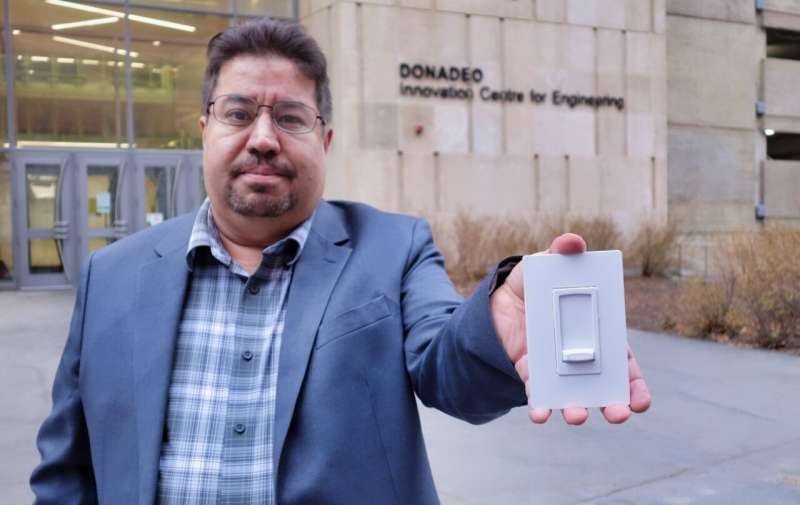
Engineering researcher Kambiz Moez is developing a wireless light switch that works without batteries, which could reduce the cost of wiring a house by up to 50%.
 Credit: Geoff McMaster

A University of Alberta engineering researcher has developed a wireless light switch that could reduce the cost of wiring a house by as much as 50%.

Wireless switches—consisting of a transmitter on the switch and a receiver near a light fixture or other appliance—have been around for many years, and have been proven that they can reduce the material and labor cost for wiring houses, says Kambiz Moez, director of electrical engineering in the Department of Electrical and Computer Engineering, but they require batteries to operate.

"If you have 50 wireless light switches in a house, it's very inconvenient for an average homeowner to run around and replace batteries all the time," he says.

What makes his system unique is that the switches run without batteries, harvesting energy from ambient sources such as radio frequency signals. Instead, each floor would have one or two RF (radio frequency) power transmitters to power up all switches inside the house.

Moez has so far developed a prototype switch for less than one dollar that can be installed anywhere on a wall. The system is "scalable, easy to replicate and adopt, and can be customized to meet the specific needs of homeowners, contractors and regulators," he says.

In 2018, Alberta became the first province to allow wireless electricity control in new homes. With the current housing crisis in Canada, Moez says his innovation could help reduce construction costs.

The switch can also accommodate sensors for temperature, humidity and occupancy that can drastically reduce energy consumption.

"Imagine heating a 3,000-square-foot house, but you're only using a room at any given time. If your house has wirelessly controlled vents, you can close the vents outside that room, or maybe a couple of bedrooms," says Moez.

The "seamlessly automated" system could also turn lights on and off as occupants move from room to room.

"By enabling the wireless control of each section of homes, our solution prevents unnecessary use of energy, which in turn lowers energy bills and reduces carbon emissions," says Moez.


Recommend this post and follow
The Life of Earth

Tuesday, 28 November 2023

Health and Wellness News: Israeli scientists unlock new information key to fighting brain cancer


Israeli scientists unlock new information key to fighting brain cancer


DNA methylation sheds light on varieties of the most common and most fatal primary brain cancer.


Bacteria found to contribute to the modulation of animal behavior

Nov. 22, 2023, by Eva Sittig, Kiel U.

Shown here are the nerve cells that are involved in feeding behavior in Hydra: All cells of populations N3 and N4 are marked in blue; population N6 is colored yellow due to a specific neuropeptide.
 Credit: Christoph Giez

An increasingly important field of work in modern life sciences is the study of the symbiotic coexistence of animals, plants, and humans with their specific microbial populations. In recent years, researchers have gathered growing evidence that the composition and balance of the microbiome plays a decisive role in the function and health of the organism as a whole.

They have identified a fundamentally important aspect of these functional relationships in the communication between nerve cells of the host and its microbiome, which was first established very early in evolution. The significance of this cooperation and how these interactions affect behavior is still largely unknown.

In a recent study, a research team from the Collaborative Research Center (CRC) 1182 "Origin and Function of Metaorganisms" at Kiel University has gained new insights into the cooperation between the nervous system and the microbiome. Using the freshwater polyp Hydra as an example, the Kiel researchers investigated the neuronal basis of their feeding behavior and whether and in what way the microbiome intervenes in this behavior.

In doing so, they were able to prove mechanistically for the first time that a microbiome with reduced diversity affects the function of certain nerve cells and thus alters the feeding behavior. They published their research results today in the journal Current Biology.

Complex cooperation of nerve cells controls the feeding behavior of Hydra

The freshwater polyp Hydra is a cnidarian about one centimeter in size that lives in the shallow waters of lakes attached to aquatic plants and feeds on microscopic crustaceans, among other things. To catch its prey, Hydra executes a coordinated and relatively fast behavioral program.

"This behavior can be well studied experimentally, as it can be triggered not only by the living prey but also by the peptide glutathione, which can be fed to the animals in the culture dishes," explains Christoph Giez, CRC 1182 member and Ph.D. student in the Cell and Developmental Biology group at the Zoological Institute.

"Underlying the feeding behavior is a neuronal control that is significantly more complex than was previously assumed from the simple nerve network of Hydra," Giez continues. Using a calcium-based visualization method, the research team was able to observe the nerve populations involved in feeding behavior in real-time in the living animal and thus identify the neuronal circuit involved.

Graphical Abstract. Credit: Current Biology (2023). DOI: 10.1016/j.cub.2023.10.038

Composition of the microbiome influences natural feeding behavior

In order to test a connection between the microbiome and feeding behavior, the scientists first examined artificially germ-free animals: Hydras without a microbiome showed a clearly altered behavioral pattern, which was mainly expressed in a shorter duration of mouth opening. "By adding the microbiome again, the normal feeding behavior was restored in these animals. This allowed us to prove the direct influence of the microbiome," Giez says.

In order to find out which bacteria have a particularly significant influence, the Kiel researchers first colonized germ-free animals with one defined bacterial species each in the next step. "A particularly interesting effect was seen when colonizing with the bacterium Curvibacter. The feeding behavior of animals colonized only with Curvibacter is very strongly impaired: These animals can only open their mouths to a very limited extent," Giez continues.

In further studies, Curvibacter was found to produce the amino acid glutamate, which also plays an important role in human metabolism. When the microbiome is greatly reduced in composition and only Curvibacter is present, glutamate accumulates, binds to neurons, and leads to a blockage of the mouth opening. The inhibitory effect of the Curvibacter bacteria is reversed as soon as the remaining members of the microbiome are also reintroduced to the tissue.

"Overall, we were able to prove that even in phylogenetically ancient animals, a diverse microbiome is necessary for normal feeding behavior. If the composition of this microbiome is severely disturbed, significant changes in behavior occur," says Professor Thomas Bosch, head of the Cell and Developmental Biology group.

The researchers have gathered evidence that this is due to interactions between the different members of the microbiome. If there is a species-rich, "normal" microbiome, the glutamate produced is taken up and utilized by other bacterial species, and the neuronal circuit responsible for feeding behavior is not disturbed.

Hydra opens up the spectrum of novel research perspectives

With their mechanistic evidence of the collaboration between the microbiome and the nervous system, the new research results of the CRC 1182 team provide important new approaches for in-depth research.

"Our study opens the door for further research into the effects of the interplay between the microbiome and the nervous system on the functions of the whole organism. Among other things, we want to find out in the future whether and how microorganisms are already involved in the formation of the nervous system during embryonic development and what part the microbiome plays in the production of neurotransmitters," Bosch says.

In the long term, elucidating these individual building blocks will result in various fascinating research perspectives that are also aimed at improving human health.

"Perhaps with a better understanding of the interactions between nerve cells and bacteria in the model animal Hydra, we will also be able to look into the mechanisms that can lead to neurological and neurodegenerative diseases in humans. Although the incidence of these diseases is very high worldwide, the mechanisms of their pathogenesis are not yet understood," says Bosch, spokesperson of CRC 1182.


Recommend this post and follow
The Life of Earth

New Study: Ginger Supplementation Shows Promise in Autoimmune Disease Treatment

By U. OF COLORADO ANSCHUTZ MEDICAL CAMPUS, Nov. 22, 2023


Recent research highlights ginger supplements as potentially effective in controlling inflammation in autoimmune diseases by targeting neutrophils and inhibiting NETosis, offering a new perspective on natural supplements in treatment plans for conditions like lupus and rheumatoid arthritis.

New research examined the effects of ginger supplementation on the functioning of white blood cells in individuals.

Recent findings highlight the significance of ginger supplements in managing inflammation in autoimmune conditions. The study, detailed in the journal JCI Insight, concentrated on the effects of ginger on neutrophils, a kind of white blood cell.

It particularly examined the process of neutrophil extracellular trap (NET) formation, known as NETosis, to understand its implications for inflammation control.

Impact of Ginger on Neutrophil Function

The study found ginger consumption by healthy individuals makes their neutrophils more resistant to NETosis. This is important because NETs are microscopic spider web-like structures that propel inflammation and clotting, which contribute to many autoimmune diseases, including lupus, antiphospholipid syndrome, and rheumatoid arthritis.

“There are a lot of diseases where neutrophils are abnormally overactive. We found that ginger can help to restrain NETosis, and this is important because it is a natural supplement that may be helpful to treat inflammation and symptoms for people with several different autoimmune diseases,” said senior co-author Kristen Demoruelle, MD, Ph.D., associate professor of medicine at the University of Colorado School of Medicine on the University of Colorado Anschutz Medical Campus.

Clinical Trial Insights

In a clinical trial, the researchers found that daily intake of a ginger supplement for seven days (20 mg of gingerols/day) by healthy volunteers boosted a chemical inside the neutrophil called cAMP. These high levels of cAMP then inhibited NETosis in response to various disease-relevant stimuli.

“Our research, for the first time, provides evidence for the biological mechanism that underlies ginger’s apparent anti-inflammatory properties in people,” said senior co-author Jason Knight, MD, PhD, associate professor in the Division of Rheumatology at the University of Michigan.

Ginger’s Role in Treatment Discussions

The researchers say that many people with inflammatory conditions are likely to ask their healthcare providers whether natural supplements could be helpful for them or they already take supplements, like ginger, to help manage symptoms.

Unfortunately, the precise impact on disease is often unknown. The researchers hope that providing more evidence about ginger’s benefits, including the direct mechanism by which ginger impacts neutrophils, will encourage healthcare providers and patients to more strategically discuss whether taking ginger supplements as part of their treatment plan could be beneficial.

“There are not a lot of natural supplements, or prescription medications for that matter, that are known to fight overactive neutrophils. We, therefore, think ginger may have a real ability to complement treatment programs that are already underway. The goal is to be more strategic and personalized in terms of helping to relieve people’s symptoms,” Knight adds.

As a next step, the researchers hope to use this study to unlock funding for clinical trials of ginger in patients with autoimmune and inflammatory diseases where neutrophils are overactive, such as lupus, rheumatoid arthritis, antiphospholipid syndrome, and even COVID-19.


Recommend this post 
and follow

The Life of Earth

Ancient Giant Trees Found Petrified In Thailand

December 6, 2022
thearchaeologist.org/blog/ancient-giant-trees-found-petrified-in-thailand


Fossil trees that approached the heights of today’s tallest redwoods have been found in northern Thailand. The longest petrified log measures 72.2 meters (237 feet), which suggest the original tree towered to more than 100 meters (330 feet) in a wet tropical forest some 800,000 years ago.

The trees appear to have been closely related to a species alive today called Koompassia elegans, which belongs to the same family as beans, peas and black locust trees, explained lead author of the study, Marc Philippe of France’s University of Lyon. That is to say, the ancient trees are not closely related to today’s tallest trees, which are the Eucalyptus (gum trees) of Australia and Sequoia (redwoods) of California. Both of those living trees can reach about 130 meters (425 feet) in height.

Interestingly, there are no trees living today in Thailand that approach the size of the ancients.

The largest unbroken petrified tree trunk in the world (right). The reconstructed tree with a modern giraffe beside it for scale.
 (Image credit: courtesy of Marc Philippe, Université de Lyon)

“Highest trees nowadays in Thailand are almost 60 meters (200 feet),” wrote Philippe in response to my email query about his new paper coming out in the April issue of the journal Quaternary Science Reviews. ”To my knowledge the highest tree yet recorded in Thailand is a Krabak tree, belonging to the Dipterocarpaceae (‘tropical oaks’), 58 meters (190 feet) tall.”

The sediments in which the fossil trees were found suggest that they lived in a wet forest at the edge of a lowland plain. Today the fossil trees are at an elevation of 170 meters (550 feet) above sea level and the climate flips between wet and dry seasons — what’s called monsoonal. Philippe says it’s possible there has been some uplift of the region since the trees fell.

Just how these buried trees were found is an interesting story in itself. A small section of a large petrified log was found ten years ago by a villager in a reserve forest at Ban Tak District, Tak Province. The discovery was reported to officials of the National Park, Wildlife and Plant Conservation Department and so an official came out to examine the log and surveyed the surrounding area. The log was then excavated to a length of 21 meters (70 feet) without reaching the end. Ground penetrating radar was brought in and found that 30 meters (100 feet) of trunk were still unexposed. In 2005, funds were found to excavate the whole trunk. At present, seven of nine discovered petrified trunks have been excavated, mostly in 2005.

“The result was the appearance of what is considered the world’s longest piece of petrified wood, with a length of 72.22 meters” (236.9 feet), the researchers report. “In 2006, the name of the park was changed to the Petrified Forest Park because of the fascinating discoveries.”

As to why there were big trees in the past that are unrelated to today’s giant trees, it appears to be just another case of what’s called convergent evolution. That’s where similar environmental factors lead to traits that are similar in unrelated species. Think rheas (South America), ostriches (Africa) and emus (Australia). All are large, unrelated flightless birds that evolved on different continents. I’m not sure what drives trees to grow taller, but a dense forest and a competition for sunlight is part of it. It seems likely that over hundreds of millions of years that plants have been around there have been lots of very tall tree species, probably from every family of plant. It’s just an extremely very rare thing to get an entire petrified trunk to confirm it.


Recommend this post and follow
The Life of Earth