Monday, 30 September 2024

Chuck's photo corner to Sept. 30 2024 the first days of fall

The weather has been perfect these first days of fall. The air is clean and fresh, the Sun is shining and temps go from 10c to the low 20's each day. The dark is falling faster and faster.

the full jars sit in boiling water for 15 min.  The lids are on loose so hot air can exit the jar while it boils

Heading to the kids for a late Sunday lunch

My daughters fav. new chicken

The back yard

enjoying some late season pollen

the wildernes behind the garage

so many of these wild asters

ready for another chili cook

Peppers ready for this weeks chili as well

We have to scrub the apples this year because of all the rain causing growth on the skin

Hanging out at the grocery store yard with Charlotte the dog while Rachelle shops

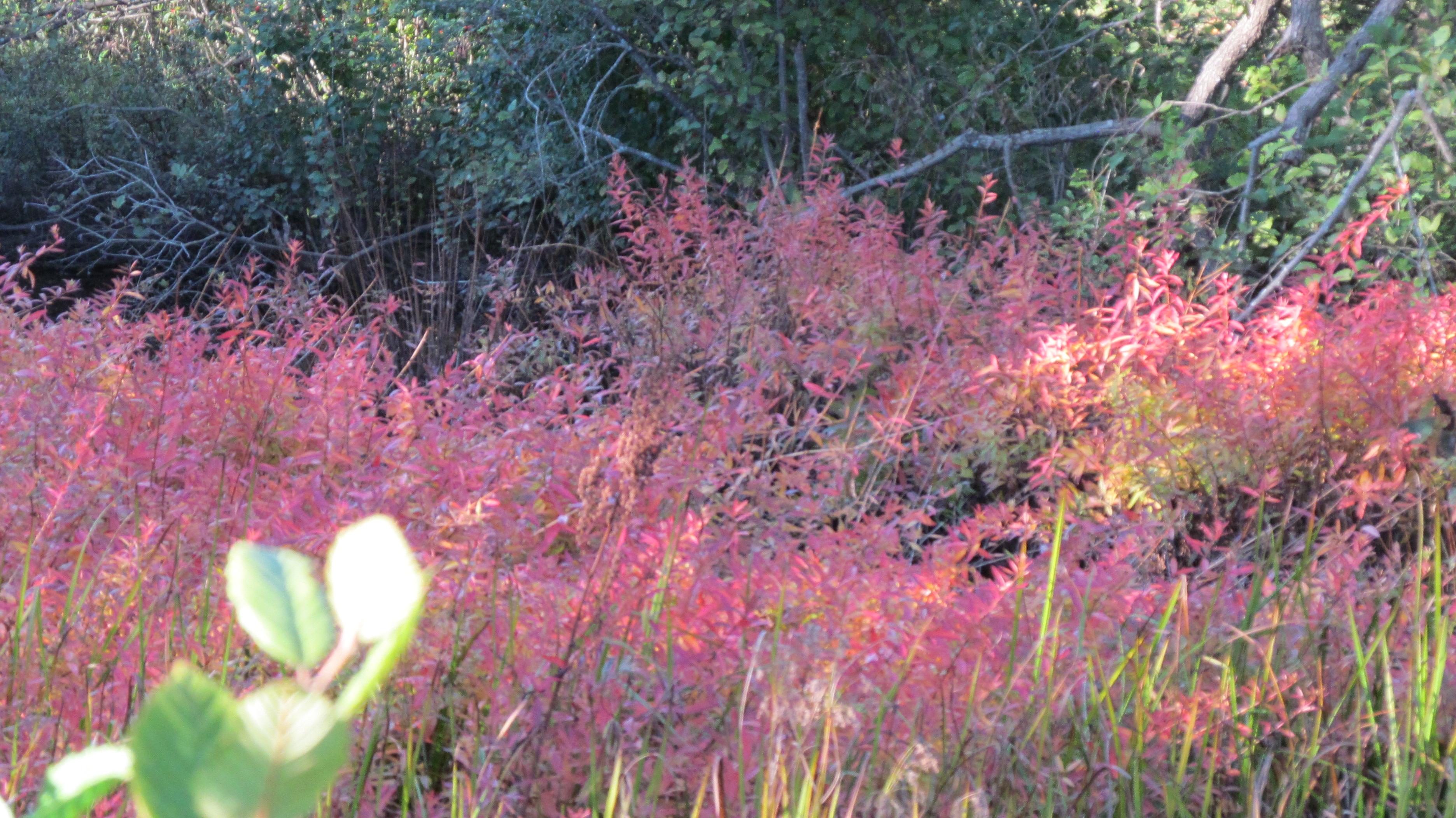
fall colours have begun


This little guy wants to stay forever green

down the road at the lake


Rachelle went to the hardware alone and came back with these pics on the camera


the creek at the lake in a different light


Enjoy the day
Cheers

Gut Bacteria Form Communities To Outsmart Medications, New Study Finds

BY EUROPEAN MOLECULAR BIOLOGY LAB., SEPT. 30, 2024


EMBL researchers found that bacteria in gut microbiomes can protect each other from drugs, but this protection fails at higher concentrations. The study could lead to tailored prescriptions to reduce side effects by considering microbial interactions. 

Credit: Isabel Romero Calvo/EMBL
Drug-sensitive bacteria can develop resistance when part of microbial communities, utilizing cross-protection mechanisms.


Many human medications can directly inhibit the growth and disrupt the function of bacteria in our gut microbiome. However, researchers at EMBL Heidelberg have found that this impact is diminished when these bacteria form communities.

In a first-of-its-kind study, researchers from EMBL Heidelberg’s Typas, Bork, Zimmermann, and Savitski groups, and many EMBL alumni, including Kiran Patil (MRC Toxicology Unit Cambridge, UK), Sarela Garcia-Santamarina (ITQB, Portugal), André Mateus (Umeå University, Sweden), as well as Lisa Maier and Ana Rita Brochado (University Tübingen, Germany), compared a large number of drug-microbiome interactions between bacteria grown in isolation and those part of a complex microbial community. Their findings were recently published in the journal Cell.

For their study, the team investigated how 30 different drugs (including those targeting infectious or noninfectious diseases) affect 32 different bacterial species. These 32 species were chosen as representative of the human gut microbiome based on data available across five continents.

They found that when together, certain drug-resistant bacteria display communal behaviors that protect other bacteria that are sensitive to drugs. This ‘cross-protection’ behavior allows such sensitive bacteria to grow normally when in a community in the presence of drugs that would have killed them if they were isolated.

Surprising Resilience of Bacterial Communities

“We were not expecting so much resilience,” said Sarela Garcia-Santamarina, a former postdoc in the Typas group and co-first author of the study, currently a group leader in the Instituto de Tecnologia Química e Biológica (ITQB), Universidade Nova de Lisboa, Portugal. “It was very surprising to see that in up to half of the cases where a bacterial species was affected by the drug when grown alone, it remained unaffected in the community.”

The researchers then dug deeper into the molecular mechanisms that underlie this cross-protection. “The bacteria help each other by taking up or breaking down the drugs,” explained Michael Kuhn, Research Staff Scientist in the Bork Group and a co-first author of the study. “These strategies are called bioaccumulation and biotransformation respectively.”

“These findings show that gut bacteria have a larger potential to transform and accumulate medicinal drugs than previously thought,” said Michael Zimmermann, Group Leader at EMBL Heidelberg and one of the study collaborators.

However, there is also a limit to this community strength. The researchers saw that high drug concentrations cause microbiome communities to collapse and the cross-protection strategies to be replaced by ‘cross-sensitization’. In cross-sensitization, bacteria that would normally be resistant to certain drugs become sensitive to them when in a community – the opposite of what the authors saw happening at lower drug concentrations.

Shifting Dynamics at High Drug Concentrations

“This means that the community composition stays robust at low drug concentrations, as individual community members can protect sensitive species,” said Nassos Typas, an EMBL group leader and senior author of the study. “But, when the drug concentration increases, the situation reverses. Not only do more species become sensitive to the drug and the capacity for cross-protection drops, but also negative interactions emerge, which sensitize further community members. We are interested in understanding the nature of these cross-sensitization mechanisms in the future.”

Just like the bacteria they studied, the researchers also took a community strategy for this study, combining their scientific strengths. The Typas Group are experts in high-throughput experimental microbiome and microbiology approaches, while the Bork Group contributed with their expertise in bioinformatics, the Zimmermann Group did metabolomics studies, and the Savitski Group did the proteomics experiments. Among external collaborators, EMBL alumnus Kiran Patil’s group at Medical Research Council Toxicology Unit, University of Cambridge, United Kingdom, provided expertise in gut bacterial interactions and microbial ecology.

As a forward-looking experiment, the researchers also used this new knowledge of cross-protection interactions to assemble synthetic communities that could keep their composition intact upon drug treatment.

“This study is a stepping stone towards understanding how medications affect our gut microbiome. In the future, we might be able to use this knowledge to tailor prescriptions to reduce drug side effects,” said Peer Bork, Group Leader and Director at EMBL Heidelberg. “Towards this goal, we are also studying how interspecies interactions are shaped by nutrients so that we can create even better models for understanding the interactions between bacteria, drugs, and the human host,” added Patil.


Recommend this post and follow
The Life of Earth

Overlooked Weather Phenomenon Produces Gamma Rays in Our Atmosphere

30 Sept. 2024, By M. STARR

(crazybboy/iStock/Getty Images Plus)

The electrical effects of a thunderstorm are not confined just to high up in the atmosphere. Close to the ground, Earth's atmosphere hums with intense electric fields that accelerate particles, flinging electrons in ways that force atoms to glow with gamma rays.

From atop a mountain in Armenia, scientists have taken a close look at this mysterious meteorological phenomenon.

At the Alikhanyan National Science Laboratory's cosmic ray facility on Mount Aragats, physicist Ashot Chilingarian and his colleagues have been working to understand Thunderstorm Ground Enhancements, or TGEs.

This electromagnetic enhancement, Chilingarian says, has been overlooked in thunderstorm research – but it could be a piece of the puzzle in our understanding of the physical Universe, from thunderstorms here on Earth, to the cosmic rays that travel vast distances across space.

"Each day, 40,000 thunderstorms occur. Numerous networks detecting atmospheric discharges and satellites with precise optical instruments are monitoring lightning flashes. Still, when we started TGE research, nobody monitored the huge flux of mega-electronvolt (MeV) electrons bombarding our planet and space above it," he told ScienceAlert.

"We established the SEVAN particle detector network ten years ago to monitor TGEs in Eastern Europe, Germany, and Armenia. Electron accelerators with energies of tens of MeV cover vast volumes in the atmosphere and many square kilometers on the Earth's surface.

"This huge flux is accompanied by life on Earth through its billion years of evolution and surely influences all aspects of the geospace and biosphere."

TGEs consist of electric fields in the atmosphere, generated by thunderstorms. Within these electric fields, electrons are accelerated to high speeds – speeds approaching that of light in a vacuum, or relativistic speeds.

These are known as relativistic runaway electron avalanches, propelled by the electric field both towards the ground and upward into the atmosphere. It's these electrons that produce the radiation.

When they decelerate suddenly, deflected by a collision with an atomic nucleus in the atmosphere, the loss of energy manifests as gamma rays – a form of radiation known as bremsstrahlung radiation.

Using their network of detectors, Chilingarian and his colleagues collected data on thunderstorms across Europe in 2023, performing detailed measurements of the electrons and the gamma radiation that occurred during the 56 intense TGEs they recorded.

The most intense TGEs mostly took place from May to July, and the most powerful was recorded on Mount Lomnický štít in Slovakia in May. For this one event, the particle flux was 100 times the normal, fair-weather level. In total, there were seven events that exceeded the fair weather flux by more than 75 percent.

"We measure the stable electron flux on Earth's surface, covering a hundred thousand square meters. Some mechanism provides this stability for a minute or more," Chilingarian explained.

"A huge electron beam emerges in the thundercloud, where the charge structure changes on the second-time scale. Atmospheric discharges kill the potential difference, but the flux is stable. It was exciting to measure!"

Surprisingly, the researchers also found that the electric field is much closer to the ground than they expected to find. They measured a strong electric field strength down to 50 meters (164 feet) above ground.

"This discovery was astonishing to meteorologists, who didn't believe it until we presented exhaustive proof," Chilingarian noted.

The consistency of the acceleration, able to maintain particle flux for up to several minutes, as well as the low height of the electric field, reveals new details about the structure of atmospheric electric fields, and thunderstorms, that we didn't know before.

For example, TGEs might provide a pathway whereby lightning strikes can reach the ground. And their role in geophysics needs to be investigated. The researchers have made an open-access TGE database available for the scientific community to explore and analyze.

Their thunderstorm research is only part of the work performed on Aragats. This year, the Sun has reached a frenzy as it approaches solar maximum, the peak of its activity cycle, sending particles spewing into space powered by coronal mass ejections.

Chilingarian and his colleagues have also detected solar events with the mountaintop equipment, publishing three papers with a fourth on the way.

"Violent explosions in our galaxy also send ultra-high energy particles to the solar system. Recently, Pevatrons, sources of 1015 eV gamma rays, were discovered. We critically analyzed this discovery based on our knowledge of atmospheric physics," Chilingarian told ScienceAlert.

"The synergy of atmospheric, space, and solar accelerators is important for understanding nature!"


Recommend this post and follow
The Life of Earth

Sunday, 29 September 2024

Unprecedented Category 5 Atmospheric River Drenches British Columbia and Alaska

By L. Doermann, NASA Earth Observatory, Sept. 28, 2024

Satellite image of a potent atmospheric river captured on September 22, 2024, 
by the Visible Infrared Imaging Radiometer Suite on the Suomi NPP satellite.

An intense atmospheric river traversed the Gulf of Alaska, heavily impacting coastal regions of British Columbia and southeastern Alaska with prolonged rainfalls.

Captured via satellite, this remarkable storm system displayed a significant water vapor stream stretching from Southeast Asia to North America. This Category 5 atmospheric river, classified by a newly established scale, resulted in considerable precipitation and high integrated water vapor transport levels, signaling its unusual strength.

Powerful Atmospheric River Hits North America

An intense atmospheric river swept through the Gulf of Alaska in September 2024, bringing abundant rain to coastal British Columbia, Canada, and southeastern Alaska. Because of its duration and the concentration of moisture moving across the ocean, experts suspect this atmospheric river was among the most intense to transit the northeast Pacific in a satellite-based record going back to 2000.
Satellite Imagery Captures Massive Storm

The potent storm is visible in this image, acquired by the VIIRS (Visible Infrared Imaging Radiometer Suite) on the Suomi NPP satellite on September 22. In this image, an elongated stream of water vapor—the hallmark of atmospheric rivers—had reached the west coast of North America after crossing the Pacific from Southeast Asia. When atmospheric rivers encounter land, they often release that water vapor in the form of rain or snow.
Impact and Intensity of the Storm

Areas along the coast of British Columbia and southeast Alaska saw days-long stretches of significant precipitation. In the town of Bella Bella, British Columbia, between 50 and 100 millimeters (2 and 4 inches) of rain fell each day from September 21 to 24. Rainfall totals in Yakutat, Alaska, topped 25 millimeters (1 inch) on September 23 and 24.

The ribbon of clouds delivering precipitation to the region was still visible on September 24, when NASA’s EPIC (Earth Polychromatic Imaging Camera) imager on the DSCOVR (Deep Space Climate Observatory) satellite captured an image (below) from about 1 million miles above Earth.

Satellite image of a powerful atmospheric river captured on September 24, 2024, 
by NASA’s EPIC imager on the DSCOVR satellite.

Scientific Insights and Future Forecasts

In 2019, scientists established a scale to classify atmospheric rivers based on their maximum intensity and duration. Similar to the Saffir-Simpson wind scale for hurricanes and the Enhanced Fujita scale for tornadoes, it is meant to help communicate potential storm effects to the public and distinguish between hazardous and more-beneficial events. (Atmospheric rivers bring replenishing rains and contribute to winter snowpack, particularly in the western United States.)

The storm shown here made landfall as a Category 5 atmospheric river—the highest tier on the scale—near Bella Bella and at progressively lower intensities to the north and south. Prior to making landfall, the system’s overall intensity was much higher.

Preliminary estimates indicate that this was an uncommonly strong event, said scientists affiliated with the Center for Western Weather and Water Extremes at the University of California, San Diego. An initial calculation of integrated water vapor transport (IVT)—a measure combining wind speed and moisture levels in the atmosphere—found anomalously high values in this system compared with other atmospheric rivers in the north Pacific in the past 23 years.

“The extremity of the Gulf of Alaska atmospheric river IVT is remarkable,” said Bin Guan, an atmospheric scientist at NASA’s Jet Propulsion Laboratory and the University of California, Los Angeles. The days leading up to the event saw the development of a strong Arctic Oscillation in its negative phase, he said. Such low values are extremely rare for September but can be conducive to atmospheric rivers in this region. “This could be one of the conditions that potentially contributed to this exceptionally strong atmospheric river event,” Guan said.

This storm system was expected to bend south late on September 24, according to news reports. However, more unsettled weather was forecast along the coast in the ensuing days, bringing less rain but high winds.


Recommend this post and follow
The Life of Earth

Greenland’s Largest Glacier Faces Melting Mystery As Warm Waters Cool Unexpectedly

By A. Wegener Institute, Helmholtz Centre for Polar and Marine Research, September 27, 2024


The 79° N Glacier in Greenland experienced cooler water flow between 2018 and 2021, slowing its melting. This cooling resulted from atmospheric blocking patterns that altered ocean currents, even as overall ocean temperatures rose. Researchers will return in 2025 to observe if rising water temperatures will again increase glacier melting, offering insights into climate-driven glacier behavior and sea-level rise predictions.

Atmospheric processes are chilling the Atlantic seawater that enters the ice cavern beneath the 79° N Glacier in Northeast Greenland.

Northeast Greenland is home to the 79° N Glacier, the country’s largest floating glacier tongue, which is under serious threat from global warming as warm Atlantic waters erode it from below. However, experts from the Alfred Wegener Institute have recently found that the temperature of the water flowing into the glacier’s cavern decreased between 2018 and 2021, despite the ocean warming steadily in the region over recent decades. This may be linked to temporary shifts in atmospheric circulation patterns.

In a study just released in the journal Science, the researchers discuss how this affects the ocean and what it could mean for the future of Greenland’s glaciers.

Over the past few decades, the Greenland Ice Sheet has lost more and more mass, which has also lessened its stability. This is chiefly due to the warming of the atmosphere and oceans, which accelerates the melting of ice, contributing in turn to an increase in mean sea level. The Northeast Greenland Ice Stream alone, which feeds into the massive Nioghalvfjerdsfjorden Glacier – also known as the 79° N Glacier – could produce a meter of sea-level rise if it melted completely. Beneath the glacier tongue lies a cavern that ocean water flows into.

Surprising Discovery: Cooling Waters

Data gathered by the Alfred Wegener Institute, Helmholtz Centre for Polar and Marine Research (AWI) now indicates that the temperature of the water flowing into the cavern declined between 2018 and 2021.

“We were surprised to discover this abrupt cooling, which is a marked contrast to the long-term regional ocean warming we’ve observed in the influx to the glacier,” says Dr Rebecca McPherson, a researcher at the AWI and the study’s first author. “Since the ocean water in the glacier cavern grew colder, it means less oceanic warmth was transported under the ice in this period – and in turn, the glacier melted more slowly.”

Visual representation for 79 North Glacier. 
Credit: Alfred Wegener Institute / Rebecca McPherson

But where did this cold water below the glacier come from if temperatures in the surrounding ocean continued to climb? To find out, the AWI researchers collected data from 2016 to 2021, using an oceanographic mooring to do so. The monitoring platform continually took readings on parameters like the temperature and flow speed of the seawater at the calving front of the 79° N Glacier, which is where water flows into the cavern. Whereas the temperature of the Atlantic water initially rose, topping out at 2.1 degrees Celsius in December 2017, it dropped by 0.65 degrees again from early 2018.

We were able to track down the source of this temporary cooling from 2018 to 2021 upstream, to Fram Strait and the vast Norwegian Sea,” Rebecca McPherson explains. “In other words, circulation changes in these remote waters can directly affect the melting of the 79° N Glacier.”

As such, the lower water temperatures in Fram Strait were the result of atmospheric blocking. When this blocking occurs, stationary high-pressure systems in the atmosphere force the normally dominant air currents to deviate. That’s also what happened over Fram Strait: several atmospheric blocks over Europe allowed more cold air from the Arctic to flow through Fram Strait into the Norwegian Sea. This slowed water from the Atlantic that was flowing toward the Arctic, so that it cooled more than usual along the way.

The cooled water then flowed through Fram Strait to Greenland’s continental shelf and the 79° N Glacier. The whole process – from the appearance of the atmospheric blocks to the inflow of the cooler Atlantic water in the glacier cavern – took two to three years.

Impact of Atmospheric Blocking

“We assume that atmospheric blocks will remain an important factor for multiyear cooling phases in the Norwegian Sea,” says Rebecca McPherson. “They provide the atmospheric and oceanic conditions that influence temperature variability in Atlantic Ocean water, and in turn the glaciers of Northeast Greenland.” Why? Because the northward-flowing water mass not only continues farther into the Arctic, where it affects the extent and thickness of sea ice; in Fram Strait, roughly half of the water veers to the west, where it determines the oceanic melting of Greenland’s glaciers. “In the summer of 2025, we’ll be returning to the 79° N Glacier on board the research icebreaker Polarstern. We already know that water temperatures in Fram Strait are now rising again slightly and we’re anxious to see if the glacier melting increases as a result.”

To more accurately predict the fate of the 79° N Glacier, it’s important to understand what is driving changes within it, as Rebecca McPherson stresses: “Our study offers new insights into the behavior of Northeast Greenland’s glaciers in a changing climate. This will allow forecasts for rising sea levels to be refined.”

As their colleague Prof Torsten Kanzow from the AWI adds: “Generally speaking, we consider the warm-water inflow into the cavern below the 79° N Glacier to be part of the Atlantic Meridional Overturning Circulation (AMOC). Forecasts indicate that this thermal conveyor belt could weaken in the future. One key challenge will be to establish long-term observation systems capable of capturing the effects of macro-scale ocean circulation extending as far as the fjords of Greenland.”


Recommend this post and follow
The Life of Earth

The unexpected role of magnetic microbes in deep-sea mining

SEPT. 26, 2024, by A. Sidder, American Geophysical Union

The growth of polymetallic nodules provides a low-oxygen, organic-rich microenvironment suitable for magnetotactic bacteria. 
Credit: Yan Liu

Polymetallic nodules are potato-sized formations on the ocean floor that are rich in minerals such as nickel, cobalt, and manganese. Their concentration of rare, economically important minerals has made the nodules the focus of controversial deep-sea mining enterprises.

There are several hypotheses as to how the nodules grow, but most agree that they form as metallic components in seawater slowly precipitate onto the seafloor. Several studies suggest that microorganisms play a role in nodule growth as well. The nodules tend to contain biogenic magnetite—the fossil remains of magnetotactic bacteria, which have magnetic organelles that act like tiny compass needles.

In a study published in the Journal of Geophysical Research: Solid Earth, researchers have examined the relationship between bacteria abundance and polymetallic nodule distribution in the Clarion-Clipperton Fracture Zone (CCFZ), an environmental management area south of Hawaii managed by the International Seabed Authority. The CCFZ could be an economically vital region for the burgeoning deep-sea mining exploration industry.

The authors analyzed seafloor sediments collected during a research cruise in 2013. They used a vibrating sample magnetometer to determine magnetic properties, electron microscopes to identify minerals based on electron diffraction, and spectroscopy techniques (which test how materials absorb and emit light and other radiation) to test for rare earth elements.

The results revealed three distinct origins of magnetic minerals in the samples: windborne dust, volcanoes, and bacteria. Windborne sediments were likely transported into the region by midlatitude westerlies and northeasterly trade winds, as indicated by decreasing magnetite concentrations from north to south and from east to west in the CCFZ. Volcanic magnetite resulted from the Antarctic Bottom Water's erosion of the Line Islands and Hawaiian chain.

The highest abundance of biogenic magnetite, the type associated with bacteria, coincided with the highest densities of polymetallic nodules in the CCFZ. The findings led the authors to hypothesize that the nodules produce carbon-rich, low-oxygen microenvironments that both support bacteria and encourage the biomineralization of magnetite nanocrystals. In turn, the bacteria help to foster the growth of the nodules.

The results offer new insights into the formation of polymetallic nodules and the ecological distribution of magnetotactic bacteria, with implications for potential deep-sea exploration.


Recommend this post and follow
The Life of Earth

Saturday, 28 September 2024

Health concerns around fluoride in water merit EPA action, judge rules

SEPT. 26, 2024, by R. Foster


The Environmental Protection Agency must address concerns about potential health risks posed by the recommended levels of fluoride in the country's drinking water, a federal court in California has ruled.


While District Court Judge Edward Chen was careful to note his decision "does not conclude with certainty that fluoridated water is injurious to public health," he added that evidence of its potential risk was now enough that the EPA has to do something.

"In all, there is substantial and scientifically credible evidence establishing that fluoride poses a risk to human health; it is associated with a reduction in the IQ of children and is hazardous at dosages that are far too close to fluoride levels in the drinking water of the United States," Chen wrote in his ruling, which was issued Tuesday.

The decision fuels the growing debate about whether the benefits of adding fluoride to the water supply outweigh its potential harms.

For nearly a decade, anti-fluoride groups have been fighting in the courts over fluoridated drinking water. The nonprofit Food & Water Watch is the petitioner in the California case.

Chen's ruling cited a recent review by the National Institutes of Health's toxicology program that concluded "higher levels" of fluoride are linked to lowered IQ in children.

But last month, the American Academy of Pediatrics challenged the validity of the NIH review, saying other reports have come to different conclusions about fluoride's risks and benefits.

Meanwhile, the U.S. Centers for Disease Control and Prevention continues to endorse the addition of fluoride to drinking water as one of the greatest public health achievements in recent history.

While the NIH report did say that more research was needed to assess the potential dangers of the lower levels of fluoride typically found in U.S. drinking water, Chen ruled "there is not enough of a margin" of safety at those levels.

He pointed to studies of pregnant moms that found their fluoride exposure could be even higher. EPA experts had told the court those higher levels could be due to exposure to fluoride in food, toothpaste and other dental products.

"Not only is there an insufficient margin between the hazard level and these exposure levels, for many, the exposure levels exceed the hazard level," Chen noted in his ruling.

Chen left it up to the EPA to decide exactly what action to take—that could be anything from warning labels about fluoride's risks at current levels to tightening restrictions on its addition to drinking water.

"One thing the EPA cannot do, however, in the face of this Court's finding, is to ignore that risk," Chen wrote.

"From our vantage point, the obvious way of eliminating the risk from adding fluoride chemicals to drinking water is to stop adding them," Michael Connett, the lead attorney for the groups who brought the lawsuit, told CBS News.

The judge's ruling stems from a lawsuit first brought by the anti-fluoride groups under a 2016 chemical safety law that allowed them to challenge the EPA in court after the agency denied their petition.

"Clearly, the length of time the judge took to decide this case shows that the court did not rush to make this decision. It took its time, it allowed extensive testimony and evidence. So it was certainly not a rush job, just the opposite of it," Connett said.


Recommend this post and follow
The birth of modern Man

CHINA Revealed NEW $3.9 Billion NUCLEAR Thorium Reactor… What's Next?

27 Sept 2024
#ThoriumReactor #CleanEnergy #NuclearRevolution

by BlowMe AI

China has just made a monumental leap in the world of clean energy by launching the first thorium-powered molten salt nuclear reactor.

This groundbreaking innovation uses thorium, a safer and more abundant alternative to uranium, and could drastically reduce nuclear waste. Unlike traditional reactors, this thorium reactor operates without the need for water cooling, making it a perfect fit for arid regions like the Gobi Desert.

Could this revolutionary design lead to a cleaner, safer nuclear future? Watch to find out how this new technology could change the global energy landscape.

https://www.youtube.com/watch?v=MgTjorwI5uY


Recommend this post and follow
The birth of modern Man


Vikings Sailed to The Ends of Earth to Search For Ivory, DNA Suggests

28 Sept. 2024, By C. CASSELLA

(Emily Ruiz-Puerta/Canadian Museum of Nature in Ottawa)

The Vikings seem to have gone to the ends of the Earth in their search for precious ivory – quite literally.

The Norse were trading walrus tusks in medieval Europe that have now been traced to the very top of Greenland – well beyond the reach traditionally associated with this seafaring civilization.

A genetic analysis of 31 ivory artifacts, kept at museums across Europe, provides preliminary evidence that the Greenland Norse were searching for walrus tusks in the high Arctic at roughly the same time as the Thule Inuit of North America, and possibly their predecessors, the Tuniit (or Dorset).

Close to half of all the ivory artifacts analyzed were traced back to a population of walruses living between what is now northwest Greenland and Arctic Canada. The main Norse settlements in Greenland were in the southwest.

"We had no idea they were harvesting ivory from such a vast catchment area," said archaeologist Peter Jordan from Lund University in Sweden in a media release.

"Our emerging results generated more questions than answers, and we struggled to understand precisely how these Norse ivory harvesting operations could have been organized by the small and remote Greenland communities."

Early circumpolar globalization: schematic reconstruction of the Arctic Ivory Road. 
(Puerta et al., Science Advances, 2024)

Archaeologist Greer Jarrett from Lund University explains that before making such a voyage, the Greenland Norse would have had to wait for sea ice to retreat, and they would have had a tight window of just 10 weeks in which to do their exploring before the seas froze again.

It would have taken about a month to sail to the top of Greenland, but once there, the crew would have had non-stop daylight under which to hunt or trade.

"Our study does not prove a direct contact between the Norse and Indigenous North Americans, but it shows that they overlapped in space and time in the North Water region in search for the same natural resource: walrus," ecologist Morten Tange Olsen from the University of Copenhagen told ScienceAlert.

"It is, thus, highly likely that they also met, interacted, and perhaps traded walrus products."


Walrus ivory from Greenland carved to look like a walrus. 
(Åge Hojem/NTNU University Museum)


A larger and more diverse sampling of walrus ivory artifacts will be needed to support that hypothesis, as well as further archaeological research in the high Arctic.

If true, this would be a crucial moment in the history of our species: the first circumnavigation of the planet – coming full circle from our origins out of Africa, into Asia, and across the Bering Strait.

"The extent of their ventures into the High Arctic suggests that the Norse were not just farmers and settlers but also strategic traders deeply involved in long-distance resource extraction," molecular ecologist Emily Ruiz-Puerta from the University of Copenhagen in Denmark told ScienceAlert.

"Moreover, this activity may have brought them into contact with Arctic Indigenous cultures, such as the Thule people, potentially leading to exchanges that have never been considered before."

There's a chance the Thule Inuit or Tuniit may have even hunted the walruses to which these ivory artifacts once belonged.

Unlike Greenland Norse, who sailed in plank-built vessels, and who probably harvested walruses with iron-tipped lances once they'd hauled themselves out of the water, the Thule Inuit used sophisticated harpoons to expertly hunt swimming walruses from open boats, waterproofed with animal skins.

It is unlikely, the researchers say, that the Tuniit or Thule Inuit were harvesting ivory and then voyaging south to trade with the Norse. The Vikings didn't have much of value to offer the Indigenous peoples of the north to warrant such a big trip.

The Norse, by contrast, had every reason to push northward. In medieval Europe, ivory was a prized possession for the creation of high-status objects, especially for religious reasons.

In Iceland, the disappearance of walruses coincided with Viking colonization, and there are hints of a similar decline occurring when the Norse made it to Greenland in 950 CE. Perhaps resource exploitation is why the Norse ultimately abandoned Greenland in the 1400s, but not before they'd also collected walruses from the very north of the island.

Chessmen from Medieval times made from walrus ivory and the teeth of whales. 
(Andrew Dunn/Wikimedia Commons/CC BY-SA 2.0)

If a surging demand for ivory in Europe is what ultimately drove the Norse and the Thule Inuit into each other's orbits, then researchers argue these are some of the earliest steps towards globalization of supply chains.

"It has echoes of global capitalism sucking up remote resources with devastating consequences," the authors of the study explain.

But the Indigenous perspective should not be overlooked, they argue.

"Thus far, it is all a very 'Eurocentric' story about Norse expansion and colonization… " explains Jarrett.

"The reality is more nuanced and interesting. It all needs a big rethink and a lot of new research."


Recommend this post and follow
The birth of modern Man

Friday, 27 September 2024

Nature is adapting to climate change—why aren't we?

SEPT. 26, 2024, by J. Marley, The Conversation

Credit: Pixabay/CC0 Public Domain

Humanity may be no better prepared for the impacts of climate change today than in the 1970s.

So says a new study led by Stanford University researchers that compared how sensitive societies are to extreme weather now versus 50 years ago. This research has yet to be peer-reviewed, and its conclusions run counter to what many climate policy experts have long assumed. If they are accurate, it means that additional wealth, technology and climate-savvy have not meaningfully enhanced our protection as the weather has become more hostile.

Earth's atmosphere has warmed and contains more moisture as a result of fossil fuel burning. Europeans reeling from Storm Boris can testify to the failure of even wealthy countries to adapt to this reality says Chris Medland, a Ph.D. candidate in climate change resilience at the University of Surrey.

Eventually, everyone will feel this deficit.

"Your home may not be in the path of the next storm but the infrastructure it relies on might be," Medland says.

Flood defenses, power lines, rail networks—all of these things and more need to be built or upgraded to withstand mounting storms. Yet in the recently flooded UK, the companies that run utilities are not expressly obliged to ensure their networks remain resilient to climate change, Medland says. Nor is it clear who is ultimately responsible for keeping the lights on as the crisis intensifies.

Invaders must die?

If the accounts of biologists are anything to go by, the natural world is adapting to the effects of climate change far more radically than any human institution.

"Faced with the degradation of their habitat, the species that will survive will be those that are able to adapt," says Suzanne Bonamour, a postdoctoral researcher in ecology at the Norwegian University of Science and Technology.

Bonamour studies an endangered seabird, the crested cormorant, and its struggles to feed itself and its brood amid stormier seas. These birds can migrate to escape a winter squall, but only some do.

Bonamour wonders whether adult birds might transmit this behavior to their chicks, but she says that there is little that species can do to compensate for the catastrophe humans are engineering.

When plants and animals seeking cooler climes settle on new shores, they usually get a hostile reception. Attempting to root out these migrants is generally a mistake according to Heather Kharouba, an ecologist at the University of Ottawa.

"Stated plainly, the vast majority of intentionally or unintentionally introduced species are not a threat to native ecosystems," she says.

Some arrivals do cause problems. In North America, "invasive species" include the emerald ash borer, an insect from north-eastern Asia that damages ash trees. But most control measures are laborious and expensive failures, Kharouba says. Some are even harmful, like using herbicides that afflict the native and non-native alike.

Kharouba cites numerous examples of introduced species enriching their new homes. More generally, there is a trade-off: forests in the eastern US that are turning gold with autumn's onset now harbor fewer species, but they store more carbon.

"All this means that introduced plants could be well placed to support, or even buffer, current ecosystems as they undergo transitions due to climate change," Kharouba says.

Nature offers stark evidence that the world is changing rapidly. What if we embraced it?
"Not just a challenge'

Climate activists have typically shied away from discussing "climate adaptation" for fear of sounding defeatist, says Joost de Moor, an assistant professor of political science at Sciences Po. There is cause to remain laser-focused on cutting emissions, he adds, but no excuse to neglect the question entirely.

If change is inevitable, what sort of world do we want to emerge from the climate crisis? In March 2023, protesters in western France seized the initiative when they opposed the construction of a 628,000 sq meter reservoir in the rural Sainte-Soline commune, de Moor says.

France had suffered a historic drought, and so a huge artificial water reserve might have seemed prudent. Not if it involved draining a common resource, the water table, to serve a few farmers whose methods of agriculture already placed an untenable strain on struggling ecosystems, protesters argued.

The campaign sparked a vital debate about whose needs ought to be prioritized in a future with greater hardship says Lucien Thabourey, a sociologist of environmental activism at Sciences Po. Fortunately, there is also a conversation to be had about the ways in which everyone might live better.

"Some of the actions taken by humans to minimize the risk of catastrophic floods can actually make life more pleasant anyway, even when it isn't raining," says Maryam Imani, an associate professor of water systems engineering at Anglia Ruskin University.

"For this reason, we should see rains like this not just as a challenge, but as an opportunity."


Recommend this post and follow
The birth of modern Man

How to save a sinking city

SEPT. 26, 2024, by Wageningen U.

Credit: Unsplash/CC0 Public Domain

What do Venice, Jakarta, Manilla and Bangkok have in common? They are or were sinking cities. Wageningen researcher Philip Minderhoud studies the causes of subsidence in these cities. Groundwater extraction plays an important part in all cases. The good news is that this can be avoided.

The best-known example of a sinking city is Jakarta. Large sections of the Indonesian city have dropped by three to four meters since the '80s, and continue to do so by up to ten centimeters annually. Some 40% of the city is below sea level, prompting the Indonesian government to move the capital to Kalimantan.

Sinking cities are mainly the result of groundwater extraction, says Minderhoud. Tragically, in the case of Jakarta, this cause has been ignored for many years.

"A professor of tectonics in Jakarta claimed that subterranean tectonic shifts were causing the subsidence. This may, indeed, cause subsidence, but the effect of groundwater extraction was not sufficiently considered," Minderhoud notes.

The fact that water extraction delivers clean drinking water and drives economic development, and as such, benefits many may have contributed, says Minderhoud. "Although it is technically simple to stop extracting groundwater, doing so is a socioeconomic challenge."
Succumbed to the sea

Minderhoud has studied subsidence in the Mekong Delta in Vietnam for a decade.

"There, subsidence has been accelerating in recent years by some 7 cm per year. This acceleration can be attributed to groundwater extraction, which benefits cities and agriculture," he explains.

The same pattern is seen in deltas in India. He also contributes to studies in the coastal areas surrounding Manila in the Philippines, and adds, "There, the soil drops by 10 to 12 centimeters per year. Part of the coastal region is already submerged. Several villages have already succumbed to the sea and have been abandoned."

Minderhoud explains that the local population is often unaware of the subsidence: "They see rising water levels and experience more floods during spring tides and typhoons. They assume sea levels are rising, but that is not the main cause. The key lies in subsidence in these cases."

Strict policy

According to Minderhoud, this can be perceived as good news. Global sea water levels rising due to climate change are something that local governments can hardly influence. However, subsidence resulting from human interventions can be reduced or even stopped. There are some striking examples. The Japanese capital, Tokyo, dropped four meters in the last century due to subsidence. The subsidence was halted when the local authorities implemented a strict water policy, constructing water reservoirs around the city and all but ceasing water extraction.

Similar measures taken in Bangkok (Thailand) halted subsidence.

"Bangkok was sinking by some ten cm per year when the director of the water management institute took a bold decision," Minderhoud explains. "Despite protests, he decided to shut down many pumps and levy hefty taxes on the extraction of groundwater. Strict enforcement was also introduced. The city invested in alternative water sources. All of these measures have stabilized the situation in Bangkok. A true story of success."

Venice also managed to get a grip on subsidence. The world heritage site in the Italian lagoon was sinking due to a combination of compaction of sediments and water extraction beneath the city. The city's administration stopped extracting groundwater and now acquires its drinking water from the Italian mainland. As a result, Venice now sinks by only one millimeter per year.

The Netherlands, an exception

The Dutch delta is also sinking. However, groundwater extraction plays no part in this fact. In the Dutch peat fields region, subsidence is caused by drainage and pumping of the polders, which causes the water levels in the peat field areas to be artificially lowered. Hence, surface water levels and the management thereof play a crucial role in subsidence in the Netherlands, making this country an exception to the rule that subsidence is chiefly the result of groundwater extraction, Minderhoud says, noting, "Therefore, investigating the causes on the spot is of the essence, as is exchanging knowledge."

This approach is taken more and more often. Vietnam is to organize the first UN conference on river deltas next year, at which Minderhoud will deliver a presentation on sinking cities and deltas.

According to the scientist, research is needed to identify and prevent subsidence in coastal areas sooner. He is currently involved in a research project in West Africa.

"There, the urban population increase in coastal cities is enormous. As a result, more groundwater is extracted, and the first signs of subsidence in metropolises such as Lagos are showing. Mapping the causes and solutions may enable us to nip it in the bud," he states.

Climate panel

Minderhoud will also make the IPCC climate panel aware of his research. To date, the climate panel only reports on rising sea levels. Still, Minderhoud feels that soil subsidence in coastal areas should be included to achieve a comprehensive view of the issues for the benefit of governments: "We should make projections of subsidence similar to the IPCC projections of sea level increase to provide a clear view of the challenges we face. Additionally, we may draft options for action to prevent subsidence in and around urban areas in lower coastal regions."

This is far from easy, as Minderhoud's experience in Vietnam has shown. The country drafted the Mekong Delta Plan with WUR's help a decade ago. In it, nature-based solutions replaced the traditional solution of building dikes. The nature-based approach allows more flooding in the delta so that the sediment deposits can cushion the effects of the rising sea levels. But this alone will not suffice, says Minderhoud.

"There is not enough sediment available to elevate the delta, partly due to the many dams in the Mekong. The soil subsidence in the region is more extensive and faster."

The delta plan has since been detailed to indicate that economic development may not contribute to soil subsidence.

"But combating subsidence is a point of attention in the plan and not a point of departure," the researcher says. That is fighting a running battle. In his view, the Mekong Delta, like Bangkok, requires an effective implementation of new policies restricting water extraction.

"An unpleasant message in a coastal region facing salination and drying out. But the alternative invites much graver issues in the long run."


Recommend this post and follow
The Life of Earth