Sunday, 31 January 2021

Archaeology News: Amateur treasure hunter finds $2.5M gold headpiece from Henry VIII’s lost crown


Amateur treasure hunter finds $2.5M gold headpiece from Henry VIII’s lost crown


By Paula Froelich,  New York Post, January 30, 2021

An amateur treasure hunter struck gold – literally.

Kevin Duckett was hunting for treasure with his metal detector in a field near Market Harborough, Northamptonshire, England, when he unearthed a solid gold figurine that experts believe is part of a long-lost figurine from the crown of Henry VIII.

“At first I wondered if it was a crumpled foil dish from a 1970s Mr Kipling product, or even a gold milk bottle top,” Duckett told the Sun.

“I got a very loud positive signal from my detector and started to dig down before spotting something… It was lodged in the side of a hole just a few inches down.”

Duckett had found a 2.5 inch, solid gold and enamel figure that has been lost for over 400 years.

In 1649, Oliver Cromwell abolished the monarchy, beheaded King Charles I and ordered the crown, once worn by Henry VIII, to be melted down, minted and sold as coins — orders that weren’t followed.

According to the Sun, the crown’s 344 precious stones were sold separately while other parts of the crown were passed on intact never to be seen again.

The crown was worn by Henry VI II at his coronation and during his wedding to Anne of Cleves in 1540. The headpiece was later used at the coronations of his children, Edward, Mary and Elizabeth, and then of James I and Charles I.

Historians think the figurine could have detached as Charles escaped, or he buried it to keep it from Cromwell.

Upon finding the piece Duckett claims he knew what he had.  

“I’d seen the replica on YouTube and the tiny figures on the fleurs-de-lys but I couldn’t be sure,” Duckett told the paper.

“I headed to the palace to find out. … I’ll never forget the sheer excitement as I got closer to the Grand Hall where the replica sat in all its glory. I entered the room and my figurine’s identical twin was staring right at me.”

Lucy Worsley, chief curator at Historic Royal Palaces, told the Sun: “It’s great news that after centuries of subterranean slumber this little golden figure has been revealed once more. It is tantalizing to imagine its true history.”

The piece is now being held at the British Museum.

๐Ÿ˜‡๐Ÿ˜‡๐Ÿ˜‡๐Ÿ˜‡๐Ÿ˜‡๐Ÿ˜‡๐Ÿ˜‡๐Ÿ˜‡๐Ÿ˜‡๐Ÿ˜‡๐Ÿ˜‡๐Ÿ˜‡๐Ÿ˜‡๐Ÿ˜‡๐Ÿ˜‡๐Ÿ˜‡๐Ÿ˜‡๐Ÿ˜‡๐Ÿ˜‡๐Ÿ˜‡๐Ÿ˜‡๐Ÿ˜‡๐Ÿ˜‡๐Ÿ˜‡๐Ÿ˜‡๐Ÿ˜‡

With 6 wives I'm not surprised that  Henry VIII  died young & fat !  
Neander-Troll says :Be sure to recommend and follow Chucks " Life of Earth " Blog at:
https://disqus.com/home/forum/lifeofearth/

Specific bacteria in the gut prompt mother mice to neglect their pups

JANUARY 29, 2021, by Salk Institute
https://phys.org/news/2021-01-specific-bacteria-gut-prompt-mother.html

Escherichia coli (E. coli) bacteria, pictured here, is a common gut bacteria in both humans and animals. There are many different strains, some of which cause disease. Credit: fusebulb/Shutterstock.com


As scientists learn more about the microorganisms that colonize the body—collectively called the microbiota—one area of intense interest is the effect that these microbes can have on the brain. A new study led by Salk Institute scientists has identified a strain of E. coli bacteria that, when living in the guts of female mice, causes them to neglect their offspring.

The findings, published January 29, 2021, in the journal Science Advances, show a direct link between a particular microbe and maternal behavior. Although the research was done in mice, it adds to the growing body of science demonstrating that microbes in the gut are important for brain health and can affect development and behavior.

"To our knowledge, this is the first demonstration that the intestinal microbiota is important for promoting healthy maternal behavior and bonding between mom and offspring in an animal model," says Professor Janelle Ayres, Laboratory Head of Salk's Molecular and Systems Physiology Laboratory and senior author of the paper. "It adds to the ever-growing evidence that there's a gut-brain connection, and that microbes are important for regulating the behavior of the host that they're inhabiting."

The ways in which the microbiota can impact mental health and neurological disorders is a growing area of research. The makeup of the gut microbiota in people has been linked to depression, anxiety, autism and other conditions. But it has been difficult to study how individual strains of bacteria exert their influence on human behavior, a connection often called the microbiota-gut-brain axis.

In her lab, Ayres uses mice to study how body systems and the brain interact with each other to promote health. This includes focusing on how body processes are regulated by microbes and the ways in which microbes affect growth and behavior. In the current experiments, she and her team were investigating groups of mice that each had a single strain of E. coli in their gut. Mice with one particular strain of E. coli, called O16:H48 MG1655, mothered offspring that had stunted growth. Further examination revealed that the mice were smaller because they were malnourished.

"We found that the pups' behavior was normal, and the milk made by the mothers was of normal, healthy composition and was being produced in normal amounts," Ayres says. "We eventually figured out that being colonized with this particular bacteria led to poor maternal behavior. The mice were neglecting their pups."

Additional experiments revealed that the mice could be rescued from stunted growth, either by giving them a growth factor called IGF-1 or handing them off to foster mouse mothers that could take care of them properly. This confirmed that the cause of stunted growth was coming from the mothers' behavior rather than something in the pups themselves.

"Our study provides an unprecedented understanding of how the intestinal microbiota can disrupt maternal behavior and how this can negatively impact development of an offspring," says first author Yujung Michelle Lee, a former graduate student in Ayres' lab and now a postdoctoral fellow at Genentech. "It is very interesting to me that establishment of a healthy mother-infant relationship is driven by factors beyond hormones, and that the microorganisms residing in our bodies play a significant role in it."

Ayres and her team plan to study how these microbes provoke changes in mouse behavior. Early findings suggest the bacteria might be affecting levels of serotonin, the hormone associated with feelings of happiness and well-being, but more work is needed.

"It's very hard to study these relationships in humans, because the human microbiota contains hundreds of different species of microorganisms," says Ayres, who holds the Helen McLoraine Developmental Chair. "But once we understand more about the mechanisms in animal models, we may be able translate our findings to humans to determine whether the microbes and their effects might be the same."

The O16:H48 MG1655 strain has been found in human guts and was previously believed to have no positive or negative effects.


Recommend this post and follow The Life of Earth
https://disqus.com/home/forum/lifeofearth/


Stunning eagle sculpture uncovered at sacred Aztec temple in Mexico

By Harry Baker - Staff Writer Dec. 29, 2021
https://www.livescience.com/aztec-eagle-sculpture-uncovered.html

The bas-relief of a golden eagle found near the foot of Templo Mayor.
(Image: © Mirsa Islas)

It is around 600 years old.

A striking 600-year-old Aztec sculpture depicting a golden eagle has been uncovered in an ancient temple in Mexico, archaeologists with Mexico's National Institute of Anthropology and History (INAH) announced Monday (Jan. 25). 

The eagle, which measures 41.7 inches by 27.6 inches (106 by 70 centimeters), is the largest bas-relief sculpture ever found at the temple.

The eagle was carved into the floor of a structure at the foot of Templo Mayor — the iconic pyramid-shaped temple that was built at the heart of the ancient Aztec capital city of Tenochtitlรกn and is now in modern-day Mexico City. 

Artists created the bas-relief — a type of sculpture with raised images carved out of a stone background — in the mid-15th century during the reign of Moctezuma I. 

Archaeologists from INAH discovered the carving in February 2020 as a part of the ninth season of the Templo Mayor Project, an ongoing excavation of the sacred site. 

"It is a very beautiful piece that shows the great secrets that the Templo Mayor of Mexico Tenochtitlรกn has yet to reveal to us," Alejandra Frausto Guerrero, Mexico's secretary of culture, said in a statement. "Thanks to their [the archaeologists'] effort and dedication, we can continue to recover our history and our memory." 

A sacred location

Templo Mayor, also known as the Great Temple, was a massive, pyramid-shaped structure that stood in the center of Tenochtitlรกn and was the heart of Aztec religion and culture. At its summit were two chapels dedicated to Huitzilopochtli — the god of the sun and war and also patron of the city — and the rain god Tlฤloc. The temple was one of 78 structures that made up the sacred precinct of Tenochitlรกn.


"For the Aztecs, the Templo Mayor lay at the heart of the physical, mythical and spiritual universes," Caroline Dodds Pennock, an Aztec historian at the University of Sheffield in England, told Live Science in an email.


Part of the excavation site at Templo Mayor in Mexico City. 
(Image credit: Shutterstock)


The Aztec leader Itzcoatl, who reigned between 1427 and 1440, first built the temple at the start of the 15th century. Subsequent rulers Moctezuma I (who reigned from 1440 to 1469) and Ahuรญtzotl (who reigned from 1486 to 1502) also made significant contributions to the temple, often building over earlier structures. 

The bas-relief eagle is carved into the floor of one of the structures next to Templo Mayor and had been covered by another floor built on top of it during Ahuรญtzotl’s reign.

"That is why it has a good state of conservation," Rodolfo Aguilar Tapia, an archaeologist at INAH who led the investigation, said in the statement. "It is an element that was never seen by the Spanish," he said.

Today, the striking eagle sculpture lies beneath the intersection of two streets in Mexico City. However, when it was built, the structure would have sat at the base of the southern slope of Templo Mayor. It would also have been on the central axis — a line linking the chapel of Huitzilopochtli at the summit of Templo Mayor and a giant statue of his sister, the goddess Coyolxauhqui, down below.

Eagle symbology

The golden eagle (Aquila chrysaetos) — also known as an "itzcuauhtli," or obsidian eagle, in the Nahuatl language spoken by Indigenous people in central Mexico — was an important symbol in Aztec culture. 

A bas-relief of a golden eagle carved into the floor near the famous Aztec site Templo Mayor

A bas-relief of a golden eagle carved into the floor near the famous Aztec site Templo Mayor. (Image credit: Mirsa Islas)

"The eagle was a sacred creature in Aztec thought, believed to have been present at the birth of the sun (hence, the blackened 'singed' wing tips) and was the symbol of one of the elite warrior orders in Aztec culture," Pennock said.

The bird of prey was also frequently linked with Huitzilopochtli, and the positioning of the bas-relief may echo an important myth surrounding the god.

"According to the Aztecs' mythical history, Huitzilopochtli had vanquished his sister Coyolxauhqui and thrown her down a mountain, where she fell into pieces," Pennock said. "This history was repeated through human sacrifice on the Templo Mayor, as the bodies of victims were thrown down the steps."

Sculpting the eagle at the foot of Templo Mayor near the statue of Coyolxauhqui was probably a reference to both this story and the very real human sacrifices carried out there, Pennock said.

The bas-relief resembles an image of a golden eagle in the Codex Borgia, a famous Aztec manuscript dating back to the 16th century. Just as in the Codex Borgia, the newly discovered eagle's feathers look like sacrificial knives, according to the researchers.

"The Templo Mayor Project continues to shed remarkable insights on Aztec culture," Pennock said. "This eagle adds another layer to our understanding of the ways in which the Aztecs saw their mythical history as at the heart of their belief and ritual."

Originally published on Live Science.


Recommend this post and follow The birth of 
modern Man

https://disqus.com/home/forum/lifeofearth/

Nigeria seizes pangolin scales bound for Vietnam

JANUARY 27, 2021
https://phys.org/news/2021-01-nigeria-seizes-pangolin-scales-bound.html

Pangolins are believed to be the world's most-trafficked animal

Nigeria has seized pangolin scales and tusks and bones from endangered species allegedly bound for export to Vietnam, a senior customs official said Wednesday.

Pangolin scales are traditionally used in China for a range of ailments, including treating blood clots, although there is no scientific evidence they have medicinal value.

Studies have also suggested the pangolin may have been the intermediate host that transmitted the coronavirus to humans when it first emerged at a wet market in the Chinese city of Wuhan in late 2019.

The Nigerian items concealed in a container as furniture materials were intercepted by customs operatives at Apapa port in Lagos on January 21, the area controller, Mohammed Abba-Kura told AFP.

"Immediately the container was opened, logs were seen in front, and upon 100 percent physical examination of the container, elephant tusk and the pangolin scales were seen concealed by the logs," he said.

"The items, falsely declared as furniture, comprised 162 sacks of pangolin scales... and 57 sacks of mixed endangered species of various sizes such as ivory/animal horns, lion bones and others," he said.

The total haul weighed 8,800 kilogrammes (19,400 pounds), he said.

Abba-Kura said the items were valued at 952 million naira ($2.5 million, 2.07 million euros) on the black market.

He said the consignment was heading to Haiphong, Vietnam before it was intercepted, adding that a suspect had been arrested over the shipment.

Nigeria is major hub for traffickers sending the scales of African pangolins to Asia.

Pangolins are believed to be the world's most trafficked mammals accounting for as much as 20 percent of all illegal wildlife trade.

Nigeria has made huge seizures of illegal animal parts in recent years in line with the Convention of International Trade in Endangered Species (CITES).


Recommend this post and follow The Life of Earth

https://disqus.com/home/forum/lifeofearth/

Reindeer lichens are having more sex than expected

JANUARY 29, 2021, by Field Museum
https://phys.org/news/2021-01-reindeer-lichens-sex.html

Reindeer lichen. Credit: Marta Alonso-Garcรญa

In northern Canada, the forest floor is carpeted with reindeer lichens. They look like a moss made of tiny gray branches, but they're stranger than that: they're composite organisms, a fungus and algae living together as one. They're a major part of reindeer diets, hence the name, and the forest depends on them to move nutrients through the ecosystem. They also, at least in parts of Quebec, are having a lot more sex than scientists expected. In a new study in the American Journal of Botany, researchers found that the reindeer lichens they examined have unexpected levels of genetic diversity, indicating that the lichens have been doing more gene-mixing with each other than the scientists would have guessed.

"We were surprised because this species of reindeer lichen had always been considered mainly a clonal species that reproduces asexually," says Marta Alonso-Garcรญa, the paper's lead author and a postdoctoral fellow at Quebec's Universitรฉ-Laval. "It doesn't follow the expected pattern."

Reindeer lichens swing both ways: they can reproduce sexually via spores, or they can asexually clone themselves. When fungi reproduce sexually, they send out root-like structures toward a neighboring fungus and exchange genetic information when they touch. They then release spores, single cells containing genetic material, which travel on the wind and disperse. When they land, they start growing and produce a new baby fungus that's genetically distinct from its parents. In asexual clonal reproduction, on the other hand, a piece of the entire lichen (fungus and alga), called the thallus, is pinched off and regrows into a whole organism that's genetically identical to its parent.

The two reproductive methods have different advantages. "Sexual reproduction is very costly," says Felix Grewe, the co-director of the Field Museum's Grainger Bioinformatics Center and a co-author of the study. "You have to find your partner, it's more difficult than reproducing asexually. But many organisms do it because when you have this combining and mixing of genetic traits, it enables you to weed out negative mutations long-term among other benefits."
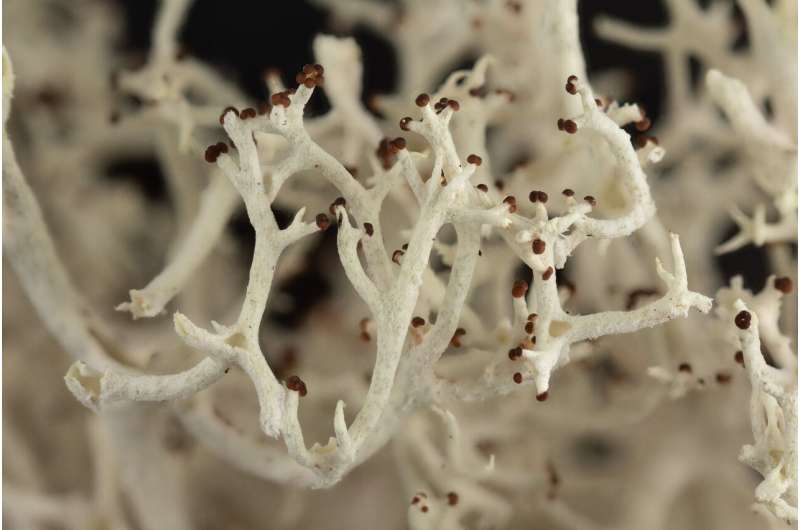
Microscopic view of reproductive organs of reindeer lichens. Credit: Kim Daloise

The researchers were examining reindeer lichens (Cladonia stellaris) to learn about their genetic patterns. "We used DNA sequences to tease apart the genetic relationships between populations of this lichen," says Alonso-Garcรญa. "We tested whether individuals from northern Quebec (Hudson Bay) were genetically different from those from the South (Parc National des Grands-Jardins, two hours from Quรฉbec City). At the same time, due to its important role in the colonization process after a fire, we evaluated lichen genetic diversity along a post-fire succession."

Lichens can reveal a lot about how wildfires affect ecosystems. "Wildfire is the most significant disturbance in the world's northernmost forests, and it plays a major role in determining the distribution and composition of plant communities," says Alonso-Garcรญa. "In Eastern North America, four successional vegetation stages are generally identified after a fire. During the first stage, crustose lichens and mosses colonize the burned surface. Subsequently, the soil is covered by cup and horn lichens. The landscape remains mostly uniform for around 20 years until the arrival of fruticose lichens which replace the previous vegetation. Cladonia stellaris arrives the last one, usually three or four decades after fire." By studying genetic variations in reindeer lichens, the researchers hoped to learn how lichens recolonize an area after a fire.

To study the lichens' DNA, the researchers ground up samples of lichens and extracted their DNA. But lichens present an extra challenge in this process, since they're made up of a fungus and an alga (or a kind of bacteria that performs photosynthesis) living together. "That means that all the DNA is mixed up together, we get one pool that contains fungal DNA and algal DNA," says Grewe. "We have to carefully filter and sort the sequence reads bioinformatically." The main body of a lichen is made up of the fungus, so the researchers wanted to focus on the fungal component's DNA. By comparing the pool of DNA to existing genomes, the researchers were able to pick out the DNA belonging to the fungus, and they could then compare the fungal DNA from reindeer lichens from different areas of Quebec.

What they found was surprising: in general, there was a lot more genetic variation in the lichens than the researchers expected, and that indicates hanky-panky. "It's a general assumption was that these reindeer lichens mainly reproduce asexually because there's little evidence for them producing spores, but now the genetic data shows all this diversity, and that leads to the assumption that might be some form of sex," says Grewe.
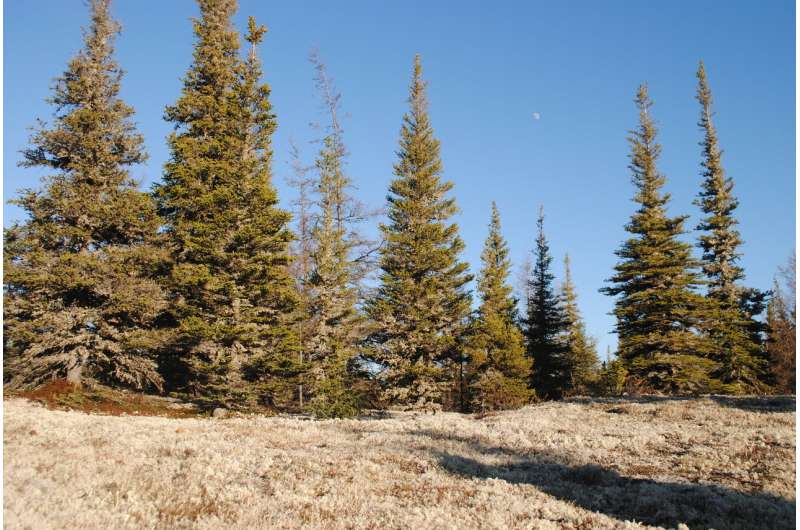
A Canadian forest carpeted with reindeer lichen. Credit: Marta Alonso-Garcรญa

"We were expecting that lichens from North Quebec would be more similar to each other than to those from Parc National des Grands-Jardins. However, our results suggest constant migration of C. stellaris between populations throughout Eastern North America," says Alonso-Garcรญa. "In fact, contrary to the widespread belief, we found many reproductive structures in the species and these structures are formed after sexual reproduction."

But while the lichens are apparently doing more genetic intermingling than expected, the researchers also found that after a forest fire, the new lichens that crop up are genetically similar to the ones that were there before. That was counterintuitive— the thought had been that the little cloned lichen bits would be destroyed in a fire, and that the repopulation of lichens would be growing from spores that arrived on the wind from other areas. "Regarding the genetic diversity of the species after fires, we found no differences along four stages of the succession. This was also astonishing because time since the last fire increases the probability that clonal fragments successfully reached the sites, enhancing genetic diversity," says Alonso-Garcรญa.

In addition to revealing the hidden sex lives of reindeer lichen, the study could have implications for forest conservation. "We have learned that time since the last fire does not necessarily mean more genetic diversity, so conservation strategies in boreal forests should take this into account," says Alonso-Garcรญa. "Prioritizing the protection of an area should not be based exclusively on its age. This is quite important because funding is usually limited, so we cannot carry out conservation activities in the entire forest." In short: if conservation scientists want to protect areas of forest with genetically diverse lichen populations, the forest's age isn't the only indicator of diversity.

Grewe adds the importance of bioinformatics in learning about how organisms are related to each other. "It is astonishing that today we can have such a detailed view of the evolution of populations using bioinformatics," says Grewe. "This is another good example of how advancement in sequencing technology allows us to learn about the evolution of an organism in more detail than ever before."


Recommend this post and follow The Life of Earth

https://disqus.com/home/forum/lifeofearth/

Saturday, 30 January 2021

Archaeology News: Tyrannosaur babies 'born ready' to hunt and kill


Tyrannosaur babies 'born ready' to hunt and kill

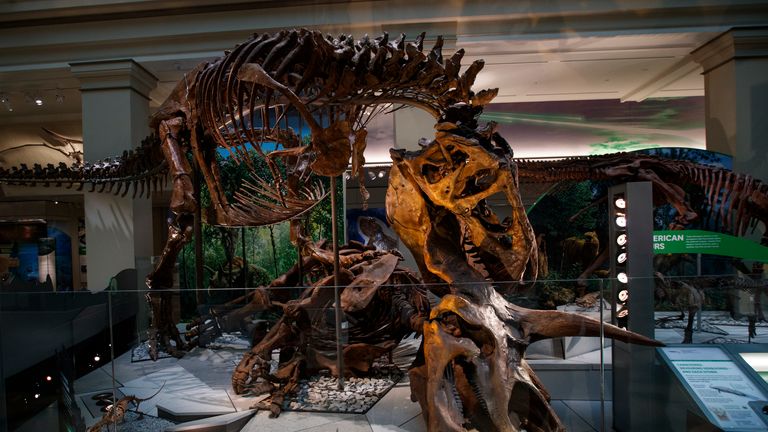
Tyrannosaurs were the apex predators in Asia and North America during the Cretaceous Period.


By Sky News, January 27, 2021

https://news.sky.com/story/tyrannosaur-babies-born-ready-to-hunt-and-kill-12200028


Tyrannosaurs were apex predators during the Cretaceous Period Pic: AP
Image:Tyrannosaurs were apex predators during the Cretaceous Period Pic: AP (file pic)


The babies of a ferocious group of meat-eating dinosaurs, that included T-rex, were huge, fully toothed and clawed and “born ready” to kill, according to analysis of recently uncovered embryonic remains.

The fossils are from two species in the group called tyrannosaurs, the apex predators in Asia and North America during the Cretaceous Period toward the end of the dinosaur age.

The remains consist of a 3cm-long, 77 million-year-old jaw bone found in Montana that may have belonged to a species called Daspletosaurus and a roughly 72-million-year-old claw unearthed in Canada's Alberta province that probably came from an Albertosaurus.

Both were slightly smaller cousins of the largest-known tyrannosaur, the Tyrannosaurus-rex, which was more than 12 metres (40ft) long and weighed around seven tonnes.

T-rex was up to 12 metres long and weighed seven tonnes Pic: AP
Image:T-rex was up to 12 metres long and weighed seven tonnes Pic: AP

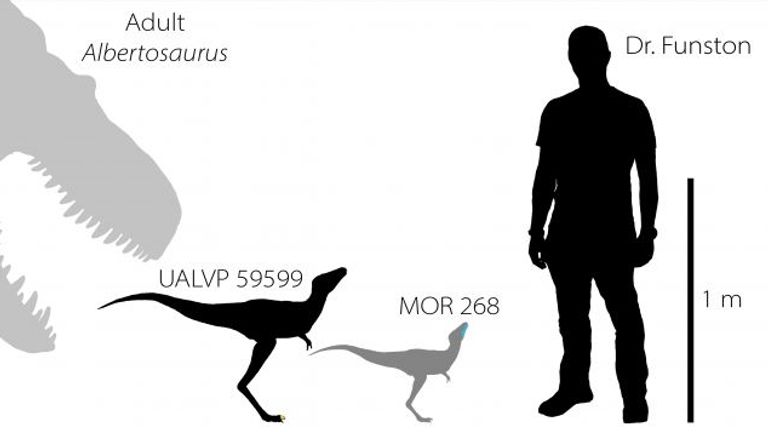
The fossils indicated that these were bigger than any other known dinosaur babies - one metre (3ft) long, or the size of a medium dog - and hatched from what must have been enormous eggs, perhaps exceeding the 43cm (17inch) length of the largest dinosaur eggs currently known.

The jaw possesses distinctive tyrannosaur traits, including a deep groove inside and a prominent chin.

University of Edinburgh paleontologist Greg Funston, lead author of the research published in the Canadian Journal of Earth Sciences, said the scientists were amazed at how similar the embryonic bones were to older juvenile and adult tyrannosaurs and noted that the jaws boasted functional teeth.

"So although we can't get a complete picture, what we can see looks very similar to the adults," Funston said.

The fossils suggest the babies were larger than previously thought Pic: Dr Greg Funston
Image:The fossils suggest the babies were larger than previously thought Pic: Dr Greg Funston

It appears that tyrannosaurs, Funston added, were "born ready to hunt, already possessing some of the key adaptations that gave tyrannosaurs their powerful bites.

"So it's likely that they were capable of hunting fairly quickly after birth, but we need more fossils to tell exactly how fast that was."


๐Ÿ˜‡๐Ÿ˜‡๐Ÿ˜‡๐Ÿ˜‡๐Ÿ˜‡๐Ÿ˜‡๐Ÿ˜‡๐Ÿ˜‡๐Ÿ˜‡๐Ÿ˜‡๐Ÿ˜‡๐Ÿ˜‡๐Ÿ˜‡๐Ÿ˜‡๐Ÿ˜‡๐Ÿ˜‡๐Ÿ˜‡๐Ÿ˜‡๐Ÿ˜‡๐Ÿ˜‡๐Ÿ˜‡๐Ÿ˜‡๐Ÿ˜‡๐Ÿ˜‡๐Ÿ˜‡๐Ÿ˜‡

I'm going to have me some baby T-Rex ribs at my next campfire BBQ with spicy Pterosauria sauce!  
Neander-Troll says :Be sure to recommend and follow Chucks " Life of Earth " Blog at:
https://disqus.com/home/forum/lifeofearth/

Indigenous tribe that worships tigers helps protect the species

JANUARY 29, 2021, by University of Illinois at Urbana-Champaign
https://phys.org/news/2021-01-indigenous-tribe-worships-tigers-species.html

Credit: Pixabay/CC0 Public Domain

Spirituality isn't usually considered a factor in conservation efforts. But indigenous peoples who worship wildlife may be helping protect endangered species from extinction.

The Soligas tribe in the Western Ghats of India reveres the Bengal tiger. Their coexistence in India's Biligiri Rangaswamy Temple Tiger Reserve has helped the tiger population flourish, says Shadi Atallah, a natural resource economist in the Department of Agricultural and Consumer Economics at University of Illinois.

Atallah first learned about the Soligas from a BBC article that discussed how the tiger population doubled from 2010 to 2014, after the tribe obtained property rights to their ancestral land.

"The BBC article stated that the local tribe venerates the tiger and that worshiping relationship makes them the best conservationists," Atallah says. "We could not find anything in the conservation economics literature that backs that claim. There was nothing that accounted for spirituality ecosystem service values."

He and co-author Adrian Lopes wanted to investigate how the tribe's spiritual beliefs might make them effective conservation stewards.

The researchers conducted a case study to assess spiritual value of the Bengal tiger for the Soligas tribe and show how such values can be harnessed as an economic tool for promoting sustainable wildlife conservation.

Atallah and Lopes used bioeconomic modeling to estimate four different management scenarios: Whether or not the Soligas tribe had property rights to the land, and whether or not poaching fines were implemented for illegal harvesting of the tigers.

Their results were clear: Tribal property rights were by far the best policy to protect the tigers.

"We observed that if you remove the property rights and poaching fines, the species goes to extinction in 49 years. Implementing poaching fines alone delays the extinction by nine years but does not prevent it," Atallah says.

He suggests the tribe's veneration of the tiger makes them less likely to look for the quick reward of illegal poaching.

There is little precedent for including spiritual values in economic models, Atallah notes.

"Putting a dollar value on spirituality is controversial," he says. "But by leaving it out of economic calculations, we assume it has a value of zero."

Bioeconomic models include biological information such as status and growth rate of a species and economic policies such as property rights and fines. They can also account for the values generated from wildlife ecotourism. But so far, they have not included wildlife spiritual values, Atallah states.

"If we can place a value on spiritual ecosystem services the way we do for ecotourism, we would not be under-accounting for those services when governments make policy decisions," he notes.

Conservation efforts often consist of establishing protected areas by separating humans and wildlife. Such policies may involve expulsing indigenous communities and are controversial on ethical and humanitarian grounds. But Atallah and Lopes' research also provides an economic argument by showing that local tribes are, indeed, the best conservationists.

The Indian Forest Rights Act grants indigenous tribes property rights to their ancestral lands; however, the tribes need to provide documentation for their claim to the land, and lack of proof has in some cases led to expulsion.

"Our research shows if a government has to decide which policy instrument to use, spending money in courts to secure the property rights of the local tribes is much more effective than spending money on catching and fining poachers," Atallah says.

"If you care about the survival of the species, securing the property rights of the tribes that venerate them is the best tool you can have," he concludes.


Recommend this post and follow The birth of modern Man
https://disqus.com/home/forum/lifeofearth/

Ancient rivers reveal multiple Sahara Desert greenings

JANUARY 29, 2021, by University of Hawaii at Manoa
https://phys.org/news/2021-01-ancient-rivers-reveal-multiple-sahara.html

A giraffe painting from a Green Sahara epoch. Credit: Mike Hettwer (http://hettwer.com)

Large parts of the Sahara Desert were green thousands of years ago, evidenced by prehistoric engravings in the desert of giraffes, crocodiles and a stone-age cave painting of humans swimming. Recently, more detailed insights were gained from a combination of sediment cores extracted from the Mediterranean Sea and results from climate computer modeling, which an international research team, including University of Hawai'i at Mฤnoa oceanography researcher Tobias Friedrich, examined for the first time.

The layers of the seafloor tell the story of major environmental changes in North Africa over the past 160,000 years. The study, co-authored by Friedrich and led by Cรฉcile Blanchet of the German Research Centre for Geosciences GFZ, was published in Nature Geoscience.

Climatic context for past populations

Together with the GEOMAR Helmholtz Centre for Ocean Research Kiel, a team of scientists organized a research cruise to the Libyan Gulf of Sirte.

"We suspected that when the Sahara Desert was green, the rivers that are presently dry would have been active and would have brought particles into the Gulf of Sirte," said Blanchet.

Analyzing such sediments would help to better understand the timing and circumstances for the reactivation of these rivers and provide a climatic context for the development of past human populations.

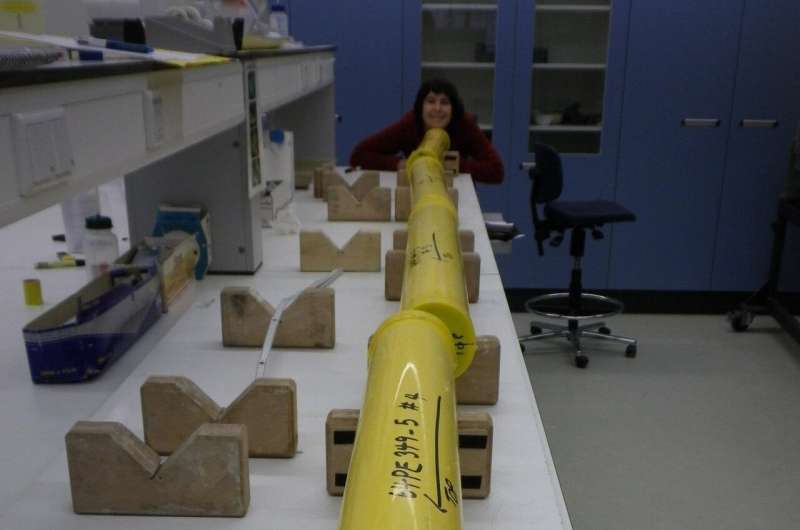
Using a method called piston coring, the scientists pressed giant cylinders into the seafloor and were able to recover nearly 30-foot long columns of marine mud.

The layers of mud contain sediment particles and plant remains transported from the nearby African continent, as well as shells of microorganisms that grew in seawater, telling the story of climatic changes in the past.

"By combining the sediment analyses with results from our computer simulation, we can now precisely understand the climatic processes at work to explain the drastic changes in North African environments over the past 160,000 years," said Friedrich.

Piston cores, wrapped in yellow, await analysis. In background: lead author Cรฉcile Blanchet. Credit: University of Hawaii at Manoa


Climate change can prompt migrations

From previous work, it was already known that several rivers episodically flowed across the region, which today is one of the driest areas on Earth. The team's unprecedented reconstruction continuously covers the last 160,000 years. It offers a comprehensive picture of when and why there was sufficient rainfall in the Central Sahara to reactivate these rivers.

"We found that it is the slight changes in the Earth's orbit and the waxing and waning of polar ice sheets that paced the alternation of humid phases with high precipitation and long periods of almost complete aridity," explained Blanchet.

The fertile periods generally lasted five thousand years and humidity spread over North Africa up to the Mediterranean coast. For the people of that time, this resulted in drastic changes in living conditions, which probably led to large migratory movements in North Africa.

"With our work, we have added some essential jigsaw pieces to the picture of past Saharan landscape changes that help to better understand human evolution and migration history," said Blanchet. "The combination of sediment data with computer-simulation results was crucial to understand what controlled the succession of humid and arid phases in North Africa during the past. This is particularly important because it is expected that this region will experience intense droughts as a consequence of human-induced climate change."


Recommend this post and follow The birth of 
modern Man

https://disqus.com/home/forum/lifeofearth/

Archaeologist argues the Chumash Indians were using highly worked shell beads as currency 2,000 years ago

JANUARY 29, 2021, by Jim Logan, University of California - Santa Barbara
https://phys.org/news/2021-01-archaeologist-chumash-indians-highly-shell.html

Chumash shell beads. Shell beads found in the Santa Barbara Channel region as well as elsewhere in California. 
Credit: Stacy Kennedy/Santa Barbara Museum of Natural History

As one of the most experienced archaeologists studying California's Native Americans, Lynn Gamble knew the Chumash Indians had been using shell beads as money for at least 800 years.

But an exhaustive review of some of the shell bead record led the UC Santa Barbara professor emerita of anthropology to an astonishing conclusion: The hunter-gatherers centered on the Southcentral Coast of Santa Barbara were using highly worked shells as currency as long as 2,000 years ago.

"If the Chumash were using beads as money 2,000 years ago," Gamble said, "this changes our thinking of hunter-gatherers and sociopolitical and economic complexity. This may be the first example of the use of money anywhere in the Americas at this time."

Although Gamble has been studying California's indigenous people since the late 1970s, the inspiration for her research on shell bead money came from far afield: the University of Tรผbingen in Germany. At a symposium there some years ago, most of the presenters discussed coins and other non-shell forms of money. Some, she said, were surprised by the assumptions of California archaeologists about what constituted money.

Intrigued, she reviewed the definitions and identifications of money in California and questioned some of the long-held beliefs. Her research led to "The origin and use of shell bead money in California" in the Journal of Anthropological Archaeology.

Gamble argues that archaeologists should use four criteria in assessing whether beads were used for currency versus adornment: Shell beads used as currency should be more labor-intensive than those for decorative purposes; highly standardized beads are likely currency; bigger, eye-catching beads were more likely used as decoration; and currency beads are widely distributed.

"I then compared the shell beads that had been accepted as a money bead for over 40 years by California archaeologists to another type that was widely distributed," she said. "For example, tens of thousands were found with just one individual up in the San Francisco Bay Area. This bead type, known as a saucer bead, was produced south of Point Conception and probably on the northern [Santa Barbara] Channel Islands, according to multiple sources of data, at least most, if not all of them.

"These earlier beads were just as standardized, if not more so, than those that came 1,000 years later," Gamble continued. "They also were traded throughout California and beyond. Through sleuthing, measurements and comparison of standardizations among the different bead types, it became clear that these were probably money beads and occurred much earlier than we previously thought."

As Gamble notes, shell beads have been used for over 10,000 years in California, and there is extensive evidence for the production of some of these beads, especially those common in the last 3,000 to 4,000 years, on the northern Channel Islands. The evidence includes shell bead-making tools, such as drills, and massive amounts of shell bits—detritus—that littered the surface of archaeological sites on the islands.

In addition, specialists have noted that the isotopic signature of the shell beads found in the San Francisco Bay Area indicate that the shells are from south of Point Conception.

"We know that right around early European contact," Gamble said, "the California Indians were trading for many types of goods, including perishable foods. The use of shell beads no doubt greatly facilitated this wide network of exchange."

Gamble's research not only resets the origins of money in the Americas, it calls into question what constitutes "sophisticated" societies in prehistory. Because the Chumash were non-agriculturists—hunter-gatherers—it was long held that they wouldn't need money, even though early Spanish colonizers marveled at extensive Chumash trading networks and commerce.

Recent research on money in Europe during the Bronze Age suggests it was used there some 3,500 years ago. For Gamble, that and the Chumash example are significant because they challenge a persistent perspective among economists and some archaeologists that so-called "primitive" societies could not have had "commercial" economies.

"Both the terms 'complex' and 'primitive' are highly charged, but it is difficult to address this subject without avoiding those terms," she said. "In the case of both the Chumash and the Bronze Age example, standardization is a key in terms of identifying money. My article on the origin of money in California is not only pushing the date for the use of money back 1,000 years in California, and possibly the Americas, it provides evidence that money was used by non-state level societies, commonly identified as 'civilizations.' "

Recommend this post and follow The birth of modern Man
https://disqus.com/home/forum/lifeofearth/

Friday, 29 January 2021

Archaeology News: Biblical ‘royal purple’ found at Timna offers look at King David wardrobe


Biblical ‘royal purple’ found at Timna offers look at King David wardrobe


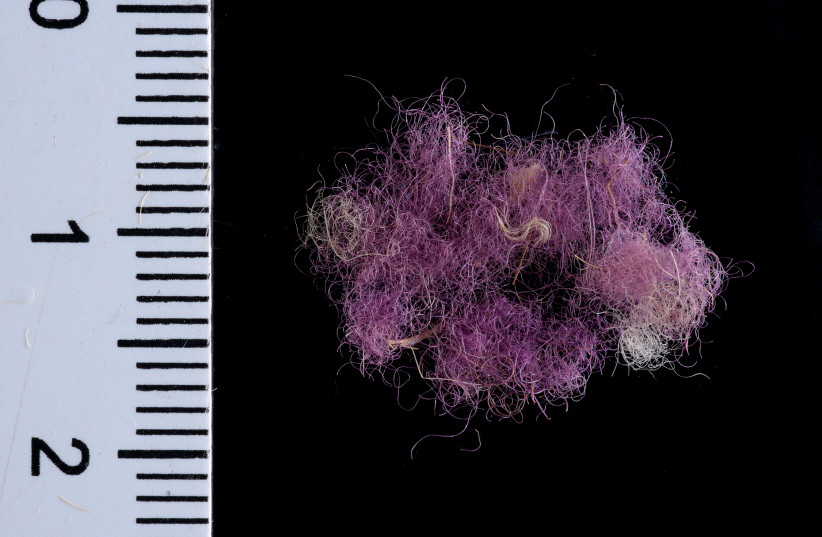
The color, a bright shade of purple, was extracted from mollusks fished in the Mediterranean Sea through a very expensive process.


By Rossella Tercatin , Jerusalem Post, January 28, 2021