Monday, 31 August 2020

770-pound crocodile caught at Outback tourist destination

AUGUST 31, 2020
https://phys.org/news/2020-08-pound-crocodile-caught-outback-tourist.html

In this photo provided by Northern Territory Dept. of Tourism, Sport and Culture, a 350-kilogram (770-pound) male crocodile is tied to the back of a trailer in Katherine, Australia on Aug. 28, 2020. Wildlife rangers trapped the 4.4-meter (14.5-foot) saltwater crocodile at a tourist destination in Australia's Northern Territory, the biggest caught in the area in years, a wildlife ranger said on Monday, Aug. 31, 2020.
 (Northern Territory Dept. of Tourism, Sport and Culture via AP)

Wildlife rangers have trapped a 4.4-meter (14.5-foot) saltwater crocodile at a tourist destination in Australia's Northern Territory, the biggest caught in the area in years, a wildlife ranger said Monday.

The 350-kilogram (770-pound) male was caught in the Flora River at a remote nature park 120 kilometers (75 miles) southwest of the Outback town of Katherine, said Katherine senior wildlife ranger John Burke.

A larger 4.7-meter (15.5-foot) croc was trapped three years ago in the same wildlife management zone, but that one was caught in the Katherine River, which is closer to the sea, Burke said. He said he did not know of a larger croc caught in the Flora River.

Crocodile numbers have been increasing across Australia's tropical north since federal law made them a protected species in the early 1970s.

"They certainly are increasing (in number), and that's part of the reason we have the management zones—to reduce the numbers in high-visitation areas so there's less chance of interaction between salties and people," Burke said, referring to saltwater crocs.

The captured croc had been taken to a crocodile farm to become part of a breeding program. Farmed crocodiles can be killed for their meat and leather.

The crocs are trapped in large cages baited with wild pig and other meats and submerged in waterways.

Recommend this post and follow The Life of Earth

Sunday, 30 August 2020

Devils of the deep: How jumbo squids survive freezing cold, oxygen-deprived waters

August 26, 2020 by Hanane Hadj-Moussa, PhD Candidate in Molecular Biology, Carleton University and Kenneth B Storey,Professor of Biochemistry, Carleton University
https://theconversation.com/devils-of-the-deep-how-jumbo-squids-survive-freezing-cold-oxygen-deprived-waters-144168

According to the Norse sagas, the kraken terrorized sailors off the coasts of Norway and Greenland. (John Gibson)

Humans are a picky species. We are happiest in a near-constant environment and experience severe and often fatal injuries if our core temperature falls below 25 C or if oxygen content of the air drops below 10 per cent.

Many other species, however, live in almost constant change.

Consider the red devil squid. Also known as the Humboldt or jumbo squid (Dosidicus gigas), it rises every night from the depths of the ocean for a few hours of frenzied feeding at the surface. Before dawn breaks, it leaves these warm waters and sinks back into the frigid abyss of crushing pressure and low oxygen.

As molecular biochemistry researchers, we wanted to know how squids adapted to daily changes in the environmental conditions imposed by their vertical lives.
Bears, tardigrades and krakens

Despite the obvious differences between one animal and the next, all animals share a considerable number of similar genes. According to a 2005 study, for example, the genome of the chimpanzee is about 96 per cent similar to the human genome.

The regulation of those genes allows animals to adjust to daily or seasonal changes, respond to environmental stresses or tolerate other stresses, such as extreme temperatures or pressures. Epigenetics — chemical marks that alter the availability of DNA — and RNA modifications, which can silence protein production, are two of the several ways genes are regulated.

Genetic regulation is behind the seasonal hibernation of bears, allows many species to survive in low- or no-oxygen environments and lets others withstand extreme dehydration. It even allows some creatures to endure the freezing, oxygen-deprived, radiation-filled vacuum of space, which may be happening now to the thousands of miroscopic tardigrades that crash-landed on the moon in 2019.

It turns out that is also how krakens survive in the abyss.

Krakens in the abyss

We began our study at Experiment, a platform for scientific discoveries, and crowd-funded the support we needed to work on the red devil squid in the Gulf of California, between the two Mexican states of Baja California Sur and Sinoloa.

On one tranquil, pitch-black night in the middle of the gulf, we noticed a flurry of movement around our boat. Jackpot.

A shoal of red devil squid were rising hundreds of metres from the ocean’s depths to the warm, oxygenated surface waters to join a large feeding frenzy. They mainly ate small fish but sometimes there was a bit of cannibalism.


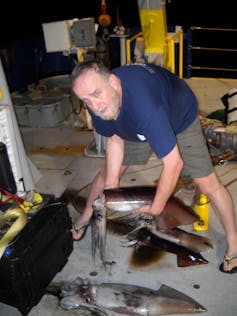
Kenneth Storey with red devil squids during the research cruise in the Gulf of California. (Kenneth Storey), Author provided


Before the first rays of morning appeared, they began their quiet descent, where they would have to deal with oxygen deprivation (hypoxia), high pressures and near-freezing temperatures.

We successfully caught several juvenile and adult jumbo squid before they descended and placed them in sea-water tanks on the ship.

These aggressive two-metre-long predators calmly occupy the deep ocean by depressing global gene expression, essentially turning down the volume of most of their genome while activating a select number of genes that promote their survival. This is known as “metabolic rate depression,” and is the basis for the dormancy often associated with hibernation.

The central mechanism emerging as a vital driving force behind metabolic suppression and squid survival is epigenetics, or more specifically, the squid’s ability to alter its epigenetic code rapidly and reversibly.

Epigenetics of killer squid

Breaking down the word epigenetics helps reveal what it is. First, we have the Greek prefix epi, meaning outside of, over or around, and then we have genetics, which refers to the cell’s DNA code. So, epigenetics is the study of heritable and non-heritable changes that occur on top of or around DNA without altering the DNA sequence itself.

Squids rely on epigenetic mechanisms to survive environmental extremes and retreat into a state of suspended animation by slowing down their metabolic rate. They reduce the squid’s oxygen requirements, turn off non-essential biological processes and sidestep damage from cold temperatures.

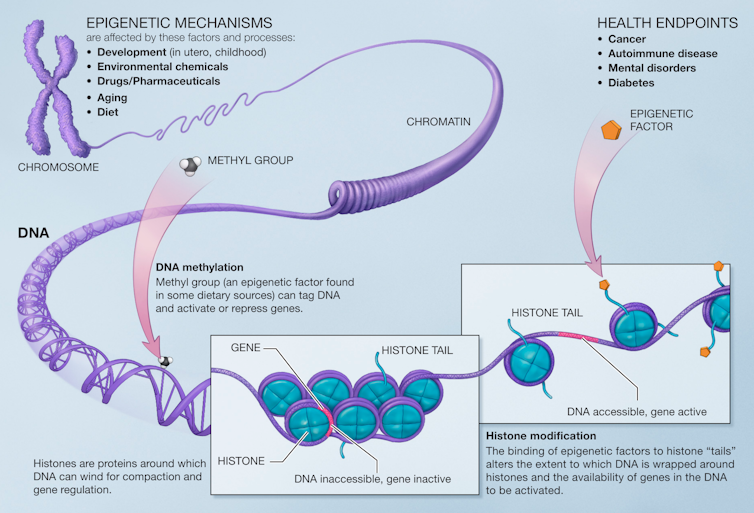
The epigenetic tools that alter gene expression in both squids and humans include DNA and histone modifications, and microRNAs. Adding chemical groups (such as methyl groups) to DNA or histones (proteins that spool DNA) can alter the availability or function of the DNA, making it more — or less — available to the cellular machinery that converts DNA into proteins.


Epigenetic modifications can be initiated by a number of factors from environmental conditions to diet. They change the way genes are expressed. (National Institutes of Health)

While we have yet to explore the state of DNA modifications on oxygen-deprived squid, our study of squid histones shows that histones are modified to promote DNA condensation (or spooling), making DNA less accessible when the squid is deep in the ocean. This critical mechanism allows the squid to save energy while it is oxygen-deprived, as genes are turned off when they are tightly wrapped around histones.

A third mechanism that keeps squid metabolism flexible are microRNAs. These short pieces of RNA do not code for proteins, but silence genes by physically binding to gene transcripts and blocking them from being translated into protein.
We found microRNAs in the hearts and brains of red devil squid that could slow their metabolism while they were oxygen deprived, helping protect these organs from damage. In the muscles, which give squids the jet propulsion they need for daily vertical migrations and to escape from predators, we found another microRNA, expressed under low-oxygen conditions, that likely suppressed growth and energy use while the squid was in its metabolically depressed state.

https://youtu.be/2Hv17U2z2q0

A diver gets too close to a Humboldt squid (BBC Earth Unplugged)


These seemingly tiny changes have big effects, allowing the red devil squid to go back and forth from the surface of the ocean to its bottom, killing and eating everything in their path. But they also have implications for medicine, and can help researchers understand — and find innovative solutions for — health conditions like stroke, ischemia (inadequate blood flow and oxygen to organs) and organ transplants.

Nature has already solved a lot of the problems we face. We just need to figure out how.


Recommend this post and 

follow The Life of Earth
Saturday, 29 August 2020

Painting with bacteria could revolutionise wastewater treatment

AUGUST 28, 2020, by Natasha Meredith, University of Surrey
https://phys.org/news/2020-08-bacteria-revolutionise-wastewater-treatment.html

Credit: University of Surrey

Improvements to a new type of water-based paint containing bacteria could pave the way for advancements in waste management and the production of biomass or biofuel gasses, a new study in the American Chemical Society journal, Biomacromolecules reports.

Researchers from the University of Surrey investigated and improved the properties of biocoatings, which consist of a polymeric layer that encapsulate bacteria. When inside the coating, the bacteria do not grow or divide, but they can still perform useful functions, such as absorbing toxins or carbon dioxide. Although other researchers have previously manufactured biocoatings, the bacteria did not stay alive for long, which limited their use. It is necessary for biocoatings to have a permeable structure to allow water and nutrients to enter and keep the bacteria alive, and to allow byproducts to escape.

To improve the effectiveness of using bacteria in the field of waste management and in the production of biomass and biofuel gasses, the Surrey researchers sought to resolve the issue of permeability in biocoatings, key to the survival of the bacteria within. They used halloysite, which consists of natural low-cost and microscopic tubes of clay, previously used as a reinforcement for plastic materials. The tiny halloysite tubes created channels in the biocoating to raise the permeability.

Using a specially adapted resazurin reduction assay, the researchers found that bacteria encapsulated in halloysite biocoatings were statistically more likely to stay viable compared to bacteria in the ordinary biocoatings. They determined that a coating made up of 29 percent halloysite had the best combination of good mechanical strength and high permeability. Importantly, fluorescence microscopy determined that the bacteria remained viable and metabolically active for extended periods of time. In the future, viable bacteria could be used to clean polluted water by removing harmful chemicals.

Joe Keddie, professor of soft matter physics at the University of Surrey, said, "Our research is inter-disciplinary. It has been a pleasure for me as a soft matter physicist to collaborate with experts in microbiology. Only when working together could we make a breakthrough in biocoatings. We are grateful to The Leverhulme Trust for making the research possible."

Dr. Suzie Hingley-Wilson, lecturer in bacteriology at the University of Surrey, said, "The majority of bacteria are beneficial and without them many daily processes and life as we know it would be impossible. Maintaining their viability within biocoatings is critical to harnessing their many powers which could revolutionize applications ranging from reducing pollution to clearing up nuclear waste."

Recommend this post and follow The birth of modern Man

400,000 farm chickens, turkeys & emus EUTHANIZED as bird flu blights Australia

28 Aug, 2020, posted by the Ruskies
https://www.rt.com/news/499304-australia-birds-flu-euthanazed/

FILE PHOTO © REUTERS/Stephane Mahe

The Australian state of Victoria has had to euthanize huge numbers of poultry, among them thousands of baby chicks, in a bid to stem the spread of the bird influenza, likely to add to Australia’s perils in containing coronavirus.

Choosing between bad and worse, poultry farmers in Victoria have decimated their livestock, with a whopping 400,000 turkeys, chickens, and emus being killed out of fear they could be a great risk of transmitting the contagion. That includes 2,000 baby emus, local media have reported.

The Victorian Farmers Federation Egg Group said that the loss would be devastating for both large and small producers “not just emotionally but financially as well.” Australia’s Agriculture Minister David Littleproud responded with sympathy to the news, assuring that the government understands “the impact of the difficult decisions that need to be made.”

The dramatic campaign comes after avian influenza – otherwise known as bird flu or avian flu – was first discovered at an emu farm and an egg farm in Victoria in late-July. Authorities have placed the facility in quarantine, while issuing advisories to local farmers.

Bird flu is a contagious disease that predominantly affects chickens, ducks, geese, turkeys, guinea fowl, quail, pheasants, and ostriches. While there are lots of types of contagion, the virus strains are destroyed by cooking.

Some of them, however, are dangerous to humans, most notably the H5N1 strain, which can infect humans. The reported mortality rate is around 60 percent, the World Health Organization believes. The biggest risk to humans stems from close contact with infected birds. This means farmers mucking out and handling poultry are more likely to catch it than others.

This appears to be the second outbreak affecting Australia after Covid-19, which infected close to 25,500 people and has killed over 580. The new coronavirus has been taking a toll on the nation for months, although its spread is nowhere near the scale of the crisis in neighboring Southeast Asia.

Related post.

Farmers' quick sale of poultry during outbreaks may increase deadly virus transmission

AUGUST 28, 2020, by Pennsylvania State University
https://phys.org/news/2020-08-farmers-quick-sale-poultry-outbreaks.html

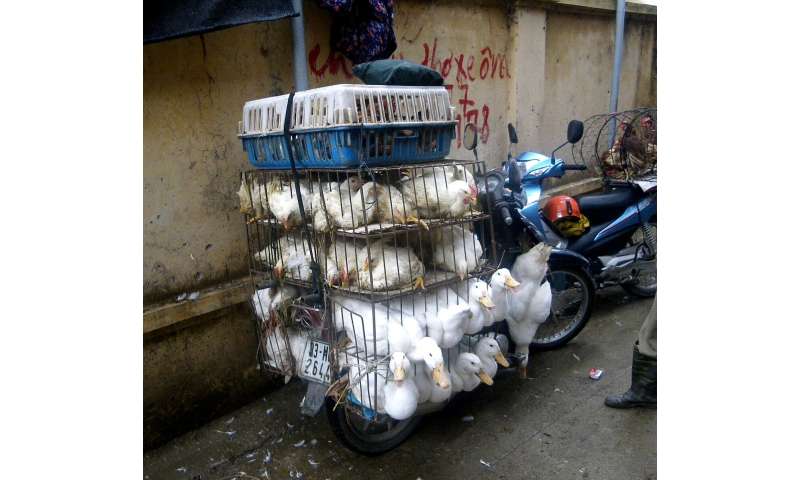
Small-scale poultry farmers in Vietnam tend to respond to viral outbreaks of highly pathogenic avian influenza (HPAI) by rapidly selling their birds as a way to avoid financial loss. Credit: Alexis Delabouglise, CIRAD/Penn State

Small-scale poultry farmers in Vietnam tend to respond to viral outbreaks of highly pathogenic avian influenza (HPAI) by rapidly selling their birds as a way to avoid financial loss, according to a new study by an international team of researchers. As these birds are commingled with other birds in markets and trading networks, this practice may increase the likelihood of widespread disease transmission. The findings could have implications for government policymaking in the many regions of the world where small-scale poultry farming and avian influenza risk co-occur.

"Avian influenza is deadly to humans, with a case fatality rate between 25% and 50%," said Maciej Boni, associate professor of biology, Penn State. Fortunately, reports of human-to-human transmission over the past 15 years have been either absent or anecdotal. COVID-19 took us by surprise, but with HPAI we have a known threat with the potential to become pandemic. If we ignore the active role that poultry farmers play in the control and dissemination of avian influenza, we may miss another opportunity to curtail an emerging disease outbreak at a stage when it is still controllable."

Lead author Alexis Delabouglise, an animal health economist at CIRAD-Agricultural Research for Development in France who was a postdoctoral scholar at Penn State when the research was performed, explained that small-scale poultry farming is practiced by millions of Vietnamese households and by millions more throughout southeast Asia, mostly on a scale of fewer than 100 birds per farm. These farmers make decisions on a daily basis—often in response to economic incentives—about when and where to sell their flocks. And their decisions can influence disease spread.

"If the price of poultry goes up, farmers might expand their farming activities, which could create more outbreak risk," said Delabouglise. "If there is an outbreak on a neighboring farm, they might choose to sell their poultry early to avoid their own birds from being infected and to avoid lower prices. And if there is an outbreak on their own farm, the evidence in our study shows that they would be likely to sell their birds early to avoid both monetary loss and epidemiological risk."

Boni and colleagues, including researchers at the Oxford University Clinical Research Unit (OUCRU) in Ho Chi Minh City, conducted a longitudinal study of small-scale poultry farms in the Mekong river delta region of southern Vietnam with a goal of characterizing the effects of disease outbreaks on poultry harvest rates, as well as on two prevention practices—vaccination and farm disinfection. The team followed 53 farmers and their management of more than 1,000 poultry flocks for a period of two years—from 2015 to 2017.

"Working with partners in endemic countries day-in and day-out on study details and public health priorities is key to establishing collaborations that allow these long-term follow-up studies to succeed," said Boni, who led a research group at OUCRU for eight years.

Researchers found that small-scale farmers increased their harvest of broiler chickens by 56% during outbreaks with no sudden deaths and by 214% during outbreaks with sudden deaths. 
Credit: Alexis Delabouglise, CIRAD/Penn State

Delabouglise, the statistical lead on the project, used mixed-effects general additive models to investigate farmers' probabilities of harvesting—either selling or slaughtering—flocks, of performing avian influenza vaccination on flocks that were not previously vaccinated and of disinfecting farm facilities when faced with an outbreak. Their findings appeared in eLife on August 25.

"We found that farmers did send their chickens to market early when there were outbreaks occurring on their farms," said Delabouglise. "Specifically, small-scale farmers increased their harvest of broiler chickens by 56% during outbreaks with no sudden deaths and by 214% during outbreaks with sudden deaths. This has the potential to exacerbate the outbreak and spread the virus even further."

The team noted that sudden deaths—the deaths of chickens less than one day after the onset of clinical symptoms—are considered to be indicative of HPAI infection. Interestingly, the team found that the probability of disinfection was not affected by the occurrence of outbreaks.

Finally, the team found that the likelihood of vaccination against avian influenza strongly increased with flock size. The probability of vaccination was almost zero for flocks of 16 birds or fewer and nearly 100% for flocks of more than 200 birds. According to Delabouglise, one reason that millions of small-scale poultry farmers may not be vaccinating their birds could be their desire to avoid transaction costs associated with declaring flocks to governmental veterinary services before vaccination. Another reason could be that due to their small size, their vaccination status is not controlled and, therefore, vaccination is less worthwhile from the farmers' perspective.

"Crucially, it is these smaller flocks that are more likely to be sold into trading networks during outbreaks," he said. "The rapid sale of sick birds can contaminate other birds at traders' storage places and those at live bird markets. It also exposes consumers and traders, slaughterers and retailers to an increased risk of infection."

Delabouglise noted that, on the flip side, a massive arrival of underage birds in a live bird market, or a price decrease due to the temporary oversupply of poultry, may be a sign that an outbreak is occurring.

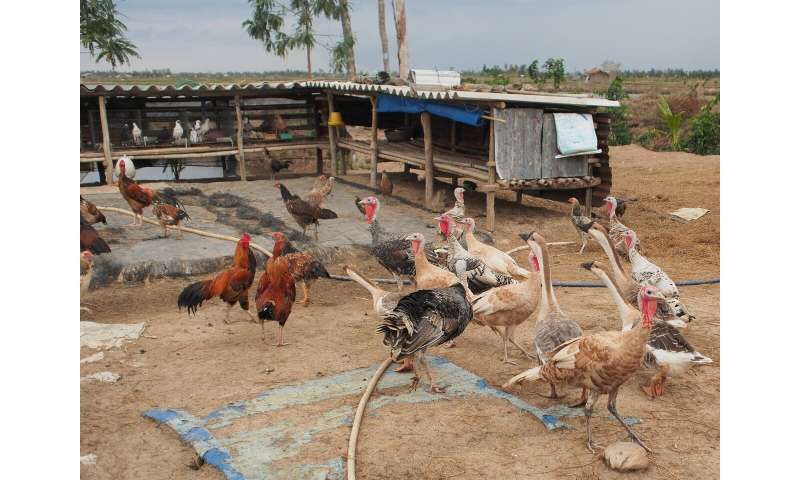
Small-scale poultry farming is practiced by millions of Vietnamese households and by millions more throughout southeast Asia, mostly on a scale of fewer than 100 birds per farm.
 Credit: Maciej Boni, Penn State

"This is an interesting area for surveillance of livestock diseases," he said.

Delabouglise said that the team's results could help governmental agencies create policies that aim to avoid the spread of HPAI.

"Small-scale farmers could play an active role in the control of emerging infectious diseases if they are given the opportunity to depopulate their farm upon disease detection without disseminating pathogens in trade circuits," he said. "Policymakers could encourage the establishment of formal trade agreements that encourage such 'virtuous' management of disease outbreaks in poultry."

One such "virtuous" management strategy could be for farmers to sell their sick chickens as feed for pythons and crocodiles raised on neighboring farms. Another could be to set up agreements with neighboring large commercial farmers who can give them financial indemnities to destroy the birds as a way of protecting their own flocks.

"It would be impossible to have reliable public-health control over the millions of small-scale poultry flocks in a place like Vietnam," said Delabouglise, "but providing economic incentives to responsibly manage birds during disease outbreaks is feasible."

Other authors on the paper include Nguyen Thi Le Thanh, Wellcome Trust Major Overseas Programme; Huynh Thi Ai Xuyen, Ca Mau Sub-Department of Livestock Production and Animal Health; Benjamin Nguyen-VanYen, Wellcome Trust Major Overseas Programme and Ecole Normale Superieure; Phung Ngoc Tuyet, Ca Mau Sub-Department of Livestock Production and Animal Health; and Ha Minh Lam, Wellcome Trust Major Overseas Programme and University of Oxford.

The Defense Threats Reduction Agency, the Wellcome Trust and the Pennsylvania State University supported this research.


Recommend this post and follow The birth of modern Man

Fossil trees on Peru's Central Andean Plateau tell a tale of dramatic environmental change

AUGUST 28, 2020, by Smithsonian Tropical Research Institute
https://phys.org/news/2020-08-fossil-trees-peru-central-andean.html

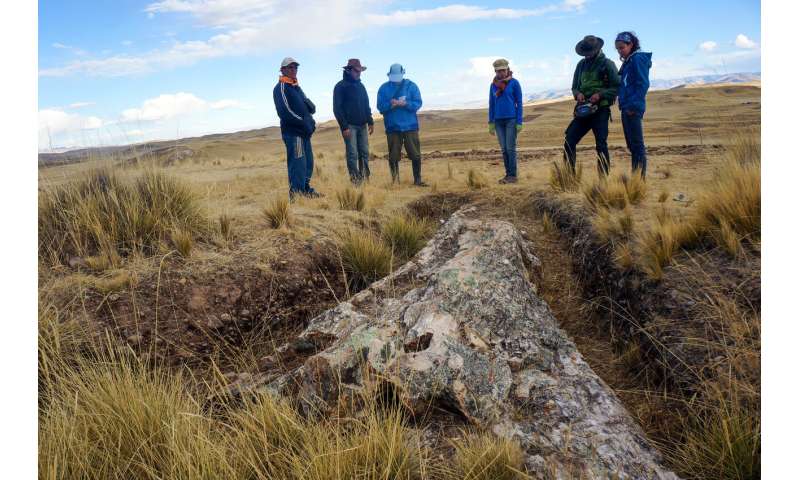
Paleontologist Edwin Cadena poses next to giant, fossilized (permineralized) tree on Peruvian Central Plateau. Credit: Carlos Jaramillo, Smithsonian Tropical Research Institute

On an expedition to the Central Andean Plateau, researchers from the Smithsonian Tropical Research Institute (STRI) and colleagues were astounded to find a huge fossil-tree buried in the cold, grassy plain. The plant fossil record from this high-altitude site in southern Peru contains dramatic reminders that the environment in the Andes mountains changed drastically during the past 10 million years, but not in the ways that climate models of the past suggest. Findings from the expedition are presented in the journal Science Advances.

"This tree and the hundreds of fossil wood, leaf and pollen samples we collected on the expedition, reveal that when these plants were alive the ecosystem was more humid—even more humid than climate models of the past predicted," said Camila Martinez, a fellow at STRI, who recently finished her doctorate at Cornell University. "There is probably no comparable modern ecosystem, because temperatures were higher when these fossils were deposited 10 million years ago."

The anatomy of the petrified (permineralized) wood the researchers found is very much like wood anatomy in low-elevation tropical forests today. Indeed, the altitude then was probably only 2,000 meters above sea level.

But that ecosystem did not last for long. Today, the arid, intermountain plateau lies at 4,000 meters above sea level.

Five million year-old fossils from the same sites confirmed that the Puna ecosystem that now dominates the Andes' high mountain plateaus had been born: the younger pollen samples were mostly from grasses and herbs, rather than from trees. Leaf material was from ferns, herbs and shrubs, indicating that the plateau had already risen to its current altitude.


Left to right: Florentino Tunquipa who discovered and excavated the fossil tree on his land, Rodolfo Salas Gismondi, Carlos Jaramillo, Julia Tejada, Federico Moreno, Camila Martínez. San Miguel Community, Espinar Municipality, Cusco Department, Peru. 2014. 
Credit: Rodolfo Salas Gismondi


"The fossil record in the region tells us two things: both the altitude and the vegetation changed dramatically over a relatively short period of time, supporting a hypothesis that suggests the tectonic uplift of this region occurred in rapid pulses," said Carlos Jaramillo, STRI staff scientist and project leader.

"Andean uplift played an important role in shaping the climate of South America, but the relationship between the rise of the Andes, local climates and vegetation is still not well understood," Martinez said. "By the end of this century, changes in temperature and atmospheric carbon dioxide concentrations will again approximate the conditions 10 million years ago. Understanding the discrepancies between climate models and data based on the fossil record help us to elucidate the driving forces controlling the current climate of the Altiplano, and, ultimately, the climate across the South American continent.


Recommend this post and follow The Life of Earth
BRITAIN BRACES FOR COLDEST AUGUST BANK HOLIDAY ON RECORD AS ARCTIC AIR ENGULFS WESTERN EUROPE

AUGUST 29, 2020 CAP ALLON
https://electroverse.net/britain-braces-for-coldest-august-bank-holiday-on-record/

GFS 2m Temp Anomalies for Sat, Aug 29 [tropicaltidbits.com].

Following on from the UK’s historically cool July (its coldest since 1988), AUTUMNAL conditions will return to British Isles and western Europe this weekend, with Briton’s bracing for their coldest August Bank Holiday on record.

Rare summer frosts will grip parts of the UK over the next few mornings, as the mercury takes an unseasonable plunge thanks to a violently descending trough of Arctic air — a phenomenon which is predicted to increase due to the historically low solar activity we’re receiving and its impact on the jet stream: weakening its tight ZONAL flow to more of a wavy MERIDIONAL flow:

BBC meteorologist Phil Avery admits that this weekend could see a “new record for the coldest Bank Holiday in August” as a powerful Arctic blast engulfs practically ALL of western Europe:


GFS 2m Temp Anomalies for Sun, Aug 31 [tropicaltidbits.com].


“If we don’t get to 18C (64.4F) this weekend,” explains Avery; “that would set a new record for the coldest Bank Holiday weekend in August.”

The far southeast will likely reach 17C (62.6F) –at Heathrow by any chance?– but the remainder of he UK will struggle to break 13C or 14C — temps which are some 6C to 7C below the seasonal average. And with regards to the minimum lows, Northern England and Scotland could dip below freezing on Sunday morning, with southern parts tumbling well below double-digits.

50 mph (80 kmh) gales will make it feel even colder.

“There are showers, and wind coming in from the North Sea,” continues Avery. “That wind and cloud gradually drifts itself down into East Anglia and London. And because the wind is essentially from the north, it is not going to be warm.”

Weather Outlook forecaster Brian Gaze says: “Frost is the cherry on the cake after the past week saw some of the worst summer weather of the past 50 years, with named storms Ellen and Francis.”

Furthermore, there is another all-time cold-record seriously under-threat this weekend: the coldest daytime maximum temperature ever recorded during the UK’s late-August Bank Holiday weekend (since the holiday began in 1971) is the 9.1C (48.4C) set in 2011 at Cromdale, Scotland, Met Office records show — and this low is forecast to be busted on Saturday, on Sunday, AND on Monday.

By stark contrast, at exactly this time last year the UK was enjoying a balmy Spanish Plume: “Last year’s August bank holiday we recorded 33C,” says Avery; “and we are talking about 18C this year.” This ‘flip’ serves as yet another example of the swings-between-extremes expected during the onset of a Grand Solar Minimum; and while the day-to-day (or year-to-year) weather we’re witnessing is completely unpredictable, the overall trend of the climate is not:


Recommend this post and follow The Life of Earth

Friday, 28 August 2020

Wolverines return to Mount Rainier National Park after 100 years

AUGUST 27, 2020, by Anna Patrick, The Seattle Times
https://phys.org/news/2020-08-wolverines-mount-rainier-national-years.html

Credit: CC0 Public Domain

Mount Rainier National Park is now home to wolverines again after a more than 100-year hiatus.

A reproducing female, named Joni, and her two babies, called kits, were discovered by scientists of the Cascades Carnivore Project in collaboration with the National Park Service, according to a recent announcement. To make the rare and historic discovery last week, scientists used camera stations designed to photograph the animals and identify them using their uniquely patterned chest markings.

"It's really, really exciting," Chip Jenkins, superintendent of Mount Rainier National Park, said in a news release. "It tells us something about the condition of the park—that when we have such large-ranging carnivores present on the landscape that we're doing a good job of managing our wilderness."

Wolverines look like small bears, but they're actually the largest member of the weasel family. But seeing one in the wild is becoming extremely rare in the U.S.

There's an estimated 300 to 1,000 wolverines living in the Lower 48 states of the U.S., according to the National Park Service. Wolverines used to live as far south as California, Utah and Colorado, but their population has receded north over the last 100 years, according to The Wolverine Foundation.

"Many species that live at high elevation in the Pacific Northwest, such as the wolverine, are of particular conservation concern due to their unique evolutionary histories and their sensitivity to climate change," Dr. Jocelyn Akins, founder of the Cascades Carnivore Project, said in a statement. "They serve as indicators of future changes that will eventually affect more tolerant species and, as such, make good models for conservation in a changing world."

Since 2008, the Cascades Carnivore Project has conducted scientific research and conservation efforts on rare and at-risk carnivore species, including the wolverine. Volunteers and scientists with the project, led by Akins, helped make the discovery at Mount Rainier possible, the National Park Service news release said.

Wolverines need snowpack to den their young, just like Joni and her two kits discovered at Rainier. But as climate change threatens these fragile ecosystems, wolverines are finding themselves living in more hostile conditions.

In a recent report Akins authored for Columbia Insight, an environmental publication, she said genetic analysis of wolverines living in the South Cascades match up with populations in the North Cascades. That means these animals had to cross Interstate 90 to begin recolonizing the South Cascades.

These solitary creatures require a lot of room to roam. In places with high-quality habitat, an area of 600 square miles is likely to be home to an estimated 6.2 wolverines.

The particular locations of the den and camera stations used to make the discovery at Rainier are not being released to protect the animals from possible disturbances, according to park officials. But future parkgoers don't need to view this announcement with fear, officials said.

"Wolverines are solitary animals and despite their reputation for aggressiveness in popular media, they pose no risk to park visitors," said Dr. Tara Chestnut, wildlife ecologist for the National Park Service. "If you are lucky enough to see one in the wild, it will likely flee as soon as it notices you."

To learn more about wolverines and community-based science efforts to protect these animals, visit Cascades Carnivore Project and their partners at Cascades Wolverine Project.

Recommend this post and follow The Life of Earth

Meteorite study suggests Earth may have been wet since it formed

AUGUST 27, 2020, by Talia Ogliore, Washington University in St. Louis
https://phys.org/news/2020-08-meteorite-earth.html


Piece of the meteorite Sahara 97096 (about 10 cm long), an enstatite chondrite that contains about 0.5 weight % of water. If Earth formed entirely of this material, it would have received 23 times the total mass of water present in the Earth's oceans. Credit: L. Piani, Museum of Natural History in Paris


A new study finds that Earth's water may have come from materials that were present in the inner solar system at the time the planet formed—instead of far-reaching comets or asteroids delivering such water. The findings published Aug. 28 in Science suggest that Earth may have always been wet.
Researchers from the Centre de Recherches Petrographiques et Geochimiques (CRPG, CNRS/Universite de Lorraine) in Nancy, France, including one who is now a postdoctoral fellow at Washington University in St. Louis, determined that a type of meteorite called an enstatite chondrite contains sufficient hydrogen to deliver at least three times the amount of water contained in the Earth's oceans, and probably much more.

Enstatite chondrites are entirely composed of material from the inner solar system—essentially the same stuff that made up the Earth originally.

"Our discovery shows that the Earth's building blocks might have significantly contributed to the Earth's water," said lead author Laurette Piani, a researcher at CPRG. "Hydrogen-bearing material was present in the inner solar system at the time of the rocky planet formation, even though the temperatures were too high for water to condense."

The findings from this study are surprising because the Earth's building blocks are often presumed to be dry. They come from inner zones of the solar system where temperatures would have been too high for water to condense and come together with other solids during planet formation.

The meteorites provide a clue that water didn't have to come from far away.

"The most interesting part of the discovery for me is that enstatite chondrites, which were believed to be almost 'dry,' contain an unexpectedly high abundance of water," said Lionel Vacher, a postdoctoral researcher in physics in Arts & Sciences at Washington University in St. Louis.

Vacher prepared some of the enstatite chondrites in this study for water analysis while he was completing his Ph.D. at Universite de Lorraine. At Washington University, Vacher is working on understanding the composition of water in other types of meteorites.

Enstatite chondrites are rare, making up only about 2 percent of known meteorites in collections.

But their isotopic similarity to Earth make them particularly compelling. Enstatite chondrites have similar oxygen, titanium and calcium isotopes as Earth, and this study showed that their hydrogen and nitrogen isotopes are similar to Earth's, too. In the study of extraterrestrial materials, the abundances of an element's isotopes are used as a distinctive signature to identify where that element originated.

"If enstatite chondrites were effectively the building blocks of our planet—as strongly suggested by their similar isotopic compositions—this result implies that these types of chondrites supplied enough water to Earth to explain the origin of Earth's water, which is amazing!" Vacher said.

The paper also proposes that a large amount of the atmospheric nitrogen—the most abundant component of the Earth's atmosphere—could have come from the enstatite chondrites.

"Only a few pristine enstatite chondrites exist: ones that were not altered on their asteroid nor on Earth," Piani said. "In our study we have carefully selected the enstatite chondrite meteorites and applied a special analytical procedure to avoid being biased by the input of terrestrial water."

Coupling two analytical techniques—conventional mass spectrometry and secondary ion mass spectrometry (SIMS)—allowed researchers to precisely measure the content and composition of the small amounts of water in the meteorites.

Prior to this study, "it was commonly assumed that these chondrites formed close to the sun," Piani said. "Enstatite chondrites were thus commonly considered 'dry,' and this frequently reasserted assumption has probably prevented any exhaustive analyses to be done for hydrogen.


Recommend this post and follow The Life of Earth

Making One Simple Change to Wind Turbines Could Cut Bird Deaths by 70 Percent

DAVID NIELD,  27 AUGUST 2020
https://www.sciencealert.com/a-simple-wind-turbine-paint-job-has-cut-bird-deaths-by-70-percent

(Norwegian Institute for Nature Research)

As a source of clean energy, wind farms come with many benefits - but they can be a danger to local birds. A new study suggests a small tweak to the turbine design could make a big difference in terms of avian safety, and all it takes is a paint job.

In an experiment run on the Norwegian archipelago of Smøla, changing the colour of just one of the turbine blades to black led to an average of 70 percent annual reduction in bird fatalities, as measured over three and a half years. In a linked experiment, painting part of some of the turbine towers black also resulted in fewer bird deaths.

While the study only involved one wind farm and a small number of birds – six fatalities on the four painted turbines, 18 fatalities on the four non-painted control turbines – it points to a way of keeping birds from harm without major reengineering.

"In this case it was resource demanding to paint the rotor blades, since the wind turbines were already installed," says conservation biologist Roel May, from the Norwegian Institute for Nature Research (NINA).

"If the painting is done before construction, however, both the cost and the bird mortality will be reduced."

Very little data is available on just how many bird deaths are caused each year by wind turbines. Some estimates put it at the tens of thousands – that's not good news, though it's still a mere fraction of the avian fatalities caused by nuclear and fossil fuel power generation, and by birds hitting power lines (which runs into the tens of millions).

Painted blades could be one solution to the problem. The researchers think it makes the turbines more visible to birds, reducing what's known as motion smear – where moving objects are more difficult to get a visual lock on.

The study also looked at other possible ways of reducing bird deaths, such as covering blades with ultraviolet paint, and positioning turbines in such a way as to avoid areas of updraft that birds use to soar.

While the black blade-painting technique was the most conclusively effective in this case, other colours and techniques could be tried, the researchers say. It's a promising first step, but many more studies will be required across multiple sites to see what works best when it comes to keeping birds and turbine blades apart.

With more and more wind turbines coming online, the potential danger to birds and other animals will increase – though wind farm sites are already carefully chosen to keep the disruption levels to local ecosystems as low as possible.

According to Martin Harper, director for conservation at the Royal Society for the Protection of Birds (RSPB) in the UK, innovations like those outlined in this study can be combined to minimise the risk of harming wildlife.

Harper, who wasn't involved in the study, told the BBC: "Wind turbines are the right technology when we find the right places for them, so studies like this are valuable and build on our understanding of what additional mitigation could be used once we identify locations suitable for wind farms."

"As the report acknowledges, this studied a single site and more work needs to be done, so we would be interested in seeing more research in this area."

The research has been published in Ecology and Evolution.


Recommend this post and follow The Life of Earth

Thursday, 27 August 2020

Marijuana test for stressed-out Warsaw Zoo elephants

AUGUST 26, 2020
https://phys.org/news/2020-08-marijuana-stressed-out-warsaw-zoo-elephants.html

There are around 400,000 African elephants in the wild today

The Warsaw zoo said Wednesday it will start giving its elephants medical marijuana as part of a ground-breaking pilot project to test how it reduces their stress levels.

Medical cannabis has been used worldwide to treat dogs and horses but "this is probably the first initiative of its kind for elephants," Agnieszka Czujkowska, the veterinarian in charge of the project, told AFP.

The zoo's three African elephants will be given liquid doses of a high concentration of the relaxing cannabinoid CBD through their trunks.

The veterinarian said the CBD neither causes euphoria nor harmful side effects on the liver and kidneys.

"It's an attempt to find a new natural alternative to the existing methods of combating stress, especially pharmaceutical drugs," Czujkowska told AFP.

The project, she said, comes at an opportune time as the zoo's herd has recently had to cope with the death of its alpha female.

The zoo monitors the elephants' stress by checking their hormone levels and through behavioural observation.

Czujkowska said it will take around two years before her team has any conclusive results.

If successful, the initiative could then be tried with other animals living in captivity.

"Contrary to what some would imagine, the elephants won't be using cannabis pipes nor will they be getting huge barrels of it" to match their size, Czujkowska said with a laugh.

The initial doses will be comparable to those given to horses: a vial's worth of a dozen drops of CBD oil, two or three times a day.

"The female Fryderyka has already had a chance to try it and she didn't say no," Czujkowska said.

Poaching has decimated the world elephant population, which slumped in Africa from several million at the turn of the 19th century to around 400,000 today.


Recommend this post and follow The Life of Earth

Invasive South American fish known as the 'vegetarian piranha' found in Tennessee

AUGUST 26, 2020, by Mark Price
https://phys.org/news/2020-08-invasive-south-american-fish-vegetarian.html

Credit: Unsplash/CC0 Public Domain

A Tennessee fisherman's suspicions that he caught something extraordinary were confirmed over the weekend when state officials determined the fish was a South American pacu, a species related to the famously vicious piranha.

One big difference, however: Pacu are vegetarians, the Tennessee Wildlife Resources Agency reported.

"The pacu is commonly called the 'vegetarian piranha.'" the agency said in a Facebook post. "Don't let their teeth freak you out, pacu are vegetarians and don't eat meat.

"Pacu have teeth that look very similar to human teeth. They have two sets of blunt molars that are used for cracking nuts and grinding up plants."

Pacu are not considered harmful to humans, but are an invasive species that can "overrun the waters they occupy," state officials said.

Fisherman Randall Adams caught the pacu recently in Rony Pond, a body of water within the John Tully Wildlife Management Area along the Mississippi River. A photo of the fish was shared by the state on Facebook, showing the dingy colored fish was flat-bodied, with fins on its back and belly.

Pacu grow up to 42 inches in length and can weigh as much as 97 pounds depending on the species, state officials said. They are "delicious" and often served in restaurants in South America, officials added.

"How did it get into Rony Pond? Pacu are suitable for home aquariums, but grow rapidly and can live for 15-25 years. So the odds are the fish outgrew its aquarium, and someone relocated the fish to Rony Pond," state officials wrote on Facebook.

"It's illegal to relocate or stock fish. Illegal stockings are one-way exotic species are introduced to waters and can harm our native fish populations through diseases or harmful viruses."

Investigators suspect the pacu was recently put in the pond, because the species can't survive in winter temperatures below 58 degrees.

This is not the first time a pacu has been caught in southern waters. The Mississippi Department of Wildlife, Fisheries and Parks reported on Facebook that one measuring 15 inches long was caught in Issaquena County's Steel Bayou in 2012.

Angler Maxine Smith of Mayersville told state officials the fish was surprisingly strong. "All of a sudden I hooked a fish that almost snatched me into the water," Smith was quoted saying. "At first, I thought it was a big shad or a buffalo, but then I saw the teeth!"
added by CC


Recommend this post and follow The Life of Earth

Researchers reveal how THC may treat acute respiratory distress syndrome

AUGUST 26, 2020, by University of South Carolina
https://medicalxpress.com/news/2020-08-reveal-thc-acute-respiratory-distress.html

Credit: CC0 Public Domain

Acute Respiratory Distress Syndrome (ARDS), when caused by a bacterial toxin known as Staphylococcal enterotoxin, can be completely prevented by treatment with Δ9-tetrahydrocannabinol (THC), a cannabinoid found in the cannabis plant. This exciting finding, recently published in the highly cited British Journal of Pharmacology, also suggests a possible treatment for ARDS caused by COVID-19.

This new paper is based on research studies from the laboratories of Dr. Mitzi Nagarkatti and Dr. Prakash Nagarkatti at the University of South Carolina (UofSC) School of Medicine, Department of Pathology, Microbiology and Immunology. 
The Nagarkattis published "Protective Effects of Δ9-Tetrahydrocannabinol Against Enterotoxin-induced Acute Respiratory Distress Syndrome is Mediated by Modulation of Microbiota," with co-authors Amira Mohammed, Hasan Alghetaa and Juhua Zhou, who also work in their UofSC School of Medicine laboratories, and Saurabh Chatterjee from the UofSC Arnold School of Public Health. Drs. Mitzi and Prakash Nagarkatti have for years studied how plant-derived compounds can be used to prevent and reduce inflammation throughout the body.

The incidence of ARDS in the United States is 78.9 per 100,000 persons/year and the mortality rate is 38.5 percent. When inhaled, Staphylococcal enterotoxin can cause ARDS by activating immune cells to produce massive amounts of cytokines leading to "cytokine storm," which can cause the lungs and other organs to fail, often resulting in death. This immune process is similar to that seen in patients with severe COVID-19 who are admitted to the hospital and develop ARDS accompanied by cytokine storm, which leads to respiratory and multi-organ failure. These studies therefore raise the exciting possibility of using cannabinoids to treat ARDS seen in COVID-19 patients.

These studies also showed that Staphylococcal enterotoxin alters the microbiome in the lungs leading to the emergence of pathogenic microbiota. But THC helps this symptom too, by promoting beneficial bacteria that suppress inflammation thereby preventing the damage to the lungs.

"Acute respiratory distress syndrome is triggered by a variety of etiologic agents. Currently, there are no FDA-approved drugs to treat ARDS because of which the mortality rate is close to 40 percent. Our studies suggest that THC is highly effective to treat ARDS and thus, clinical trials are critical to investigate if this works," said Mitzi Nagarkatti.

"Cytokine storm is a huge clinical issue which leads to multiorgan failure and often death. It is also seen in COVID-19 patients, and there are no effective treatment modalities against this syndrome. We have been working on cannabinoids for over 20 years and found that cannabinoids such as THC are highly anti-inflammatory. Thus, our studies raise the exciting suggestion to test THC against ARDS seen in COVID-19 patients," said Prakash Nagarkatti.

The Nagarkatti laboratory has performed decades of pioneering studies on cannabinoids. In fact, their studies on the use of another cannabinoid derived from the cannabis plant, cannabidiol (CBD), to treat autoimmune hepatitis have been well-recognized in the field and have led to FDA approval of CBD as an orphan drug to treat this disorder.

The Nagarkatti Laboratory has published extensively to demonstrate that cannabinoids are potent anti-inflammatory agents that can be used safely to treat a variety of inflammatory and autoimmune diseases such as multiple sclerosis, colitis, hepatitis and the like.

Recommend this post and follow The life of Earth

Brain gain: Early stimulation gives mice life-long benefits

AUGUST 27, 2020
https://phys.org/news/2020-08-brain-gain-early-mice-life-long.html

This picture shows mice in a box at the Neurosciences rechearch Center CERMEP in Bron, France in 2014

Mice that grow up in stimulating environments not only become smarter and more curious but are also more likely to develop individualized "personalities," a new study showed Wednesday.

These behavioral differences become imprinted on their genomes and remain even when the rodents are put back in standard cages, indicating that early-life experiences can have long-lasting benefits to their brains.

Gerd Kempermann, a professor at the German Center for Neurodegenerative Diseases (DZNE) Dresden, told AFP the research could have implications for humans, including how we raise our children.

Kempermann was the senior author of a paper describing the findings in Science Advances.

The team designed a sprawling cage system made up of 70 interconnected cages arranged on seven levels.

This so-called enriched environment contained equipment designed to inspire play, including plastic toys, tunnels, and hideouts that were replaced and rearranged every week.

The mice in the study were inbred twins, in order to control for genetic variation.

The researchers took five-week-old mice and housed 40 in enriched environments for six months; 40 in standard cages for six months; while 40 spent three months in enriched cages before moving to standard cages.

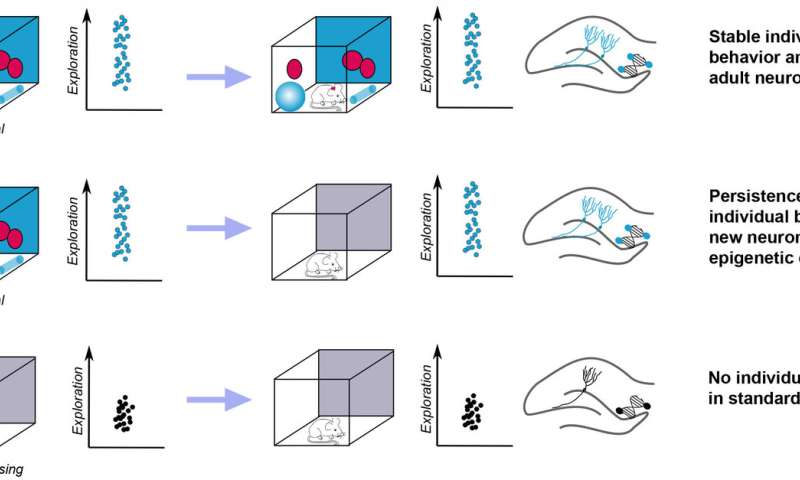
Living of mice in a stimulus-rich environment causes individual changes in behavior and brain structure that persist for long-term, even after stimulus withdrawal. 
Credit: Sara Zocher 2020

They were microchipped to record their movements, and were later euthanized to analyze their brains.

Mice that spent the entire six months in the enriched environment were more likely to explore as adults, and there was a great range of individual personalities.

In the context of mice, personality refers to "relatively stable differences in behavior," said Kempermann.

The team also found that mice that spent either three or six months in the enriched setting had more neurons in the hippocampus—a part of the brain associated with memories, learning and emotion.

The group which went from enriched to standard settings continued to show high rates of exploration, even though some of their activities were diminished.

Significantly, the team also found that mice that had been kept in enriched environments had major changes to their genomes.

Living of mice in a stimulus-rich environment causes individual changes in behavior and brain structure that persist for long-term, even after stimulus withdrawal.
 Credit: Sara Zocher 2020

Molecules known as methyl groups had attached themselves to particular regions of the DNA in the neurons of the hippocampus, which alters how the genome can be read and indicated that some behavioral changes had become permanent.

This might be good news in the context of people who have a traumatic event in adulthood but whose childhood was otherwise stable, said Kempermann.

In the longstanding nature versus nurture debate, the data suggests that providing a good environment early on can have a permanent impact.

"People cannot change their genes, but they can change their behavior, so it's relevant to know what the contribution from the non-genetic factors is," said Kempermann.


Recommend this post and follow The birth of modern Man

Wednesday, 26 August 2020

Researchers argue health care systems should use 'food as medicine' interventions

AUGUST 25, 2020, by U. of North Carolina at Chapel Hill School of Medicine
https://medicalxpress.com/news/2020-08-health-food-medicine-interventions.html

Credit: Pixabay/CC0 Public Domain

An analysis recently published in the British Medical Journal argues for increased implementation of "food is medicine" interventions in the health care system. The article was co-authored by Seth A. Berkowitz, MD, MPH, assistant professor of medicine at the UNC School of Medicine, who mostly recently argued in the New England Journal of Medicine that food insecurity is known to be a health equity issue that disproportionately affects racial/ethnic minorities and those with lower incomes and rural communities. Thus, food insecurity is now playing a big role in the COVID-19 pandemic and associated health outcomes.

Berkowitz has conducted a number of studies on health-related social needs and their effect on health outcomes, published in JAMA Internal Medicine.

Sarah Downer, JD, from the Center for Health Law and Policy Innovation at Harvard Law School is the first author of the BMJ study, along with Timothy Harlan, MD, at the George Washington University School of Medicine and Health Sciences, Dana Lee Olstad, Ph.D., at the Cumming School of Medicine at University of Calgary, and Dariush Mozaffarian, MD, MPH, DrPH, from the Friedman School of Nutrition Science and Policy at Tufts University.

The world is facing an epidemic of diet-related chronic diseases with one in five deaths attributed to a suboptimal diet, more than any other risk factor including tobacco, according to the authors. An emerging body of research suggests that nutrition interventions delivered in the health care system may be associated with improved outcomes.

"Food is medicine" is an initiative around integrating specific food and nutrition interventions in, or closely coordinated with, the health care system. These interventions include medically tailored meals, medically tailored groceries, and produce prescriptions. According to the authors, clinicians should be knowledgeable enough to recognize a patient's nutritional needs and understand the impact of available services. However, this is not the case in many countries, including the United States.

"Nutrition training delivered across disciplines holds the promise of more effective patient nutrition education and treatment," the authors write. "Clinicians should have familiarity with validated nutrition assessment tools, the range of availability food is medicine interventions, and the systems and incentive structures that enable and encourage their use in clinical practice."

The benefits of the approach include offering patients greater ability to follow dietary recommendations and alleviating budget constraints that might prevent them from affording medications or paying bills. They also suggest that with these interventions, clinicians might see better disease management and fewer hospital admissions.

"As health care systems continue to evolve to tackle the global crisis of nutrition related diseases, food is medicine interventions should be held to rigorous standards when decisions about implementation, coverage, and care are made," the authors write. "Food as medicine can no longer be excluded as outside or ancillary to health care delivery."


Recommend this post and follow The birth of modern Man

New internal combustion engine that does not emit harmful gases or carbon dioxide

AUGUST 25, 2020, by Asociacion RUVID
https://techxplore.com/news/2020-08-internal-combustion-emit-gases-carbon.html


Credit: CC0 Public Domain


Researchers from Valencia's Polytechnic University (UPV) have designed a new internal combustion engine that does not generate carbon dioxide (CO2) or gasses that are harmful to people's health. According to its creators, it is a revolutionary engine that meets the regulation on emissions planned for 2040 and also has high efficiency. The first two prototypes of this engine will become a reality in coming months thanks to funding provided by the Valencian Agency for Innovation.

The technology is based on MIEC ceramic membranes. Patented by the Institute of Chemical Technology, a mixed center of the UPV and CSIC, these membranes remove all gasses that are contaminating and harmful for health (NOx), capturing the engine's CO2 along with environmental CO2 and liquefying it.

"These membranes, included in the engine of the vehicle, enable the selective separation of oxygen from the air to produce the oxycombustion. This way, a pure combustion gas is generated, composed of water and CO2, which can be captured inside the vehicle and stored, without having it expelled from the exhaust pipe," explains José Manuel Serra, researcher at the ITQ (UPV-CSIC).

This way, the technology developed by this team of researchers will make it possible to have an engine with the autonomy and refueling capabilities of a conventional one, but with the advantage of being completely clean, without any type of contaminating or greenhouse effect emission, just like electric engines. Therefore, we offer the sector a technology that combines the best of both types of engines, electric and combustion," adds Luis Miguel García-Cuevas González.

With the technology developed by the CMT-Thermal Motors and the ITQ, the vehicle also becomes a supplier of CO2. As the researchers explain, in a conventional engine, a large amount or nitrogen and nitrogen oxides are generated in the exhaust pipe after the oxycombustion. However, in this case, only a very high concentration of CO2 and water are generated, which can easily be separated from the CO2 by condensing it.

"This CO2 is compressed inside the engine and is stored in a pressure tank, which could be returned as a by-product, directly as pure high-quality CO2, in a service station, for an industrial use. This way, inside the vehicle we would have a tank for fuel and another for the CO2 that is generated after burning the fuel and which we could draw value from," says Luis Miguel García-Cuevas.

The technology developed by the CMT-Thermal Motors team and the Institute of Chemical Technology is mainly aimed at manufacturers of large vehicles for carrying passengers and goods, both on land and sea, and for aviation up to a certain level of power. Furthermore, it could also be used to transform current diesel engines into special vehicles.

"In the case of smaller vehicles, it could also be applied by sequestering only part of the CO2 in the exhaust," says Francisco José Arnau, fellow researcher at the CMT-Thermal Motors of the UPV.


Recommend this post and follow The birth of modern Man