Tuesday, 30 November 2021

Medical Science News: Psychedelics may have long-term impact treating depression, mental illness - study


Psychedelics may have long-term impact treating depression, mental illness - study


The study confirmed that the results of psychedelic treatments take effect much more quickly than those of other drugs such as antidepressants.


Psilocybin or "magic mushrooms" are seen in an undated photo provided by the US Drug Enforcement Agency (DEA) in Washington, US, May 7, 2019. (photo credit: DEA/HANDOUT VIA REUTERS)

Psilocybin or "magic mushrooms" are seen in an undated photo provided by the US Drug Enforcement Agency (DEA) in Washington, US, May 7, 2019. (photo credit: DEA/HANDOUT VIA REUTERS)

A single dose of a psychedelic drug, such as lysergic acid diethylamide (LSD), psilocybin, mescaline or 2,5-Dimethoxy-4-iodoamphetamine (DOI) could have long-lasting positive effects on patients suffering from mental illnesses such as anxiety, depression, substance addiction and post-traumatic stress disorder, according to an October study conducted by researchers from Virginia Tech and Virginia Commonwealth University (VCU).

The research team, including Virginia Tech's Fred W. Bull Professor of Chemical Engineering in the College of Engineering Chang Lu, doctoral student Bohan Zhu and VCU pharmacologist Javier González-Maeso, administered a single dose of DOI to lab mice, then analyzed small brain tissue samples from the mice to determine the effects of the drug.

In addition, the study confirmed that the results of psychedelic treatments take effect much more quickly than those of other drugs such as antidepressants, and the drugs may be effective in treating people who are unresponsive to traditional medications.

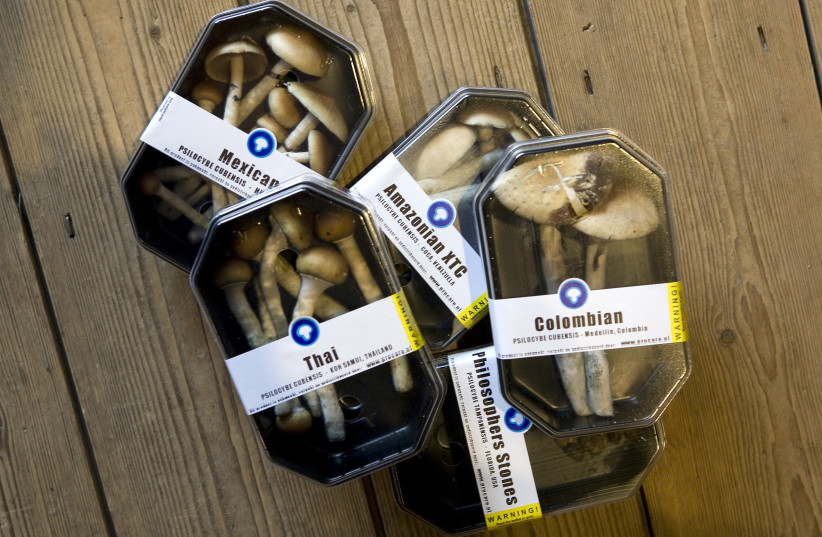
Boxes containing magic mushrooms are displayed at a coffee and smart shop in Rotterdam November 28, 2008. (credit: REUTERS/JERRY LAMPEN)

Boxes containing magic mushrooms are displayed at a coffee and smart shop in Rotterdam November 28, 2008. (credit: REUTERS/JERRY LAMPEN)

However, the study warns about the potential of psychedelic drugs to cause psychotic symptoms in patients who are predisposed to such symptoms.

Due to the possibility of treatment triggering or exacerbating potential psychosis, the study notes the treatment cannot be administered on a routine basis.


Mysterious Vanishing of Advanced Chinese Civilization 4,000 Years Ago Finally Solved

PETER DOCKRILL, 29 NOVEMBER 2021

About 5,300 years ago, an ancient civilization emerged in the east of China, building a brilliant city the likes of which had perhaps never been seen before in all of Asia – nor possibly even the whole world.

The surviving traces of the Liangzhu culture, which rose up along the banks of the Yangtze River Delta in China's east, are a testament to what this unique Neolithic society was capable of in the final stretches of the Stone Age.

The archaeological ruins of Liangzhu City demonstrate numerous signs of social, cultural, and technological advancements for the period, especially in agriculture and aquaculture.

Sophisticated architectural features, meanwhile – including clever hydraulic engineering that enabled canals, dams, and water reservoirs – led to allusions of Liangzhu being a Neolithic "Venice of the East".

None of these marvels would last, however.

(Hangzhou Liangzhu Archaeological Site Administrative District Management Committee)

Above: Aerial view of palace area of Liangzhu.

After a single innovative millennium, the Liangzhu culture mysteriously collapsed around 4,300 years ago, and the ancient city was abruptly abandoned.

Exactly why has never been fully understood, although many have suggested some form of catastrophic flooding led to the sudden decline.

"A thin layer of clay was found on the preserved ruins, which points to a possible connection between the demise of the advanced civilization and floods of the Yangtze River or floods from the East China Sea," explains geologist Christoph Spötl from the University of Innsbruck in Austria.

"However, no clear conclusions on the cause were possible from the mud layer itself."

Now, we have a clearer picture of the deluge that drowned this astounding place.

In a new study, Spötl and an international team of researchers went far deeper than the ancient mud deposits, examining mineral formations (or speleothems) such as stalagmites from two underwater caves in the region, which preserve chemical signatures of climatic conditions long ago.

Stalagmites in Shennong Cave. (Haiwei Zhang)

Led by first author Haiwei Zhang from China's Xi'an Jiaotong University, their analysis of the stalagmite samples shows the collapse of Liangzhu City coincided with a period of extremely high precipitation that likely lasted for decades over 4,300 years ago, probably due to increased frequency of El Niño–Southern Oscillation conditions.

"This is amazingly precise in light of the temporal dimension," Spötl says.

"Massive monsoon rains probably led to such severe flooding of the Yangtze and its branches that even the sophisticated dams and canals could no longer withstand these masses of water, destroying Liangzhu City and forcing people to flee."

According to the researchers, previous instances of climate change in the Yangtze River Delta region may have also impacted other Neolithic cultures that inhabited the area before the Liangzhu society rose up in a period of dry and relatively stable environmental conditions.

But history and weather meant this prosperous city could not endure forever.

"Archeological studies show the presence of large-scale hydraulic complexes such as large earthen dams near the Liangzhu city, which were constructed between [5,300 and 4,700 years before present]," the researchers write in their study.

"This suggests that the Liangzhu society was effectively managing water resources by using hydraulic infrastructure for flood mitigation and/or irrigation to survive in a dry climate."

With time, however, that dry climate seems to have gotten progressively drier, culminating in a possible 'megadrought' around 4,400 years ago, at which point dam construction appears to have ceased, since existing dams would have been sufficient under the arid conditions.

And then the rains came, falling in two distinct burst periods between roughly 4,400–4,300 years ago.

"Our speleothem records, together with geochemical evidence of flood deposits above the Liangzhu culture layer, suggest that massive rainfall in the entire middle-lower reaches of the Yangtze River Valley might have induced fluvial flooding and/or overbank marine flooding transported by the Yangtze River plume and thus impeded human habitation and rice farming," the authors explain.

"Massive flooding and inundation due to poor drainage in the low-lying land may have forced the Liangzhu people to abandon their capital city and dwellings in the Taihu Plain, ultimately leading to the collapse of the entire Liangzhu civilization."

For hundreds of years afterward, humid conditions remained, during which time other ancient cultures temporarily rose up to succeed the Liangzhu – at least, until another megadrought likely led to the "final demise" of Neolithic human societies in the region.

At about the same time, Chinese society was about to begin a transformational new chapter, with the founding of the Xia dynasty in 2070 BCE, considered to be the first dynasty of China, led by Yu the Great.

"While many documents indicate that the leader Yu built the Xia Dynasty because he successfully managed river flooding, some studies suggest that Yu's control of the flooding can be ascribed to climate change," the researchers explain, noting that their own speleothem data also back up the idea.

"This observation provides new robust evidence that the rise of the Xia Dynasty occurred in the context of a major climate transition from wet to dry, in line with the Chinese historic records and previous studies."


Recommend this post and follow
The birth of modern Man

Cargill plant serves lockout notice

By Doug Ferguson, Published: November 28, 2021

An empty cattle liner leaves the Cargill meat packing plant near High River, Alta. Negotiations are under way for a labour deal in order to prevent a possible strike or lockout Dec. 6. | Mike Sturk photo.

One of Canada’s largest meatpacking companies has served notice it will lock out more than 2,000 workers at its plant in High River, Alta., on Dec. 6 if contract talks are unsuccessful.

Cargill said the deadline is the same as that of a strike notice it received Nov. 10 from the United Food and Commercial Workers Canada (UFCW) Union Local 401 in Calgary. The two sides are slated to continue their negotiations on Nov. 30, giving them only a few days to resolve the dispute.

“We remain determined and hopeful that we can reach an agreement during this period,” the company said in a statement Nov. 26. The dispute marks a “watershed moment” for the Canadian beef sector, union leader Thomas Hesse said in an earlier interview.

The union is urging farmers and ranchers to “get on the phone and talk to Cargill,” said union labour relations officer Scott Payne. “I’d tell (the company) to make their workers a fair offer so that we can settle this deal.”

More than 1,400 workers voted 98 percent against the company’s latest offer on Nov. 23 and 24, triggering Cargill’s decision to issue the lockout notice on Nov. 25.

Payne said the meatpacking giant has “certainly (raised) the stakes and it’s a pretty aggressive move by the company, and lets our members know that they are certainly not messing around in terms of their position with regard to the dispute.”

Hundreds of workers at the High River plant were infected and two died following an outbreak last year that was the largest in North America, forcing the facility to be closed for two weeks.

Hesse said the employees, many of whom are immigrants, feel they are largely invisible to people in authority at both Cargill and the provincial government. The company ended its extra pandemic pay for workers last year, despite the fact the pandemic has continued and beef prices in grocery stores have soared, he added.

A partnership between researchers at the Centre for Refugee Studies at York University and the Calgary-based community advocacy group ActionDignity looked at conditions faced by employees at Alberta’s meatpacking plants during the COVID-19 pandemic.

A survey was conducted from January to May involving 224 of immigrant, migrant and refugee workers, along with 17 qualitative interviews.

An executive summary of the report, “No Safe Place,” said 70 percent of beef sold in Canada comes from Cargill’s plant in High River and JBS Foods’ facility in Brooks, Alta. It added that 67 percent of workers in the province’s meat processing industry are immigrants who “bore the brunt of the outbreaks, infection and fatalities” from COVID-19.

“Industrial meat processing has long been recognized as a dangerous industry in which to work,” said the report. However, such “dangers became more pronounced with the onset of COVID-19 … the nature of this work – crowded industrial settings where workers often work side by side – led to massive COVID-19 outbreaks, resulting in hundreds of workers becoming sick and numerous deaths.”

It said 42 percent of survey participants reported they or people in their households tested positive for COVID-19, rising to 11 out of 17 for the interviewees who said they had personally been infected.

“Participants also described how efforts to mitigate the spread of COVID-19 have inadvertently worsened other conditions of work and exacerbated concerns around safety at work.

Other findings include:
Canada’s temporary labour migration programs exacerbate the vulnerability facing migrant workers in meat processing.
Refugees to Canada are over-represented in the Alberta meatpacking industry and are uniquely vulnerable to dangerous work conditions and risk of injury and illness.
Provincial occupational health and safety regimes meant to protect workers do not adequately meet their needs.
Unless there is significant reform to the industry and regulatory environment in which it takes place, employees will continue to be vulnerable at work.

A request Nov. 26 for Cargill to provide its response to the report was not immediately met. The company said Nov. 12 it had exchanged multiple comprehensive proposals with the union that “included increased wages well beyond the industry standard,” along with enhanced employee benefits and cash bonuses.

“At Cargill, we greatly value our employees and the work they do to feed Canadians … we remain focused on employee safety, ensuring farmers and ranchers have access to markets, and providing meals for families across Canada.”

Payne said he had not read the report and couldn’t comment on its conclusions. However, he added workers on Nov. 4 voted 97 percent in favour of going on strike if their demands aren’t met, although such a move would mean loss of income and economic security.

“We don’t want a strike any more than the ranchers and producers want a strike. And Cargill is going to listen to those ranchers and those producers much more readily than they’re going to listen to us, so help us out and make sure you send the message to Cargill that nobody wants to see a stoppage in production.”


Recommend this post and follow
The birth of modern Man
Study suggests Sun is likely an unaccounted source of the Earth's water

NOVEMBER 29, 2021, by Curtin University

Graphic of the sun, solar winds and itokawa.
 Credit: Curtin University

Curtin University researchers have helped unravel the enduring mystery of the origins of the Earth's water, finding the Sun to be a surprising likely source.

A University of Glasgow-led international team of researchers including those from Curtin's Space Science and Technology Center (SSTC) found the solar wind, comprised of charged particles from the Sun largely made of hydrogen ions, created water on the surface of dust grains carried on asteroids that smashed into the Earth during the early days of the Solar System.

SSTC Director, John Curtin Distinguished Professor Phil Bland said the Earth was very water-rich compared to other rocky planets in the Solar System, with oceans covering more than 70 percent of its surface, and scientists had long puzzled over the exact source of it all.

"An existing theory is that water was carried to Earth in the final stages of its formation on C-type asteroids, however previous testing of the isotopic 'fingerprint' of these asteroids found they, on average, didn't match with the water found on Earth meaning there was at least one other unaccounted for source," Professor Bland said.

"Our research suggests the solar wind created water on the surface of tiny dust grains and this isotopically lighter water likely provided the remainder of the Earth's water.

"This new solar wind theory is based on meticulous atom-by-atom analysis of miniscule fragments of an S-type near-Earth asteroid known as Itokawa, samples of which were collected by the Japanese space probe Hayabusa and returned to Earth in 2010.

"Our world-class atom probe tomography system here at Curtin University allowed us to take an incredibly detailed look inside the first 50 nanometres or so of the surface of Itokawa dust grains, which we found contained enough water that, if scaled up, would amount to about 20 liters for every cubic meter of rock."

Curtin graduate Dr. Luke Daly, now of the University of Glasgow, said the research not only gives scientists a remarkable insight into the past source of Earth's water, but could also help future space missions.

"How astronauts would get sufficient water, without carrying supplies, is one of the barriers of future space exploration," Dr. Daly said.

"Our research shows that the same space weathering process which created water on Itokawa likely occurred on other airless planets, meaning astronauts may be able to process fresh supplies of water straight from the dust on a planet's surface, such as the Moon."

The paper, "Solar wind Contributions to the Earth's Oceans," was published in Nature Astronomy.


Recommend this post and follow 
The Life of Earth

Monday, 29 November 2021

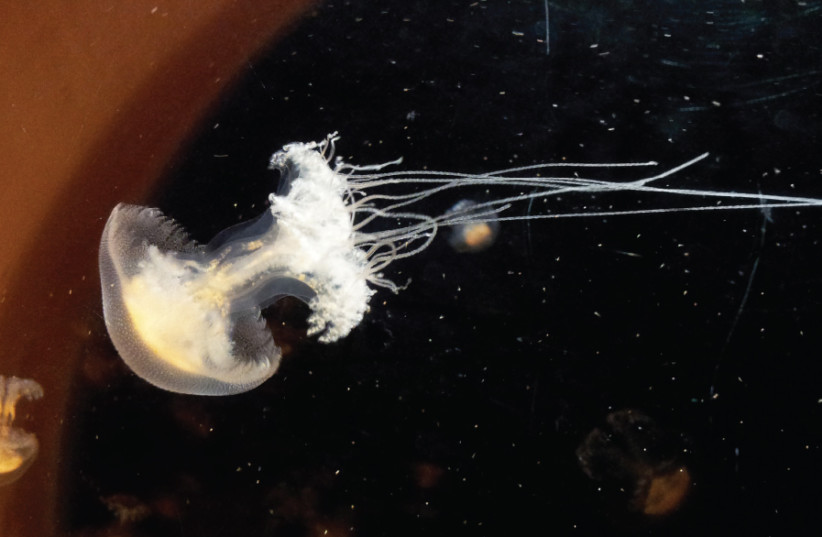
Science News: Mind readers: Caltech scientists find way to watch jellyfish's brain activity


Mind readers: Caltech scientists find way to watch jellyfish's brain activity


Caltech scientists hope to use the knowledge they gain from observing jellyfish brains to understand nervous systems in general.


Testing social scientists with replication studies shows them capable of changing their beliefs

NOVEMBER 28, 2021 **REPORT** , by Bob Yirka , Phys.org

Credit: Pixabay/CC0 Public Domain

A team of researchers from the University of Alabama, the University of Melbourne and the University of California has found that social scientists are able to change their beliefs regarding the outcome of an experiment when given the chance. In a paper published in the journal Nature Human Behavior, the group describes how they tested the ability of scientists to change their beliefs about a scientific idea when shown evidence of replicability. Michael Gordon and Thomas Pfeifer with Massey University have published a News & Views piece in the same journal issue explaining why scientists must be able to update their beliefs.

The researchers set out to study a conundrum in science. It is generally accepted that scientific progress can only be made if scientists update their beliefs when new ideas come along. The conundrum is that scientists are human beings and human beings are notoriously difficult to sway from their beliefs. To find out if this might be a problem in general science endeavors, the researchers created an environment that allowed for testing the possibility.

The work involved sending out questionnaires to 1,100 social scientists asking them how they felt about the outcome of several recent well-known studies. They then conducted replication efforts on those same studies to determine if they could reproduce the findings by the researchers in the original efforts. They then sent the results of their replication efforts to the social scientists who had been queried prior to their effort, and once again asked them how they felt about the results of the original team.

In looking at their data, and factoring out related biases, they found that most of those scientists that participated lost some confidence in the results of studies when the researchers could not replicate results and gained some confidence in them when they could. The researchers suggest that this indicates that scientists, at least those in social fields, are able to rise above their beliefs when faced with scientific evidence, ensuring that science is indeed allowed to progress, despite it being conducted by fallible human beings.


Recommend this post and follow
The birth of modern Man

UK warns of "Arctic shot" after three killed in storm

NOVEMBER 29, 2021

Trees felled by "Storm Arwen" killed three people across the UK and the Met Office warned of Arctic temperatures later Sunday.

Britain braced for an Arctic freeze Sunday in the aftermath of a powerful storm that left three people dead and thousands in Scotland facing days without power.

"Storm Arwen" brought wind gusts of almost 100 miles (160 kilometres) per hour late Friday, before weakening and drifting towards continental Europe.

Heavy snow in its tail forced the cancellation of Sunday's Premier League football match between Burnley and Tottenham Hotspur in northwest England, and the severe gale has wreaked havoc on road and rail transport across the UK.

Meteorologists warned that temperatures could plunge to minus 10 degrees Celsius in parts of the country overnight, with the mercury falling below zero in London too, due to an "Arctic shot" moving south from Scotland.

The UK Health Security Agency issued a weekend-long cold weather alert, urging the public to take precautions against the freeze.

But in Scotland, 45,000 customers remained without power on Sunday after more than 100,000 homes were cut off on Friday night, according to the utility company Scottish Southern and Electricity Network (SSEN).

Mark Rough, SSEN customer operations director, said the damage from Arwen's high winds was three times greater than that from the "Beast from the East" winter storm that hit Europe in early 2018.

"Our teams are responding to some of the most significant and challenging conditions experienced in the areas affected in decades," Rough said, warning that many customers may not see their electricity restored for several days.

Police said falling trees killed three men late Friday—one in northwest England, one in Scotland and the third in Northern Ireland.


Recommend this post and follow 
The Life of Earth

Rare hunting scene raises questions over polar bear diet

NOVEMBER 28, 2021, by Pierre-Henry Deshayes

A research team from a Polish scientific station caught on camera a polar bear hunting a reindeer in Norway's Svalbard archipelago.

A polar bear chases a reindeer into the water, drags it ashore and devours it, in a striking scene caught on film for the first time.

With sea ice melting, the king of the Arctic may be changing its diet.

The dramatic spectacle played out in Norway's Svalbard archipelago on August 21, 2020—in summer, the sea ice retreats and takes with it the seals that make up the polar bear's main source of food.

A research team from a nearby Polish scientific station watched it happen and caught for the first time on camera a polar bear hunting a reindeer.

The video shows a young female chasing a male reindeer into the icy waters, catching and drowning it, then pulling it on shore and making a meal of it.

"The whole situation was so amazing that it was like watching a documentary," said Izabela Kulaszewicz, a biologist at the University of Gdansk.

"You could almost hear the voice of a narrator in the background saying that you absolutely have to watch this event because we will most likely never see anything like it again," she told AFP.

Down to 'modern media' ?

The scene was so unusual that she co-wrote Polar Biology with two other researchers.

In it, they argued that the incident was one of a series of observations that suggest polar bears are increasingly preying on terrestrial animals to make up for their limited access to seals.


In Svalbard, just over 1,000 kilometres (620 miles) from the North Pole, some 300 sedentary polar bears live alongside around 20,000 reindeer.


In Svalbard, just over 1,000 kilometres (620 miles) from the North Pole and where signposts warn of the danger of polar bears, some 300 sedentary bears live alongside around 20,000 reindeer.

According to the article's authors, there are indications that polar bears have been hunting reindeer more frequently in recent decades.

They say that two factors are at play: the retreating sea ice is stranding the bears on land for longer periods, and the number of reindeer has been steadily rising on Svalbard since a 1925 hunting ban.

Eating reindeer is therefore a matter of both necessity and opportunity for the furry white beast, they suggest.

However, other experts caution against reading too much into the incident.

"If polar bears were killing reindeer back in the 1950s and 60s, it would have been very rare to have been seen, as there were few people, few bears, and few reindeer" in Svalbard at the time, said Andrew Derocher, a professor at the University of Alberta.

"Now, with modern media, everyone has a camera, social media and the 'news' spreads fast," he added.

Opportunistic hunters

While high-fat, high-calorie ringed and bearded seals make up their main diet, polar bears are also known to feed on eggs, birds, rodents and even dolphins.

Weighing between 70 and 90 kilos (155 and 200 pounds) as adults, reindeer would be a good complement for the bears during the lean summer period, which has grown longer due to global warming.

Key facts about the polar bear, apex predator of the Arctic.

Two days after the Polish researchers filmed their video, the same polar bear was observed devouring another reindeer carcass.

"Reindeer can be important, at least for some polar bears when they have to stay on land for extended periods," said Norwegian expert Jon Aars, co-author of the article.

Experts note, however, that the new diet would not make a difference in bolstering the animal's population size.

"While an occasional successful predation attempt on reindeer may be good in the short-term for an individual bear or two (and the media), I think there is little significance at the population level for either polar bears or reindeer," said professor Ian Stirling, of the Canadian Wildlife Service.

Polar bears are strong swimmers—their Latin name is Ursus maritimus—but they can't keep up with reindeer on long distances on land.

Elsewhere in the Arctic, caribou—as North American reindeer are known—are not as vulnerable as their Svalbard cousins, whose wariness seems to have dissipated since the hunting ban.

Caribou "are also larger animals and have co-evolved with land predators, namely wolves, wolverines, and barren ground grizzlies, making them more challenging prey," said Geoff York, of conservation organisation Polar Bears International.

The future looks especially ominous for Svalbard's polar bears.

"There's not enough ice to sustain a polar bear population," Derocher said.

"I suspect that given the trend, the Barents Sea polar bear population—which includes Svalbard—is one that will disappear this century."


Recommend this post and follow
The Life of Earth

Sunday, 28 November 2021

Another pulse crop option for growers?

By Treena Hein, Published: November 26, 2021

Seed multiplication will continue in 2022, with a goal of crop commercialization in 2023.
 Photo: Lupin Platform

Lupins offer high protein and resistance to aphanomyces root rot

Move over soybeans, canola and yellow peas — another high-value crop is in development in Canada to meet the demands of the rapidly evolving plant-based food product market — lupin. It may also represent a strong option for the local and export livestock feed markets.

Grown in ancient times for both food and feed, today lupin is almost all grown for livestock feed, mostly in Australia. Only four per cent of the global 2020 crop was consumed by humans. But recently, in Canada and beyond, lupin flour (made from the high-protein seeds) has begun to be included in baked goods and snacks. Loblaw’s President’s Choice brand has offered a lupin-wheat pancake mix, and in late August 2021, Nabati Foods Global of Edmonton launched a plant-based liquid “egg” product that contains lupin and pea protein. “Nabati Plant Eggz” will soon be available at Sobeys in Quebec and Whole Foods across B.C. and Ontario.

Even if market demand is not yet strong in Canada, lupin’s future looks rosy. It’s a nitrogen-fixing pulse crop that produces comparable yields to peas, with a protein content of 35 to 40 per cent compared to an average of 24 per cent for peas, says Tristan Choi, director of Lupin Platform, an Alberta-based lupin development firm. In addition, the company’s two varieties (bred in Europe) are resistant to aphanomyces root rot, which can reduce yield in some other pulse crops. Lupin Platform has registered a white lupin (Lupinus albus) called Dieta, and a blue (L. angustifolius, also known as narrow-leaved lupin) called Boregine.

The Lupin Platform team plans to market both varieties for food and feed, but each has a focus related to market access. Dieta production will be focused in Manitoba due to its longer growing season and proximity to initial industry customers in Canada and the U.S. Boregine, which has undergone trials involving Alberta Agriculture for most of the last decade, is well-adapted to various areas of Alberta. However, the Parkland areas will be the focus in order to keep transport costs low to the main market livestock feed in Asia.

Crop requirements

Gordon Butcher, CEO Of AgCall, a firm contracted by Lupin Platform to assist with research and commercialization, says a soil pH at or below 7.2 is needed for their blue lupin and less than 7.8 for their white. This is based on information provided by the breeders in Europe.

“Soil pH is considered a default indicator for soil calcium level, with calcium being higher the higher the soil pH. High soil calcium levels negatively affect nodule formation and if high enough, will cause iron deficiency in lupin. And high iron levels in the soil will not compensate or prevent this deficiency.”

A 10-per cent higher protein content may make the lupin price competitive with peas. photo: Lupin Platform

Dieta should be planted the last week of April up to the end of the first week in May and needs about 125 days to maturity, similar to soybean. Boregine’s planting window is similar to Dieta but it matures in 110 to 115 days. Nitrogen requirement is low when the proper inoculant is applied to the seed. A liquid inoculant is now registered because the equipment of Prairie growers is set up for liquid and because it provides improved seed coverage over powder.

Regarding weed control, Butcher says “Registered broadleaf herbicides are still an issue but research is underway and will continue next year. We hope to have a number of new options of registered products when large-scale commercial production gets underway in 2023. With respect to crop insurance, we’re working with insurance companies, but it will take a couple of years of commercial production for crop insurance to move forward.”

Butcher adds that “We know we need to be competitive with peas in order for farmers to be interested. Because lupins have about 10 per cent higher protein than peas, we expect the price to be higher than peas when we get commercial production.”

Outlook for 2022

Butcher says that due to the severe drought in Manitoba this year, Lupin Platform’s seed multiplication has been low and hopefully will increase in 2022.

Next year, a few commercial farmers in Manitoba will also grow a limited acreage of 20 to 40 acres each. Due to the drought, there will not be any certified seed for Alberta growers in 2022.

This year in Manitoba, Red River Seeds and JS Henry and Son Ltd. are multiplying Dieta, and in Alberta, Galloway Seeds, Lindholm Seed Farm and Brian Ellis Seed are doing the same for Boregine.

Lupin Platform is also partnering with Hensall Co-op and two farmers in Ontario to investigate agronomic/economic fit for Dieta.

Grown in ancient times for both food and feed, lupin today is grown almost entirely for livestock feed, and mostly in Australia. 
photo: Lupin Platform

Although 2021 has been challenging, Choi, Butcher and their colleagues say they are excited about continued development of the value chain from variety development and seed and grain production to the development of value-added processing technologies and end-use markets. “We want Canada to be the supplier of choice for the highest-quality lupin available worldwide,” says Choi.

For more information visit lupinplatform.com.

A grower’s experience

Dane Lindholm of Lindholm Seed in New Norway, Alta., grew 88 acres of Boregine for Lupin Platform this year.

It was the first year for lupins on the farm, and the area had below-average rainfall and extreme heat in the early part of the growing season. The seed was treated with Vibrance Maxx and powdered inoculant (which is being replaced by liquid). Lindholm says there was quick emergence, and “You want to have it in early. We planted April 27. And you don’t want to seed too deep.”

For harvest, Lindholm says the best desiccation timing needs to be worked out so that the stalk and pods are ready at the same time.

“Overall, we were happy with how the plants looked, and there’s definitely a fit for them here,” Lindholm sums up.“Lupins are going to work ... harvest stability is the main issue at this point in my view.”


Recommend this post and follow
The Life of Earth

A 3D ink made of living cells for creating living structures

NOVEMBER 27, 2021 **REPORT** by Bob Yirka , Phys.org

Fig. 1: Schematics of the design strategy, production, and functional applications of microbial ink. a E. coli was genetically engineered to produce microbial ink by fusing α (knob) and γ (hole) protein domains, derived from fibrin to the main structural component of curli nanofibers, CsgA. Upon secretion, the CsgA-α and CsgA-γ monomers self-assemble into nanofibers crosslinked by the knob-hole binding interaction.
 b The knob and hole domains are derived from fibrin, where they play a key role in supramolecular polymerization during blood clot formation. 
c The protocol to produce microbial ink from the engineered protein nanofibers involves standard bacterial culture, limited processing steps, and no addition of exogenous polymers. Microbial ink was 3D printed to obtain functional living materials. 
Credit: DOI: 10.1038/s41467-021-26791-x

A team of researchers from Harvard University and Brigham and Women's Hospital, Harvard Medical School, has developed a type of living ink that can be used to print living materials. In their paper published in the journal Nature Communications, the group describes how they made their ink and possible uses for it.

For several years, microbial engineers have been working to develop a means to create living materials for use in a wide variety of applications such as medical devices. But getting such materials to conform to desired 3D structures has proven to be a daunting task. In this new effort, the researchers have taken a new approach to tackling the problem—engineering Escherichia coli to produce a product that can be used as the basis for an ink for use in a 3D printer.

The work began by bioengineering the bacteria to produce living nanofibers. The researchers then bundled the fibers and added other ingredients to produce a type of living ink that could be used in a conventional 3D printer. Once they found the concept viable, the team bioengineered other microbes to produce other types of living fibers or materials and added them to the ink. They then used the ink to print 3D objects that had living components. One was a material that secreted azurin—an anticancer drug—when stimulated by certain chemicals. Another was a material that sequestered Bisphenol A (a toxin that has found its way into the environment) without assistance from other chemicals or devices.

The researchers believe that their concept suggests that producing such inks could be a self-creating proposition. Engineering could be added to the microbes to push them to produce carbon copies of themselves—the ink could literally be grown in a jar. They also state that it appears possible that the technique could be used to print renewable building materials that would not only grow but could self heal—a possible approach to building self-sustaining homes here on Earth, or on the moon or on Mars.


Recommend this post and follow 

Science News: Neutrinos detected in particle collider for first time at CERN


Neutrinos detected in particle collider for first time at CERN


For the first time, neutrinos produced in a particle accelerator have been detected.


A general view of the Large Hadron Collider (LHC) experiment is seen during a media visit at the Organization for Nuclear Research (CERN) in the French village of Saint-Genis-Pouilly near Geneva in Switzerland, July 23, 2014 (photo credit: REUTERS/PIERRE ALBOUY)

A general view of the Large Hadron Collider (LHC) experiment is seen during a media visit at the Organization for Nuclear Research (CERN) in the French village of Saint-Genis-Pouilly near Geneva in Switzerland, July 23, 2014 (photo credit: REUTERS/PIERRE ALBOUY)

Researchers at the ForwArd Search ExpeRiment (FASER) at CERN have detected neutrino candidates in the first such detection in a particle accelerator, publishing a paper on the breakthrough in the peer-reviewed journal Physical Review D on Wednesday.

Neutrinos are the most abundant fundamental particles that have mass in the universe and have been detected from many sources, including the sun and cosmic-ray interactions. They are among the least understood particles in the standard model of particle physics, with neutrinos produced within a particle collider having never been directly detected.

Collider neutrinos are produced at high energies, at which neutrino interactions have not been well studied. Being able to detect and study collider neutrinos could shed light on the particles, as it would allow scientists to study the particles under highly controlled conditions.

“These neutrinos will have the highest energies yet of man-made neutrinos, and their detection and study at the LHC will be a milestone in particle physics, allowing researchers to make highly complementary measurements in neutrino physics,” said Jamie Boyd, co-spokesperson for the FASER experiment, in 2019, according to CERN.

“What’s more, FASER may also pave the way for neutrino programs at future colliders, and the results of these programs could feed into discussions of proposals for much larger neutrino detectors.”

The FASER researchers, led by physicists from the University of California, Irvine, observed six neutrino interactions during a pilot run of a compact emulsion detector at the Large Hadron Collider (LHC) at CERN in 2018, shortly before the LHC shut down for maintenance and upgrades, according to UC Irvine News.

The detector was made up of lead and tungsten plates alternated with layers of emulsion. During particle collisions at the LHC, some of the neutrinos produced smash into nuclei in the dense metals, creating particles that travel through the emulsion layers and create marks that can be seen following processing. The marks can provide information about the energies of the particles helping scientists understand what kind of particles they were.

Study co-author Jonathan Feng, UCI Distinguished Professor of physics & astronomy and co-leader of the FASER Collaboration, explained to UC Irvine News that "this significant breakthrough is a step toward developing a deeper understanding of these elusive particles and the role they play in the universe.”

The discovery gave the FASER team two crucial pieces of information, according to Feng: It verified that the position of the device in the LHC is the right location for detecting collider neutrinos and demonstrated that an emulsion detector is effective in observing neutrino interactions.

The result of the team's work has a statistical significance of 2.7 standard deviations, just below the three standard deviations required to claim evidence of a particle or process in particle physics.

“Having verified the effectiveness of the emulsion detector approach for observing the interactions of neutrinos produced at a particle collider, the FASER team is now preparing a new series of experiments with a full instrument that’s much larger and significantly more sensitive,” said Feng.

The device which led to the discovery is only a pilot version of a final much larger device that will begin operations once the LHC begins running again in 2022. The final device will weigh over 2,400 pounds, while the pilot detector weighs only about 64 pounds. The final device will also be much more reactive and able to differentiate among neutrino varieties.

According to CERN, the FASER team expects to observe about 20,000 collider neutrino interactions once the full-fledged detector becomes active in the next LHC run, from 2022 to 2024.

The final device will also be used to investigate the dark matter at the LHC, with researchers hoping to detect dark photons, which would help show how dark matter interacts with normal atoms and other matter in the universe through nongravitational forces.

The Scattering and Neutrino Detector (SND@LHC) will also work to detect and study neutrinos once the accelerator starts up again in 2022, but from a different angle than that of FASERν. The detector will also be able to search for new particles, very weakly interacting particles not predicted by the Standard Model which could make up dark matter.

Saturday, 27 November 2021

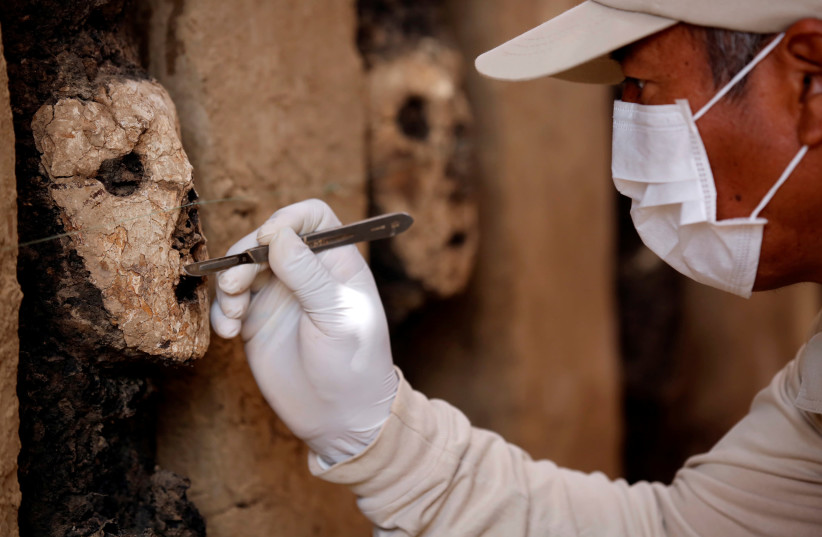
Archaeology News: Archaeologists find 800-year old mummy in Peru


Archaeologists find 800-year old mummy in Peru


The mummy was found inside an underground structure found on the outskirts of the city of Lima. In the tomb were also offerings including ceramics, vegetable remains and stone tools.