Monday, 31 January 2022

An exquisitely preserved egg reveals what birds have inherited from dinosaurs

JANUARY 31, 2022, by Darla K. Zelenitsky, The Conversation

An artist reconstruction of a baby oviraptorid in its egg. 
Credit: Julius Csotonyi, Author provided

Oviraptorosaurs are a group of birdlike dinosaurs that were part of the ancestral dinosaur lineage that later gave rise to birds. Oviraptorosaurs walked on two legs, had a powerful toothless beak and were covered in feathers.

One of the first known species, Oviraptor philoceratops, was discovered in the 1920s when a skeleton was uncovered alongside a nest of eggs in Cretaceous rocks of Mongolia's Gobi Desert. Paleontologists at the time assumed that the animal had died while attempting to raid the nest of another dinosaur—the name means "egg thief."

It wasn't until the mid-1990s, thanks to another discovery, that it was realized that the Oviraptor had actually been preserved in the act of tending to its own eggs. Since then, several important discoveries of oviraptorosaur eggs and nests have helped paleontologists reconstruct the reproductive and nesting habits of these unusual and birdlike dinosaurs.

In 2021, the latest such discovery revealed an exquisitely preserved skeleton of an oviraptorosaur curled in its egg. Our group of scientists from Canada, China and the United Kingdom led the study of this 70 million-year-old fossil from China, known as Baby Yingliang.

Baby Yingliang

Baby Yingliang is the first skeleton of a baby dinosaur showing precisely how the embryo was curled in its egg. Although the remains of other embryos have been found inside eggs before, their embryonic positions were uncertain because these skeletons were disarticulated or missing many bones.

During our study of the oviraptorosaur fossil, we recognized a trait that was long considered unique to birds that relates to how the embryo is tucked in the egg before hatching. In Baby Yingliang, the back is hunched in the blunt end of the egg and its head is lying on the abdomen with the tail curled along the opposite pointed end. The legs and feet are so folded up that they are lying on either side of the head and upper body. The embryo is positioned much like a chick that is only a few days from hatching.

Bird embryos, however, are known to tuck even further than what we found in Baby Yingliang. Immediately before hatching, the head moves under the wing where it rests on the shoulder, a position that helps ensure successful pipping and escape from the egg. Perhaps Baby Yingliang would have fully tucked like a bird if it had lived a little bit longer—its overall pose still suggests that such embryonic postures first evolved in dinosaurs before being passed down to birds.

An artist reconstruction of Baby Yingliang. 
Credit: Lida Xing/Shoulin Animation, Author provided

Brooding behaviors

There are also other egg-related features that birds have inherited from dinosaurs like oviraptorosaurs. These include the architecture of eggshell layers, the shape of the egg (one end is more pointed), the pigments that cause egg color and an open nest style. Even a nesting behavior called brooding where the parent sits on top of the eggs, long-thought to be practiced only by birds, first evolved in these dinosaurs.

In a stunning fossil discovery about 25 years ago, and a few like it since, the skeleton of an oviraptorosaur parent was found crouched on top of its eggs in a bird-like fashion.

What's interesting is that oviraptorosaurs arranged their eggs in the nest in a unique manner noticeably different from birds. The eggs, often with over 30 in a nest, were arranged in two or three stacked rings, and were oriented like the spokes of a bike tire. If these dinosaurs used body heat to incubate their eggs like today's brooding birds, the particular layout may have been crucial to expose all eggs to the parent's body in the central space of the ring.

The few brooding oviraptorosaur fossils that have been discovered so far are all from smaller species at around 100 kilograms or less, no bigger than the size of an ostrich. The species to which Baby Yingliang belonged would also have been about this size—the 17 centimeter egg weighed half a kilogram in life and was from an egg cluster just over half a meter across. Giant oviraptorosaurs, which are quite rare, were considerably larger, as were their eggs and nests.

Giant eggs, giant nest

In 2017, I was part of a team that studied another embryonic skeleton, known as Baby Louie. The skeleton was found with a group of eggs belonging to a new species of giant oviraptorosaur, which we named Beibeilong. As the largest known dinosaur eggs, they were over 45 centimeters long and weighed more than five kilograms each. Based on their size, the female would have weighed over 1,100 kilograms and the nest diameter was some two meters across.

Assuming Beibeilong behaved like other oviraptorosaur species, an obvious question was: How did this behemoth sit on the nest without crushing the eggs.

A fossilized giant oviraptorosaur nest from China. 
Credit: Kohei Tanaka, Author provided

In 2018, with another research team, we examined the eggs and nests of oviraptorosaur species ranging from 50 kilograms to the size of Beibeilong. We found that the eggshell of the Beibeilong-sized eggs was, at two millimeters thick, likely not strong enough to withstand the animal's entire weight.

Interestingly, we noticed that while nearly all oviraptorosaur species laid a ring of eggs with an open central space, the size of that space was relatively larger in giant species like Beibeilong. This suggested that giant species were constructing their egg ring differently from smaller species so there was plenty of space in the center to take the brunt of the body weight, also likely reducing their contact with the eggs.

Of birds and dinosaurs

Birds acquired many of their seemingly unique features from dinosaurs. Recent discoveries of fossilized eggs and nests have revealed birdlike characteristics in oviraptorosaurs associated with reproduction.

Several features related to their eggs, including brooding behaviors, are now known to have been passed down from dinosaurs, like oviraptorosaurs, to birds. The latest discovery, Baby Yingliang, uniquely preserves the embryonic position inside its egg, one that is remarkably similar to that of a bird embryo close to hatching.


Recommend this post and follow
The Life of Earth

Researchers discover new type of cellular communication in the brain

JANUARY 31, 2022, by The Scripps Research Institute

Scripps Research scientists tracked proteins tagged with biotin (black areas of this electron microscopy image) from retinal cells (pictured) to the visual cortex of the brain.
 Credit: The Scripps Research Institute

Scientists at Scripps Research have discovered hundreds of proteins that are constantly transported throughout the healthy brain in small membrane-enclosed sacs, revealing a new form of communication between brain cells. The findings, published this week in the journal Cell Reports, could help scientists better understand neurological diseases, including Alzheimer's and autism.

"This is an entirely new way that cells in the brain can communicate with one another that has never before been integrated into how we think about health and disease," says Hollis Cline, Ph.D., Hahn Professor of Neuroscience at Scripps Research. "It opens up a lot of exciting avenues of research."

To send signals throughout the brain, neurons typically communicate using chemicals called neurotransmitters, which move from one cell to an adjacent one. Hormones also circulate through the brain, affecting the growth of brain cells and helping forge new connections between neurons.

Previously, researchers had suspected that a small number of proteins may move more independently around the brain in isolated instances. For example, scientists studying Alzheimer's disease found that synuclein and tau—two proteins associated with neurodegeneration—could move between cells in the brains of animals affected by Alzheimer's. But they were not sure if this was related to the disease itself. Other teams have provided evidence that a protein originating from one cell can later be found in another; they could not eliminate the possibility, however, that the protein was disassembled into its amino acid building blocks and later reassembled in the destination cell.

In the new work, Cline and her colleagues used a method of labeling proteins that ensured they only tracked proteins that stay intact. The tag, a biotin molecule, cannot be reintegrated into new proteins if the proteins are disassembled. The research team introduced the tag into retinal ganglion cells in the eyes of rats. Eleven days later, they examined cells from the visual cortex, an area of the brain responsible for processing vision and physically distant from the retinal ganglion cells.

Cline's team next isolated any protein in the visual cortex that was tagged with biotin. They found more than 200 proteins and collaborated with Scripps Research professor John Yates III, Ph.D., to identify each protein using mass spectrometry.

"Previous methods didn't allow researchers to identify specific proteins being transported or watch the process at an ultrastructural level," says Lucio Schiapparelli, first author of the new paper and a former staff scientist at Scripps Research now at Duke University. "So, using this new combination of protein tagging and identification strategies allowed us to make headway in really understanding what was happening with these proteins."

The proteins identified included many with known functions in the brain, including the tau and synuclein seen moving between cells in Alzheimer's disease.

"This is a confirmation that in the healthy brain, tau and synuclein—and their movement around the brain—is normal," says Cline. "But with Alzheimer's disease it's a toxic form of the protein that is transported between neurons."

The researchers also used a different set of protein tags to show that, in most cases, these proteins were being transported between cells inside exosomes—small, membrane-enclosed compartments packed with proteins, like suitcases packed with clothes. This discovery can help pave the way for other researchers who want to follow protein movements in other areas of the brain, as well as compare interneuronal protein transport in healthy versus diseased brains. While the new work was carried out in the visual system, Cline says there's no reason not to think the results are further reaching.

"There are likely proteins being shuttled around in this mechanism all throughout the brain," she says. "What I really hope is that this spurs new interest in exploring the roles of intercellular communication that we had not known about until now."


Recommend this post and follow
The birth of modern Man

Magical but messy: Rome scares off its starlings

JANUARY 30, 2022, by Clement Melki

Between October and February every year, millions of starlings migrate from northern Europe to Italy.

As the sun sets over central Rome, five figures in white overalls move under the trees. They wave speakers emitting a mix of sharp cries, and the birds rise into the air.

Every winter, the skies over Italy's capital are filled with the mesmerising sight of thousands of starlings swooping and diving in unison.

But when they stop to rest on the trees, their droppings coat the pavements and cars below—prompting the city authorities, every year, to try to scare them away.

"We act on their fear reflex by using their own alarm call," said Marianna Di Santo, clad head-to-toe in white protective clothing and heading towards the birds gathered in trees around Termini central train station.

"It's as if they were warning each other that this is a dangerous place and they should move away," said Di Santo, whose company, Fauna Urbis, is hired by the Rome authorities to disperse the starlings.

Up to one million

Between October and February every year, millions of starlings migrate from northern Europe to Italy in search of warmer temperatures for the winter.

Their synchronised ballets—murmurations—over the Eternal City's centuries-old churches, palaces and ruins entrances passers-by.

"I've never seen such a thing in my life. It's spectacular," said Spanish tourist Eva Osuna, taking out her phone to capture the magic.

A member of Fauna Urbis carries out a wintering starling removal operation in central Rome on January 14, 2022.

The glossy dark-feathered birds, which measure up to 20 centimetres each, spend the day feeding in rural areas before heading back into town to sleep, explains ornithologist Francesca Manzia from Italy's League for Bird Protection (LIPU).

"In the city, the temperatures are higher and the light helps them find their way around, and protects them from predators," she told AFP.

Warmer temperatures in northern European caused by climate change have shortened the starlings' stay in Italy, but their sheer numbers make them a force to be reckoned with.

Between 500,000 and one million are believed to be in Rome this year, according to one expert.

Naturally "gregarious", according to Manzia, they stick together at night, creating collective dormitories in the trees.

She insisted the starlings "do not carry diseases" but pose problems "because of their droppings, which make the roads slippery and smell very strong".

In their nature

Such is the problem that, even on a clear day, it is not uncommon to see Romans walking along tree-lined streets with umbrellas as protection against the birds.

Warmer temperatures in northern Europe caused by climate change have shortened the starlings' stay in Italy.

City authorities use sounds and also lights not to chase the birds out of the city, but to split them up into smaller, more manageable groups.

Sounds are "the most simply and effective" way of moving the birds on, said Valentina de Tommaso from Fauna Urbis.

She works two or three times a week near Termini, which—with its lights and shelter from the wind—is a "comfortable" place for the birds to rest.

"We play recordings for about 10 minutes, with breaks in between so they do not get used to the noise"—a tactic that aims to be annoying but harmless, she said.

The piercing noise draws a small crowd, some of them approving, others less so.

"They pose lots of problems. Walking around under flocks of starlings is not really ideal," said Francesco Fusco, a 55-year-old engineer.

"They are magnificent," counters 16-year-old Alessio Reiti, saying he does not understand why they need to be scared away.

"It's in their nature. We are not going to make them wear nappies!" he said, laughing.


Recommend this post and follow
The Life of Earth

Sunday, 30 January 2022

The Natural World : Rare insect species with leaf-shaped genitals found in Uganda


Rare insect species with leaf-shaped genitals found in Uganda


Phlogis kibalensis, the new leafhopping discovery, is the first member of the rare genus to be stopped since 1969.


Peruvian gold rush turns pristine rainforests into heavily polluted mercury sinks

JANUARY 28, 2022, by Duke University

Artisinal gold miners in the Peruvian Amazon use open pit fires to extract gold, sending methylmercury into the atmosphere. New data shows how that mercury is absorbed by nearby ecosystems. 
Credit: Melissa Marchese

If you had to guess which part of the world has the highest levels of atmospheric mercury pollution, you probably wouldn't pick a patch of pristine Amazonian rainforest. Yet, that's exactly where they are.

In a new study appearing Jan. 26 in the journal Nature Communications, an international team of researchers show that illegal gold mining in the Peruvian Amazon is causing exceptionally high levels of atmospheric mercury pollution in the nearby Los Amigos Biological Station.

One stand of old-growth pristine forest was found to harbor the highest levels of mercury ever recorded, rivaling industrial areas where mercury is mined. Birds from this area have up to twelve times more mercury in their systems than birds from less polluted areas.

The impact and spread of mercury pollution have primarily been studied in aquatic systems. In this study, a team of researchers led by Jacqueline Gerson, who completed this research as part of her Ph.D. at Duke, and Emily Bernhardt, professor of Biology, provide the first measurements of terrestrial deposits of atmospheric methylmercury, the most toxic form of mercury.

Illegal miners separate gold particles from river sediments using mercury, which binds to gold, forming pellets large enough to be caught in a sieve. Atmospheric mercury is released when these pellets are burned in open fire ovens. The high temperature separates the gold, which melts, from the mercury, which goes up in smoke. This mercury smoke ends up being washed into the soil by rainfall, deposited onto the surface of leaves, or absorbed directly into the leaves' tissues.

To measure this mercury, Gerson and her team collected samples of air, leaf litter, soil and green leaves from the top of trees, which were obtained with the help of a huge slingshot. They focused their collection on four types of environments: forested and deforested, near mining activity or far from mining activity. Two of the forested areas near mining activity are patches with small, scraggly trees, and the third is Los Amigos Biological Station, a pristine old-growth forest that has never been touched.

Deforested areas, that would have received mercury solely through rainfall, had low levels of mercury regardless of their distance to the mining activity. Forested areas, which accumulate mercury both on their leaves and into their leaves, weren't all the same. The four areas with scraggly trees, two near mining activity and two further away, had levels of mercury in keeping with world-wide averages.

"We found that mature Amazonian forests near gold mining are capturing huge volumes of atmospheric mercury, more than any other ecosystem previously studied in the entire world," said Gerson, who is currently a postdoctoral researcher at the University of California, Berkeley.

For all forested areas, Gerson and her team measured a parameter called leaf area index, which represents how dense the canopy is.

They found that mercury levels were directly related to leaf area index: the denser the canopy, the more mercury it holds. The canopy acts like a catch-all for the gases and particulates originating from the nearby burning of gold-mercury pellets.

To estimate how much of the mercury caught in the forest canopy was making its way through the food web, the team measured the mercury accumulated in feathers of three songbird species, in reserve stations near and far from mining activity.

Birds from Los Amigos had on average three times, and up to 12 times more mercury in their feathers than those from a more remote biological station. Such high concentrations of mercury could provoke a decline of up to 30% in these birds' reproductive success.

"These forests are doing an enormous service by capturing a huge fraction of this mercury and preventing it from getting to the global atmospheric pool," Bernhardt said. "It makes it even more important that they not be burned or deforested, because that would release all that mercury back to the atmosphere."

Small-scale artisanal gold mining is an important livelihood for local communities. Akin to the American gold-rush that ravaged California in the 1850s, it is driven by economic necessity, and disproportionally impacts indigenous communities.

"This is not something new or exclusive to this area," Bernhardt said. "A very similar thing, with very similar methods, has already been done throughout many of the wealthy countries of the world where gold was available. The demand is just pushing mining further into new areas."

"There's a reason why people are mining," Gerson said. "It's an important livelihood, so the goal is not to get rid of mining completely, nor is it for people like us coming in from the United States to be the ones imposing solutions or determining what should happen."

"The goal is to highlight that the issues are far vaster than water pollution, and that we need to work with local communities to come up with ways for miners to have a sustainable livelihood and protect indigenous communities from being poisoned through air and water," Gerson said.


Recommend this post and follow
The birth of modern Man

Radiocarbon dating from prehistoric cemetery reveals human stress caused by global cooling event 8,200 years ago

JANUARY 27, 2022, by University of Oxford

Site of the early Holocene cemetery of Yuzhniy Oleniy Ostrov, at Lake Onega, some 500 miles north of Moscow. 
Credit: Pavel Tarasov

New insight into how our early ancestors dealt with major shifts in climate is revealed in research, published today in Nature Ecology & Evolution, by an international team, led by Professor Rick Schulting from Oxford University's School of Archaeology.

It reveals, new radiocarbon dates show the large Early Holocene cemetery of Yuzhniy Oleniy Ostrov, at Lake Onega, some 500 miles north of Moscow, previously thought to have been in use for many centuries, was, in fact, used for only one to two centuries. Moreover, this seems to be in response to a period of climate stress.

The team believes the creation of the cemetery reveals a social response to the stresses caused by regional resource depression. At a time of climate change, Lake Onega, as the second largest lake in Europe, had its own ecologically resilient microclimate. This would have attracted game, including elk, to its shores while the lake itself would have provided a productive fishery. Because of the fall in temperature, many of the region's shallower lakes could have been susceptible to the well-known phenomenon of winter fish kills, caused by depleted oxygen levels under the ice.

The creation of the cemetery at the site would have helped define group membership for what would have been previously dispersed bands of hunter-gatherers—mitigating potential conflict over access to the lake's resources.

But when the climate improved, the team found, the cemetery largely went out of use, as the people presumably returned to a more mobile way of life and the lake became less central.

The behavioral changes—to what could be seen as a more 'complex' social system, with abundant grave offerings—were situation-dependent. But they suggest the presence of important decision makers and, say the team, the findings also imply that early hunting and gathering communities were highly flexible and resilient.

The results have implications for understanding the context for the emergence and dissolution of socioeconomic inequality and territoriality under conditions of socio-ecological stress.

Radiocarbon dating of the human remains and associated animal remains at the site reveals that the main use of the cemetery spanned between 100-300 years, centring on ca. 8250 to 8,000 BP. This coincides remarkably closely with the 8.2 ka dramatic cooling event, so this site could provide evidence for how these humans responded to a climate-driven environmental change.

The Holocene (the current geological epoch which began approximately 11,700 years before present) has been relatively stable in comparison to current events. But there are a number of climate fluctuations recorded in the Greenland ice cores. The best known of these is the 8,200 years ago cooling event, the largest climatic downturn in the Holocene, lasting lasted one to two centuries. But there is little evidence that the hunter-gatherers, who occupied most of Europe at this time, were much affected, and if they were, in what specific ways.

Yuzhniy Oleniy Ostrov is one of the largest Early Holocene cemeteries in northern Eurasia, with up to 400 possible graves, 177 of which were excavated in the 1930s by a team of Russian archaeologists. Based on their work, the cemetery site has an important position in European Mesolithic studies, in part because of the variation in the accompanying grave offerings. Some graves lack these entirely, to those with abundant and elaborate offerings.


Recommend this post and follow
The birth of modern Man

“Living Walls” Can Reduce Heat Lost From Buildings by Over 30%

By UNIVERSITY OF PLYMOUTH JANUARY 29, 2022

The Sustainability Hub at the University of Plymouth has been retrofitted with an exterior living wall façade, comprised of a flexible felt fabric sheet system with pockets allowing for soil and planting. 
Credit: University of Plymouth

Retrofitting an existing masonry cavity walled building with a green or living wall can reduce the amount of heat lost through its structure by more than 30%, according to new research.

The study, conducted at the University of Plymouth, centered around the Sustainability Hub – a pre-1970s building on the university campus – and compared how effectively two sections of its walls retained heat.

Despite being on the same west-facing elevation, one of those sections had been retrofitted with an exterior living wall façade, comprised of a flexible felt fabric sheet system with pockets allowing for soil and planting.

After five weeks of measurements, researchers found the amount of heat lost through the wall retrofitted with the living façade was 31.4% lower than that of the original structure.

They also discovered daytime temperatures within the newly-covered section remained more stable than the area with exposed masonry, meaning less energy was required to heat it.

The study is one of the first to ascertain the thermal influence of living wall systems on existing buildings in temperate scenarios and was conducted by academics associated with the University’s Sustainable Earth Institute.

Writing in the journal Building and Environment, they say while the concept is relatively new, it has already been shown to bring a host of benefits, such as added biodiversity.

However, with buildings directly accounting for 17% of UK Greenhouse Gas Emissions – and space heating accounting for over 60% of all energy used in buildings – these new findings could be a game-changer in helping the UK achieve its net-zero commitments.

Dr. Matthew Fox, a researcher in sustainable architecture and the study’s lead author, said:

“Within England, approximately 57% all buildings were built before 1964. While regulations have changed more recently to improve the thermal performance of new constructions, it is our existing buildings that require the most energy to heat and are a significant contributor to carbon emissions. It is, therefore, essential that we begin to improve the thermal performance of these existing buildings if the UK is to reach its target of net zero carbon emission by 2050, and help to reduce the likelihood of fuel poverty from rising energy prices.”

The University is renowned globally for its research into sustainable building technologies, and this study’s findings are already being taken forward as part of the University’s Sustainability Hub: Low Carbon Devon project.

Supported by an investment from the European Regional Development Fund (ERDF), the three-year £2.6 million program is exploring low carbon solutions through research and support for local enterprises.

Specifically, this aspect of the project is looking to optimize the performance and sustainability of external living walls in sustainable building design through research on the thermal properties, and carbon sequestration, offered by different plant and soil types.

Dr. Thomas Murphy, one of the study’s authors and an Industrial Research Fellow on the Low Carbon Devon project, added:

“With an expanding urban population, ‘green infrastructure’ is a potential nature-based solution which provides an opportunity to tackle climate change, air pollution and biodiversity loss, whilst facilitating low carbon economic growth. Living walls can offer improved air quality, noise reduction and elevated health and well-being. Our research suggests living walls can also provide significant energy savings to help reduce the carbon footprint of existing buildings. Further optimizing of these living wall systems, however, is now needed to help maximise the environmental benefits and reduce some of the sustainability costs.”


Recommend this post and follow
The Life of Earth

Saturday, 29 January 2022

Magnetic navigation: Songbirds use the Earth's magnetic field as a stop sign during migration

JANUARY 28, 2022, by University of Oldenburg

During their migration, reed warblers use magnetic information as a ‘stop sign’, with magnetic inclination in particular telling the birds that they have arrived at their destination. 
Credit: Thomas Miller

A new study published today in Science has shed light on how birds navigate back to their breeding site after flying across two continents.

The study, part of an international collaboration led by researchers at the University of Oxford and including scientists from the University of Oldenburg, suggests that information extracted from the Earth's magnetic field tells birds where and when to stop migrating. This trick allows them to precisely target the same breeding site year-on-year from thousands of kilometers away.

How birds sense the Earth's magnetic field has been the subject of intense research. Birds might even 'see' magnetic field lines, and possibly use this ability to both determine the direction they're facing in and where they are.

Dr. Joe Wynn, formerly of the University of Oxford and now a researcher at the Institute for Avian Research, Germany, said that "whilst we know an increasing amount about how birds inherit migratory information from their parents, how they return to the same site year-on-year with pinpoint accuracy has remained elusive. It's quite exciting, therefore, that we've been able to find evidence that magnetic cues could be used by songbirds trying to re-locate their homes." He started developing the idea for the study during a stay as a guest scientist in the research group of biologist Prof. Dr. Henrik Mouritsen at the University of Oldenburg. Mouritsen was also involved in data analysis for the study.

You have arrived at your destination

The team analyzed data from nearly 18,000 reed warblers to investigate whether the birds used the Earth's magnetic field when finding their breeding site. Reed warblers are tiny songbirds that fly across the Sahara Desert each year to spend the summer in Europe.

They found that, as the magnetic field of Earth moved slightly, the sites to which birds returned moved with it, suggesting that birds homed to a moving magnetic target. Birds appeared to use magnetic information as a 'stop sign', with magnetic inclination in particular telling birds that they had arrived at their breeding location.

The work utilized 'ringing' data. For nearly a century, uniquely numbered metal rings have been attached to the legs of birds from across Europe.

Dr. Wynn added that "Ringing data are a fantastic way to answer questions about migration, simply because they've been gathered for so many years across a very large area…and when looking at where birds and ringed and then recovered, it seems that reed warblers use a single magnetic coordinate a bit like a 'stop sign'; when they reach the right magnetic field value, they stop migrating."

Why use the magnetic field to inform return migration?

Dr. Wynn explains that "Magnetic information seems to be pretty stable, meaning the magnetic field doesn't change very much in a given location year-on-year. Aiming for a specific magnetic value during migration might make sense then, and the cue we think birds are using, inclination, appears the most stable aspect of the magnetic field. We think this gives the birds the best chance of making it back to the breeding site."

In conclusion Dr. Wynn said that "the trans-continental migration of birds that weigh less than a teaspoon is remarkable for so many reasons, but the ability to precisely pinpoint the breeding site from half the world away is perhaps the most extraordinary aspect of all. That we can investigate this using data gathered by scientists and bird-watchers alike is extremely exciting, and we hope that this use of citizen science data inspires others to go out, watch birds and get excited about science more generally."


Recommend this post and follow
The Life of Earth

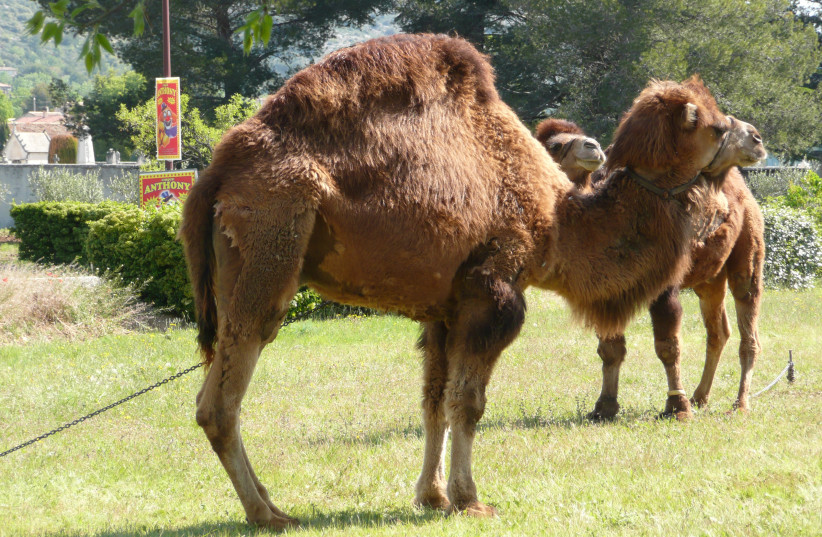
Archaeology News: Ancient Arab temple reveals evidence of hybrid camels - study


Ancient Arab temple reveals evidence of hybrid camels - study


A new study finds that camel hybridization was being practiced by a kingdom in the 2,000-year-old ancient city of Hatra in northern Iraq, previously damaged by ISIS.


US East Coast hunkers down as 'bombogenesis' snowstorm hits

BBC News
https://www.bbc.com/news/world-us-canada-60177979


In New York City, work to clear the streets began as the storm arrived

The US East Coast is hunkering down as a major blizzard hits the region for the first time in four years.

The storm is forecast to stretch from the Carolinas to Maine, packing hurricane-force winds in coastal parts. Five states have declared emergencies.

Mayor Michelle Wu of Boston, a city that is no stranger to snowfall, said the storm could be "historic".

More than two feet of snow could fall in New England. Weather officials also warn of flooding near the coast.

Over 5,000 US flights were cancelled between Friday and Sunday, according to FlightAware.

Forecasters say there is a chance the storm, known as a Nor'easter, will blanket the Boston area with up to 2ft (61cm) of snow.

The current record of 27.6in (70cm) within 24 hours was set in 2003.


Dangerous winds and heavy snow on the way from US Nor'easter

Experts say the storm will undergo bombogenesis, meaning that colder air is expected to mix with warmer sea air, leading to a swift drop in atmospheric pressure. The process leads to a so-called bomb cyclone.

"Travel should be restricted to emergencies only," warned the National Weather Service (NWS) in Boston.

"If you must travel, have a winter survival kit with you. If you get stranded, stay with your vehicle."

The powerful storm began to hit the country's coast in the early hours of Saturday morning, with snowfall already reported in several states.

Forecasters have warned the storm could bring 'historical snowfall'


Winds are expected to strengthen, possibly reaching hurricane-level speeds, according to the NWS and Accuweather. A blizzard warning has been issued throughout the north-east, the first time such an alert has been issued since 2018.

The governors of New York, New Jersey, Maryland, Rhode Island and Virginia declared states of emergency, telling residents to stay off the roads for their own safety.

75 million people are in the path of the storm, according to CBS News.

New York Mayor Eric Adams cancelled outdoor dining for Saturday, as well as vaccine appointments.

New York Governor Kathy Hochul suggested that residents stay home "with a six pack of beer and wait it out".

Florida is also expected to see some of its coldest temperatures in years, leading to iguanas - a cold-blooded lizard species - to become immobilised and fall out of trees.

Watch these Chicago trains drive over flaming tracks in snowy weather.


Recommend this post and follow
The Life of Earth

Meat and masculinity: Why some men just can't stomach plant-based food

JAN. 28, 2022, by D. Marinova, C. Bryant, D. Bogueva, The Conversation

Plant-based burgers are hitting the mainstream – but are they meaty enough for some men? 
Credit: Shutterstock

Meat alternatives are suddenly everywhere, from burger joints to supermarket shelves to restaurant-grade food.

One problem? For men, in particular, there is often a visceral attachment to slaughter-derived meat. This could pose a stumbling block for an industry worth an estimated $A9.4 billion globally in 2020 and seeing significant growth, with grocery sales in Australia up by 46% in 2020.

Our new research is based on interviews with 36 men who recently went to vegan restaurants in Sydney and tried a plant-based burger. We found none of these men, who usually eat animal meat four to five times a week or more, were likely to include plant-based alternatives in their diets permanently.

But why? That's the interesting part. Many of our interviewees made a strong link between animal meat and their own masculinity. "I don't want to end up with my friends laughing at me over a plant-based burger," one said. Another told us plant-based burgers were "ruining [his] reputation as a man." A third said he felt guilty choosing plant-based burgers: "I was feeling I was sacrificing my manhood, my masculinity. It's even worse when you are kind of forced to do it as everyone around is doing it. There is no other option."

Why do some men react so strongly to meat alternatives?

We interviewed men aged 18–40, as these are the generations most likely to embrace flexitarianism (meat-reduction) and include more plant-based foods. That's why it was surprising to see the strength of their negativity.

We believe two psychological responses are at work:
The men we interviewed saw the idea of a vegan-only menu as a blow to their freedom to choose, regardless of whether they enjoyed the burger. They were determined to restore their freedom. This is in line with the idea of psychological reactance, which suggests people will react very strongly to perceived loss of freedoms.
On the other hand, the men we interviewed wanted to impress or please their girlfriends or partners who had taken them to the restaurant. This is linked to impression management theory, which describes how we strive to be in control of how others see us. Earlier research has shown men, in particular, can buy into eating larger and unhealthy meals as part of impression management. Our interviewees had to juggle how their partner saw them as well as how their friends and other men would see their choices.

What happens when these two theories collide? You get themes emerging like these:
Focusing on the novelty of a vegan restaurant. One 18 year old told us: "You don't need to be a vegan to go and try a veggie burger. I am not a vegan, but everyone is talking about [these burgers]. I am not even kidding, they are so popular." A 29 year old said: "We used to go out and eat steaks and burgers in pubs and steakhouses […] now we are mingling with the veggie burger eaters. Strange world!"
Protecting masculinity through food choice. A 22 year old told us: "Friends nowadays can trace you everywhere. I don't want to end up with my friends laughing at me over a plant-based burger," while a 19 year old said he had to "guard what [my girlfriend] is saying in front of my male friends. I think she is smart enough and understands the implications of this. We do have a vegan friend, and everybody is constantly fooling him and it's very annoying to think that I can get in his place with my vegetarian burger."
Skepticism over the taste of the plant-based burgers. One 32 year old told us it was "tasteless for me […] not even close to real meat. You could have it once but that's it."
Concerns over the health of plant-based burgers. A 21 year old told us plant-based burgers were not better for health compared to meat. "They are ultra-processed imitations," he said.

Why does this matter?

The emergence of this new industry is a clear response to urgent calls to change our current food systems due to the heavy environmental footprint of animals bred for meat, destruction of pristine habitat to create more fields, as well as animal welfare concerns. Our reliance on meat also affects our health, both on an individual and population level. New alternatives to animal-sourced meat represent the start of the transition to more sustainable food choices.

Unfortunately, plant-based alternatives can only help us tackle our overlapping environmental crises of climate change, extinctions, wilderness loss and pollution if people actually want to eat them in preference to animal muscle. This may mean improving the ingredients used in some alternative products and reducing the processing to boost how healthy they are.

Forcing people to abandon animal meat is a non-starter, given how strongly we react to perceived loss of freedoms. That means we need to go after the psychological reasons some men, in particular, have such a strong attachment to animal meat.

How can we do that? Social marketing would be a good start, given the successes of previous common-good campaigns around making tobacco use less popular, uptake of sunscreen and COVID vaccinations.

Our study shows any marketing messages to encourage men to take up plant-based alternatives will need to be tailored very carefully. These could include:
Describing plant-based foods as a deliberate choice to make to improve nutrition, reduce health risks and improve the environment. This approach would be likely to suppress the reactance backlash.
Presenting new forms of male identity focused on food to describe a masculinity centered around caring for themselves and for wilderness to create a positive impression management.

Even with reluctant or avoidant eaters, the plant-based sector is still expected to grow strongly, adding $3 billion to the Australian economy by 2030.

Just imagine if we could bring everyone along—even self-described carnivores.


Recommend this post and follow
The birth of modern Man

Friday, 28 January 2022

Scientists find link between antibiotics and colon cancer

JANUARY 27, 2022, by University of Aberdeen

Credit: Unsplash/CC0 Public Domain

Scientists from the University of Aberdeen, NHS Grampian and Queen's University Belfast have found that antibiotic use may increase the risk of developing colon cancer, potentially more so among younger people.

The study of almost 40,000 people compared antibiotic use and lifestyle factors of those who had colorectal cancer and those who didn't. While no relationship was found with rectal cancer, antibiotic use was found to be associated with the development of colon cancer.

The researchers also found for the first time that, while the overall numbers remain relatively low, antibiotic use was linked with an estimated 50 percent higher risk of colon cancer in people aged under 50, and an estimated 9 percent higher risk in those 50 and over.

Sarah Perrott, from the University of Aberdeen and co-first author of the research explains: "Antibiotic use is very common, and it is important to note that not everyone who uses antibiotics will get bowel cancer.

"However, while invaluable in medicine, antibiotics should be used appropriately and only when necessary."

Published in the British Journal of Cancer, the Cancer Research UK funded study, analyzed data from the Primary Care Clinical Informatics Unit Research (PCCIUR) national primary care database. From this routinely gathered data, the team identified 7,903 people with colorectal cancer and compared them to more than 30,418 matched people without a cancer diagnosis. The researchers controlled for genetic factors and non-genetic factors such as underlying health conditions, to try to determine whether antibiotic use is a risk factor for colon cancer. To understand the effects of other risk factors, they then adjusted for alcohol consumption, smoking and weight.

Early-onset and later-onset colon cancer were investigated separately as the evidence suggests that risk factors may differ between early-onset and later-onset disease.

Previously, only a small number of studies investigating an antibiotic and colon cancer link existed and these studies were limited to older adults and showed mixed results.

Sarah Perrott adds: "We found antibiotic exposure was associated with colon cancer among all age groups.

"This, along with multiple other dietary and lifestyle factors, may be contributing to increased cases of colon cancer among young people."

Reasons behind this link are purported to be due to the impact of antibiotics on the natural diversity of bacteria within the gut microbiome, which can potentially lead to altered bacterial activity and interfere with normal immune function. This can lead to chronic inflammation and theoretically increase the risk of cancer.

Sarah Perrott adds: "Taking antibiotics is likely to have a detrimental impact on the gut microbiota. Antibiotics can unintentionally induce gut dysbiosis, which may lead to permanent changes to the natural gut environment. This disruption to the gut microbiome may be what drives this increase in risk.

"It is important to note that diet, lifestyle, stress, and so many different factors can affect gut health and antibiotic use is just one of those factors."

The team suggest that prescribing of antibiotics should be considered very carefully: "Regardless of our findings, antibiotic prescribing should be judicious due the pressing concern of antimicrobial resistance.

"Healthcare professionals and members of the public need to be aware that unnecessary antibiotic use, especially among young people, should be avoided." Miss Perrott adds.

They also suggest that probiotic supplements could be useful to counteract the negative effects of antibiotics: "Probiotic supplements contain strains of live microbes and aim to improve or restore the gut microbiome. Although there is limited evidence so far, perhaps pairing an antibiotic with a probiotic drug could limit the incidence of gut microbiome dysbiosis, given that antibiotic exposure is often necessary and unavoidable."

Dr. Ron McDowell, Centre for Public Health, Queen's University said: "This study shows the value of using the high-quality data being routinely collected by our health service to inform clinical practice. Further studies are required to evaluate the long-term effects of antibiotics on gut health."

Senior author Dr. Leslie Samuel, Consultant GI Oncologist in NHS Grampian said: "We are seeing more cases where people under 50 are being diagnosed with colorectal cancer—a disease traditionally seen in older people. Many do not have factors we might expect to see, such as diabetes, obesity, high alcohol intake and sedentary lifestyle.

"The gut microbiome comprises a delicate balance of bacteria and disruption to that—be it from lifestyle factors or from repeated use of antibiotics as we have seen here, can have very serious consequences."

Alice Davies, health information manager at Cancer Research UK, said: "The results of this study build on previous research examining a link between antibiotic use and colon cancer.

"Currently there isn't enough evidence to say if antibiotics are definitely increasing people's risk, but this gives us another piece of the puzzle. Continued research is needed, we still need to understand which antibiotics might increase the risk, how this happens, and how much they increase risk by.

"Antibiotics are an essential tool in combatting common illnesses so it's important to follow your doctor's advice on taking them."

Co-author Professor Peter Murchie, a GP and professor of primary care at the University of Aberdeen added: "Against a background of rising antibiotic resistance these data come as a timely reminder to GPs and their patients that taking antibiotics can have consequences, some of which may be yet to emerge. Their use should be reserved for clinical situations where they are truly necessary."


Recommend this post and follow
The Life of Earth