Thursday, 30 June 2022

HOME HEALTH NEWS How Eating Eggs Can Protect Against Heart Disease and Improve Heart Health

By ELIFE JUNE 30, 2022


Individuals who ate a moderate amount of eggs possessed more large HDL molecules in their blood, which assist in the removal of cholesterol from blood vessels and hence guard against blockages that may cause to heart attacks and strokes.

According to new research, eating eggs may increase the quantity of heart-healthy metabolites in the blood, which may help explain why moderate egg consumption is protective against cardiovascular disease

Researchers recently published findings in the journal eLife that demonstrate how eating eggs can boost the number of heart-healthy metabolites in the blood.

According to the research, consuming up to one egg daily may help reduce the risk of cardiovascular disease.

Despite the fact that eggs are a rich source of dietary cholesterol, they also provide a variety of important nutrients. There is contradictory evidence about whether eating eggs is good or bad for your heart. According to a 2018 study in the journal Heart, those who ate eggs regularly (about one egg per day) had a much reduced risk of heart disease and stroke than people who ate eggs less often. This study involved roughly 500,000 individuals in China. The authors of this research have now conducted a population-based study to further understand this association by looking at how egg intake impacts indicators of cardiovascular health in the blood.

“Few studies have looked at the role that plasma cholesterol metabolism plays in the association between egg consumption and the risk of cardiovascular diseases, so we wanted to help address this gap,” explains first author Lang Pan, MSc at the Department of Epidemiology and Biostatistics, Peking University, Beijing, China.

Pan and the team selected 4,778 participants from the China Kadoorie Biobank, of whom 3,401 had a cardiovascular disease and 1,377 did not. They used a technique called targeted nuclear magnetic resonance to measure 225 metabolites in plasma samples taken from the participants’ blood. Of these metabolites, they identified 24 that were associated with self-reported levels of egg consumption.

Their analyses showed that individuals who ate a moderate amount of eggs had higher levels of a protein in their blood called apolipoprotein A1– a building-block of high-density lipoprotein (HDL), also known as ‘good lipoprotein’. These individuals especially had more large HDL molecules in their blood, which help clear cholesterol from the blood vessels and thereby protect against blockages that can lead to heart attacks and stroke.

The researchers further identified 14 metabolites that are linked to heart disease. They found that participants who ate fewer eggs had lower levels of beneficial metabolites and higher levels of harmful ones in their blood, compared to those who ate eggs more regularly.

“Together, our results provide a potential explanation for how eating a moderate amount of eggs can help protect against heart disease,” says author Canqing Yu, Associate Professor at the Department of Epidemiology and Biostatistics, Peking University. “More studies are needed to verify the causal roles that lipid metabolites play in the association between egg consumption and the risk of cardiovascular disease.”

“This study may also have implications for Chinese national dietary guidelines,” adds senior author Liming Li, Boya Distinguished Professor at the Department of Epidemiology and Biostatistics, Peking University. “Current health guidelines in China suggest eating one egg a day, but data indicate that the average consumption is lower than this. Our work highlights the need for more strategies to encourage moderate egg consumption among the population, to help lower the overall risk of cardiovascular disease.”

The study was funded by the National Natural Science Foundation of China, The Kadoorie Charitable Foundation in Hong Kong, the Chinese Ministry of Science and Technology and the National Key Research and Development Program of China.


Recommend this post and follow
The Life of Earth

The pair of Orcas deterring Great White Sharks—by ripping open their torsos for livers

JUNE 30, 2022, by Taylor & Francis

Lead author Alison Towner with the carcass of a Great White Shark, washed up on shore following an Orca attack. 
Credit: ©Marine Dynamics/ Dyer Island Conservation Trust. Image by Hennie Otto

A pair of Orca (Killer Whales) that have been terrorizing and killing Great White Sharks off the coast of South Africa since 2017 has managed to drive large numbers of the sharks from their natural aggregation site.

A new study, published today in the peer-reviewed African Journal of Marine Science, uses long-term sightings and tagging data to show that the Great Whites have been avoiding certain regions of the Gansbaai coast—territories which they have dominated over many years—ever since for fear of being hunted by Orca.

Since 2017 eight Great White Sharks have washed up on shore following an Orca attack. Seven of them had their livers removed, some their hearts too. Their wounds are distinctively made by the same pair of Orcas, who are likely to have killed more (which haven't washed up on shore). It is widely understood that other Orcas are also capable of such attacks.

The findings add further weight to an argument that suggests sharks use their 'flight' sense of fear to trigger a rapid, long-term emigration en masse when their marine predator is nearby.

In this latest research, carried out over five-and-a-half years, 14 sharks have been tracked fleeing the areas when the Orcas are present and visual sightings have dropped dramatically in certain Western Cape Bays. Located approximately 100 km east of Cape Town, Gansbaai was a world-renowned place for spotting this legendary shark, with tourists across the globe visiting and partaking in cage diving.

Reporting on the findings, lead author Alison Towner, a Senior White Shark Biologist, at the Dyer Island Conservation Trust, says: "Initially, following an Orca attack in Gansbaai, individual Great White Sharks did not appear for weeks or months. What we seem to be witnessing though is a large-scale avoidance (rather than a fine-scale) strategy, mirroring what we see used by wild dogs in the Serengeti in Tanzania, in response to increased lion presence. The more the Orcas frequent these sites, the longer the Great White Sharks stay away.

"The research is particularly important, as by determining how large marine predators respond to risk, we can understand the dynamics of coexistence with other predator communities; and these dynamics may also dictate the interactions between competitors or intra-guild predator/prey relationship."

Alison, from Lancashire in the UK, is a Ph.D. candidate at the Rhodes University in Makhanda, Eastern Cape. She lives in Gansbaai and has studied Great White Sharks for the last 15 years, learning about their movement patterns through tagging data. Regularly found on a boat and having witnessed many huge Great White Sharks, she has previously described the area as "simply special, in terms of marine life—few places compare to this truly diverse and beautiful area".

Prior to these predations on the Great White Sharks, there were only two instances since data collection began in Gansbaai where they were absent for a week or more: one week in 2007, and 3 weeks in 2016.

So, what Alison, and other colleagues at institutions she represents such as Marine Dynamics Academy, have recently witnessed first-hand (by physically retrieving the carcasses of attacked sharks—as pictured) is this new absence is unprecedented for the area.

And, she explains, it is changing the sea's very ecosystem: "It has triggered the emergence of a new mesopredator to the area, the Bronze Whaler Shark—which is known to be eaten by the Great White Shark—and these Bronze Whalers are also being attacked by the Orcas too, who are indicating a level of experience and skill in hunting large sharks.

"However, balance is crucial in marine ecosystems, for example, with no Great White Sharks restricting Cape Fur seal behavior, the seals can predate on critically endangered African Penguins, or compete for the small pelagic fish they eat. That's a top -down impact, we also have 'bottom up' trophic pressures from extensive removal of Abalone, which graze the kelp forests these species are all connected through.

"To put it simply, although this is a hypothesis for now, there is only so much pressure an ecosystem can take, and the impacts of Orcas removing sharks, are likely far wider-reaching."

But, what drew the pair of Orcas, easily recognizable by their distinctive collapsed dorsal fins, to this new territory?

Other, yet-to-be-published data, suggests the Orcas' presence is increasing in coastal regions of South Africa and this pair might be members of a rare shark-eating morphotype, known to hunt at least three shark species as a prime source of nutrition in South Africa.

"This change in both top predators' behavior could," Alison says, "be related to a decline in prey populations, including fishes and sharks, causing changes in their distribution pattern.

"We know that Great White Sharks face their highest targeted mortality in the anti-shark bather protection nets in KwaZulu Natal, they simply cannot afford additional pressure now from Orca, killer whale predation."

What it means for populations of the Great White could be more pronounced and it is "unclear" what the pressure may do, Alison states.

"The Orcas are targeting subadult Great White Sharks, which can further impact an already vulnerable shark population owing to their slow growth and late-maturing life-history strategy. Increased vigilance using citizen science (e.g. fishers' reports, tourism vessels), as well as continued tracking studies, will aid in collecting more information on how these predations may impact the long-term ecological balance in these complex coastal seascapes."

As with all studies, alternative explanations for the findings should be considered. The authors suggest that sea surface temperature can have an impact on the Great White's recent absence, "however, the immediate and abrupt decline in sightings at the beginning of 2017 and the extended and increasing periods of absence cannot be explained" by this.

"Other potential explanations for a decline at Gansbaai," they say, "could be direct fishing of Great White Sharks or the indirect effect of fishery-induced declines in potential prey". However, they state that while this could "potentially contribute to an overall decline in numbers of Great Whites in South Africa, they are unlikely to explain the sudden localized decline"


Recommend this post and follow
The Life of Earth

Dogs Could Have Joined Humans More Than Once, Ancient Wolf DNA Has Revealed

MICHELLE STARR 30 JUNE 2022

(Joe McDonald/Getty Images)

The beloved pooch snoring on your couch or sticking a snoot under your arm at dinner time came from a much wilder origin. At some point, dogs diverged from gray wolves under the guidance of domestication, to become the diverse fuzzbutts that fill our homes and hearts with such joy today.

Exactly when and how this process took place, however, is something of a mystery. Now ancient DNA, including that of wolves preserved in permafrost for tens of thousands of years, is shedding some light on how wild wolves became some of our best non-human friends.

"Through this project we have greatly increased the number of sequenced ancient wolf genomes, allowing us to create a detailed picture of wolf ancestry over time, including around the time of dog origins," explained geneticist Anders Bergström of The Francis Crick Institute in the UK.

"By trying to place the dog piece into this picture, we found that dogs derive ancestry from at least two separate wolf populations – an eastern source that contributed to all dogs and a separate more westerly source that contributed to some dogs."

All domestic dogs today, from the teensiest chihuahua to the mightiest mastiff, belong to the same species, Canis familiaris. And all are descended from wolf ancestry shared with today's gray wolf (Canis lupus). But the timeline is murky, and hotly debated. Some scientists controversially suggest that the process began over 100,000 years ago.

Recent work by Bergström and his colleagues included the DNA of 32 dogs dating between 100 and 32,000 years ago. They found that dogs had diversified by 11,000 years ago, so it had to have happened before then. It's generally accepted that domestication and therefore diversification began sometime between 40,000 and 20,000 years ago, and likely more than once, in different parts of the world.

The new work is based on 72 ancient wolf genomes, 66 of which have been newly scanned for this analysis, dating back 100,000 years – covering roughly 30,000 generations of wolves across Europe, Siberia and North America.

These were compared against 68 genomes from modern wolves, ancient and modern dogs, and other canid species, such as coyotes.

Among the samples were some famous recent finds, including the almost perfectly preserved cub Dogor, locked for 18,000 years in the Siberian permafrost, and the 32,000-year-old head of a wolf, also from the Siberian permafrost.

'Dogor', an 18,000 year-old wolf puppy from Yakutia. 
(Sergey Fedorov)

The genomes revealed that both the ancient and the modern dogs are more closely related to ancient wolves in Asia than those that lived in Europe. This suggests domestication and diversification may have begun in the East, rather than the West.

However, something was odd. Early dogs in Northeastern Europe, Siberia, and the Americas derive 100 percent of their DNA from an eastern population of wolves. Early dogs from the Middle East, Africa, and the South of Europe have a DNA contribution from wolves related to modern populations in Southeast Eurasia.

This could support previous findings that dogs were domesticated more than once, in different parts of the world. However, it could also mean that dogs were domesticated first in the East, then mixed with a population of wild wolves.

It's unclear which of these scenarios may have taken place; none of the genomes in the study are a direct match, so more information is needed.

The study also allowed the team to learn more about ancient wolves, and their evolution. In particular, they traced a gene variant that went from being very rare to almost ubiquitous, over the period of about 10,000 years. This mutation affects a gene called IFT88, involved in the development of head and jaw bones, and is still present in almost every dog and wolf today.

The team doesn't know why this mutation became so common, but it may have to do with natural selection; perhaps the types of available prey made changes wrought by the mutation particularly beneficial. It's also possible that the gene does something we don't know about, and the mutation provided an unknown benefit.

"This is the first time scientists have directly tracked natural selection in a large animal over a time-scale of 100,000 years, seeing evolution play out in real time rather than trying to reconstruct it from DNA today," said geneticist and senior author Pontus Skoglund, also of Crick.

"We found several cases where mutations spread to the whole wolf species, which was possible because the species was highly connected over large distances. This connectivity is perhaps a reason why wolves managed to survive the ice age while many other large carnivores vanished."

These findings suggest that such temporally wide-ranging whole-genome studies can give us much more detailed insights into how species move and change over time.

The next stage of the research is to try to further narrow down which wolves were the ancestors of modern dogs. The team is expanding their investigation into regions of the world not covered by this analysis.


Recommend this post and follow
The Life of Earth

Wednesday, 29 June 2022

Researchers find deadly fungus can multiply by having sex, which could produce more drug-resistant, virulent strains

JUNE 27, 2022, by McMaster University

Candida albicans, which is related to Candida auris. 
Credit: CDC

Researchers at McMaster University have unlocked an evolutionary mystery of a deadly pathogen responsible for fueling the superbug crisis: it can reproduce by having sex.

And while such fraternizing is infrequent, scientists report it could be producing more drug-resistant and more virulent strains of Candida auris, capable of spreading faster.

C. auris is a fungus that can cause severe infections and sometimes death, often striking immunocompromised hospital patients.

Unlike animals and plants, microorganisms of this nature usually divide and reproduce asexually, so one produces two, two produce four and so on, all genetically identical to each other, through a process of very simple division and without the exchange of genetic material.

"One of the really complex and puzzling questions about this fungal pathogen is its origin and how it reproduces in nature," says Jianping Xu, a professor in McMaster's Department of Biology and researcher with Canada's Global Nexus for Pandemics and Biological Threats.

For the study, recently published online in Computation and Structural Biotechnology Journal, researchers analyzed nearly 1,300 strains available on a public database of C. auris genome sequences. They searched for and confirmed recombination events, or sexual activity.

The findings will help to inform further research because scientists can now replicate those sexual behaviors in the lab.

"The research tells us that this fungus has recombined in the past and can recombine in nature , which enable it to generate new genetic variants rather quickly," explains Xu. "That may sound frightening, but it's a double-edged sword. Because we learned they could recombine in nature, we could possibly replicate the process in the lab, which could allow us to understand the genetic controls of virulence and drug resistance and potentially other traits that make it such a dangerous pathogen, much faster."

C. auris was first discovered in 2009 and has since spread in over 50 countries, where outbreaks have been reported and thousands have died from fungal infections.

In Canada, three of the five known divergent lineages of C. auris have been identified, some isolated from the same hospital.

Xu explains that if one strain becomes resistant to one drug and another strain becomes resistant to another drug, then through sexual activity they could produce offspring resistant to both drugs.

"The mixing of strains in the same hospital, potentially in the same patient, creates an opportunity for them to meet and mate," he says. "This study is about sex and the implication of sex to organisms is often very broad. For fungi, it means they can spread genes that are beneficial to them much faster through populations than asexual reproduction alone."

In previous work, Xu and his collaborators at the University of Delhi had found drug-resistant strains of C. auris on the skins of two popular varieties of stored apples, Royal Gala and Red Delicious, which had been treated with fungicides to extend shelf life. The results of that study suggested the apples could be a pathway for the yeast, helping it to spread drug-resistant strains more widely.


Recommend this post and follow
The Life of Earth

Who trusts gene-edited foods? New study gauges public acceptance

JUNE 28, 2022, by Iowa State University

Scientists are running outdoor field trials this summer to test a gene-edited tomato variety that could provide a new dietary source of vitamin D. 
Credit: Amy Juhnke/Iowa State University

Through CRISPR and other gene-editing technologies, researchers and developers are poised to bring dozens—if not hundreds—of new products to grocery stores: mushrooms with longer shelf lives, drought-resistant corn and bananas impervious to a fungus threatening the global supply. A few, including a soybean variety that produces a healthier cooking oil, are already being sold commercially in the U.S.

Advocates say gene editing is faster and more precise than traditional crop breeding methods. It can address rapidly evolving challenges to produce food and benefit consumers. Critics argue this new technology could create unintended consequences and that government agencies must address the shortcomings of current regulation. Under current federal law, gene-edited foods do not need to be labeled.

Given the backlash over transgenic engineering for genetically modified organisms (GMOs), there's a lot of speculation over whether the public will accept gene-edited foods, even though the process to create them is different.

A new study from Iowa State University is the first to gauge public acceptance of gene-edited foods using a nationally representative sample of 2,000 U.S. residents. The researchers surveyed participants to understand if they would eat or actively avoid gene-edited foods; and to understand the factors that shape their decisions. The researchers plan to repeat the survey every two years for the next decade to track how public attitudes on gene-edited foods will shift as more products come onto the market.

"Right now, there are a lot of people in the middle. They have not fully made up their mind about gene-edited foods, but as they learn more about the technologies and products, they will likely move to one side of the issue. I think it will depend on their consumer experience—what kind of messaging they trust and who sends it, as well as what products they encounter," said Senior Research Fellow Christopher Cummings.

Cummings co-authored the paper published in Frontiers in Food Science and Technology with David Peters, a professor of sociology and a rural sociologist with ISU Extension and Outreach.

Social factors drive decisions

The researchers found a person's likelihood of eating or avoiding gene-edited foods is primarily driven by their social values and how much they trust government, industry and environmental groups.

"Food industry experts tend to have the mindset that people make decisions about food based on the cost, appearance, taste and nutritional content. But our study shows that when you have a new technology that people are not familiar with, other factors play a much bigger role, especially people's social and ethical values, and whether they trust government and industry to protect them," said Peters.

The study reveals people who are more willing to eat raw or processed gene-edited foods generally view science and technology as a primary means to solve society's problems. They place a high level of trust in government food regulators and the agriculture biotechnology industry and generally do not have strong beliefs about how food should be produced. They also tend to be younger (Generation Z and millennials under 30 years of age) with higher levels of education and household incomes.

By contrast, the people who are more likely to avoid eating raw or processed gene-edited foods are more skeptical of science and technology. They place greater value on the way their food is produced, saying ethics play an important role, and rely more on their own personal beliefs or environmental groups rather than government and industry. People in this group also tend to have lower incomes and be more religious, older and female.

Around 60% of the women in the survey said they would be unwilling to eat and purposely avoid gene-edited foods.

Cisgenic engineering (gene-edited foods)

With cisgenic engineering, scientists use tools like CRISPR-Cas, ZFN or TALEN to tweak a specific section of DNA in a plant or animal, or replace it with genetic material from a sexually compatible species. The genetic change is passed on to its offspring, like traditional breeding.

The technology is newer than transgenic engineering; the first gene-edited food to enter the marketplace, a soybean variety for cooking oil free of transfats, was March 2019. Under current federal law, gene-edited foods do not need to be approved by the U.S. Food and Drug Administration and labeling is voluntary.

Transgenic engineering (GMOs)

With transgenic engineering, scientists insert genes from another species or genes that were made synthetically into the genome of a plant or animal.

The technology emerged in the 1990s and slowly came onto the market in the early 2000s. Most of the GMO crops grown in the U.S. are for livestock feed, but some make their way directly into human diets, primarily through cornstarch, corn syrup, corn oil, soybean oil, canola oil and granulated sugar.

GMOs are regulated by the U.S. Food and Drug Administration, U.S. Environmental Protection Agency and U.S. Department of Agriculture, and as of January 2022, GMO foods are required by federal law to include a "Bioengineered" or "Derived from Bioengineering" label.

"Current regulations say gene-edited foods are analogous to traditional selective breeding and therefore, do not fall under the same review process as GMOs. But some consumer groups, trade organizations and environmental groups disagree," said Cummings.

He added, several European Union countries have already put out strong declarations that they will not accept gene-edited foods.

"As academic professionals and public opinion scholars, we're well positioned to be third-party arbiters and report the facts for how the public understands—and comes to make decisions—about the foods they choose to accept or avoid."

Gene Edited Foods Project

Peters and Cummings are part of an interdisciplinary team of experts from ISU and the State University of New York College of Environmental Science and Forestry (SUNY-ESF) trying to answer: What are the social and ethical considerations surrounding gene-edited foods?
How do stakeholders differ in their views of gene-edited foods?
How should gene-edited crops and foods be governed and regulated?
Which organizations do the public trust to govern gene-edited foods?
How are gene edited foods portrayed in the media?

"We want to work with government regulators, environmental groups, consumer groups and the food industry to come to some common framework that doesn't stifle innovation but still gives consumers the right to know how their food is made," said Peters.

In another study expected to be published this year, Peters and Cummings found 75% of the American public agree there should be a federal labeling law for gene-edited foods, regardless of whether or not they plan on buying or avoiding them.

The researchers hosted a deliberative workshop earlier this year to bring diverse stakeholders together to discuss public engagement and governance issues as well as potential avenues for a voluntary certification process and label for gene-edited food developers.

"The worry is that if more of these gene-edited foods move onto the marketplace and consumers don't know, there will be a backlash when they find out," said Peters. "Ag biotech companies who support voluntary labels want other companies to follow suit. The hope is that labels will improve transparency and instill trust among consumers, avoiding any potential backlash or opposition to the technology."


Recommend this post and follow
The Life of Earth

These Hidden Passages May Have Been Used For Ancient Psychedelic Rituals

TOM METCALFE, LIVE SCIENCE, 28 JUNE 2022

Network of sealed passages within the Chavín de Huántar temple complex. 
(John Rick/Programa Chavin)

Archaeologists have revealed a complex of hidden passageways and galleries deep inside the ancient Chavín de Huántar temple complex in the Peruvian Andes. The researchers think the network of chambers and galleries was used in religious rituals, possibly involving psychedelic drugs.

It's the first time in about 3,000 years that these particular hidden structures have been explored; some of the dark and isolated chambers may have been used for sensory deprivation, while some of the larger galleries seem to have been used for the worship of idols, said John Rick, a Stanford University archaeologist who is leading the research.

"These are stone-lined passageways, corridors, rooms, cells, and niches, big enough to walk through, roofed with stone beams," he told Live Science in an email. "The galleries have a diversity of function from what we can tell, [but] all are related to ritual activity."

Rick explained that the newly discovered passageways weren't strictly tunnels, because they hadn't been dug into the ground. Instead, they were deliberately constructed inside the mass of the enormous temple complex as it was built in stages between 1200 BCE and 200 BCE.

Some of the chambers seem to have originally been rooms near the surface that were kept accessible for a time with heavy-duty roofs and extended entrance passages, he said. The passageways are up to 300 feet (100 meters) long, but many are twisting, with right-angled corners and multiple levels.

A total of 36 galleries and their associated passageways have now been found at Chavín de Huántar over 15 years of excavations, but this latest network was detected only a few years ago and was not explored until this year, Rick said.

The temple complex at Chavín de Huántar.
 (Qpqqy/CC BY-SA 4.0/Wikimedia Commons)

Ancient temple

Archaeologists think Chavín de Huántar was a religious center for the mysterious Chavín people, who lived in the northern and central parts of what's now Peru between 3,200 and 2,200 years ago, according toEncyclopedia Britannica.

The complex is about 270 miles (430 kilometers) north of Lima, in a mountain valley at a height of more than 10,000 feet (3,000 m), and it's the largest of several Chavín religious sites found so far.

Rick said the latest passageways deep inside the complex were first detected in 2019 and were initially explored with a remote-controlled camera.

COVID-19 restrictions prevented further exploration until May of this year, when archaeologists were able to enter the passageways for the first time since they were apparently sealed off about 3,000 years ago, he said.

The passageways led to a main gallery that contained two large ritual stone bowls, one of them decorated with the symbolic head and wings of a condor, a large Andean bird of prey. The gallery is now known as the Condor Gallery as a result.

"We have now documented the gallery, but have much left to explore," Rick said. "Major excavations will start next year."

He added that the gallery was deeper than most of those found before, and appeared to be older. "The Condor Gallery shows many lines of evidence pointing at an age of at least 3,000 years since the gallery was built, and probably since it was formally sealed," Rick said.

Two stone bowls, one with Andean Condor features, found in a gallery. 
(John Rick/Programa Chavin)

Mysterious religion

Little is known about Chavín beliefs, but the newly discovered passages and gallery seem to have had a religious purpose, like other chambers found in the past at Chavín de Huántar. "The galleries have a diversity of function, from what we can tell," Rick said.

They include several small chambers that might have been used for sensory deprivation or ritual visual, auditory and tactile disorientation, he said.

Others chambers were used for worship or to store ritual equipment, including the famous carved ornamental trumpets made from giant conch shells that were unearthed at Chavín de Huántar in large numbers and that seem to have been used in ceremonies there, he said.

While some passageways and galleries have been discovered at religious sites of similar age in the Andes, they are usually much smaller and simpler – "nothing like the profusion found in Chavín," Rick said.

"The most similar passages in the New World might be the caves beneath the pyramids of Teotihuacan in central Mexico, but the differences are still glaring," Rick said. "Chavín is effectively unique in the number and nature of galleries."

Anthropologist and archaeologist Richard Burger, an expert in South American prehistory at Yale University who was not involved in the latest research at Chavín de Huántar, said the two bowls in the Condor Gallery were probably mortars used to grind up psychedelic drugs for religious ceremonies.

"There was a tradition in Chavín to inhale hallucinogenic snuff," he told Live Science. He's argued that it was made from seed pods of the vilca tree, which contain a powerful hallucinogenic substance that includes dimethyltryptamine, or DMT.

University of Florida anthropologist Dan Contreras, who wasn't involved in the discovery but has worked with Rick at Chavín de Huántar, said the latest tunnels present a rare opportunity for archaeologists to study the passageways with new techniques.

While the temple complex at Chavín included several sealed networks of passageways, "this is one that has remained entirely unknown," he said. "Until now, not only had it not been entered, but nobody even knew that it was there."

Many of the passageways seem to have originally been near the surface, but they were sealed off as the complex was built higher over the centuries, he said. One of the most famous is a gallery with a stone monolith near its center.

"There is a compelling argument that this was originally an open plaza," Contreras said. "Then, as the temple was built around it, they kept access to what had been a plaza, but it was now an entirely enclosed space."


Recommend this post and follow
The birth of modern Man

Tuesday, 28 June 2022

Intermittent fasting may help heal nerve damage

JUNE 27, 2022, by Jacklin Kwan, Imperial College London

Credit: Pixabay/CC0 Public Domain

Intermittent fasting changes the gut bacteria activity of mice and increases their ability to recover from nerve damage.

The new research is published in Natureand was conducted by Imperial College London researchers. They observed how fasting led to the gut bacteria increasing production of a metabolite known as 3-Indolepropionic acid (IPA), which is required for regenerating nerve fibers called axons—thread-like structures at the ends of nerve cells that send out electro-chemical signals to other cells in the body.

This novel mechanism was discovered in mice and is hoped to also hold true for any future human trials. The team state that the bacteria that produces IPA, Clostridium sporogenesis, is found naturally in the guts of humans as well as mice and IPA is present in human's bloodstreams too.

"There is currently no treatment for people with nerve damage beyond surgical reconstruction, which is only effective in a small percentage of cases, prompting us to investigate whether changes in lifestyle could aid recovery," said study author Professor Simone Di Giovanni from Imperial's Department of Brain Sciences.

"Intermittent fasting has previously been linked by other studies to wound repair and the growth of new neurons—but our study is the first to explain exactly how fasting might help heal nerves."

Fasting as a potential treatment

The study assessed nerve regeneration of mice where the sciatic nerve, the longest nerve running from the spine down the leg, was crushed. Half of the mice underwent intermittent fasting (by eating as much as they liked followed by not eating at all on alternate days), while the other half were free to eat with no restrictions at all. These diets continued for a period of 10 days or 30 days before their operation, and the mice's recovery was monitored 24 to 72 hours after the nerve was severed.

The length of the regrown axons was measured and was about 50% greater in mice that had been fasting.

Professor Di Giovanni said, "I think the power of this is that opens up a whole new field where we have to wonder: is this the tip of an iceberg? Are there going to be other bacteria or bacteria metabolites that can promote repair?"

Investigation reveals metabolism link

The researchers also studied how fasting led to this nerve regeneration. They found that there were significantly higher levels of specific metabolites, including IPA, in the blood of diet-restricted mice.

To confirm whether IPA led to nerve repair, the mice were treated with antibiotics to clean their guts of any bacteria. They were then given genetically-modified strains of Clostridium sporogenesis that could or could not produce IPA.

"When IPA cannot be produced by these bacteria and it was almost absent in the serum, regeneration was impaired. This suggests that the IPA generated by these bacteria has an ability to heal and regenerate damaged nerves," Professor Di Giovanni said.

Importantly, when IPA was administered to the mice orally after a sciatic nerve injury, regeneration and increased recovery was observed between two and three weeks after injury.

The next stage for this research will be to test this mechanism for spinal cord injuries in mice as well as testing whether administering IPA more frequently would maximize its efficacy.

"One of our goals now is to systematically investigate the role of bacteria metabolite therapy." Professor Di Giovanni said.

More studies will need to investigate whether IPA increases after fasting in humans and the efficacy of IPA and intermittent fasting as a potential treatment in people.

He said: "One of the questions that we haven't explored fully is that, since IPA lasts in blood for four to six hours in high concentration, would administering it repeatedly throughout the day or adding it to a normal diet help maximize its therapeutic effects?"


Recommend this post and follow
The Life of Earth

 SNOW PLOWS WON’T HAVE PASSES AT GLACIER NATIONAL PARK OPEN BEFORE JULY 4; SUNSHINE VILLAGE OFFERS SUMMER SKIING FOR FIRST TIME IN 31 YEARS; ANTARCTICA -5.1C BELOW 1979-2000 BASE; + PROPOSED BIOFUELS CAP REJECTED AT G7, DESPITE GLOBAL FOOD CRISIS

JUNE 28, 2022 CAP ALLON


SNOW PLOWS WON’T HAVE PASSES AT GLACIER NATIONAL PARK OPEN BEFORE JULY 4

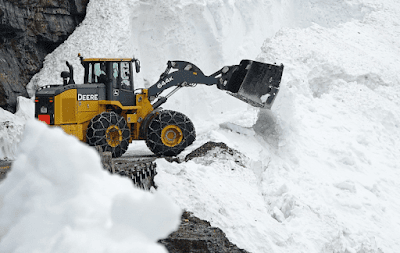
Snow clearing crews at Glacier National Park have only just gotten through Logan’s Pass. And much to the chagrin of visitors, Going-to-the-Sun Road won’t be cleared anytime soon, even as the calendar approaches July.

Since records began, Going-to-the-Sun has experienced only five openings in the month of July: these were July 1, 2007 and July 2, 2008 (solar minimum of cycle 23), July 10, 1943 (solar min of cycle 17) , July 13, 2011 (the very start of the space-age-record-weak solar cycle 24), and July 15, 1933 (solar min of cycle 16)–that last one, however -July 15, 1933- was the date of the road’s official opening and so wasn’t necessarily due to a large snowpack.

Only three factors have ever delayed the iconic alpine highway’s opening later than the Fourth of July: World War II, a global pandemic, and a deep, lingering mountain snowpack. This year is suffering the latter, of course; and given the truly historic snowpack of 2022, the year has a shot at breaking the current record for the road’s latest opening — July 13 set back in 2011.

Having recently cleared five avalanche slides that buried the upper reaches of the Sun Road, snowplow crews are now making progress, but there’s still plenty of work to do before all 50 miles of the road can open to motorists, reports flatheadbeacon.com.

On June 24, Glacier Park officials announced that the Sun Road would not fully open before July 4:


“Unprecedented winter snows and late spring snowstorms slowed plowing progress on Going-to-the-Sun Road this spring,” reads a section of the post–an inconvenient reality for the AGW Party and their ‘EOTW heat induced apocalypse’ narrative.

Towering snowbanks of as high as 80 feet have proven laborious for the experienced clearing crews. And although progress is now finallyquickening, the unseasonably cold and snowy spring of 2022 has the team working the Continental Divide section a full month behind schedule–their progress slowed by 1) June’s lingering snowpack, 2) fresh snow accumulations measuring in the feet, and 3) frequent avalanches and rockslides.


Serving as further evidence of how so-called ‘climate experts’ can get it spectacularly wrong, let’s recall the predictions made by Montana’s National Park Service (NPS) back in the early 2000s.

For almost two decades the NPS warned the world that glaciers at Glacier National Park would be gone by the year 2020. They even went to the trouble of erecting signs across all of its visitor centers prophesying the 2020 doomsday date.

Embarrassingly for these spineless, bandwagon frauds, however, that deadline of doom uneventfully pass; and, laughably, the NPS sheepishly pulled all ‘2020 signs’ from its displays after the computer models it relied upon from the early 2000s –which foretold of unending glacial retreat– turned out to be woefully inaccurate.

The opposite is actually occurring.

In a supposedly catastrophically warming world Going-to-the-Sun-Road is about to witness its latest opening on record.

It is the Sun and the Sun alone that can impact Earth’s climate in any sustained and meaningful way.

Every great civilization of the past knew this and they acknowledged the Sun’s power, worshiping it as a God: the Egyptians called it “Ra”, the Minoans “Ariadne”, and the Romans “Sol”.

Today, we humans consider ourselves the most powerful entity in the solar system. Perhaps our recent technological advances and achievements have given rise to a sense of all-conquering self-confidence. But the Sun, as we call it, ended every one of those great civilizations of the past, and it will take down our modern one, too–and likely not in some raging fiery explosion but by a mere dimming of its energy colloquially known as The Grand Solar Minimum.


Don’t fall for the bogus political agendas perpetuated across the MSM. There is far more to behold than the obfuscating BS spewing from your TV.

SUNSHINE VILLAGE OFFERS SUMMER SKIING FOR FIRST TIME IN 31 YEARS

Record winter snowfall and a cold spring at the ski hill in Banff National Park has the slopes reopening for summer.

“This is definitely the craziest amount of snow I’ve seen in my recollection,” said Kendra Scurfield, director of brand and communications. “I’ve never seen a season where we’ve had so much snow this late.”

“People are out-of-this-world excited for [the summer reopening],” added Scurfield. “A lot of them are like, ‘Is this a prank? Is this for real? Is this actually happening?’ I personally am like, what’s more Canadian than skiing on Canada Day?”


Scurfield continued: “Nine-hundred centimeters (30 feet) is one of our snowiest winters on record. The last time we had so much snow was actually in the 1956-57 ski and snowboard season. So it was a very, very snowy winter,” she said.


It’s the first time in more than three decades that the resort has opened this late in the ski season, and only the second time in the resort’s nearly 100 years of operation.

“The last time we did so was in 1991, after an incredibly snowy year just like this one,” concluded Scurfield.


Elsewhere in Canada, an anomalously cold lobe of air will swirl around Hudson Bay this week, one that is forecast to deliver summer snow to parts of Ontario.

Northern reaches of the province will also see the mercury plunge 15C below the seasonal norm.


ANTARCTICA -5.1C BELOW 1979-2000 BASE

Following yesterday’s -4.4C anomaly, temperatures across the Antarctic continent have cooled further today.

According to the Climate Change Institute at the University of Maine, today’s anomaly stands at an astonishing -5.1C below the 1979-2000 average (also worth noting is that the overall global temp stands at just 0.1C against that same multidecadal norm):


PROPOSED BIOFUELS CAP REJECTED AT G7, DESPITE GLOBAL FOOD CRISIS

A proposal to temporarily reduce the volume of biofuels consumption in G7 countries has failed to gain traction, with the US and Canada said to be leading the opposition to the move.

Germany and the UK are reportedly pushing for a temporary relaxation of biofuels mandates. But the US and Canada have cited the recent spike in fossil fuel prices as the reason to refrain from introducing a waiver to biofuels mandates.

The choice, again, appears to be between ‘heating and eating’.

In a statement published late Sunday by Boris Johnson’s UK government, G7 leaders were urged to look at their demands on the use of land and biofuel globally: “The use of grain for biofuel is contributing to reduced availability and increased costs for human consumption. That is something the Prime Minister will be raising at the G7 today (Monday),” the statement said.

Reuters reported on June 23 that Germany and the UK would ask other G7 countries to consider reducing biofuels blending requirements in order to free up grains and vegetable oils amid fears of a global food crisis.

UK newspapers on June 24 reported comments from Boris Johnson that biofuels use should be moderated by 10% to free up the availability of grain for the world’s poorest countries.

However, and as is always the case, company revenue is being put before the needs of the people, and the U.S. will likely prevail in its drive to keep biofuel producers in operation.

Even amid a global food crisis, the biofuel waiver request has been met with disdain and frustration by large producers. The RTFA, the UK’s main biofuels lobby, said in statement that it has “no intention of curbing its ambition on renewable fuels, nor pulling back on E10 which was successfully and smoothly introduced in September 2021″–which translates as: We’re currently in a very profitable market. Don’t jeopardize our profits. We’re even willing to throw the hot-button that is ‘climate change’ into the mix.

Amusingly, though, the lobby also pointed out that the country’s bioethanol industry is also the single largest producer of food-grade carbon dioxide, which is essential for food preservation and distribution: “Lack of food-grade CO2 would trigger a food crisis in its own right,” the RTFA statement added.

But who’s really surprised by this gamesmanship?

As discussed in yesterday’s article, corporations rule the world, via lobbying.

The U.S. Agribusiness spent more than $150,000,000 on lobbying in 2021, via a total of 1,238 lobbyists–of which an uncomfortable 56% were former government employees.

The fact is that there is a very small circle of unelected power controlling our lives. Decisions are not made with the intention of improving the existence of the powerless masses, we are merely placated with empty promises and distracted by controversial, wedge-driving topics — such as gun laws and abortion rights.

The masses are idiots, basically, and they, the elite, know it.

The unnoticed monstrous wealth transfer during the most-recent ‘manufactured crisis’ –COVID-19– has shown how inattentive and easily led the majority are. Global Warming and the European War are the other key ‘catastrophes’ the elites are using to extract additional wealth and power from us. But how bad do things need to get before the masses awake from their manufactured psychosis? IS there even a limit?

Excess deaths reveal that COVID-19 was NOT a pandemic; while satellite temperature datasets show that the Earth is NO LONGER warming (see link below). Once these seismic pennies drop, I believe all hell could break lose. Unfortunately though, by then the elites may-well have a firm enough grip on us –via central bank digital currencies and a universal basic income, etc.– that anyone even contemplating stepping out of line is ‘stopped’ with just a click of a button–via a stripping of their benefits and their livelihood, and also by restricting their access to essentials.

Resist this authoritarian technocracy.

Don’t get riled up by the divisive topics TPTB continue to throw in front of your face; instead, concentrate and argue the points they routinely and keenly want resigned to the sidelines, such as a failing economy, crippling inflation, nonsensical climate pledges (while still buying oil from the Saudis) and nosediving living standards.


Recommend this post and follow
The Life of Earth

Fossils in the 'Cradle of Humankind' may be more than a million years older than previously thought

JUNE 27, 2022, by Brittany Steff, Purdue University

Four different Australopithecus crania that were found in the Sterkfontein caves, South Africa. The Sterkfontein cave fill containing this and other Australopithecus fossils was dated to 3.4 to 3.6 million years ago, far older than previously thought. The new date overturns the long-held concept that South African Australopithecus is a younger offshoot of East African Australopithecus afarensis. 
Credit: Jason Heaton and Ronald Clarke, in cooperation with the Ditsong Museum of Natural History.

The earth doesn't give up its secrets easily—not even in the "Cradle of Humankind" in South Africa, where a wealth of fossils relating to human evolution have been found.

For decades, scientists have studied these fossils of early human ancestors and their long-lost relatives. Now, a dating method developed by a Purdue University geologist just pushed the age of some of these fossils found at the site of Sterkfontein Caves back more than a million years. This would make them older than Dinkinesh, also called Lucy, the world's most famous Australopithecusfossil.

The "Cradle of Humankind" is a UNESCO World Heritage Site in South Africa that comprises a variety of fossil-bearing cave deposits, including at Sterkfontein Caves. Sterkfontein was made famous by the discovery of the first adult Australopithecus, an ancient hominin, in 1936. Hominins includes humans and our ancestral relatives, but not the other great apes. Since then, hundreds of Australopithecus fossils have been found there, including the well-known Mrs. Ples, and the nearly complete skeleton known as Little Foot. Paleoanthropologists and other scientists have studied Sterkfontein and other cave sites in the Cradle of Humankind for decades to shed light on human and environmental evolution over the past 4 million years.

Darryl Granger, a professor of earth, atmospheric, and planetary sciences in Purdue University's College of Science, is one of those scientists, working as part of an international team. Granger specializes in dating geologic deposits, including those in caves. As a doctoral student, he devised a method for dating buried cave sediments that is now used by researchers all over the world. His previous work at Sterkfontein dated the Little Foot skeleton to about 3.7 million years old, but scientists are still debating the age of other fossils at the site.

In a study published in the Proceedings of the National Academy of Sciences, Granger and a team of scientists including researchers from the University of the Witwatersrand in Johannesburg, South Africa and the University Toulouse Jean Jaurès in France, have discovered that not only Little Foot, but all of the Australopithecus-bearing cave sediments date from about 3.4 to 3.7 million years old, rather than 2-2.5 million years old as scientists previously theorized. That age places these fossils toward the beginning of the Australopithecus era, rather than near the end. Dinkinesh, who hails from Ethiopia, is 3.2 million years old, and her species, Australopithecus africanus, hails back to about 3.9 million years old.

Darryl Granger of Purdue University developed the technology that updated the age of an Australopithecus found in Sterkfontein Cave. New data pushes its age back more than a million years, to 3.67 million years old. 
Credit: Purdue University photo/Lena Kovalenko


Sterkfontein is a deep and complex cave system that preserves a long history of hominin occupation of the area. Understanding the dates of the fossils here can be tricky, as rocks and bones tumbled to the bottom of a deep hole in the ground, and there are few ways to date cave sediments.

In East Africa, where many hominin fossils have been found, the Great Rift Valley volcanoes lay down layers of ash that can be dated. Researchers use those layers to estimate how old a fossil is. In South Africa—especially in a cave—the scientists don't have that luxury. They typically use other animal fossils found around the bones to estimate their age or calcite flowstone deposited in the cave. But bones can shift in the cave, and young flowstone can be deposited in old sediment, making those methods potentially incorrect. A more accurate method is to date the actual rocks in which the fossils were found. The concrete-like matrix that embeds the fossil, called breccia, is the material Granger and his team analyze.

"Sterkfontein has more Australopithecus fossils than anywhere else in the world," Granger said. "But it's hard to get a good date on them. People have looked at the animal fossils found near them and compared the ages of cave features like flowstones and gotten a range of different dates. What our data does is resolve these controversies. It shows that these fossils are old—much older than we originally thought."

Granger and the team used accelerator mass spectrometry to measure radioactive nuclides in the rocks, as well as geologic mapping and an intimate understanding of how cave sediments accumulate to determine the age of the Australopithecus-bearing sediments at Sterkfontein,

Granger and the research group at the Purdue Rare Isotope Measurement Laboratory (PRIME Lab) study so-called cosmogenic nuclides and what they can reveal about the history of fossils, geological features and rock. Cosmogenic nuclides are extremely rare isotopes produced by cosmic rays —high-energy particles that constantly bombard the earth. These incoming cosmic rays have enough energy to cause nuclear reactions inside rocks at the ground surface, creating new, radioactive isotopes within the mineral crystals. An example is aluminum-26: aluminum that is missing a neutron and slowly decays to turn into magnesium over a period of millions of years. Since aluminum-26 is formed when a rock is exposed at the surface, but not after it has been deeply buried in a cave, PRIME lab researchers can date cave sediments (and the fossils within them) by measuring levels of aluminum-26 in tandem with another cosmogenic nuclide, beryllium-10.

In addition to the new dates at Sterkfontein based on cosmogenic nuclides, the research team made careful maps of the cave deposits and showed how animal fossils of different ages would have been mixed together during excavations in the 1930s and 1940s, leading to decades of confusion with the previous ages. "What I hope is that this convinces people that this dating method gives reliable results," Granger said. "Using this method, we can more accurately place ancient humans and their relatives in the correct time periods, in Africa, and elsewhere across the world."

The age of the fossils matters because it influences scientists' understanding of the living landscape of the time. How and where humans evolved, how they fit into the ecosystem, and who their closest relatives are and were, are pressing and complex questions. Putting the fossils at Sterkfontein into their proper context is one step towards solving the entire puzzle.


Recommend this post and follow
The birth of modern Man

Monday, 27 June 2022

Health & Wellness News: Women's heart attacks differ from men's, this gene may be why - study


Women's heart attacks differ from men's, this gene may be why - study


Heart disease kills more people worldwide than any other disease, but it often goes undiagnosed in women, who are more likely to die of it than men. This gene may be why.


 Heart attack (Illustrative). (photo credit: PIXABAY)

Heart attack (Illustrative). (photo credit: PIXABAY)

Heart attacks and heart disease in women are often overlooked by medical workers, and while the reasons behind this have often been debated, a newly identified gene may have the answer, according to a new study.

The findings, published in the peer-reviewed academic journal American Heart Journal Plus: Cardiology Research and Practice, sheds light on a possible genetic cause behind why women's heart disease and heart attacks are often undetected. 

This important study could hopefully improve standard medical practices in a way that will allow a significant gender equality gap in health care to be bridged.

Background

Heart disease –  specifically ischemic coronary heart disease (IHD), which is a collective designation for coronary artery disease (CAD) and related conditions of acute coronary syndrome (ACS) and myocardial infraction (MI) – remains one of the biggest global health dangers. Compared to every other disease on Earth, it is heart disease that kills the most people worldwide.

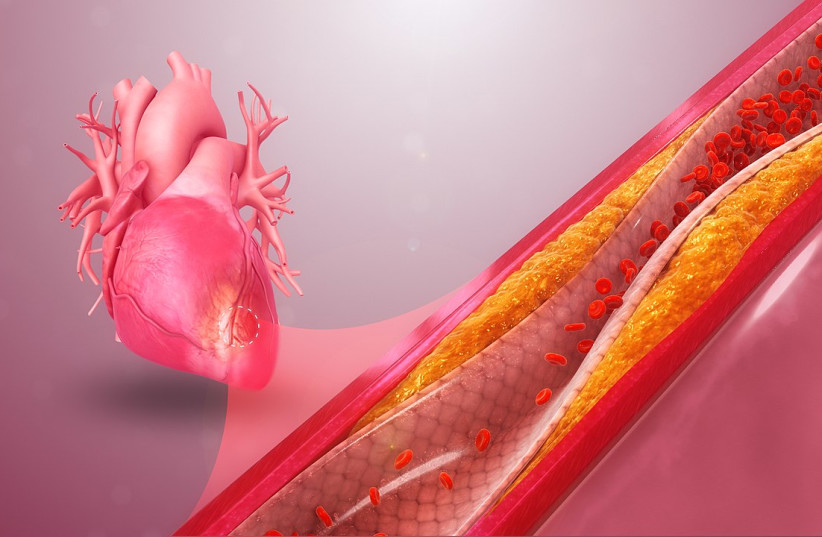
 3D medical animation still showing reduced blood flow in preventing the heart muscle from receiving enough oxygen. (credit: Wikimedia Commons)

 3D medical animation still showing reduced blood flow in preventing the heart muscle from receiving enough oxygen. (credit: Wikimedia Commons)

The disease is present among both sex, males and females. However, there are some notable differences.

Overall, men suffer from heart attacks and IHD-induced deaths at earlier ages than women. But IHD mortality rates among women sharply spike ahead of men after age 65. After contracting MI, over a third (35%) of women have another heart attack within just six years – which is double what occurs in men.

Further, in the US, women are 2-3 times more likely to die of heart disease than men, even when taking into account the same levels of care and overall risk factors

But despite this, women are 50% more likely to be misdiagnosed or undiagnosed by doctors as having a heart attack. 

This is just the start, however, as further differences in the data also exist among different races and ethnicities, with many women of color being at an even greater risk.

So why does this happen?

On a technical level, we already know.

Firstly, diagnostic tests for hearts did not originally account for differences between bodies, especially between sexes. 

Secondly, males and females tend to experience different symptoms when it comes to heart disease. With this in mind, many current tests and symptom profiles for IHD don't often reflect these differences. 

 Heart attack (Illustrative) (credit: FLICKR)

 Heart attack (Illustrative) (credit: FLICKR)

It is this, according to study author Jennifer Dungan, an associate professor at the University of Florida College of Nursing, that has led to women being more likely to report out-of-the-ordinary heart disease symptoms, more likely to have treatment delayed and even have heart attacks completely undiagnosed.

The reason these differences happen is thought to be a genetic variation, but how genes vary between sexes in relation to IHD symptoms isn't fully understood.

But while this sort of intrinsic genetic variation that differs between sexes, known as sexual dimorphism, is the likely culprit and has been supported in principle by prior studies, the exact genetic factor that causes differences in the outcomes of IHD-related events such as heart attacks has stalled.

But a breakthrough may have been made.

The study

Dugan and her team worked to find genes associated with the survivorship of CAD. This was done thanks to data gathered from the Duke Catheterization Genetics (CATHGEN) biorepository.

And through this complex study of analyzing data from both sexes and the varying genes, the researchers highlighted a number of possible candidate genes. But overall, Dungan and her team think they found the likely culprit: RAP1GAP2.

This gene is known to have encoded a certain protein that in turn activates another protein in platelets, which are colorless cells that help with blood clots

Essentially, this gene helps manage platelet activity, which in turn means it influences blood clots. 

Now, blood clotting is important and serves a vital role in the function of our bodies. However, that doesn't mean it doesn't pose certain risks. If for whatever reason, too many platelets activate in response to a clot, this could cause the flow of blood and oxygen to the heart to be blocked. 

This, in turn, is what can cause a heart attack.

And an overactive gene – specifically one that can influence platelets like RAP1GAP2 – would be able to cause this.

Now, this isn't the first time Dugan's team has looked at RAP1GAP2. However, with men, this gene wasn't linked to poor heart disease outcomes in males. But she thinks it may work differently with women.

Of course, there are limits to this study. For instance, it didn't adequately cover differences between ethnicities, Dungan very much believes that genetics may play a role in the ethnic and racial disparities in heart disease outcomes among women. Overall, more research will be needed to better study RAP1GAP2 and other genes.

Luckily, that research seems very much to be on the way, with Dungan having received a two-year grant from the National Institutes of Health's National Institute on Aging to find which RAP1GAP2 gene markers correlate with heart disease, symptoms and deaths in women of different racial and ethnic groups.

“At the end of the study, if RAP1GAP2 gene markers accurately reflect women’s heart symptoms and predict their likelihood of a future heart attack, stroke or death, then those gene markers could help us be more confident in their diagnosis and future prognosis.”

Jennifer Dungan

“At the end of the study, if RAP1GAP2 gene markers accurately reflect women’s heart symptoms and predict their likelihood of a future heart attack, stroke or death, then those gene markers could help us be more confident in their diagnosis and future prognosis,” she said in a statement. 

“Having more accurate biomarkers for women would save lives and improve health equity for all women.”