Tuesday, 31 August 2021

Disease that blinded, killed songbirds vanishes as mysteriously as it arrived

AUGUST 30, 2021, by Frank Kummer

Credit: CC0 Public Domain

Pennsylvanians can feed birds again.

A disease that appeared from spring into summer blinding and killing a variety of songbirds in at least 10 states left wildlife experts and officials stumped as to its cause, and recommending people stop filling feeders in the belief it could mitigate the spread of the illness where birds congregated.

Now, the disease has apparently run its course, leaving experts without knowing if it will reappear.

Martin Hackett, a spokesperson for Penn's School of Veterinary Medicine, said the school's Wildlife Futures Program, which hosted an online reporting form, originally saw high numbers of reported bird deaths in the spring. But the numbers started dropping by late July into August.

Tests ruled out Avian influenza and other viral and bacterial diseases. No poison, toxin, or parasite was identified as a possible cause. Hackett said the cause of the illness remains unknown.

The disease struck birds in Pennsylvania, Delaware, Tennessee, Kentucky, Virginia, West Virginia, Maryland, Indiana, Ohio, Florida, and elsewhere. It killed a range of species, all suffering ocular and neurological issues, marked by swollen eyes with a crusty discharge, and erratic flight and stumbling.

Species affected included blue jay, European starling, common grackle, American robin, Northern cardinal, house finch, house sparrow, Eastern bluebird, red-bellied woodpecker, Carolina chickadee, and Carolina wren. The malady appeared to affect juvenile birds more than adults.

There was some speculation that Brood X cicadas that emerged this spring after 17 years could be linked to the disease. But officials said deaths were occurring in areas where the brood wasn't particularly active.

The USGS National Wildlife Health Center, the University of Georgia Southeastern Cooperative Wildlife Disease Study, the University of Pennsylvania Wildlife Futures Program, and the Indiana Animal Disease Diagnostic Laboratory were all part of the investigative team, as well as various state labs. None had luck finding a cause.

Recently, the Pennsylvania Game Commission lifted its recommendation to stop feeding birds, but still recommends feeders be cleaned weekly with soap and water, then disinfected with a 10% household bleach solution before allowing to dry and reuse.

The Game Commission said that a lot is "still unknown" about the disease, first documented in the Washington D.C. area in May. There is no indication feeding birds was a contributor, but it still recommends caution as "the issue appears to be resolving on its own..."

On Tuesday, the Delaware Department of Natural Resources and Environmental Control also lifted its advisory against bird feeders and baths.


Recommend this post and follow
The Life of Earth

Part I: Fish Farming is Feeding the World, But at What Cost?

PUBLISHED AUG 29, 2021, BY IAN URBINA

Copyright Fabio Nascimento / The Outlaw Ocean Project

Gunjur, a town of some fifteen thousand people, sits on the Atlantic coastline of southern Gambia, the smallest country on the African continent. During the day, its white-sand beaches are full of activity. Fishermen steer long, vibrantly painted wooden canoes, known as pirogues, toward the shore, where they transfer their still-fluttering catch to women waiting at the water’s edge. The fish are hauled off to nearby open-air markets in rusty metal wheelbarrows or in baskets balanced on heads. Small boys play soccer as tourists watch from lounge chairs. At nightfall, work ends and the beach is dotted with bonfires. There is drumming and kora lessons; men with oiled chests grapple in traditional wrestling matches.

Hike five minutes inland, and you’ll find a more tranquil setting: a wildlife reserve known as Bolong Fenyo. Established by the Gunjur community in 2008, the reserve is meant to protect seven hundred and ninety acres of beach, mangrove swamp, wetland, savannah, and an oblong lagoon. The lagoon, a half mile long and a few hundred yards wide, has been a lush habitat for a remarkable variety of migratory birds as well as humped-back dolphins, epaulet fruit bats, Nile crocodiles, and callithrix monkeys. A marvel of biodiversity, the reserve has been integral to the region’s ecological health—and, with hundreds of birders and other tourists visiting each year, to its economic health, too.

But on the morning of May 22, 2017, the Gunjur community discovered that the Bolong Fenyo lagoon had turned a cloudy crimson overnight, dotted with floating dead fish. “Everything is red,” one local reporter wrote, “and every living thing is dead.” Some residents wondered if the apocalyptic scene was an omen delivered in blood. More likely, ceriodaphnia, or water fleas, had turned the water red in response to sudden changes in pH or oxygen levels. Locals soon reported that many of the birds were no longer nesting near the lagoon.

A few residents filled bottles with water from the lagoon and brought them to the one person in town they thought might be able to help—Ahmed Manjang. Born and raised in Gunjur, Manjang now lives in Saudi Arabia, where he works as a senior microbiologist. He happened to be home visiting his extended family, and he collected his own samples for analysis, sending them to a laboratory in Germany. The results were alarming. The water contained double the amount of arsenic and forty times the amount of phosphates and nitrates deemed safe. The following spring, he wrote a letter to Gambia’s environmental minister, calling the death of the lagoon “an absolute disaster.” Pollution at these levels, Manjang concluded, could only have one source: illegally dumped waste from a Chinese fish-processing plant called Golden Lead, which operates on the edge of the reserve. Gambian environmental authorities fined the company twenty-five thousand dollars, an amount that Manjang described as “paltry and offensive.”

Golden Lead is one outpost of an ambitious Chinese economic and geopolitical agenda known as the Belt and Road Initiative, which the Chinese government has said is meant to build goodwill abroad, boost economic cooperation, and provide otherwise inaccessible development opportunities to poorer nations. As part of the initiative, China has become the largest foreign financier of infrastructure development in Africa, cornering the market on most of the continent’s road, pipeline, power plant and port projects. In 2017, China cancelled fourteen million dollars in Gambian debt and invested thirty-three million to develop agriculture and fisheries, including Golden Lead and two other fish-processing plants along the fifty-mile Gambian coast. The residents of Gunjur were told that Golden Lead would bring jobs, a fish market, and a newly paved, three-mile road through the heart of town.

Golden Lead and the other factories were rapidly built to meet an exploding global demand for fishmeal—a lucrative golden powder made by pulverizing and cooking fish. Exported to the United States, Europe, and Asia, fishmeal is used as a protein-rich supplement in the booming industry of fish farming, or aquaculture. West Africa is among the world’s fastest-growing producers of fishmeal: more than fifty processing plants operate along the shores of Mauritania, Senegal, Guinea Bissau, and Gambia. The volume of fish they consume is enormous: one plant in Gambia alone takes in more than seven thousand five hundred tons of fish a year, mostly of a local type of shad known as bonga—a silvery fish about ten inches long.

Gambian fishermen holding fistfuls of fish meal (Copyright Fabio Nascimento / The Outlaw Ocean Project)


For the area’s local fishermen, most of whom toss their nets by hand from pirogues powered by small outboard motors, the rise of aquaculture has transformed their daily working conditions: hundreds of legal and illegal foreign fishing boats, including industrial trawlers and purse seiners, crisscross the waters off the Gambian coast, decimating the region’s fish stocks and jeopardizing local livelihoods.

At the Tanji fish market in summer of 2019, Abdul Sisai stood at a table offering four sickly-looking catfish for sale. The table swarmed with flies, the air was thick with smoke from nearby curing sheds, and menacing seagulls dive-bombed for scraps. Sisai said that bonga had been so plentiful two decades ago that in some markets it had been given away for free. Now it costs more than most local residents can afford. He supplements his income by selling trinkets near the tourist resorts in the evenings.

“Sibijan deben,” Sisai said in Mandinka, one of the major languages in Gambia. Locals use the phrase, which refers to the shade of the tall palm tree, to describe the effects of extractive export industries: the profits are enjoyed by people far from the source—the trunk. In the past several years, the price of bonga has increased exponentially, according to the Association for the Promotion and Empowerment of Marine Fishers, a Senegalese-based research-and-education group. Half the Gambian population lives below the international poverty line—and fish, primarily bonga, accounts for half of the country’s animal-protein needs.

After Golden Lead was fined, in 2019, it stopped releasing its toxic effluent directly into the lagoon. Instead, it ran a long wastewater pipe under a nearby public beach, dumping waste directly into the sea. Swimmers soon started complaining of rashes, the ocean grew thick with seaweed, and thousands of dead fish washed ashore, along with eels, rays, turtles, dolphins, and even whales. Residents burned scented candles and incense to combat the rancid odor coming from the fish meal plants, and tourists wore white masks. The stench of rotten fish clung to clothes, even after repeated washing.

Jojo Huang, the director of the plant, has said publicly that the facility follows all regulations and “does not pump chemicals into the sea.” The plant has benefited the town, she told The Guardian.

In March 2018, about a hundred and fifty local shopkeepers, youth and fishermen, wielding shovels and pickaxes, gathered on the beach to dig up the pipe and destroy it. Two months later, with the government’s approval, workers from Golden Lead installed a new pipe, this time planting a Chinese flag alongside it. The gesture carried colonialist overtones. One local called it “the new imperialism.”

Manjang was outraged. “It makes no sense!” he told me, when I visited him in Gunjur at his family compound, an enclosed three-acre plot with several simple brick houses and a garden of cassava, orange, and avocado trees. Behind Manjang’s thick-rimmed glasses, his gaze is gentle and direct as he speaks urgently about the perils facing Gambia’s environment. “The Chinese are exporting our bonga fish to feed it to their tilapia fish, which they’re shipping back here to Gambia to sell to us, more expensivelybut only after it’s been pumped full of hormones and antibiotics.” Adding to the absurdity, he noted, is that tilapia are herbivores that normally eat algae and other sea plants, so they have to be trained to consume fish meal.

Manjang contacted environmentalists and journalists, along with Gambian lawmakers, but was soon warned by the Gambian trade minister that pushing the issue would only jeopardize foreign investment. Dr. Bamba Banja, the head of the Ministry of Fisheries and Water Resources, was dismissive, telling a local reporter that the awful stench was just “the smell of money.”

Global demand for seafood has doubled since the nineteen-sixties. Our appetite for fish has outpaced what we can sustainably catch: more than eighty per cent of the world’s wild fish stocks have collapsed or are unable to withstand more fishing. Aquaculture has emerged as an alternative—a shift, as the industry likes to say, from capture to culture.

The fastest-growing segment of global food production, the aquaculture industry is worth a hundred and sixty billion dollars and accounts for roughly half of the world’s fish consumption. Even as retail seafood sales at restaurants and hotels have plummeted during the pandemic, the dip has been offset in many places by the increase in people cooking fish at home. The United States imports eighty percent of its seafood, most of which is farmed. The bulk of that comes from China, by far the world’s largest producer, where fish are grown in sprawling landlocked pools or in pens offshore spanning several square miles.

Aquaculture has existed in rudimentary forms for centuries, and it does have some clear benefits over catching fish in the wild. It reduces the problem of bycatch—the thousands of tons of unwanted fish that are swept up each year by the gaping nets of industrial fishing boats, only to suffocate and be tossed back into the sea. And farming bivalves—oysters, clams, and mussels—promises a cheaper form of protein than traditional fishing for wild-caught species. In India and other parts of Asia, these farms have become a crucial source of jobs, especially for women. Aquaculture makes it easier for wholesalers to ensure that their supply chains are not indirectly supporting illegal fishing, environmental crimes, or forced labor. There’s potential for environmental benefits, too: with the right protocols, aquaculture uses less fresh water and arable land than most animal agriculture. Farmed seafood produces a quarter of the carbon emissions per pound that beef does, and two-thirds of what pork does.

Still, there are also hidden costs. When millions of fish are crowded together, they generate a lot of waste. If they’re penned in shallow coastal pools, the solid waste turns into a thick slime on the seafloor, smothering all plants and animals. Nitrogen and phosphorus levels spike in surrounding waters, causing algal blooms, killing wild fish, and driving away tourists. Bred to grow faster and bigger, the farmed fish sometimes escape their enclosures and threaten indigenous species.

Even so, it’s clear that if we are to feed the planet’s growing human population, which depends on animal protein, we will need to rely heavily on industrial aquaculture. Leading environmental groups have embraced this idea. In a 2019 report, the Nature Conservancy called for more investment in fish farms, arguing that by 2050 the industry should become our primary source of seafood. Many conservationists say that fish farming can be made even more sustainable with tighter oversight, improved methods for composting waste, and new technologies for recirculating the water in on-land pools. Some have pushed for aquaculture farms to be located farther from shore in deeper waters with faster and more diluting currents.

The biggest challenge to farming fish is feeding them. Food constitutes roughly seventy per cent of the industry’s overhead, and so far the only commercially viable source of feed is fish meal. Perversely, the aquaculture farms that produce some of the most popular seafood, such as carp, salmon, or European sea bass, actually consume more fish than they ship to supermarkets and restaurants. Before it gets to market, a “ranched” tuna can eat more than fifteen times its weight in free-roaming fish that has been converted to fishmeal. About a quarter of all fish caught globally at sea end up as fish meal, produced by factories like those on the Gambian coast. Researchers have identified various potential alternatives—including human sewage, seaweed, cassava waste, soldier-fly larvae, and single-cell proteins produced by viruses and bacteria—but none is being produced affordably at scale. So, for now, fish meal it is.

The result is a troubling paradox: the seafood industry is ostensibly trying to slow the rate of ocean depletion, but by farming the fish we eat most, it is draining the stock of many other fish—the ones that never make it to the aisles of Western supermarkets. Gambia exports much of its fish meal to China and Norway, where it fuels an abundant and inexpensive supply of farmed salmon for European and American consumption. Meanwhile, the fish Gambians themselves rely on for their survival are rapidly disappearing.

Ian Urbina is the director of The Outlaw Ocean Project, a non-profit journalism organization based in Washington DC that focuses on environmental and human rights concerns at sea globally.

This article appears here courtesy of The Outlaw Ocean Project. In Part II, the story will continue with Gambia's enforcement efforts and Sea Shepherd's supporting role. ???????

The opinions expressed herein are the author's and not necessarily those of The Maritime Executive.


Recommend this post and follow
The Life of Earth

Researchers identify record number of ancient elephant bone tools

AUGUST 30, 2021, by Daniel Strain, University of Colorado at Boulder

Bone tools excavated from Castel di Guido in Italy. 
Credit: Villa et al. 2021, PLOS ONE

Ancient humans could do some impressive things with elephant bones.

In a new study, University of Colorado Boulder archeologist Paola Villa and her colleagues surveyed tools excavated from a site in Italy where large numbers of elephants had died. The team discovered that humans at this site roughly 400,000 years ago appropriated those carcasses to produce an unprecedented array of bone toolssome crafted with sophisticated methods that wouldn't become common for another 100,000 years.

"We see other sites with bone tools at this time," said Villa, an adjoint curator at the CU Boulder Museum of Natural History. "But there isn't this variety of well-defined shapes."

Villa and her colleagues published their results this month in the journal PLOS ONE.

The study zeroes in on a site called Castel di Guido, not far from modern-day Rome. Hundreds of thousands of years ago, it was the location of a gully that had been carved by an ephemeral stream—an environment where 13-foot-tall creatures called straight-tusked elephants (Palaeoloxodon antiquus) quenched their thirst, and occasionally died.

Elephant tusks and other bones at the Castel di Guido site during excavation. 
Credit: Villa et al. 2021, PLOS ONE

Castel di Guido's hominids made good use of the remains, occupying the site off and on over the years. The researchers report that these Stone Age residents produced tools using a systematic, standardized approach, a bit like a single individual working on a primitive assembly line.

"At Castel di Guido, humans were breaking the long bones of the elephants in a standardized manner and producing standardized blanks to make bone tools," Villa said. "This kind of aptitude didn't become common until much later."

Stone Age toolbox

These feats of ingenuity came at a significant time for hominids in general.

Right around 400,000 years ago, Neanderthals (Homo neanderthalensis) were just beginning to emerge in Europe. Villa suspects that Castel di Guido's residents were Neanderthals.

"About 400,000 years ago, you start to see the habitual use of fire, and it's the beginning of the Neanderthal lineage," Villa said. "This is a very important period for Castel di Guido."


A series of pointed elephant bone tools from Castel di Guido. 
Credit: Villa et al. 2021, PLOS ONE


It may have been a productive one, too. In their new study, Villa and her colleagues identified 98 bone tools from Castel di Guido, which was excavated from 1979 to 1991. The findings represent the highest number of flaked bone tools made by pre-modern hominids that researchers have described so far. That rich toolbox offered a wide range of useful items: Some tools were pointed and could, theoretically, have been used to cut meat. Others were wedges that may have been helpful for splitting heavy elephant femurs and other long bones.

"First you make a groove where you can insert these heavy pieces that have a cutting edge," Villa said. "Then you hammer it, and at some point, the bone will break."

But one tool stood out from the rest: The team discovered a single artifact carved from a wild cattle bone that was long and smooth at one end. It resembles what archeologists call a lissoir, or a smoother, a type of tool that hominids used to treat leather. The curious thing: Lissoir tools didn't become common until about 300,000 years ago.
"At other sites 400,000 years ago, people were just using whatever bone fragments they had available," Villa said.


A lissoir, or smoother, tool made from a wild cattle bone. Credit: Villa et al. 2021, PLOS ONE


Useful finds

Something special, in other words, seemed to be happening at the Italian site.

Villa doesn't think that the Castel di Guido hominids were any more intelligent than their counterparts elsewhere in Europe. Instead, these early humans simply used the resources they had lying around. She explained that this region of Italy doesn't have a lot of naturally-occurring, large pieces of flint, so ancient humans couldn't make many large stone tools.

What the region might have had a lot of, however, were dead elephants. As the Stone Age progressed, straight-tusked elephants slowly disappeared from Europe. During the era of Castel di Guido's bone-crafters, these animals may have flocked to watering holes at the site, occasionally dying from natural causes. Humans then found the remains and butchered them for their long bones.

"The Castel di Guido people had cognitive intellects that allowed them to produce complex bone technology," Villa said. "At other assemblages, there were enough bones for people to make a few pieces, but not enough to begin a standardized and systematic production of bone tools."


Recommend this post and follow
The birth of modern Man

Monday, 30 August 2021

Synthetic biology enables microbes to build muscle

AUGUST 30, 2021, by Washington University in St. Louis

Researchers at the McKelvey School of Engineering at Washington University in St. Louis have developed a synthetic chemistry approach to polymerize proteins inside of engineered microbes. This enabled the microbes to produce the high molecular weight muscle protein, titin, which was then spun into fibers. In the future, such material could be used for clothing, or even for protective gear. 
Credit: Washington University in St. Louis


Would you wear clothing made of muscle fibers? Use them to tie your shoes or even wear them as a belt? It may sound a bit odd, but if those fibers could endure more energy before breaking than cotton, silk, nylon, or even Kevlar, then why not?

Don't worry, this muscle could be produced without harming a single animal.

Researchers at the McKelvey School of Engineering at Washington University in St. Louis have developed a synthetic chemistry approach to polymerize proteins inside of engineered microbes. This enabled the microbes to produce the high molecular weight muscle protein, titin, which was then spun into fibers.

Their research was published Monday, August 30 in the journal Nature Communications.

Also: "Its production can be cheap and scalable. It may enable many applications that people had previously thought about, but with natural muscle fibers," said Fuzhong Zhang, professor in the Department of Energy, Environmental & Chemical Engineering. Now, these applications may come to fruition without the need for actual animal tissues.

The synthetic muscle protein produced in Zhang's lab is titin, one of the three major protein components of muscle tissue. Critical to its mechanical properties is the large molecular size of titin. "It's the largest known protein in nature," said Cameron Sargent, a Ph.D. student in the Division of Biological and Biomedical Sciences and a first author on the paper along with Christopher Bowen, a recent Ph.D. graduate of the Department of Energy, Environmental & Chemical Engineering.

Muscle fibers have been of interest for a long time, Zhang said. Researchers have been trying to design materials with similar properties to muscles for various applications, such as in soft robotics. "We wondered, 'Why don't we just directly make synthetic muscles?'" he said. "But we're not going to harvest them from animals, we'll use microbes to do it."

To circumvent some of the issues that typically prevent bacteria from producing large proteins, the research team engineered bacteria to piece together smaller segments of the protein into ultra-high molecular weight polymers around two megadaltons in size—about 50 times the size of an average bacterial protein. They then used a wet-spinning process to convert the proteins into fibers that were around ten microns in diameter, or a tenth the thickness of human hair.

Working with collaborators Young Shin Jun, professor in the Department of Energy, Environmental & Chemical Engineering, and Sinan Keten, professor in the Department of Mechanical Engineering at Northwestern University, the group then analyzed the structure of these fibers to identify the molecular mechanisms that enable their unique combination of exceptional toughness, strength, and damping capacity, or the ability to dissipate mechanical energy as heat.

Aside from fancy clothes or protective armor (again, the fibers are tougher than Kevlar, the material used in bulletproof vests), Sargent pointed out that this material has many potential biomedical applications as well. Because it's nearly identical to the proteins found in muscle tissue, this synthetic material is presumably biocompatible and could therefore be a great material for sutures, tissue engineering, and so on.

Zhang's research team doesn't intend to stop with synthetic muscle fiber. The future will likely hold more unique materials enabled by their microbial synthesis strategy. Bowen, Cameron, and Zhang have filed a patent application based on the research.

"The beauty of the system is that it's really a platform that can be applied anywhere," Sargent said. "We can take proteins from different natural contexts, then put them into this platform for polymerization and create larger, longer proteins for various material applications with a greater sustainability."


Recommend this post and follow
The birth of modern Man

Baby Shark Born in All-Female Tank Could Be The First 'Virgin Birth' For Its Species

ALIA SHOAIB, BUSINESS INSIDER, 30 AUGUST 2021

A smooth-hound shark born in an aquarium in 2013, France. 
(Jean-Sebastien Evrard/AFP via Getty Images)

Scientists say a rare shark "virgin birth" may be the first of its kind after a baby shark was born in an all-female tank in an Italian aquarium.

The baby smoothhound shark, named Ispera, which means hope in Sardianian, was born at the Acquario di Cala Gonone in Sardinia, Italy, according to Italian outlet AGI.

Its mother had spent ten years living in a tank with one other female, the outlet said, and scientists suspect the newborn could be the first documented case of shark parthenogenesis in that species.

Parthenogenesis is a rare phenomenon where an egg develops into an embryo without being fertilized by a sperm.

The process has been observed in more than 80 vertebrate species, according to Live Science, including sharks, fish, and reptiles.

"About 15 species of sharks and rays are known to do this," Demian Chapman, director of the sharks and rays conservation program at Mote Marine Laboratory & Aquarium in Florida, told Live Science.

He added that while sharks probably had the ability to do it, it was difficult to document in the wild.

Chapman told Live Science that in the wild, parthenogenesis might be the last resort for females that cannot find a mate in situations of low population density.

The response can also be triggered in captive sharks who are separated from males for long periods of time, he said.

There are two different types of parthenogenesis, according to National Geographic.

One is apomixis, a type of cloning most common in plants.

The other, documented in sharks, is automixis, which involves the slight shuffling of the mother's genes to create offspring similar to the mother but not exact clones.

Researcher Christine Dudgeon from the University of Queensland in Australia told Live Science how parthenogenesis worked.

"Rather than combining with a sperm cell to make an embryo, [the egg cell] combines with a polar body, which is essentially another cell that is produced at the same time that the egg cell is produced and has the complementary DNA," Dudgeon told Live Science.

"Parthenogenesis is essentially a form of inbreeding, as the genetic diversity of the offspring is greatly reduced," Dudgeon added.

As a result, parthenogenesis offspring could have a reduced chance of survival, she said.

Marine biologists at the Italian aquarium have sent DNA samples to a laboratory to confirm that Ispera was born through parthenogenesis, the New York Post reported.

This article was originally published by Business Insider.


Recommend this post and follow
The Life of Earth

'Desert': drying Euphrates threatens disaster in Syria

AUGUST 30, 2021, by Delil Souleiman With Alice Hackman In Beirut

Aid groups and engineers are warning of a looming humanitarian disaster in northeast Syria, where waning river flow is compounding woes after a decade of war.

Syria's longest river used to flow by his olive grove, but today Khaled al-Khamees says it has receded into the distance, parching his trees and leaving his family with hardly a drop to drink.

"It's as if we were in the desert," said the 50-year-old farmer, standing on what last year was the Euphrates riverbed.

"We're thinking of leaving because there's no water left to drink or irrigate the trees."

Aid groups and engineers are warning of a looming humanitarian disaster in northeast Syria, where waning river flow is compounding woes after a decade of war.

They say plummeting water levels at hydroelectric dams since January are threatening water and power cutoffs for up to five million Syrians, in the middle of a coronavirus pandemic and economic crisis.

As drought grips the Mediterranean region, many in the Kurdish-held area are accusing neighbour and archfoe Turkey of weaponising water by tightening the tap upstream, though a Turkish source denied this.

Outside the village of Rumayleh where Khamees lives, black irrigation hoses lay in dusty coils after the river receded so far it became too expensive to operate the water pumps.

Instead, much closer to the water's edge, Khamees and neighbours were busy planting corn and beans in soil just last year submerged under the current.

People walk through what was the Euphrates riverbed near the Syrian village of Rumayleh.

The father of 12 said he had not seen the river so far away from the village in decades.

"The women have to walk seven kilometres (four miles) just to get a bucket of water for their children to drink," he said.

'Alarming'

Reputed to have once flown through the biblical Garden of Eden, the Euphrates runs for almost 2,800 kilometres (1,700 miles) across Turkey, Syria and Iraq.

In times of rain, it gushes into northern Syria through the Turkish border, and flows diagonally across the war-torn country towards Iraq.

Along its way, it irrigates swathes of land in Syria's breadbasket, and runs through three hydroelectric dams that provide power and drinking water to millions.

But over the past eight months the river has contracted to a sliver, sucking precious water out of reservoirs and increasing the risk of dam turbines grinding to a halt.

At the Tishrin Dam, the first into which the river falls inside Syria, director Hammoud al-Hadiyyeen described an "alarming" drop in water levels not seen since the dam's completion in 1999.

This combination of handout images made available by the European Space Agency shows two satellite false colour images captured on May 5, 2020 (top) and May 7, 2021 of decreasing water levels in Syria's Tishrin reservoir.

"It's a humanitarian catastrophe," he said.

Since January, the water level has plummeted by five metres, and now hovers just dozens of centimetres above "dead level" when turbines are supposed to completely stop producing electricity.

Across northeast Syria, already power generation has fallen by 70 percent since last year, the head of the energy authority Welat Darwish says.

Two out of three of all potable water stations along the river are pumping less water or have stopped working, humanitarian groups say.

'Water weapon'?

Almost 90 percent of the Euphrates flow comes from Turkey, the United Nations says.

To ensure Syria's fair share, Turkey in 1987 agreed to allow an annual average of 500 cubic metres per second of water across its border.

But that has dropped to as low as 200 in recent months, engineers claim.

Water levels at Syria's Tabqa dam.

Inside Syria, the Euphrates flows mostly along territory controlled by semi-autonomous Kurdish authorities, whose US-backed fighters have over the years wrested its dams and towns from the Islamic State group.

Turkey however regards those Kurdish fighters as linked to its outlawed Kurdistan Workers' Party (PKK), and has grabbed land from them during Syria's war.

Syria's Kurds have accused Ankara of holding back more water than necessary in its dams, and Damascus in June urged Turkey to increase the flow immediately.

But a Turkish diplomatic source told AFP Turkey had "never reduced the amount of water it releases from its trans-boundary rivers for political or other purposes".

"Our region is facing one of the worst drought periods due to climate change," and rainfall in southern Turkey was "the lowest in the last 30 years", this source said.

Analyst Nicholas Heras said Turkey did hold leverage over Syria and Iraq with the huge Ataturk Dam just 80 kilometres from the Syrian border, but it was debatable whether Ankara wanted to use it.

That would mean "international complications for Ankara, both with the United States and Russia", a key Damascus ally across the table in Syria peace talks.

"The easier, and more frequently utilised, water weapon that Ankara uses is the Alouk plant" that it seized from the Kurds in 2019, Heras said.

Fresh water supply from the station on another river has been disrupted at least 24 times since 2019, affecting 460,000 people, the United Nations says.

Aid groups and engineers say plummeting water levels at hydroelectric dams since January are threatening water and power cutoffs for up to five million Syrians.

'Drought is coming'

But Syria analyst Fabrice Balanche said the drought did serve Ankara's long-term goal of "asphyxiating northeast Syria economically".

"In periods of drought, Turkey helps itself and leaves the rest for the Kurds, in defiance and in full knowledge of the consequences," he said.

Wim Zwijnenburg, of the PAX peace organisation, said Turkey was struggling to provide enough water for "megalomanic" agricultural projects set up in the 1990s, a challenge now complicated by climate change.

"The big picture is drought is coming," he said.

"We already see a rapid decline in healthy vegetation growth on satellite analysis" in both Syria and Turkey.

A UN climate change report this month found human influence had almost definitely increased the frequency of simultaneous heatwaves and droughts worldwide.

These dry spells are to become longer and more severe around the Mediterranean, the United Nations has warned, with Syria most at risk, according to the 2019 Global Crisis Risk Index.


The Tabqa dam is Syria's largest. Dry spells are to become longer and more severe around the Mediterranean, the United Nations has warned, with Syria most at risk, according to the 2019 Global Crisis Risk Index.


Downstream from the Tishrin Dam, the Euphrates pools in the depths of Lake Assad.

But today Syria's largest fresh water reservoir too has withdrawn inwards.

On its banks, men with tar-stained hands worked to repair generators exhausted from pumping water across much further distances than in previous years.

Agricultural worker Hussein Saleh, 56, was desperate.

"We can no longer afford the hoses or the generators," said the father of 12.

"The olive trees are thirsty and the animals are hungry."

At home, in the village of Twihiniyyeh, power cuts had increased from nine to 19 hours a day, he said.

At the country's largest dam of Tabqa to the south, veteran engineer Khaled Shaheen was worried.

"We're trying to diminish how much water we send through," he said.

But "if it continues like this, we could stop electricity production for all except... bakeries, flour mills and hospitals."


A man holding a water bottle stands near a pump drawing water from the shallows of the Lake Assad reservoir, along the Euphrates river by the town of Rumayleh in eastern Syria.


'Short on food'

Meanwhile, among five million people depending on the Euphrates for drinking water, more and more families are ingesting liquid that is unsafe.

Those cut off from the network instead pay for deliveries from private water trucks.

But these tankers most often draw water directly from the river—where wastewater concentration is high due to low flow—and these supplies are not filtered.

Waterborne disease outbreaks are on the rise, and contaminated ice has caused diarrhoea in displacement camps, according to the NES Forum, an NGO coordination body for the region.

Marwa Daoudy, a Syrian scholar of environmental security, said the decreasing flow of the Euphrates was "very alarming".

"These levels threaten whole rural communities in the Euphrates Basin whose livelihood depends on agriculture and irrigation," she said.

Aid groups say drought conditions have already destroyed large swathes of rain-fed crops in Syria, a country where 60 percent of people already struggle to put food on the table.

Among five million people depending on the Euphrates for drinking water, more and more families are ingesting liquid that is unsafe.

In some communities, animals have started to die, the NES Forum has said.

The United Nations says barley production could drop by 1.2 million tonnes this year, making animal feed more scarce.

Balanche said Syria was likely facing a years-long drought not seen since one from 2005 to 2010, before the civil war.

"The northeast, but also all of Syria, will be short on food, and will need to import massive quantities of cereals."

Downstream in Iraq, seven million more people risked losing access to water from the river, the Norwegian Refugee Council's Karl Schembri said.

"Climate doesn't look at borders," he said.


Recommend this post and follow
The Life of Earth

Volcanoes Could Be Responsible For The First Puffs of Oxygen on Earth

DAVID NIELD, 29 AUGUST 2021

(SebastiΓ‘n Crespo Photography/Moment/Getty Images)

Most life needs oxygen to thrive, and science shows that O2 began to show up in Earth's atmosphere in serious amounts some 2.4 billion years ago. However, there was also a small injection of oxygen around 100 million years earlier than that – and the origin of that earlier breath has so far been a mystery.

A new study points to volcanoes as the likely cause of this shorter oxygenation event preceding the major one. Through an analysis of rock records, researchers have spotted a corresponding increase in mercury levels that indicates volcanic activity.

That activity would have led to nutrient-rich lava and volcanic ash fields, the researchers suggest, which then led to the release of those nutrients into rivers and coastal areas through weathering. That, in turn, would have enabled cyanobacteria and other single-celled organisms to flourish – and start pumping out oxygen.

"Our study suggests that for these transient whiffs of oxygen, the immediate trigger was an increase in oxygen production, rather than a decrease in oxygen consumption by rocks or other non-living processes," says geologist Roger Buick, from the University of Washington.

"It's important because the presence of oxygen in the atmosphere is fundamental – it's the biggest driver for the evolution of large, complex life."

Buick and his colleagues looked at drill-cores taken from the Mount McRae Shale formation in Western Australia, containing geological timelines stretching back 2.5 billion years to before the start of the Great Oxygenation Event.

Signs of both mercury enrichment and oxidation weathering convinced the researchers that volcanic eruptions and the subsequent introduction of phosphorus – a key nutrient for modulating biological activity across long timescales – had played a major part in the early oxygen spike.

And while it's not clear exactly where on Earth this volcanic activity might have taken place, geological records from locations in modern-day India and Canada, among other locations, back up the hypothesis of volcanism and lava flows around this time.


Drill-cores of rocks used for analysis. 
(Roger Buick/University of Washington)


"During weathering under the Archaean atmosphere, the fresh basaltic rock would have slowly dissolved, releasing the essential macronutrient phosphorus into the rivers," says astrobiologist Jana MeixnerovΓ‘ from the University of Washington.

"That would have fed microbes that were living in the shallow coastal zones and triggered increased biological productivity that would have created, as a byproduct, an oxygen spike."

There may well have been other oxygen spikes before the Earth's atmosphere started transforming in earnest, but even if this study only explains one of them, it's still a useful bank of evidence for peering back into the earliest moments of life on our planet.

And as with any study of this type, there are implications for research into climate change (showing us how life adapts to less oxygen) and the search for life in space (showing us the sort of atmospheric conditions that microorganisms can exist in).

Questions remain about how life on Earth first got started in its most basic form, a billion years before the Great Oxygenation Event, and answering those questions will need a better understanding of the geology of the planet through time.

"What has started to become obvious in the past few decades is there actually are quite a number of connections between the solid, non-living Earth and the evolution of life," says MeixnerovΓ‘.


Recommend this post and follow
The Life of Earth

Sunday, 29 August 2021

Chuck Sun day photo corner end of Aug. 2021 πŸ˜₯πŸ“―πŸš—πŸŒ‡πŸ’‚

It's been a busy week, burying old comrades, harvesting and giving away veggies, and making chili, one of my winter favorites. (I got 7 liters finished this morning)

All pics from around the yard in Cardinal

Sunset on the 26th

my lucky 4 leaf clover

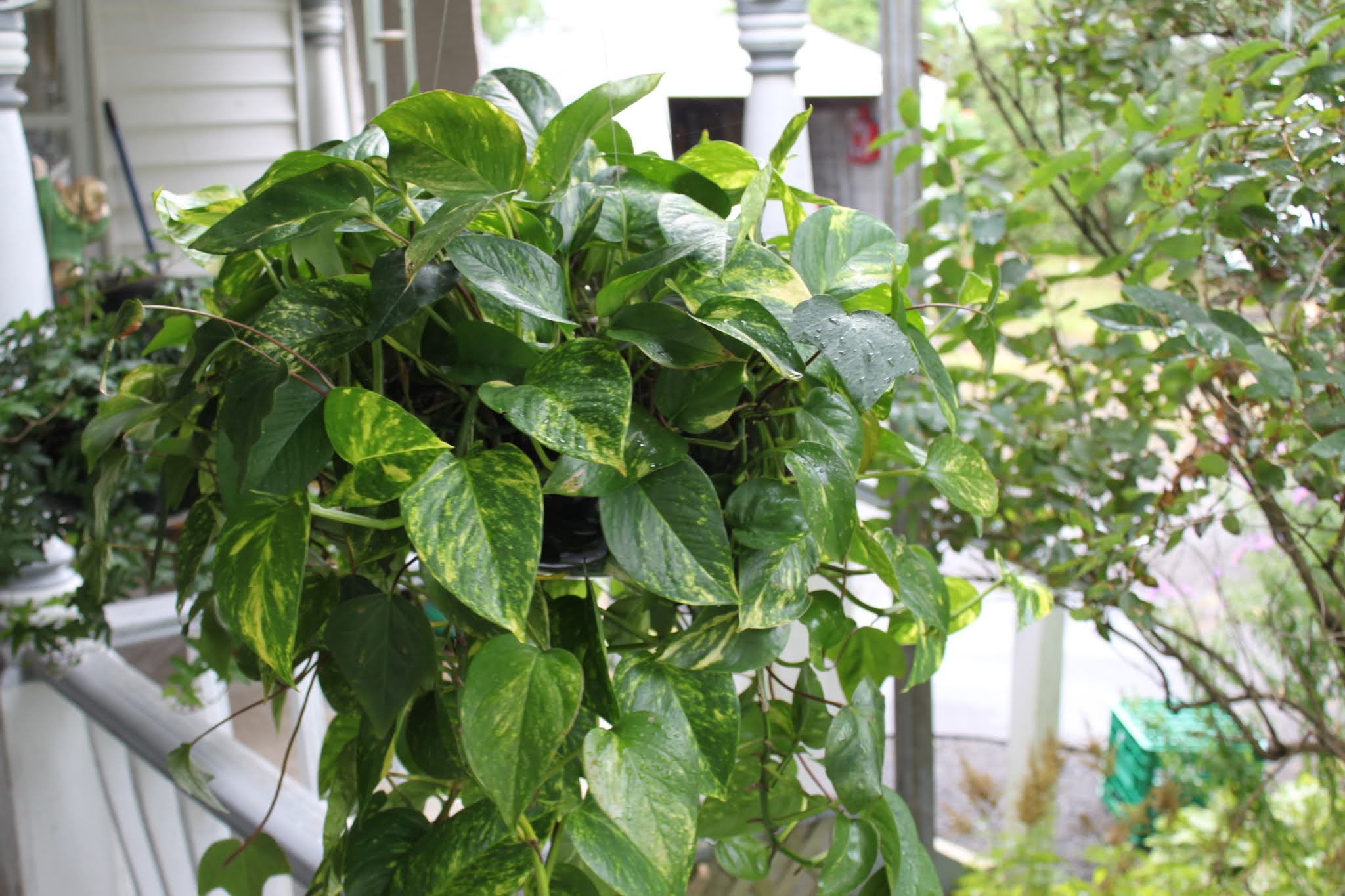
The golden pathos , Algerian ivy mix, hard to see the ivy till winter.

The zinnias which keep on going

A monarch having a taste of a zinnia.

The wild aster beginning to open up

Look at these guys go, in the olden days they used to dump kitchen garbage out the window, that landed just about here.  (Before civic curb side pickup, and my time here)

black eyed susan enjoying the season

It's been a good wet year for the weeping willows, the wettest I can recall since moving here.

These guys usually stand up but the rain has them lying down.

I thought a bit warmer location and these watermelon might grow, can't win em all I guess

Grass cutting has been immense this wet summer.


Enjoy

The Oldest Evidence of Life on Earth is Being Stolen

Friday, March 26, 2021 - Nala Rogers, Staff Writer

Media rights  Copyright American Institute of Physics

Researchers and Aboriginal people are working to protect 3.5-billion-year-old stromatolite fossils in western Australia.

(Inside Science) -- Billions of years ago in a shallow sea in what is now western Australia, microbes grew in layered cones that climbed toward a hazy orange sky. The water they lived in was green with iron; the continent above was black, bare of any life.

The cones likely grew as photosynthetic microbes pushed toward the highest points to soak up light. Yet if the microbes were using sunlight, their methods for gleaning energy were primitive and produced no oxygen. It would be another billion years before living things filled the air with oxygen and turned the sky blue.

Fast forward to the year 1994. The sea was dry, the microbes long dead, but their cityscape remained. In a patch of ground no larger than a living room, geologist and astrobiologist Martin Van Kranendonk could see how tidal movements rippled the seabed 3.4 billion years ago. The three largest cone-shaped structures, known as stromatolites, rose a foot above the surrounding rock.

That fossilized scene is one of a handful of small outcrops in the Pilbara region of Australia that hold the oldest convincing evidence of life on Earth. In 1998, Van Kranendonk returned with a team of researchers. When he approached the area that had been home to a cluster of cone-shaped stromatolites, he saw the three largest ones were gone, deliberately broken off at the base.


The three roundish shapes on this rock are the "stumps" where conical stromatolites were removed.
Media credits: Martin Van Kranendonk
Media rights : This image may only be reproduced with this Inside Science article.


"It felt like coming across a rhinoceros whose horn had been sawn off its body," said Van Kranendonk, who is now director of the Australian Center for Astrobiology at the University of New South Wales. "It was really heartbreaking."

The Pilbara fossils are famous around the world for the window they offer onto primeval life. What's less well known is that they are being stolen. The most valuable sites are listed as state geoheritage reserves, so it's illegal to visit or disturb them without permission from the government of Western Australia. But there is no on-the-ground enforcement, and even after the geoheritage reserves were established in 2010, destruction continued.

Now, scientists and Aboriginal Nyamal people are working to protect Pilbara's remaining fossils before they disappear.

Earth's oldest cityscapes

Scientists first described stromatolite fossils over a century ago, but it wasn't until live stromatolites were discovered in the late 1950s that researchers really understood what they were looking at, said Van Kranendonk.

Modern stromatolites are built by complex communities of thousands of different types of microbes, most of which are bacteria. The microbes grow in thin layers interspersed with layers of silt and other sediment. The biological activity also changes the seawater's chemistry and causes certain minerals to settle out of the water, entombing the microbes as they grow. It's thought that ancient stromatolites formed the same way.

The combination of falling sediment and precipitating minerals makes stromatolites harden quickly. Only the top layer is soft; the deeper ones are in a sense already fossilized. This is why stromatolites survive so well in the geologic record, said Van Kranendonk.

Stromatolites come in a variety of shapes, including rounded domes, cones, columns and flat sheets. In modern times, they tend to grow in places that are difficult for other life-forms to survive in, said Van Kranendonk. For example, living stromatolites have been found in hot springs in Yellowstone National Park, in a freshwater lake in Antarctica and in the extremely salty waters of Australia's Shark Bay.

In the distant past, stromatolites were probably much more common, since there were no plants, animals or protozoa for them to compete with. Fossil stromatolites have been found at many sites around the world.

The Pilbara region contains several ages and types of stromatolites, as well as additional fossils too small to be seen without a microscope. The oldest site, which contains the best fossils from a layer of rock called the Dresser formation, is thought to be the remnant of a volcanic hot spring where flat, dome-shaped, and conical stromatolites all grew close together. Those stromatolites are 3.5 billion years old, more than 50 times older than the last Tyrannosaurus rex.

There are even older rocks from Greenland that some researchers believe to be stromatolites, but those are more controversial because they have lost much of their fine-scale structure. In contrast, the Pilbara region is preserved in remarkable detail. "Really all that's happened to it is it's sat there for three and a half billion years and been tilted a bit," said Van Kranendonk.
 
Disappearing Fossils

As early as 1987, less than a decade after publication of the first scientific paper on the oldest group of Pilbara fossils, a report commissioned by the Geological Society of Australia, Western Australia Division, tried to raise the alarm.

"Key stromatolite sites have been looted," the document reads. "Some of these records of life's beginnings are in danger of being lost."

Because the sites are so small and early stromatolite fossils are rare, every piece taken represents a major loss, said Clare Fletcher, a geographer and graduate student who works with Van Kranendonk at the Australian Center for Astrobiology. The first site ever studied, named "Dunlop" for one of its discoverers, was stripped of fossils decades ago, she said.

In those days, it appeared that much of the looting was by scientists themselves, who took fossils for research or for display. In 2010, the Western Australia state government established six Pilbara fossil sites as geoheritage reserves, with a management plan that required people to obtain permits before visiting or collecting. It was thought that researchers would voluntarily respect the regulations and go through the proper channels, and indeed many scientists have been cooperative, said Sarah Martin, a paleontologist who helps manage the sites for the Geological Survey of Western Australia within the Department of Mines, Industry Regulation and Safety. The reserves also ensure that no mining permits are issued on the sites.

Nevertheless, there have been several pieces taken since the reserves were established, including a large slab showing a detailed cross-section of stromatolites that was originally part of the scene where Van Kranendonk found the decapitated cones.

Additionally, legal designations that highlight a site's importance without enforcing on-the-ground protections may backfire, essentially placing a spotlight on vulnerable resources, said Ian Percival, a retired paleontologist formerly with the Geological Survey of New South Wales.

There's no way to know for sure who is taking the specimens, but several people interviewed for this article suspect commercial dealers and members of the public. Pilbara stromatolites appear frequently on eBay and on fossil dealing sites.


Astrobiologists Martin Van Kranendonk and Tara Djokic examine the fossilized remains of an ancient hot spring in the Pilbara region of Australia.
Media credits: Courtesy of the University of New South Wales. 
Still image from "Life on Earth -- and Mars?"


Martin said she is not aware of any specimens for sale that were obviously collected illegally, since stromatolites can also be found outside the reserves. However, it is illegal to bring such fossils out of Australia without a permit, and many specimens for sale offer international shipping.

Nevertheless, Heidi Allen, a paleontologist with the Geological Survey of Western Australia, noted that scientists may still be among the culprits. "The people who understand the real value of it are people who understand the science," she said. "I'm not so sure that it's just the regular Joe Blow who wants a piece of this really old stromatolite on his mantelpiece."

Inside Science reached out to eight sellers offering stromatolite fossils attributed to the Pilbara region, but only one replied, saying that their specimens came from an old collection rather than newly collected material.

The value of fossils left in place

As the earliest clear signs of life on Earth, the Pilbara fossils are a monument to the history of everything and everyone alive today. But the fossils' value is more than symbolic. There's a wealth of research still to be done to tease apart the secrets of those ancient ecosystems, and it's impossible to predict what new questions might arise and what research technologies will become available, said Allen.

"They're a library to Earth's past and life on our planet. And they need to be available to everybody now and in the future," said Allen.

One of the most exciting ways scientists are using the Pilbara fossils is as a guide for how to find life on Mars. The rocks in that part of Australia are thought to be similar to those where NASA's Perseverance Rover landed on Mars last month, with the Mars site holding a lake at the same time the Pilbara region contained a sea. If early life could thrive on Earth in such conditions, it could potentially have done so on Mars as well, said Mitch Schulte, a geologist and program scientist for NASA's Mars exploration program.

It's not enough for the Mars researchers to examine stromatolite specimens in a museum. Members of NASA and the European Space Agency have traveled all the way to Australia so they can envision what it will be like to guide a rover through such terrain, interpreting subtle clues that may help them locate fossils on Mars -- if they do exist.

"If your rover's going this way, would you have seen what we just saw? All that kind of stuff, that didn't really occur to me until I had actually been out there," said Schulte.

There's also a tremendous amount about the fossils in Australia that can only be understood from their place in the landscape. For example, the Pilbara cone-shaped stromatolites grew straight up toward the light, even when they were on a sloped surface. They also weren't perfectly round in cross-section, said Van Kranendonk; instead, they were oblong, angled so the narrow sides would meet the incoming and outgoing tides.

When you take a stromatolite fossil out of its environment, it loses most of its scientific value, according to multiple researchers. "It would sort of be like taking one organic molecule out of an organism and thinking you know everything there is to know about that organism," said Schulte. "You really need a bigger-picture story of what's going on."

A cross-section of two conical stromatolite fossils from the Pilbara region. The stromatolite on the left was growing on a surface that sloped down toward the lower right. You can see how the stromatolite grew straight up despite the slope, with the righthand side of the cone longer than the left.
Media credits: Martin Van Kranendonk
Media rights: This image may only be reproduced with this Inside Science article.

Protecting a global treasure

Protecting the fossil sites will be no easy task. They are remote, and while that helps reduce casual and accidental damage, it also makes them harder to monitor. And with the locations published in scientific journals, there is nothing to stop anyone who is determined to get there.

Fletcher's graduate thesis is devoted to figuring out how to save the stromatolites despite the challenges. As an interim measure, she is working to get security cameras installed at the most valuable sites. She also has a long-term vision that would see the area developed as a tourist destination and monitored by Nyamal rangers -- members of the Aboriginal people who are the traditional owners of the land. In interviews with local landowners, miners and other stakeholders, she has not yet encountered any opposition and has even received offers of funding from two mining companies.

Many of those plans may be on hold as advocates wait for additional legal processes to play out. For example, the state government of Western Australia is considering including three of the most important sites in a new national park, which might open up additional sources of funding for rangers and infrastructure. Martin at the Geological Survey of Western Australia supports the move, and hopes the national park status will also help people understand why the fossils should be preserved.

"I don't think people really get why we want to protect rocks, and they see stromatolites as just rocks in a lot of cases," she said. "But as soon as you put it into a national park, it's like, yep, everyone gets it."

Meanwhile, Fletcher and Van Kranendonk are lobbying to have four sites protected under a federal National Heritage listing; the application was submitted last month. A National Heritage listing would require development of a new management plan, which should make funding easier to secure.

"I think it's a fantastic initiative and effort from Claire and Martin [Van Kranendonk], and I fully support it, and so do most of the Nyamal people that are aware of it," said Jamie Haynes, Heritage Manager at Nyamal People's Trust. "What it means up here to us is simply that we've got some country there that's ancient -- more ancient than us, our culture -- and it's going to stay there."

In fact, the Nyamal people aren't waiting for National Park or National Heritage listings. Haynes recently secured a grant from the Western Australia Department of Biodiversity, Conservation and Attractions to start an Aboriginal ranger program. The grant will pay for six part-time rangers over the next two years, said Haynes. He hopes that in that time, the program can build up enough momentum and additional funding streams to offer long-term protection to the stromatolite fossils, as well as to archaeological sites and endangered wildlife.

Haynes used to tend livestock around the fossil sites, and often wondered about the strange bubbly-looking rocks. He said that when he learned what they were, it gave him a new sense of appreciation, making him realize the exceptional age of his peoples' land. He hopes to establish a training program to teach rangers about stromatolites and help them spot whether any have been tampered with.

It makes sense to Haynes why the earliest record of life on Earth should be left in place, where it can be understood as part of an intact and complex landscape.

"Aboriginal people view it as we're just passing through. We're not here to change it," he said. "We're here to keep it, maintain it, so that other people can pass through. And when you die you go back into that, you know, so that the hills become your ancestors."


Recommend this post and follow 
The Life of Earth