Thursday, 29 February 2024

Consistent evidence links ultra-processed food to over 30 damaging health outcomes

Feb. 28, 2024, by British Medical Journal

Credit: Unsplash/CC0 Public Domain

Consistent evidence shows that higher exposure to ultra-processed foods is associated with an increased risk of 32 damaging health outcomes including cancer, major heart and lung conditions, mental health disorders, and early death.

The findings, published by The BMJ, show that diets high in ultra-processed food may be harmful to many body systems and underscore the need for urgent measures that target and aim to reduce dietary exposure to these products and better understand the mechanisms linking them to poor health.

Ultra-processed foods, including packaged baked goods and snacks, fizzy drinks, sugary cereals, and ready-to-eat or heat products, undergo multiple industrial processes and often contain colors, emulsifiers, flavors, and other additives. These products also tend to be high in added sugar, fat, and/or salt, but are low in vitamins and fiber.

They can account for up to 58% of total daily energy intake in some high-income countries, and have rapidly increased in many low and middle-income nations in recent decades.

Many previous studies and meta-analyses have linked highly processed food to poor health, but no comprehensive review has yet provided a broad assessment of the evidence in this area. To bridge this gap, researchers carried out an umbrella review (a high-level evidence summary) of 45 distinct pooled meta-analyses from 14 review articles associating ultra-processed foods with adverse health outcomes.

The review articles were all published in the past three years and involved almost 10 million participants. None were funded by companies involved in the production of ultra-processed foods.

Estimates of exposure to ultra-processed foods were obtained from a combination of food frequency questionnaires, 24-hour dietary recalls and dietary history, and were measured as higher versus lower consumption, additional servings per day, or a 10% increment.

The researchers graded the evidence as convincing, highly suggestive, suggestive, weak, or no evidence. They also assessed the quality of evidence as high, moderate, low, or very low.

Overall, the results show that higher exposure to ultra-processed foods was consistently associated with an increased risk of 32 adverse health outcomes.

Convincing evidence showed that higher ultra-processed food intake was associated with around a 50% increased risk of cardiovascular disease-related death, a 48-53% higher risk of anxiety and common mental disorders, and a 12% greater risk of type 2 diabetes.

Highly suggestive evidence also indicated that higher ultra-processed food intake was associated with a 21% greater risk of death from any cause, a 40-66% increased risk of heart disease-related death, obesity, type 2 diabetes, and sleep problems, and a 22% increased risk of depression.

Evidence for the associations of ultra-processed food exposure with asthma, gastrointestinal health, some cancers and cardiometabolic risk factors, such as high blood fats and low levels of "good" cholesterol remains limited.

The researchers acknowledge that umbrella reviews can only provide high-level overviews and they can't rule out the possibility that other unmeasured factors and variations in assessing ultra-processed food intake may have influenced their results. However, their use of rigorous and prespecified systematic methods to evaluate the credibility and quality of the analyses suggests that the results withstand scrutiny.

As such, they conclude, "These findings support urgent mechanistic research and public health actions that seek to target and minimize ultra-processed food consumption for improved population health."

Moreover, ultra-processed foods damage health and shorten life, say researchers in a linked editorial. So what can be done to control and reduce their production and consumption, which is rising worldwide?

They point out that reformulation does not eliminate harm, and profitability discourages manufacturers from switching to make nutritious foods, so public policies and action on ultra-processed foods are essential.

These include front-of-pack labels, restricting advertising and prohibiting sales in or near schools and hospitals, and fiscal and other measures that make unprocessed or minimally processed foods and freshly prepared meals as accessible and available as and cheaper than ultra-processed foods.

It is now time for United Nations agencies, with member states, to develop and implement a framework convention on ultra-processed foods similar to the framework on tobacco, and promote examples of best practice, the researchers write.

Finally, they say that multidisciplinary investigations "are needed to identify the most effective ways to control and reduce ultra-processing and to quantify and track the cost-benefits and other effects of all such policies and actions on human health and welfare, society, culture, employment, and the environment."


Recommend this post and follow
The Life of Earth

Beyond the Five Senses: Scientists Uncover Tactile Connection of Time

SCUOLA INTER. SUPERIORE DI STUDI AVANZATI Feb. 28, 2024

A new study reveals that our perception of time is intertwined with the sense of touch, supported by the dual functionality of the somatosensory cortex. Utilizing optogenetics, the research demonstrated that the somatosensory cortex’s neurons contribute to both tactile sensations and the perception of time, suggesting that time perception is rooted in a widespread network of brain areas. 
Credit: SciTechDaily.com

Sensory experiences and the perception of time are intricately linked within the somatosensory cortex of the brain. Here, the neural representations for both sensations are intertwined, being “multiplexed” within a shared neural network.

Time is felt, seen, and heard, yet there are no specific sensory receptors dedicated to perceiving time, unlike those for touch, sight, hearing, and smell. This fact has long tantalized neuroscientists with the possibility that sensing time might “piggyback” on true sensory modalities. New research in fact demonstrates that the percept of time embodied within a tactile experience is rooted in the dual functionality of the somatosensory cortex.

Professor Mathew Diamond and his SISSA research team recently published their findings in Nature Communications, shedding light on the intricate interplay between the sense of touch and the sense of time.

As we process stimuli received through the skin, neurons in the somatosensory cortex robustly represent the detailed features of the stimuli, culminating in the subjective experience of touch. However, was the stimulus brief or extended in time? How does the perception of elapsed time emerge? The research team’s results indicate how the somatosensory cortex contributes to the perception of time.

Utilizing optogenetics, a technique enabling the modulation of neuronal activity through application of light to the cortex, the study established a connection between two seemingly distinct experiences – the “what” and the “how long” of a stimulus. 
Credit: Mathew Diamond


Utilizing optogenetics, a technique enabling the modulation of neuronal activity through application of light to the cortex, the study established a connection between two seemingly distinct experiences – the “what” and the “how long” of a stimulus. In rats trained to assess vibration intensity while disregarding duration, optogenetic intervention influenced perceived intensity.

Conversely, in animals trained to evaluate vibration duration while disregarding intensity, optogenetic intervention influenced perceived duration. These findings not only affirm the expected function of the somatosensory cortex in constructing the tactile sense but also support the notion that the perception of time is rooted in a widespread network of brain areas with diverse functions, including touch. This research lays the foundation for future studies exploring the intricate relationship between sensory experiences and the perception of time.

A Widespread Network for Time Perception

“The neuronal mechanisms underlying the perception of the duration of sensory events are still not fully known,” explains Professor Mathew Diamond, the research coordinator. “It is believed that, rather than relying on a single dedicated brain center, the perception of time emanates from networks of neurons distributed across various brain regions. The study’s findings demonstrate that the sensory processing stage of cortex is one component of the network. This means that one population of cortical neurons can give rise to two distinct sensory experiences, emphasizing the interconnected nature of time perception and touch.”

A Study Exploiting Optogenetics

Previous work by the SISSA research group hinted at the integration and accumulation of impulses in the sensory processing pathway as a potential mechanism underlying time perception. Now, optogenetic techniques were employed to test this hypothesis directly, enabling the manipulation of neuron activity at a specific target location. Diamond explains: “If there is a behavioral effect of optogenetic intervention, the only explanation is that the target neurons are somehow involved. Targeting similar sets of neurons in the two groups of rats produced two different outcomes in their behavior. Increasing neuronal firing by optogenetics increased the perceived duration in the “duration” rats and increased the perceived intensity in the “intensity” rats. Since both percepts involve an overlapping set of neurons, we describe the two signals as “multiplexed” in the somatosensory cortex. As a final step, we constructed a mathematical model that goes from the physiology of cortical neurons to the final percept. The model points to potential cellular mechanisms for building elaborate percepts from neuronal firing.”

The Choreography of Two Percepts

The study concludes that the perception of time is intricately intertwined with touch, emerging within the tactile sensory representation. This insight opens the door to exploring the experience of time through the lens of sensory encoding, offering new avenues for understanding the complex relationship between sensing the external world and sensing time.


Recommend this post and follow
The Life of Earth

Health and Wellness News: Talking speed key to understanding brain health, new study suggests


Talking speed key to understanding brain health, new study suggests


“Our results show that changes in general talking speed may reflect changes in the brain,” noted lead author Dr. Jed Meltzer at Baycrest, a global leader in aging and brain health.


Wednesday, 28 February 2024

Alzheimer's Was 'Exceptionally' Rare in Ancient Greeks And Romans, Study Suggests

28 Feb. 2024, By C. CASSELLA

Raphael mural of Plato (left) and Aristotle (right). 
(Pascal Deloche/Getty Images)

Older people in ancient Greece and Rome may not have experienced severe memory problems like many who are aging today.

Researchers in California have combed through a slew of classical texts on human health written between the 8th century BCE and 3rd century CE, and found surprisingly few references to cognitive impairment in older folk.

According to Caleb Finch, who studies the mechanisms of aging at the University of Southern California, and historian Stanley Burstein from California State University, severe memory loss may have been an extremely rare outcome of growing old more than 2,000 years ago.

And that's not because ancient Romans and Greeks weren't living to a ripe old age.

While average life expectancy before the common era was roughly half of what it is today, the age of 35 was hardly considered 'old' for the time. The median age of death in ancient Greece was, by some estimates, closer to 70 years, which means that half of society was living even longer than that. Hippocrates himself, the famous Greek physician and so-called father of medicine, is thought to have died in his 80s or 90s.

Age is currently known as the single greatest risk factor for dementia, with roughly a third of all people over 85 suffering from the condition today. Diagnoses over the age of 65 have been doubling every five years.

Memory loss is a highly common feature of aging in the modern world, but it wasn't always so. In the ancient past, Finch and Burstein found not one mention of memory loss in medical writings from Hippocrates, his later followers, or even Aristotle.

In Greek texts from the 4th and 3rd century BCE, old age was associated with many symptoms of physical decline, including deafness, dizziness, insomnia, blindness, and digestive disorders. But based on the available literature – which is, admittedly, limited – severe memory issues didn't seem to be a notable problem.

"We did not find any equivalent to modern case reports of [Alzheimer's disease and related dementias]," write Finch and Burstein.

"None of these ancient accounts of cognitive loss can be considered clinical-grade data in the modern sense."

The findings of the historical review suggest that today's epidemic of dementia, experienced by numerous nations around the world, could very well be a product of modern life. Indeed, recent studies have tied dementia and its most common subtype, Alzheimer's disease, to cardiovascular issues, air pollution, diet, and disadvantaged neighborhoods in urban environments, all of which are common afflictions of modernity.

In ancient times, however, Finch and Burstein found evidence that while "mental decline was recognized", it was "considered exceptional."

In the time of Aristotle and Hippocrates, they say, only a few texts mention symptoms that could indicate early- or mid-stage Alzheimer's disease, with no mention of major losses in memory, speech, or reasoning.

Even the Roman statesman, Cicero, provided no mention of memory loss in his texts on the 'four evils' of old age, which suggests it was still an unusual symptom of age as late as the mid-1st century BCE.

Not until Finch and Burstein reached historical texts from the 1st century CE did the duo find any mention of severe, age-related memory loss. The first advanced case was written down by Pliny the Elder, who died in 79 CE, and describes a famous senator and orator in Rome who forgot his own name with age.

In the 2nd century the personal physician to the Roman emperor, a Greek physician named Galen, wrote about survivors of two plagues who apparently could not recognize themselves or their friends.

By that time, air pollution was prevalent in Imperial Rome and lead exposure from cooking vessels and the civilization's plumbing system was rampant.

Such factors could have put the populace at greater risk of Alzheimer's disease, triggering unusual symptoms of old age that were rarely seen in times gone by, suggest Finch and Burstein.

Without more data, it's impossible to say why severe symptoms of dementia feature more often in records of Imperial Roman than those in ancient Greece.

The fact that there are societies of people living today that have rates of dementia less than a percent supports the theory that environmental factors could impact cognitive decline more so than aging.

The modern Tsimané and the Moseten people of the Bolivian Amazon have an 80 percent lower incidence of dementia than the US or Europe. Their brains don't seem to age like those elsewhere in the world, and their way of life is not founded on industrialization or urbanization, but is based on traditional methods of farming and foraging.

Finch and Burstein are now calling for a "broader inquiry" into the history of dementia in ancient and pre-modern times to figure out when and why severe memory losses first began to show up in older folk.


Recommend this post and follow
The birth of modern Man

Poorly controlled asthma emits same quantity of greenhouse gas as 124,000 homes each year in the UK: Study

Feb. 27, 2024, by British Medical Journal

Credit: Pixabay/CC0 Public Domain


Patients whose asthma is poorly controlled account for eight times excess greenhouse gas emissions compared with those whose condition is well controlled—equivalent to that produced by 124,000 homes each year in the U.K. This result has been published online in the journal Thorax.

Improving the care of asthma patients could achieve substantial carbon emissions savings, and help the NHS meet its net zero target, say the researchers.

Health care is a major contributor to greenhouse gas emissions and in 2020 the NHS set an ambitious target of reducing its carbon footprint by 80% over the next 15 years, with the aim of reaching net zero by 2045, note the researchers.

Asthma is poorly controlled in around half of those with the condition in the U.K. and Europe, increasing the risk of hospital admission and severe illness as well as health care costs.

To gauge the environmental footprint of asthma care in the U.K., the researchers retrospectively analyzed the anonymized health records of 236,506 people with asthma whose data had been submitted to the Clinical Practice Research Datalink between 2008 and 2019.

Greenhouse gas (GHG) emissions, measured as carbon dioxide equivalent (CO2e), were estimated for asthma-related medication use, health care resource utilization and severe exacerbations during follow-up of patients with asthma.

Well-controlled asthma was categorized as no episodes of severe worsening symptoms and fewer than three prescriptions of short-acting beta-agonists (SABAs) reliever inhalers in a year.

Poorly controlled asthma was categorized as three or more SABA canister prescriptions or one or more episodes of severe worsening symptoms in a year.

A severe exacerbation of asthma was defined as worsening symptoms requiring a short course of oral corticosteroids, an emergency department visit, or hospitalization.

Excess GHG emissions due to suboptimal asthma control included at least three or more SABA canisters per year, severe exacerbations and any GP visits within 10 days of hospitalization or an emergency department visit.

The researchers calculated that the overall carbon footprint attributed to asthma care when scaled to the entire U.K. asthma population added up to 750,540 metric tons CO2e/year.

Asthma was poorly controlled in just under half (47%; 111,844) of the patients. And poorly controlled asthma contributed to excess greenhouse gas emissions of 303,874 tons CO2e/year—equivalent to emissions from more than 124,000 homes in the U.K., they estimate. The excess GHG emissions were eight-fold higher on average for a person with poorly controlled asthma than in the well controlled asthma patients.

The excess GHG emissions were 90% comprised of inappropriate SABA use with the remainder mostly due to health care resource utilization such as GP and hospital visits, required to treat severe worsening symptoms.

Poorly controlled asthma generated three-fold higher greenhouse gas emissions on average for a person with poorly controlled asthma compared with well-controlled asthma when taking into account GHG emissions related to all aspects of asthma care including routine prescribing and management.

The researchers acknowledge various limitations to their findings, including that the study results were largely descriptive in nature. And factors other than the level of asthma symptom control, such as prescribing patterns, may also have contributed to high SABA use.

But they nevertheless write, "Our study indicates that poorly controlled asthma contributes to a large proportion of asthma-care related greenhouse gas emissions with inappropriate SABA use emerging as the single largest contributor."

The Global Initiative for Asthma no longer recommends SABA used alone as the preferred reliever for acute asthma symptoms, they add.

The authors conclude that efforts to improve asthma treatment practices including curtailing inappropriate SABA use and implementing evidence-based treatment recommendations, could result in substantial carbon savings.


Recommend this post and follow
The Life of Earth

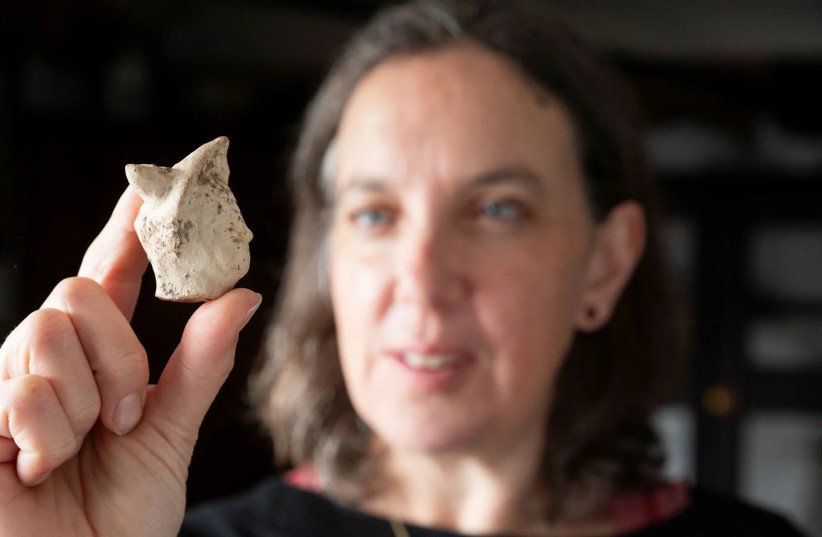
Archaeology News: Ancient Roman god head stumbled upon by English archaeologists


Ancient Roman god head stumbled upon by English archaeologists


The figuring head is of the Roman god Mercury, a messenger god thought to be the equivalent of the Greek god Hermes.


Tuesday, 27 February 2024

Bile acid breakthrough: Researchers team up for microbiome discoveries

Feb. 27, 2024, by Michigan State U.

A 3D rendering of the enzyme bile salt hydrolase, or BSH. In a testament to land-grant collaboration, researchers at Michigan State University and Pennsylvania State University teamed up to reveal the different critical roles BSH plays in our microbiome, leading to two papers published simultaneously in Nature. 
Credit: M. Rossocha et al (2005) Biochem. 44: 5739-5748. This image is available under a CC-BY-4.0 license.

Ask someone what they think of when they hear the phrase "bile acids," and you might get a few unpleasant answers.

Ask Robert Quinn, assistant professor in Michigan State University's Department of Biochemistry and Molecular Biology housed in the College of Natural Science, and you'll kickstart a conversation about some of the most versatile and crucial actors in the human gut.

Bile acids are linked to our full-body health, can act as drugs and are some of the best studied molecules in the history of biochemistry.

Now, thanks to a bit of serendipity and a cooperative spirit, Quinn and his lab helped uncover a previously unknown way that the microbes living in our gut help make these important molecules.

After realizing the lab of Andrew Patterson at Pennsylvania State University had similar findings as the MSU researchers, the two teams published separate but complementary papers in Nature.

Together, the papers reveal surprising contributions from a well-known microbial enzyme.

"There are implications not only for biomarkers, but for therapeutics that could aid gut health or lessen disease severity," said Doug Guzior, a doctoral student at MSU and first author of the Quinn lab's report.

"These two papers really showcase the fantastic things that occur when scientists collaborate," said Patterson, who is a professor of molecular toxicology, as well as of biochemistry and molecular biology.

Secrets of the microbiome

Produced in the liver and stored in the gallbladder, bile acids are some of the most abundant molecules in our guts.

"They act as detergents, not unlike soap," Quinn explained. "So, when you're having your nacho cheese while watching the game, they'll solubilize those fats and help you absorb them."

For decades, it was understood that our livers conjugate bile acids before releasing them. That means that enzymes in liver cells would add the amino acids glycine or taurine to help the bile acids best do their jobs. These glycine and taurine bile acids have been studied as far back as the 1850s and are crucial to our gut health.

But, in a 2020 paper, Quinn and his colleague showed that microbes could also conjugate bile acids by adding a host of amino acids beyond glycine and taurine.

This discovery was a springboard for deeper exploration.

Spearheaded by Guzior, who studies in MSU's Department of Microbiology, Genetics and Immunology, the Quinn lab turned its attention to an enzyme known as bile salt hydrolase, or BSH.

BSH is one of the most ubiquitous and well-studied enzymes in the gut microbiome and its traditionally understood role was in breaking down, or deconjugating, bile acids.

To their surprise, the MSU researchers found that the bile acids they discovered in 2020 were actually made by the BSH enzyme.

The discovery showed the enzyme could essentially act in reverse, producing myriad microbially conjugated bile acids that greatly increase the diversity of bile acids—and what they do.

"Different bacteria have different properties when it comes to this reverse activity, and this can very much modify the function of the bile acids," Quinn said.

The finding also demonstrated that bacteria were capable of making the same bile acids that were once believed to be the exclusive products of human cells.

"It's a sort of molecular mimicry that challenges scientific dogmas," Guzior said.

"For instance, if we detect a change in conjugated bile acid profiles, is that on the side of the host—say, from a liver abnormality—or is it on the side of the bacteria?"
A scientific 'Land-Grant Trophy'

In a testament to institutional teamwork and the scientific community, MSU's paper appears alongside a second bile acid publication authored by Patterson.

The shared discovery and dual publications are like an academic Land-Grant Trophy—the trophy given at the annual meeting of the MSU and Penn State football teams—only here, both teams won. It was a success sparked by a mutual connection and good timing.

When Quinn realized what his team had found, he reached out to his former postdoc adviser, Professor Pieter Dorrestein of the University of California, San Diego. Dorrestein had a surprising reply. He had received similar news from the Patterson lab that same day.

Rather than compete to publish, the MSU and Penn State groups instead connected and worked together to produce two nearly mirrored discoveries.

"The data was almost backwards," Quinn said. "While we showed the enzyme produced these molecules, the Patterson lab discovered the enzyme and chose to inhibit it, showing that the molecules went away. It was perfectly complementary."

"A big thanks goes to Pieter Dorrestein at UCSD for bringing us all together," said Patterson.

"We all delved into understanding this new role for BSH, and tackling it together made the experience incredibly rewarding, especially for our highly talented grad students from PSU and MSU."

The Quinn lab also benefited from regional collaboration with Michigan health experts.

Stewart Graham, director of metabolomics research and director of Alzheimer's disease research at Corewell Health, provided the MSU researchers with pre- and post-bariatric surgery fecal samples.

Molecular analysis revealed a reduced presence of microbially conjugated bile acids after surgery, showing that these bile acids were altered after changes to gut physiology.

"The findings of this study underscore the age-old adage that 'it takes a village,'" said Graham. "These results provoke critical questions."

For Guzior, working with these collaborators has been a highlight of the research experience.

"To have these otherwise unfamiliar labs connect, and to have a free-flowing discussion of ideas as we worked on simultaneous discoveries—the result has been one cohesive story."

The first steps

No matter the on-field results in East Lansing or State College, researchers at MSU and Penn State are excited to see their dual papers embody the power of scientific collaboration between iconic institutions, and how this work has opened a new era in bile acid research.

"The number of people who are now studying these molecules and engaging in the microbiome and bile acid field is immense," offered Quinn, who further noted that if individuals could be provided probiotic microbes known to produce bile acids with beneficial properties, they'd make excellent drugs.

Looking ahead, Guzior is confident in what the future has in store for bile acid studies and where these latest discoveries will lead next.

"I'd say we're on the third step of a staircase that goes all the way to the 10th floor," Guzior said.

"The possibilities are innumerable."


Recommend this post and follow
The Life of Earth

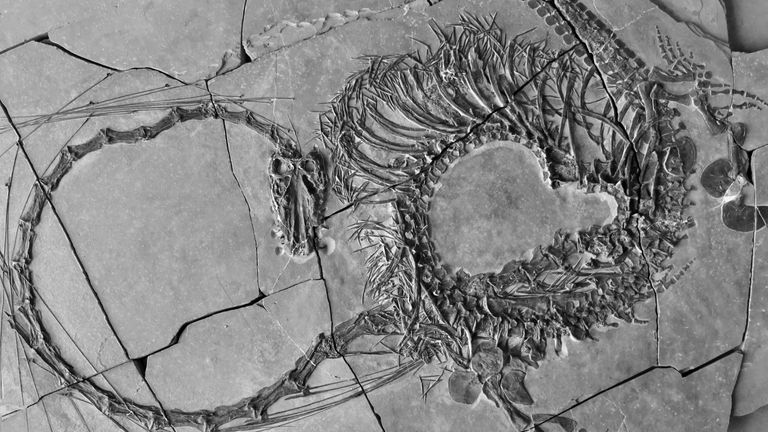
Archaeology News: Scientists unveil 240-million-year-old reptile likened to 'Chinese dragon'


Scientists unveil 240-million-year-old reptile likened to 'Chinese dragon'

The Triassic period creature had 32 separate neck vertebrae, flippered limbs and, with well preserved fish found in its stomach region, was thought to very well adapted to ocean life.


Sky News, Friday 23 February 2024

https://news.sky.com/story/scientists-unveil-240-million-year-old-reptile-likened-to-chinese-dragon-13078891 


                    Dinocephalosaurus orientalis was a dragon-like marine reptile. Pic: PA


A 240-million-year-old marine reptile with an extraordinarily long neck - likened to a "Chinese dragon" - has been depicted in full for the first time.

The Dinocephalosaurus orientalis fossils were first discovered in Guizhou province in southern China in 2003.

After finding other, more complete specimens, scientists have now been able to present a full depiction of the creature.

The dinosaur, which lived during the Triassic period, had 32 separate neck vertebrae, and flippered limbs.

EMBARGOED TO 0001 FRIDAY FEBRUARY 23 Undated handout photo issued by National Museums Scotland of a Dinocephalosaurus orientalis. The long-necked 240-million-year-old marine reptile compared to a Chinese dragon has been depicted in full for the first time following new research. The Dinocephalosaurus orientalis fossils were discovered in Guizhou province, southern EMBARGOED TO 0001 FRIDAY FEBRUARY 23 Undated handout photo issued by National Museums SIssue date: Friday February 23, 2024.
China.
Image:The Dinocephalosaurus orientalis fossils were discovered in Guizhou province in southern China in 2003. Pic: National Museums Scotland/PA

A team of international researchers found well preserved fish in its stomach region, suggesting it was very well adapted to ocean life.

Nick Fraser, from National Museums Scotland, who was part of the international team that studied the fossil, said: "This discovery allows us to see this remarkable long-necked animal in full for the very first time.

"It is yet one more example of the weird and wonderful world of the Triassic that continues to baffle palaeontologists.

"We are certain that it will capture imaginations across the globe due to its striking appearance, reminiscent of the long and snake-like mythical Chinese dragon."

The long neck of Dinocephalosaurus orientalis has drawn comparison with the neck of Tanystropheus hydroides, another marine reptile from the Middle Triassic period of both Europe and China.

Both reptiles were of similar size and have several features of the skull in common, however Dinocephalosaurus has many more vertebrae both in the neck and in the torso, making it look much more like a snake.

Researchers from Scotland, Germany, America and China took part in a 10-year study of Dinocephalosaurus orientalis at the Institute of Vertebrate Palaeontology and Palaeoanthropology, Beijing, part of the Chinese Academy of Sciences.

Despite superficial similarities, Dinocephalosaurus was not closely related to the famous long-necked plesiosaurs that evolved around 40 million years later and which are thought to have been the inspiration for the Loch Ness monster.

Professor Li Chun from the institute said the international team "used newly discovered specimens housed at the Chinese Academy of Sciences to build on our existing knowledge of this animal".

"Among all of the extraordinary finds we have made in the Triassic of Guizhou province, Dinocephalosaurus probably stands out as the most remarkable."

The paper describing the animal appears in Earth And Environmental Science: Transactions Of The Royal Society Of Edinburgh.