Israel, UAE to swap kidneys in historic life-saving operation
The kidney from Israel will be
brought to Abu Dhabi via a private plane, which will promptly fly back
to Israel with another kidney in tow for a separate patient.
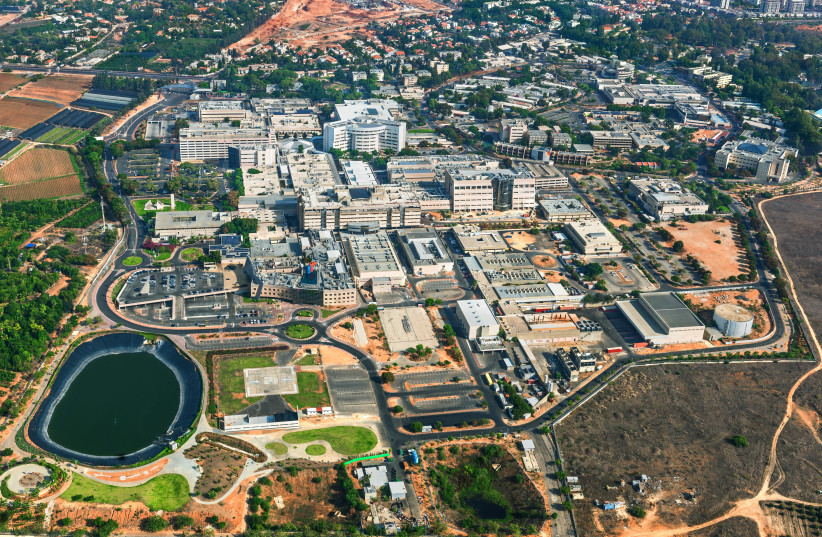
Sheba Medical Center campus, (photo credit: Courtesy)
Israelis and Emiratis are swapping kidneys, as a woman in Israel is set to undergo surgery to donate her kidney to a patient in the UAE, while an Emirati will donate a kidney to an Israeli patient, the English daily Khaleej Times reported.
The
complex operation will ensure 39-year-old Shani Markowitz will have her
kidney safely removed at Sheba Medical Center, Tel Hashomer, where it
will be sent to Abu Dhabi via private plane and be donated to a hospital
where a patient is awaiting a transplant. But the plane will promptly
fly back to Israel with another kidney aboard, this time from the UAE
and it will quickly be delivered to a patient at Israel’s Haifa Rambam Health
Care Campus.
This
incredible live-saving mission heralds another new milestone in the
ever-growing ties between Israel and the UAE and is part of the Abraham Accords’ organ donation program.
Note that the swaps & successful operations took place on July 29, 2021
Three families - two Israeli & one Arab, exchange kidneys, 29 Jul 2021
This page was posted by Sputnik One of the Sputniks Orbit blog
People synchronize in various ways when we interact with one another. We subconsciously match our footsteps when we walk. During conversations, we mirror each other's postures and gestures.
To that end, studies have shown that people synchronize heart rates and breathing when watching emotional films together. The same happens when romantic partners share a bed. Some scientists think we do this to build trust and perceive people as similar to ourselves, which encourages us to behave compassionately.
Surprisingly, people synchronize their neural rhythms, too. Researchers like Tom Froese, a cognitive scientist from the Okinawa Institute of Science and Technology in Japan, think that these findings could upend our current models of consciousness.
You may have experienced this while playing music with someone and falling into rhythmic and melodic harmony. Or you may collectively solved a problem with a team. Perhaps it felt like you were operating at the same frequency — in reality, this might have not been far from the truth.
Such inter-brain neural synchronization has been observed in people engaging in meaningful interactions. But what does it actually mean?
What We Know About Brain Syncing
Our brains are made up of billions of neurons. When they fire — sending information to nearby neurons — they give off electrical signals. Billions of neurons fire to carry out specific cognitive tasks, like producing thoughts or controlling the body’s movement.
These collective electrical signals can be aligned to certain frequencies, much like a wave where the peak represents a spike in neural activity and a dip represents low neural activity.
Cognitive tasks often require different regions of the brain to ‘speak’ to one another, allowing information to be transferred and integrated. Some scientists claim that this information transfer occurs when neural frequencies from different brain regions align. This is known as phase synchronization.
These frequencies, or oscillations, are measured in cycles per second, or hertz (Hz). There are a few different ways of measuring this neural oscillatory activity, but the most common method is known is electroencephalography (EEG), where small metal discs placed on the scalp measure electrical output.
Researchers have observed people’s neural activity while they complete cognitive tasks with techniques like EEG, functional magnetic resonance imaging (fMRI), which is a machine that detects where oxygenated blood is flowing in the brain. Functional near-infrared spectroscopy (fNIRS) also detects blood flow in the brain. With these techniques, scientists have peered into people’s minds as they complete tasks in pairs and groups.
They noticed something unexpected: Functional links appeared across people’s brains when they cooperated during certain tasks. In other words, different people’s neural oscillations aligned when they cooperated.
Neuroscientists needed to rule out the possibility that this neural synchronization occurred due to a shared environment, similarities in sensory input (what people could see, hear, smell), or in motor output (how they moved their bodies).
One such study, published in PLOS One in 2016, examined the neural activity of pilots and co-pilots during a flight simulation. In this case, the environment remains the same but the level of cooperation varies throughout the task. Pilots and co-pilots exhibited high levels of inter-brain connectivity during takeoff and landing because they needed to act as a team, yet they showed lower levels during the cruise phase of the flight when the two pilots acted independently.
A potential explanation: Functional links across brains increase when people work together, but not for those who are competing or taking on identical tasks simultaneously.
In a different study from 2018, greater neural synchronization occurred between subjects when they were told to complete a puzzle together. Synchronization levels dropped when the same subjects had to complete identical puzzles individually, or when both watched other people finish one.
As for the subjective experience of individuals in such studies, higher feelings of cooperativeness were aligned with higher levels of neural synchronization. Additionally, study participants’ level of inter-brain synchrony could predict subjective feelings of engagement, affinity, empathy and social connection.
Why It Matters
As most neuroscientists currently understand, no localized region or network in the brain is solely responsible for our conscious experience. Instead, some researchers believe that the neural basis of consciousness — specifically the first-hand experience of it — comes from large-scale interactions between different brain regions via neural oscillatory activity.
That would render consciousness an emergent property of multiple interacting networks, so it couldn’t be reduced to any single network.
Given this knowledge, along with the changes that transpire during cooperative social interactions, Froese argues that a shift in our understanding of consciousness is warranted. Namely, he supports an ‘extension of consciousness’.
Froese isn’t suggesting that consciousness lacks a neural basis; however, an individual’s neural activity is embodied in their interactions with the world. Now, we realize that other people may play a role.
The conscious mind’s boundaries could also be under constant renegotiation during exchanges with the environment and other people, Froese explained in a 2020 Neuroscience of Consciousness article. When we socialize, inter-brain synchronization neurally binds us together and extends consciousness.
“An upshot of this proposal is that it can potentially validate our most intimate experiences: When we become aware that ‘we’ are sharing a moment with someone else, it is no longer necessarily the case that we are fundamentally separated by our distinct heads — we could really be be two individuals sharing in one and the same unfolding experience,” he wrote.
Froese’s ideas build on a school of thought called complex systems theory, which would agree that consciousness emerges from multiple interacting brain networks.
He goes a step further by asserting that certain characteristics central to our experience of consciousness, like our deep sense of social connectedness, cannot be explained by reducing the system to one individual brain. Similarly, water can’t be reduced to its components of hydrogen and oxygen because the two complex systems’ interactions drive its complex behavior.
The mainstream neuroscience field hasn’t yet accepted these ideas, though. Many researchers assert that the brain requires physiological, localized connections to transfer information. The language of the brain is communicated via anatomical connections, rather than regions speaking to each other through phase synchronization.
But Froese extends the system beyond the parameters of our own heads, which may be viewed as somewhat scandalous by some. He sees it as making sense of humanity. “We have to move away from this solipsistic, brain-in-a-vat, neuro-reductionist view of human consciousness,” Froese says.
Men with symptomatic COVID-19, who were found to have low testosterone following admittance to the hospital, were more likely to become severely ill and die from the disease, new research has shown.
The study, carried out in Milan during the first wave of coronavirus in 2020, found that the lower the levels of testosterone, the higher the likelihood that male patients would need intensive care, be intubated on a ventilator, and remain in hospital over a longer period. Their likelihood of dying increased six-fold.
The findings are being presented at the European Association of Urology Congress, EAU21, which runs this week from July 8-12.
Professor Andrea Salonia and his colleagues at the San Raffaele University Hospital in Milan compared 286 male Covid patients, who came to the emergency department, with 305 healthy male volunteers, who attended the hospital to give blood between Feb and May 2020.
The team checked both patients and volunteers for levels of male hormones, including testosterone. Testosterone is measured in nanomoles per liter (nmol/l) and 9.2 or below is deemed the threshold for low testosterone, termed hypogonadism.
Nearly 90 percent of the patients had testosterone below this level, compared to just 17 percent of the healthy volunteers. Furthermore, testosterone levels in the patients were also significantly below the threshold, averaging around 2.5 nmol/l.
Those patients who had mild symptoms or were admitted to the hospital had slightly higher testosterone levels (between 3-4 nmol/l) than those admitted to ICU or those who died of the disease (just 0.7-1.0 nmol/l).
Even when age, pre-existing conditions, and body mass index (BMI) were taken into account, the differences in hormonal profiles and clinical outcomes were still stark.
Professor Salonia, a specialist in urology and endocrinology at San Raffaele Hospital, says:
“At the start of the Covid pandemic, we were seeing far more men than women coming to hospital and suffering very severe forms of the disease. We immediately thought this might be related to male hormone levels, particularly testosterone.
“But we never expected to see such a high proportion of COVID patients with these extremely low levels of testosterone, in comparison to a similar group of healthy men. The relationship is very clear: the lower the testosterone, the higher the severity of the condition and likelihood of death. I’ve never seen anything like it in my 25 years in the field.”
Because the team does not have data on the testosterone levels in the patients before they contracted COVID-19, they cannot say whether low testosterone was a pre-existing long-term condition that exacerbated the disease or whether it was caused by the SARS-COV2 virus.
However, other research has shown that some receptors for the virus, including the enzyme TMPRSS2, are linked to male hormones and that the virus reduces the number of Leydig cells in the body, which produce testosterone
“We simply don’t have the data to know which came first in these patients, the low testosterone levels or the Covid,” explains Professor Salonia. “Testosterone does play a role in protecting men from disease. However, it’s also possible that the virus itself is able to induce an acute reduction in testosterone levels, which then predisposes these men to a worse outcome. We’re now following up these patients over a longer time period, to see how their hormone levels change over time, so we can try and answer these questions.”
The annual EAU congress is Europe’s biggest urology conference, bringing together clinicians, scientists, and patients to discuss the latest research and medical developments linked to the urinary tract and male reproductive system. EAU21 takes place virtually this year, due to Covid restrictions.
Professor Jens Sonksen, a member of the EAU Executive, said: “The SARS-CoV-2 pandemic has had a tremendous impact on global health since the virus first started spreading in early 2020. We have learned a lot about the virus and possible health consequences from COVID-19 since those early days, but there is much still to learn. This is highlighted by this new research, which found a surprisingly low level of total testosterone in men with COVID-19 compared to healthy controls. Symptomatic COVID-19 patients with low testosterone were also more likely to become critically ill from COVID-19. Additional research on potential impacts from COVID-19 on men’s health is definitely needed.”
Meeting: European Association of Urology congress, EAU21
(a) altruistic behavior of a group of Homo erectus sharing food with an individual who lived several years without teeth (as evidenced by edentulous skull D3444 and associated mandible D3900). This severe masticatory impairment would limit the diet of the individual to foodstuffs that did not require heavy chewing (e.g., soft plants, animal brain and marrow) or that were orally processed before by others.
(b) a pack of hunting dogs chasing a prey (goat Hemitragus albus) by at Venta Micena, a site where a pathological skull (cranium and associated mandible VM-7000) of Canis (Xenocyon) lycaonoides showing marked bilateral asymmetry and agenesia of several teeth was unearthed. The disabled dog, whose absence of an upper canine probably made it useless for hunting, is drawn running far behind the pack. Given that the individual managed to survive until a relatively advanced age, as indicated by tooth wearing, this suggests that the other members of its family group would have allowed it to feed on the prey captured by the hunting pack. Remains of this hypercarnivorous canid species are also preserved in the assemblage of large mammals from Dmanisi, as shown in this paper.
Artwork made by Mauricio Antón with the scientific supervision by the authors of the manuscript. Credit: DOI: 10.1038/s41598-021-92818-4
A team of researchers from Italy, Spain and Georgia has found the remains of ancient hunting dogs at a dig site in what is now modern Georgia. In their paper published in the journal Scientific Reports, the group describes the fossils they found, their attempts to classify them and the possibility of the dogs interacting with early human ancestors.
Prior research has shown that a type of ancient hunting dog evolved millions of years ago in parts of Asia and then migrated into parts of Europe and Africa. Prior evidence also has shown that the dogs were quite large and likely engaged in social behaviors such as pack hunting. Prior research has also led to the discovery of the remains of ancient human ancestors near the Georgian village of Dmanisi—the oldest ever found outside of Africa. In this new study, the researchers found evidence of the hunting dogs living in the vicinity of the human ancestors at Dmanisi approximately 1.8 million years ago.
The dog remains, which included four skeletons and multiple skulls, have been classified by the team as belonging to Canis (Xenocyon) lycaonoides, commonly referred to as the Eurasian hunting dog. They have estimated that the dog likely weighed approximately 30 kg when alive and was likely quite young. They suggest it had longer limbs than modern hunting dogs and was stouter. They note that the find represents the oldest such fossil found to date in Europe and is the first to have been found at the Dmanisi site.
The researchers note that the remains do not represent domestication of the dogs. Prior research has suggested humans did not begin domesticating any kind of dog until approximately 40,000 years ago. But they note that the close proximity of the dog fossils with the human fossils suggests they did coexist and might have even stolen each other's food—modern hunting dogs have learned to eat quickly as their prey is quite often stolen by other larger animals. The find also suggests that the two species appeared to have met as the dogs were migrating south into the Middle East and Africa and the human ancestors were migrating north into Europe and Asia.
"The Patriarch", as it is known in the west of the Italian island region, was a massive wild olive tree with a trunk about 10 metres (33 feet) around and 16.5 metres (54 feet) high.
Scientists in Sardinia are hoping a thousand-year-old olive tree nearly destroyed by recent fires can be saved, mobilising volunteers to stand guard around the remains of the ancient tree.
"The Patriarch", as it is known in the west of the Italian island region, was a massive wild olive tree with a trunk about 10 metres (33 feet) around and 16.5 metres (54 feet) high.
But it was nearly completely devoured by flames that ripped through the area last weekend when over 20,000 hectares (50,000 acres) burned in the worst fires seen on the island in decades.
The blaze destroyed homes and killed livestock as it ravaged thousands of Sardinia's olive trees, along with juniper groves, cork trees, oaks and pines.
After an examination of the tree earlier this week, experts said they hoped there might be signs of life in the root system and the side of the trunk that was spared the worst burns.
The community of Cuglieri has organised volunteers to stand guard to prevent people from walking on its fragile root systems on the advice of experts, including botanist Gianluigi Bacchetta of Cagliari University.
"Keeping this tree alive means keeping everyone's hope alive," he said of the specimen, which registered on Italy's list of monumental trees.
Bacchetta said after an examination of the area Wednesday that water added to the soil around the tree had helped lower its temperature.
Another scientist who surveyed the damage, University of Sassari botany professor Ignazio Camarda, wrote on Facebook that all that was left of the mighty tree were "miserable remains that lie on the ground and a few blackened stumps, as well as a section of the base".
But he also noted "a glimmer of life from which a new sapling could emerge".
Firefighters were still on the ground in western Sardinia Friday, extinguishing new outbreaks and clearing areas, even as scorching temperatures of over 40 degrees Celsius (104 Fahrenheit) and winds mean that the risk of fire remains high.
The secret to healing what ails you lies within your own DNA, (photo credit: DREAMSTIME)
Scientists discovered that some viruses swap out one of their base genetic letters for a new fifth letter in a study published in a trio of articles in Nature.
All
life on earth is made of genomes built of various combinations of the
same four letters that make up DNA: A (adenine), T (thymine), C
(cytosine) and G (guanine). A and T are always paired, and C and G are
always paired.
"It's hard to imagine something more fundamental," said Floyd Romesberg, a synthetic biologist at Sanofai.
In
1977, researchers in the Soviet Union were examining a virus that
affects photosynthetic bacteria when they found that all the A's in the
genome had disappeared, and in their place was an alternative base they
named Z.
Testing
revealed that Z is a modification of A. It is an adenine with an extra
attachment. Z paired with T instead of A and together, they formed a
triple bond that was more stable than the A-T pairing.
In
the early 2000's Philippe Marlière, a geneticist at the University of
Evry in France, sequenced the genome the Soviet Union had found and
compared it to other genomes of viruses in the database. He was assisted
by research teams in Illinois and China.
"My instinct told me this is not just an anecdote," he said.
The
research teams found Z in more than 200 phages (viruses that solely
kill bacteria), as well as a key enzyme in Z that kills A.
Z seems to have evolved in order to help the viruses evade the defenses put up by the bacteria they kill.
Marlière's
team has been trying to modify T in order to create E. coli for years.
Huimin Zhao, a chemist at University of Illinois, is trying to get E.
coli to incorporate Z in the same way the viruses do.
The study is changing the way we thing of genomic change and evolution in DNA because it shows that this kind of genomic spread could be more common than previously thought.
"Here
was this wonderful validation that right under our noses, nature has
been expanding," said Stephen Freeland, a biologist at the University of
Maryland.
This page was posted by Sputnik One of the Sputniks Orbit blog
A Neanderthal male. Neanderthal extinction has long fascinated scientists and the latest study points to evidence of a blood disorder that Neanderthals got from Homo sapiens, plus climate change leading to increased competition between the two hominins.
There has been much speculation about Neanderthal extinction and why they disappeared 40,000 years ago. The latest research suggests they lived side-by-side with modern humans (Homo sapiens) for up to 5,000 years before their final disappearance, with the two species of humans interbreeding quite frequently.
So, if Homo sapiens and Neanderthals were able to co-exist peacefully for so long, why are they gone while we’re still here?
According to a new study published in the journal Plos One , it was getting along so well with modern humans that might have sealed the Neanderthals’ fate.
The latest study published in the Plos One journal found evidence of hemolytic disease of the fetus and newborns (HDFN) in Neanderthal DNA. And this blood disorder, which they got from breeding with modern humans, led to Neanderthal extinction.
Neanderthal Extinction From Homo Sapiens Blood Condition
This ironic thesis emerged from an important discovery made by a team of genetic scientists from the French National Centre for Scientific Research (CNRS) and Aix-Marseille University in France. These scientists analyzed the blood types of three Neanderthals, whose DNA had been successfully recovered and sequenced from fossilized bone samples. These Neanderthals did not live together but were born at different times and at different places.
Despite not being related to each other, the scientist found that these individuals carried a genetic variant in their blood that would have made them highly vulnerable to a blood disorder known as “hemolytic disease of the fetus and newborn,” or HDFN. This condition develops in expectant mothers, and when it does it can be fatal to a fetus or newborn infant.
HDFN can develop when a mother and a father have incompatible blood types. When a woman with a negative Rh blood type (A-, B-, O-, or AB-) mates with a man who has a positive Rh blood type, this can cause problems if a child with a positive blood type is conceived. The mother’s immune system may interpret the fetus’s blood cells as foreign invaders and start attacking them. This can leave a fetus or newborn suffering from a severe and life-threatening form of amenia (meaning there are not enough red blood cells to supply oxygen to the body).
This doesn’t happen every time a man and women with positive and negative blood types mate. In modern humans, HDFN occurs in approximately three out of every 100,000 births. Shots are available that can help dramatically reduce the risk for expectant mothers and their babies, when it is known that parental blood types are incompatible.
HDFN can develop when a mother and a father have incompatible blood types. When a woman with a negative Rh blood type (A-, B-, O-, or AB-) mates with a man who has a positive Rh blood type, this can cause problems if a child with a positive blood type is conceived. And this apparently accelerated Neanderthal extinction.
But as this new study makes clear, Neanderthal women were at a much higher risk for this dangerous condition than people living on the earth today.
“The fact that these forms of genes were detected in individuals separated by 4,000km and 50,000 years suggest that this genetic peculiarity — and the risk of [an] anemic fetus — would have been quite common amongst Neanderthals,” explained study lead author Stephane Mazieres , a population geneticist affiliated with the CNRS.
This genetic vulnerability did not enter the Neanderthal gene pool because they interbred with humans. But the scientists say a Rh-negative Neanderthal mother would be more likely to have a strong HDFN reaction if she mated with a Rh-positive modern human, rather than with a Neanderthal male. It is this magnification of risk, plus the commonness of the genetic vulnerability in Neanderthals, that suggests interbreeding between Neanderthals and Homo sapiens could have caused dramatic increases in the incidence of HDFN.
One of the major problems with HDFN is that it is far more likely to occur in births after the first birth. Immune systems react more strongly to “invaders” they recognize, meaning a Rh-negative Neanderthal woman trying to give birth to multiple Rh-positive children would be unlikely to have much success.
https://youtu.be/bWRjtyigHfA
This might not have mattered, if Neanderthal populations had remained high and interbreeding with modern humans was a relatively rare event. But if Neanderthal populations were on the decline for other reasons, their strategies for self-preservation might have included mating more often with humans. Such a strategy might have doomed them rather than saved them, if giving birth became increasingly hard because of rapidly-spreading HDFN.
“These elements could have contributed to weakening the descendants to the point of leading to their demise, especially combined with the competition with Homo sapiens for the same ecological niche,” the French scientists wrote in their Plos One paper.
Recent studies of the ancient climate have shown that the Northern Hemisphere experienced two long and cold dry spells around the time that Neanderthal numbers began to decline. These cold droughts transformed fertile woodlands and rich grasslands into arid landscapes and increased competition to obtain enough food, which modern humans were better at.
Unraveling the Complex Story of Neanderthal Extinction
Archaeologists, anthropologists, and evolutionary biologists have long wondered about the true causes of the Neanderthal extinction. Most believe a combination of factors likely contributed to their demise, shifting survival advantages away from Neanderthals and toward Homo sapiens.
Most scientists think the whole process started with climate change . Recent studies of the ancient climate have shown that the Northern Hemisphere experienced two long and cold dry spells around the time that Neanderthal numbers began to decline. These each lasted several hundred years and occurred between 44,000 and 40,000 years ago.
These cold droughts transformed fertile woodlands and rich grasslands into arid steppes, creating conditions that made food and water scarce and put Neanderthal population groups under great stress.
Neanderthals hunting. Though they were good hunters when big game became less available as a result of climate change they increasingly had to compete with modern humans who were more flexible and better hunters under tough conditions.
As competition for hard-to-find resources increased, modern humans seemed to have gained a significant edge. This may have been due to certain intellectual or physical capacities they possessed that Neanderthals did not. It may also have been a matter of luck, as perhaps modern humans had claimed more areas that remained fertile than their Neanderthal cousins.
It’s also possible that vulnerability to disease played a role in the final outcome. Neanderthals may have had less resistance to diseases that started in modern humans than was true in the reverse case. If Neanderthals were intentionally seeking out more contact with Homo sapiens as a way to gain access to increasingly scarce resources, these closer contacts could have caused deadly epidemics among Neanderthal populations (as happened to Native Americans , after they came into contact with Europeans starting in the 15th century).
The discovery that Neanderthal women who mated with Homo sapiens men faced an elevated risk for pre- and post-birth complications adds a new element to this complicated and ultimately tragic equation. The incompatibility between modern humans and Neanderthals may have run too deep for the gap to be bridged, even if the two species tried to cooperate. In fact, their attempts at cooperation might have made things worse for Neanderthals, who left traces of their DNA in the human genome but could not survive the encounters that made that possible.
Wine growers in the Champagne region, home to the world's most exclusive bubbly, on Thursday scrapped a century-old rule governing the distance between vines, sparking fierce resistance from traditionalists.
For the past 100 years, the maximum allowed distance between vine rows has been 1.5 metres (five feet), which experts had always believed represented the ideal balance between yield and quality.
Greater spacing, they said, would take away the need for the vines to compete for water and nutrients with neighbouring plants, a struggle that helps them produce smaller and higher-quality crop loads with just the right amount of acidity.
But the small space between rows, and between each vine, makes mechanisation difficult as machines for pruning, fertilising or harvesting can't easily navigate the narrow gaps.
A 15-year study conducted by growers association SGV, scientists and champagne houses found that larger spaces would allow a 20-percent reduction in greenhouse gas emissions thanks to wine growing equipment that would perform better and more efficiently than the straddle tractors now in use.
"The aim is to accompany the necessary agro-ecological transition by adapting Champagne vines to climate change, while at the same time preserving the quality and unique quality of Champagne vines, and the economic sustainability of wine growers," said SGV's president, Maxime Toubart.
'Debate over'
SGV's board voted on Thursday to allow a space of between 2 and 2.2 metres between each plant in future, and allow them to grow up to a height of 2 metres compared with 1.2 to 1.3 metres now.
The study also found that working the soil would become easier, as would pest control.
And while there would be room for fewer vines, each plant's increased production would make up for the shortfall.
More than half of Champagne production is exported.
"Vines would become more resistant to drought and need fewer additives," said Vincent Legras, a winegrower who has experimented with wider spaces between vines since 2007 and is in favour of the change.
"For me the debate is over," he said.
But local opponents say they expect rising inequalities between wine growers, and fear for local traditions, grape quality and jobs.
"Under the cover of environmental concerns they are implementing a business project of cost cutting," said Patrick Leroy, boss of the far-left CGT-Champagne trade union. "These strategies will destroy jobs."
Up to a quarter of the sector's 10,000 jobs could be lost, he said, adding he feared a "programmed extinction" of the Champagne region's unique production methods.
But SGV's Toubart said each wine grower would be free to decide on whether to use the new leeway and that, either way, change would be slow. "It will be a long transition, over one, two or three generations," he said.
The spacing rule is one of a number of strict criteria producers must respect to remain part of the exclusive club authorised to use the Champagne label.
Apart from exclusively using grapes from the region itself, they must also apply specific methods for pressing the fruit and for fermentation.
The most prestigious of the world's sparkling wines, Champagne accounts for just nine percent of global sparkling wine consumption, but 33 percent of its value.
More than half the 244 million bottles shipped each year go to buyers outside France.
Credit: Library of Congress, Geography and Map Division
If the Earth's oceans were drained completely, they would reveal a massive chain of undersea volcanoes snaking around the planet. This sprawling ocean ridge system is a product of overturning material in the Earth's interior, where boiling temperatures can melt and loft rocks up through the crust, splitting the sea floor and reshaping the planet's surface over hundreds of millions of years.
Now geologists at MIT have analyzed thousands of samples of erupted material along ocean ridges and traced back their chemical history to estimate the temperature of the Earth's interior.
Their analysis shows that the temperature of the Earth's underlying ocean ridges is relatively consistent, at around 1,350 degrees Celsius—about as hot as a gas range's blue flame. There are, however, "hotspots" along the ridge that can reach 1,600 degrees Celsius, comparable to the hottest lava.
The team's results, appearing today in the Journal of Geophysical Research: Solid Earth, provide a temperature map of the Earth's interior around ocean ridges. With this map, scientists can better understand the melting processes that give rise to undersea volcanoes, and how these processes may drive the pace of plate tectonics over time.
"Convection and plate tectonics have been important processes in shaping Earth history," says lead author Stephanie Brown Krein, a postdoc in MIT's Department of Earth, Atmospheric and Planetary Sciences (EAPS). "Knowing the temperature along this whole chain is fundamental to understanding the planet as a heat engine, and how Earth might be different from other planets and able to sustain life."
Krein's co-authors include Zachary Molitor, an EAPS graduate student, and Timothy Grove, the R.R. Schrock Professor of Geology at MIT.
A chemical history
The Earth's interior temperature has played a critical role in shaping the planet's surface over hundreds of millions of years. But there's been no way to directly read this temperature tens to hundreds of kilometers below the surface. Scientists have applied indirect means to infer the temperature of the upper mantle—the layer of the Earth just below the crust. But estimates thus far are inconclusive, and scientists disagree about how widely temperatures vary beneath the surface.
For their new study, Krein and her colleagues developed a new algorithm, called ReversePetrogen, that is designed to trace a rock's chemical history back in time, to identify its original composition of elements and determine the temperature at which the rock initially melted below the surface.
The algorithm is based on years of experiments carried out in Grove's lab to reproduce and characterize the melting processes of the Earth's interior. Researchers in the lab have heated up rocks of various compositions, reaching various temperatures and pressures, to observe their chemical evolution. From these experiments, the team has been able to derive equations—and ultimately, the new algorithm—to predict the relationships between a rock's temperature, pressure, and chemical composition.
Krein and her colleagues applied their new algorithm to rocks collected along the Earth's ocean ridges—a system of undersea volcanoes spanning more than 70,000 kilometers in length. Ocean ridges are regions where tectonic plates are spread apart by the eruption of material from the Earth's mantle—a process that is driven by underlying temperatures.
"You could effectively make a model of the temperature of the entire interior of the Earth, based partly on the temperature at these ridges," Krein says. "The question is, what is the data really telling us about the temperature variation in the mantle along the whole chain?"
Mantle map
The data the team analyzed include more than 13,500 samples collected along the length of the ocean ridge system over several decades, by multiple research cruises. Each sample in the dataset is of an erupted sea glass—lava that erupted in the ocean and was instantly chilled by the surrounding water into a pristine, preserved form.
Scientists previously identified the chemical compositions of each glass in the dataset. Krein and her colleagues ran each sample's chemical compositions through their algorithm to determine the temperature at which each glass originally melted in the mantle.
In this way, the team was able to generate a map of mantle temperatures along the entire length of the ocean ridge system. From this map, they observed that much of the mantle is relatively homogenous, with an average temperature of around 1,350 degrees Celsius. There are however, "hotspots," or regions along the ridge, where temperatures in the mantle appear significantly hotter, at around 1,600 degrees Celsius.
"People think of hotspots as regions in the mantle where it's hotter, and where material may be melting more, and potentially rising faster, and we don't exactly know why, or how much hotter they are, or what the role of composition is at hotspots," Krein says. "Some of these hotspots are on the ridge, and now we may get a sense of what the hotspot variation is globally using this new technique. That tells us something fundamental about the temperature of the Earth now, and now we can think of how it's changed over time."
Krein adds: "Understanding these dynamics will help us better determine how continents grew and evolved on Earth, and when subduction and plate tectonics started—which are critical for complex life."
Rat bones show climate helped early humans out of Africa through Israel
Researchers explained that the
rodents, in order to survive at the time, would have needed more humid
conditions, suggesting that the Judean Desert was greener and wetter.
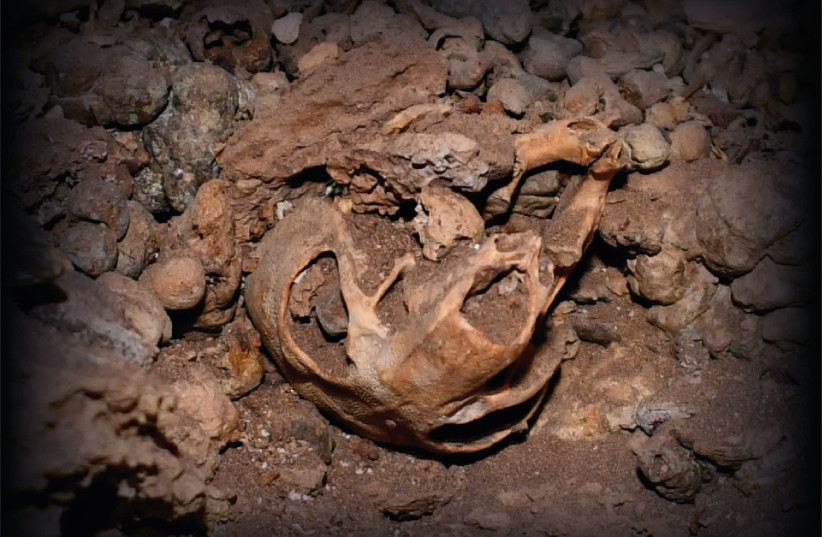
Ancient rat skull sheds light on the history of the Judean Desert.
(photo credit: DR. IGNACIO A. LAZAGABASTER)
Climate change creating favorable conditions for life, more than a
specific ability to adapt to harsh conditions, supported early humans’
migration from Africa to Europe and Asia through the Levant, new
research based on remains of an extinct poisonous rat found in Israel
has suggested.
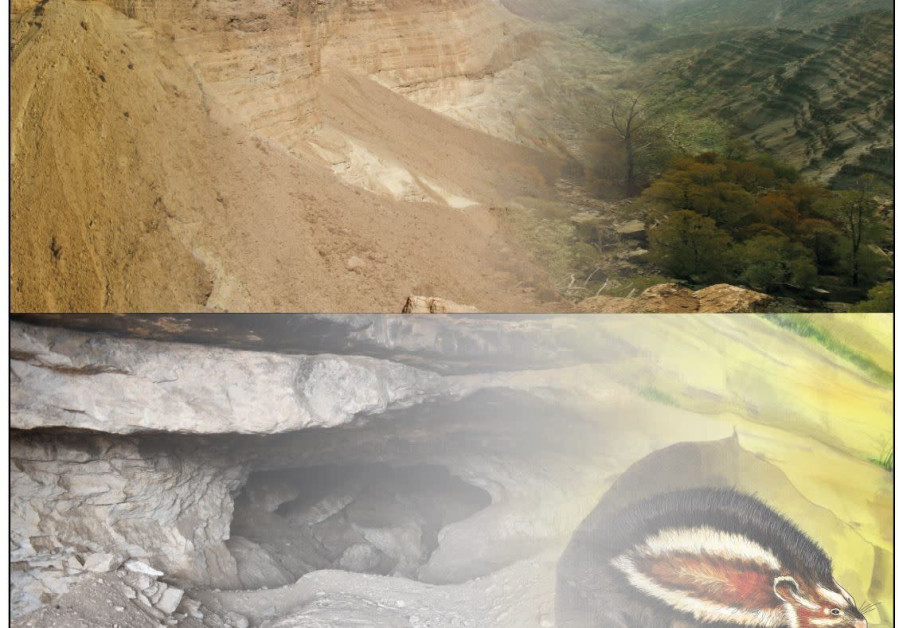
During excavations conducted in the Judean Desert in search of new Dead Sea Scrolls
led by the Antiquities Authority (IAA), the archaeologists ran into a
cave with a high number of bones belonging to an ancient rodent related
to the eastern African crested rat, a long haired animal somewhat
similar to a porcupine and equipped with a poisonous mane to fend off
predators.
A team
of Israeli and international researchers – led by Dr. Ignacio A.
Lazagabaster of the University of Haifa and the Museum of Nature in
Berlin with colleagues from Tel Aviv University, the Hebrew University
of Jerusalem, Montpellier University, the Geological Survey of Israel
and the IAA – analyzed the fossils, including some DNA that they were
able to extract. The findings were published in the academic journal PNAS (Proceedings of the National Academy of Sciences of the United States of America).
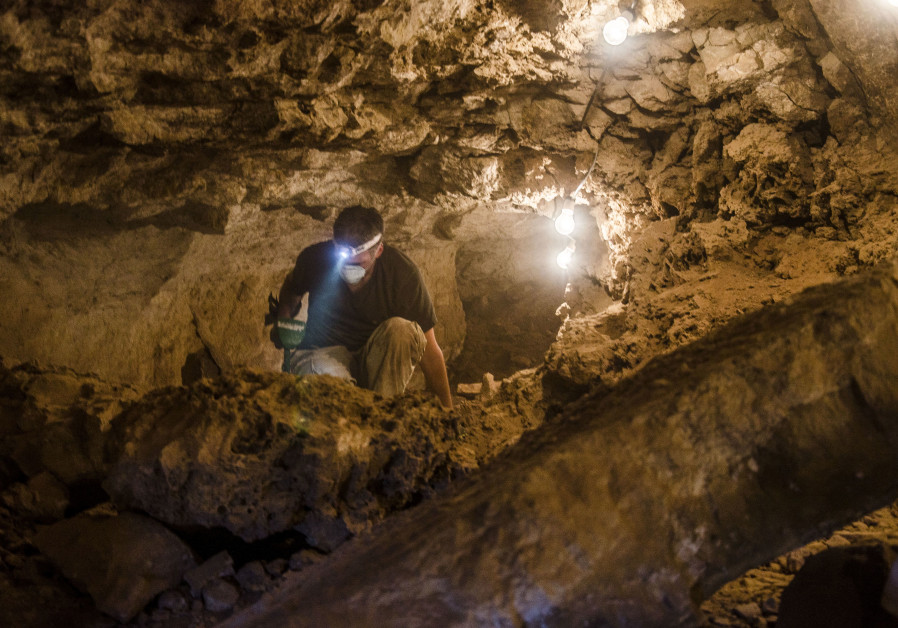
An image of the excavation in the Judean Desert cave. (Photo credit: Yuli Schwartz/IAA)
“We
were able to extract DNA from the ancient bones in the Paleogenetic
Laboratory at the Steinhardt Museum of Natural History – the earliest
DNA extracted from bones in our region to date,” the authors explained.
“Genetic and morphological analysis reveals that it is a subspecies of
the crested rat that currently lives in East Africa.”
“These are very, very close animals, so if today this species lives
in humid areas, chances are that even about 100,000 years ago the
subspecies we found would have needed the same conditions,” they added,
suggesting that at the time the Judean Desert was greener and wetter.
An
illustration that combines the appearance of the area in the Judean
Desert where the bones were found and an illustration of how it once
looked based on the driest place where the mane rat is today, in
Djibouti. (Photo credit: Aya Mark/Dr. Ignacio A. Lazagabaster)
According
to the dating conducted by the researchers using radio-carbon and other
methods, the bones found date back to a period between 120,000 and
42,000 years.
While
the first human migration from Africa began as early as 1.8 million
years ago, modern humans are thought to have left Africa and spread out
to other areas of the world, passing through the territory of modern
Israel starting around 100,000 years ago.
Scholars
have been debating whether their ability to travel and cross deserts is
to be attributed to more favorable climatic conditions compared to
those presented by the same areas in modern times, or to specific skills
developed by humans that allowed them to survive in harsher conditions.
“Since
there cannot be any doubt that this species presented special
technological capabilities and its modality of spreading happened
through slow movements over similar climatic areas, we assume that the
same African species reached the Judean Desert through an ancient
climatic corridor,” the researchers noted. “It is likely that also
humans, who migrated from Africa to the Levant at that time, were aided
by the same ecological corridor.”
This page was posted by Sputnik One of the Sputniks Orbit blog
Orbital Marine Power's O2 tidal turbine is anchored in the Fall of Warness where a subsea cable connects the two-megawatt offshore unit to the local onshore electricity network.
It comes as industry leaders call for government support to help the tidal industry develop commercially.
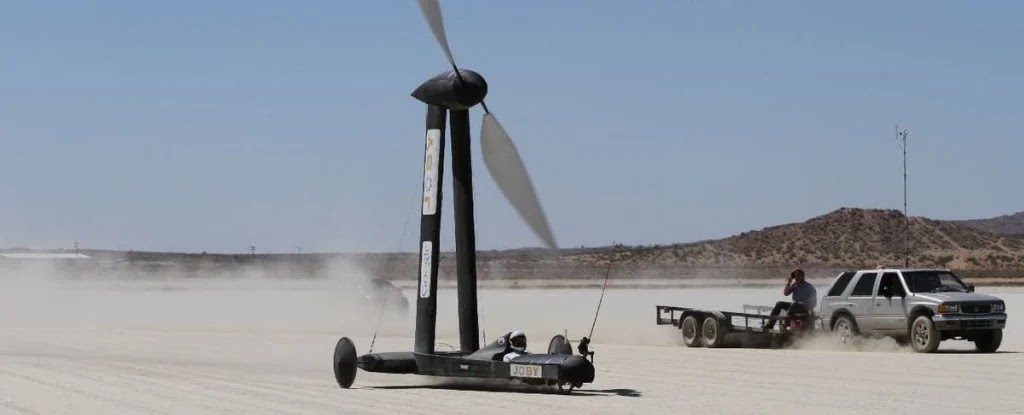
Image of the wind-powered Blackbird vehicle in action.
(Courtesy of Rick Cavallero)
When Derek Muller took an experimental land yacht for a spin this spring, he wasn't aiming to stir up scientific controversy. He certainly wasn't trying to win $US10,000 in a bet.
Muller, the creator of the Veritasium YouTube channel, likes to break down funky science concepts for his 9.5 million subscribers. So in May, he published a video about a vehicle called Blackbird that runs on wind power.
Created by Rick Cavallaro, a former aerospace engineer, Blackbird is unique because it can move directly downwind faster than the wind itself for a sustained period.
Any sailor worth their salt can tell you that a boat can do that by cutting zigzag patterns; that's called tacking. But the idea that a vehicle can beat the breeze traveling straight downwind, no tacking involved, is controversial.
"I knew this was a counterintuitive problem. To be perfectly honest with you, when I went out to pilot the craft, I didn't understand how it worked," Muller told Insider.
Blackbird is so counterintuitive, in fact, that less than a week after Muller released his video (below), Alexander Kusenko, a professor of physics at UCLA, emailed to inform him that it had to be wrong. A vehicle like that would break the laws of physics, Kusenko said.
https://youtu.be/jyQwgBAaBag
"I said, 'Look, if you don't believe this, let's put some money on this,'" Muller said. He suggested a wager of $US10,000, never imagining Kusenko would take it.
But Kusenko agreed, and in the weeks that followed, they exchanged data and argued about Blackbird. They even brought in several of science's biggest names, including Bill Nye and Neil deGrasse Tyson, to help decide who was right.
In the end, Muller emerged victorious.
'I never saw a way I could lose'
Days after Muller suggested the wager, Kusenko sent him a document with the bet's terms, Muller said.
"Everything was always super airtight, I never saw a way I could lose," Muller said.
But Kusenko was equally confident. "Thanks to the laws of physics, I am not risking anything," Kusenko told Vice last month. He did not respond to Insider's request for comment.
Kusenko gave Muller an hour-long presentation explaining why he was certain the YouTuber had been taken in by bad science.
The professor said Blackbird was most likely taking advantage of intermittent wind gusts that helped the vehicle speed up. He outlined his objections on a page of his UCLA website, though it has since been taken down.
For his part, Muller sent Kusenko data from the driving test in his video, which was filmed in the El Mirage lake bed in Arizona. During that drive, Blackbird accelerated over two minutes – a feat that would have been impossible if it had relied on sporadic gusts.
The vehicle reached a speed of 27.7 mph (45km/h) in a 10-mph (16km/h) tailwind.
Muller even contracted Xyla Foxlin, a fellow YouTuber, to build a model cart similar to Blackbird that could be tested on a treadmill. Indeed, Foxlin showed that her wind-powered model could go faster than the wind.
Muller documented this back-and-forth in a follow-up video (below) that he released in June.
https://youtu.be/yCsgoLc_fzI
"Kusenko was so sure he was right. He wanted to make it public," Muller said.
How Blackbird works
In 2010, Google and Joby Energy sponsored Cavallaro and a team of collaborators from San Jose State University to build Blackbird. The team demonstrated that the vehicle could travel downwind 2.8 times as fast as the wind, a record confirmed by the North American Land Sailing Association.
The secret to Blackbird, Cavallaro explained, is that once the wind gets the vehicle going, its wheels start to turn the propeller blades – they're connected to the blades by a chain. As the vehicle speeds up, its wheels turn the propeller faster and faster. The propeller blades, in turn, act as a fan, pushing more air behind the land yacht and thrusting it forward.
"I never even imagined a decade later that a physics professor would still be arguing how it's impossible," Cavallaro, a chief scientist at Sportvision, told Insider.
After three weeks of debate, Kusenko acknowledged that Blackbird could go slightly faster than the wind, but he maintained that it was for only short periods. If a gust of wind sped up the land yacht and then quickly died down, he said, it would appear that Blackbird was traveling faster than wind.
"The resolution of our bet was not as clean as I'd hoped," Muller said. "Kusenko coughed up the 10 grand, let's leave it at that."
Cavallaro, too, wanted more acknowledgment of his vehicle's capabilities.
Kusenko "conceded on a technicality – that the vehicle moves marginally faster than the wind temporarily," Cavallaro said. "I offered him another $US10,000 ($AU13,580) bet, because his technicality is entirely wrong, but I know I won't be hearing from him."
Muller's two videos have each garnered at least 6.8 million views and 41,000 comments, with many agreeing with Kusenko that it's impossible for Blackbird to go faster than the wind. Someviewers have even asked the YouTuber if he'd make follow-up wagers.
"It breaks a lot of people's brains," Muller said. "Clearly it got Kusenko too."