Monday, 30 November 2020

The tiny parasitic wasp that saved an industry

By William Park, 25th November 2020
https://www.bbc.com/future/article/20201124-the-tiny-parasitic-wasp-that-saved-the-cassava-industry

Before chemical pesticides were invented, farmers relied upon local predators to control crop-devastating pests for millennia, but now the practice is getting a modern revival.


Scattered among the highly biodiverse forests of South East Asia, millions of farmers eke out their livelihoods by growing cassava. This cash crop – grown by both small-scale farmers who own just one or two hectares and industrial farms spread across thousands of hectares – is sold mainly to manufacturers who use its starch in plastics and glues.

When cassava was first imported to South East Asia from South America (as it was to Africa a few decades earlier), it was able to grow without the help of pesticides. Then in 2008, the cassava mealybug followed the root vegetable to the region and began devastating the crops. To compensate for the losses, farmers began encroaching into the forests around their plots to try to get a little bit more produce from their land.

“Some of those areas are under significant pressure from deforestation,” says Kris Wyckhuys, an expert in biological controls at China Academy of Agricultural Sciences’ Institute of Plant Protection in Beijing. “Cambodia has some of the highest rates of tropical deforestation.”

The arrival of the cassava mealybug not only had major impacts on the livelihoods of those who grow cassava, it affected the national economies of the countries in the region and might have had rippling effects elsewhere.

Substitute products in the starch market like corn and potato rose in price. There was a threefold increase in the price of cassava starch in Thailand – the world's number one exporter of cassava starch.

“When an insect reduces crop yields by 60-80%, you have a major shock,” says Wyckhuys. The solution was to find the mealybug’s natural enemy, a 1mm-long parasitic wasp (Anagyrus lopezi), in its native South America. This wasp is extremely selective about using the cassava mealybug as a host for its larvae. By late 2009 it had been introduced to the cassava cropland in Thailand and had started working its way through the mealybugs.

There's no detailed information on how quickly the wasp drove mealybug populations down in the country. But by mid-2010, “parasitic wasps were being reared by the millions and mass-released throughout Thailand, including by airplane, and we can assume that their impacts on mealybug populations could be felt fairly quickly,” says Wyckhuys.
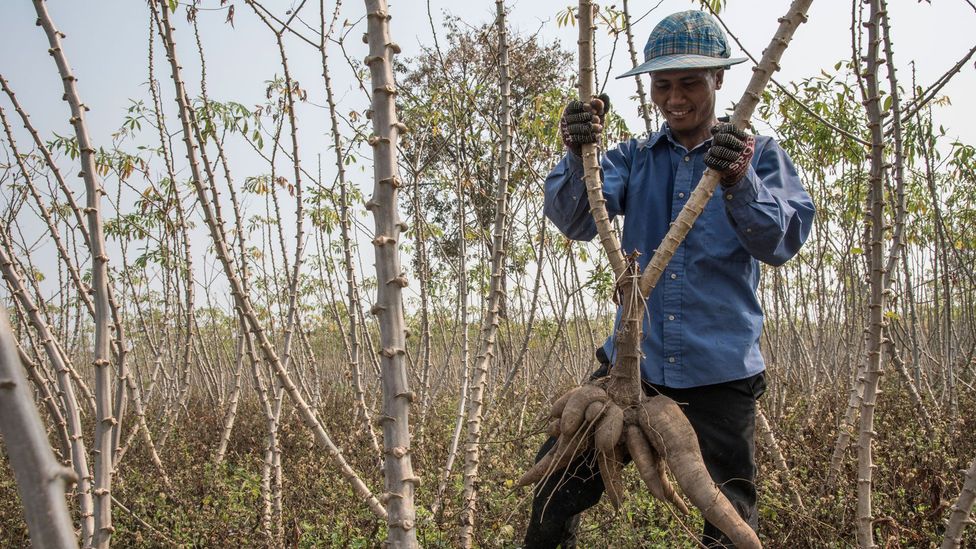

The cassava crop is incredibly important to the economies of South East Asia 
(Credit: Getty Images)


When the same wasp was used to control mealybugs in West Africa in the early 1980s, it promptly suppressed the pest population levels from more than 100 individuals on each cassava tip to fewer than 10-20. Less than three years later, the wasp had effectively dispersed over 200,000 sq km (77,220 sq miles) in southwestern Nigeria and could be found on the vast majority of cassava fields in the area.

This type of intervention is called classical biological control. You find a natural predator and introduce it to a crop to curb the spread of a pest. Wyckhuys calculated the economic benefit to the farmers across 26 countries in Asia-Pacific at $14.6bn to $19.5bn (£11.4bn to £15.2bn) per year. “The action of a 1mm wasp helped to resolve a major financial shock in the global starch market,” he says.

Biological control was the default for thousands of years, so it’s funny to think of it as new – Rose Buitenhuis

Our understanding of the benefits of the right predator in cropland stretches back millennia, though biocontrol has largely fallen out of fashion in modern farming practices. “Biological control was the default for thousands of years, so it’s funny to think of it as new,” says Rose Buitenhuis, a scientist at the independent horticulture science organisation, Vineland Research and Innovation Centre, in Ontario, Canada.

If biocontrol can be so successful, why is it now an uncommon method of fighting pests? What happens when it goes wrong? And why are researchers pushing to change that?

To the people of pre-Columbian Mesoamerica, cane toads existed somewhere between life and death, and were revered as a mediator to the underworld. The amphibians produce a powerful toxin capable of inducing hallucinogenic experiences that priests used in rituals to communicate with their deceased ancestors. The Maya people are famous for worshipping snakes and birds of prey, which feature in exquisite examples of Mesoamerican art. But the Maya, and other indigenous peoples, also portrayed the humble toad in artworks, often grinning cheerily as if enjoying the effects of their own psychedelic toxin.

The Maya carved toads and frogs into pots and vessels. As semi-aquatic animals and harbingers of rain – essential to the health of crops – they are synonymous with water and therefore life. Their metamorphosis from eggs to tadpoles to toadlets indicated the beginning of the rainy season, emerging from the water as if they were emerging from the underworld.
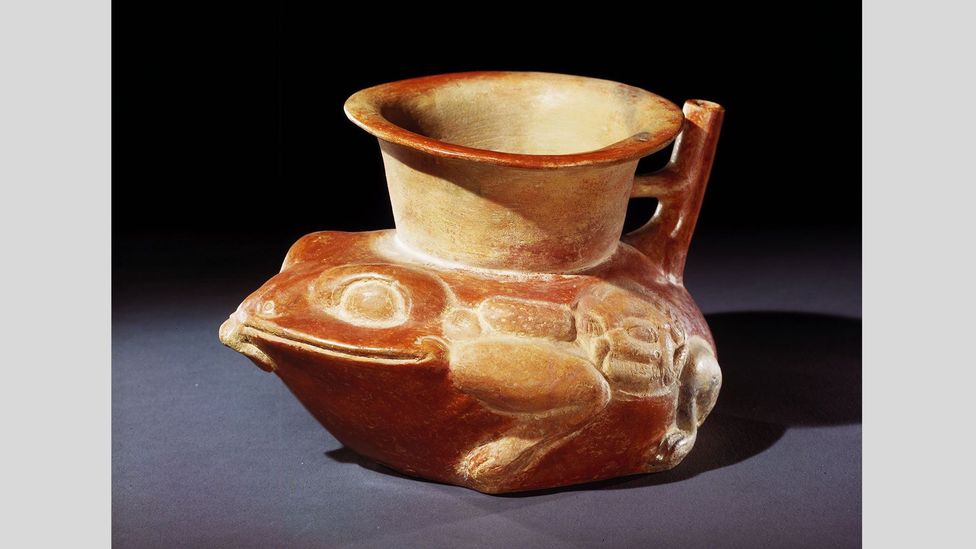
This ancient Maya vessel in the shape of a cane toad celebrates the amphibians water-bringing characteristics 
(Credit: Justin Kerr / K5935 / Dumbarton Oaks)


The toad was also seen a powerful ally in keeping crop-destroying pests at bay. They were welcomed in cornfields and storage bins, where they are a naturally-occurring predator of beetles and small rodents that might decimate a crop. But the same neurotoxin, bufotenin, that the priests used as a hallucinogen was also the cane toad’s primary defence against its own predators and it is poisonous enough to kill a human if they are careless.

The indigenous peoples of Mesoamerica understood the duality of the natural world. The cane toad represented both life and death. Painted on one Maya vessel is a cane toad presenting a platter with a human eye, bone and hand to a jaguar and serpent who dance joyously in the underworld. The Maya respected the toad’s potency and welcomed its presence. They also knew that messing with nature could have grave consequences.

In 2007, the cane toad was estimated to cover about 1.2 million sq km of Australian wilderness

The cane toad is hated in Australia. Imported from the Americas as a biocontrol in 1935, it thrived in its new environment on the sugarcane crops of the northeastern states. The abundance of its favourite prey, the cane beetle, along with other native Australian insects, and the absence of suitable predators meant that cane toad numbers exploded. In 2007, the cane toad was estimated to cover about 1.2 million sq km of Australian wilderness and number 1.5 billion individuals. Its range is likely to increase with climate change.

The result was devastating. Predator populations crashed – species that would normally prey on native toads, like quolls, a type of marsupial, and goannas, types of large monitor lizard, died from the cane toad’s toxin. The Australian government and local campaigners destroy millions of toads each year. The cane toad’s reputation is so poor in the country that the amphibian’s plight has been the subject of ironic children’s books.

“The toads were released contrary to scientific advice at the time,” says Wyckhuys. Releasing the toads “was something that should never have been done and is entirely impossible in modern biocontrol – you don’t release generalist, polyphagous, vertebrate predators. It is not a tiny red flag, it is a massive red banner”.

The cane toad is not alone. There are at least ten instances of biocontrols becoming invasive species throughout history. In World War Two, Japanese and Allied forces released mosquitofish to prey on mosquito larvae in an effort to reduce the spread of malaria among troops on Pacific islands. These small, innocuous-looking fish are now an invasive species in that area, where they dispersed quickly and outcompeted local species. The same applies to the Asian ladybug in Europe, introduced to control aphids.
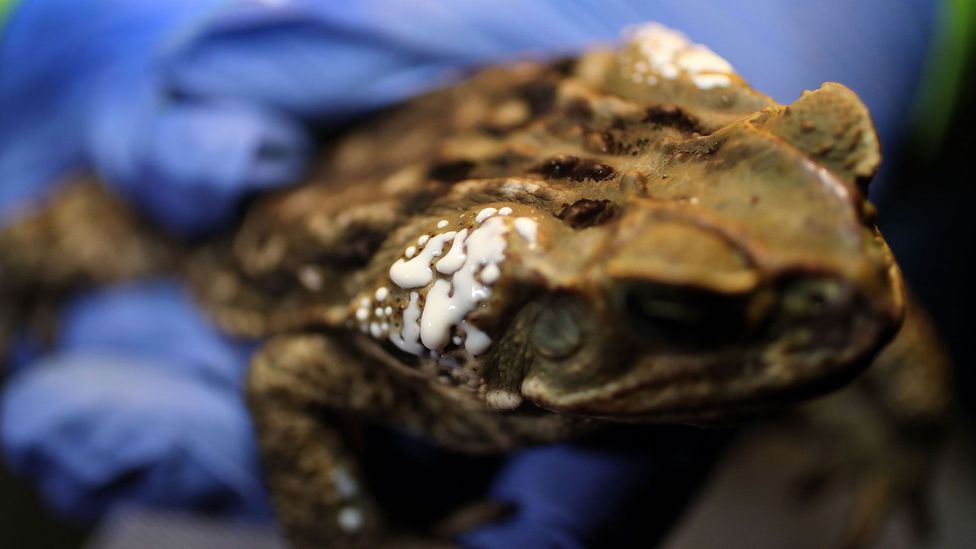

A cane toad secretes its dangerous bufotoxin from glands behind its head 
(Credit: Getty Images)


As a result of high-profile failures like this, the use of chemical controls – pesticides – instead of biocontrols gathered momentum in the first half of the 20th Century. But, with a handful of exceptions, the controversial image of biocontrols is largely unfounded. Successful introductions of biocontrols outnumber the failures at least twenty-five-fold.

Now, some researchers are trying to change biological controls’ perception. They say the days of pesticides are numbered.

The end of pesticides?

“Chemical controls solved a lot of problems in the 1930s, 1940s and 1950s,” says Buitenhuis. “Farmers didn’t have to work as hard. They could just go to their cabinet, find a spray and the pests would die.”

The issue with chemical controls is that pest species breed quickly, which means that an individual who is resistant to a pesticide can very quickly produce resistant offspring. Pesticide producers then have to constantly refine their products just to keep up with the pest – what Buitenhuis refers to as a pesticide resistance treadmill and is elsewhere called the “red queen effect”, after the Red Queen from Through the Looking Glass.

The number of pesticides available to farmers is running out. In 2018, three pesticides from a class of chemicals called neonicotinoids were banned outright by the EU having already had their use severely restricted in 2013. These chemicals, which are similar in structure to nicotine, coat seeds to protect them from pests in the soil. However, as the crop grows, the pesticide is absorbed and spreads throughout the plant’s tissue where it collects in the pollen and nectar. Both wild and domesticated pollinators feeding on those plants are then exposed to the pesticide.

Critics of the ban point out that limiting seed-treatment pesticides could end with them being replaced by spray-on pesticides, which can be equally damaging to pollinators and are more expensive to farmers.
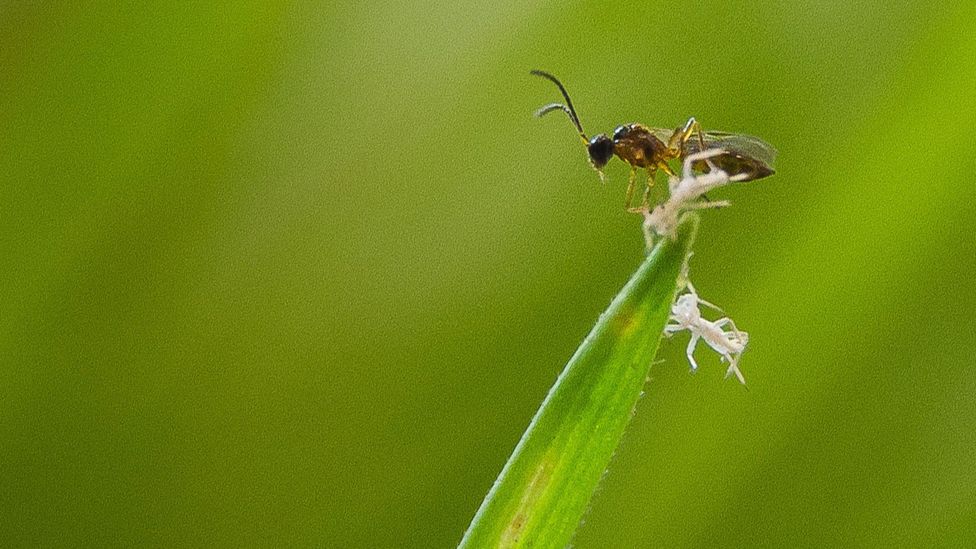
If pesticide use is to decrease, might more farmers turn to biological controls like this parasitic wasp?
 (Credit: Getty Images)


“There is a whole range of negative social and ecological factors tied to pesticides,” says Wyckhuys. “From the greenhouse gases used to produce and distribute chemicals – substantial greenhouse gas emissions – to human health implications for farmers and consumers. The impacts are not just restricted to the fields or to the farm but they are amplified across the landscape [by leaching], propagated through surface water or dust, taken up in the air by aerosols.”

Pesticide residues have been found in the cloud forest of Costa Rica and the Great Barrier Reef in Australia. And when pesticides appear in the wrong place, they become biocides – something that kills life. When they leach into the environment around farm land, they simplify biological communities and degrade ecosystems. What appeals to scientists like Wyckhuys about biocontrols is that their application can be much more targeted.

Caroline Reid, senior technical lead from Bioline Agrosciences, a biological control producer in the UK , agrees. Add to the specificity of biocontrols a reduction in the number of chemicals that are safe to use and a push across the EU towards sustainable farming and you can see why biocontrols are becoming increasingly mainstream. But how do they work?

Biological controls

There are broadly three types of biocontrols: predators, parasitoids and pathogens. Cane toads are an example of a predatory biocontrol. They prey on cane beetles, but unfortunately they are not overly choosy (they are “polyphagous”) and in Australia they began preying on other native insects which were not pests.

Parasitoids are a little more gruesome. Often these types of biocontrol are species of parasitic wasp or fly who lay their eggs inside caterpillars or beetles only for the resulting larvae to break out of their host’s abdomens, killing it in the process.

Pathogens can take the form of fungi, viruses or bacteria that kill or make their host infertile. These tend to target quite specific species of pest, making them a popular choice for modern biocontrol research because there is a lower risk of them attacking other harmless species with unintended consequences. Though, as we have all found out recently, viruses do from time to time jump species quite successfully.

Successful biocontrols should have a high reproduction rate, so they can multiply quickly when they detect a pest, be very specific in which species they target and able to seek their prey efficiently. In practice no biocontrol is perfect. Instead, researchers finely balance the risks associated with each of these.

Post continues at:  https://www.bbc.com/future/article/20201124-the-tiny-parasitic-wasp-that-saved-the-cassava-industry


Recommend this post and follow The Life of Earth

https://disqus.com/home/forum/lifeofearth/

The Animal Kingdom: Bizarre dragon-like blue sea creatures wash up on South African beach


Bizarre dragon-like blue sea creatures wash up on South African beach


By Natalie O'Neil,  New York Post, November 27,2020


Facebook Photo of blue dragon — which are shell-less mollusks

Dozens of bizarre, blue poisonous sea creatures were discovered washed up on a beach in South Africa, stunning locals, according to a report.

The blue dragons — which are shell-less mollusks known as “the most beautiful killer in the ocean” — were found in the sand near Cape Town by a local grandmother, the UK Sun reported.

Maria Wagener said she was strolling on the coast when she spotted more than 20 of the Smurf-like sea slugs, which look like a cross between a lizard, an octopus and a bird.

“I probably would have put them back in the sea if I’d had something to lift them — but no, I didn’t touch them!” she told the outlet. “I pick up starfish all the time and put them back into the sea but I had a feeling that these would have a sting.”

Blue Dragon "Most Beautiful Killer In The Ocean" Washed Up On South Africa Beach,Nov.26,2020


Blue dragons feed on deadly Portuguese man o’ war and other venomous aquatic critters then process their cells to zap predators with an even stronger sting, which can cause nausea, pain and vomiting.

Wagener, who shared photos of the creatures on her Facebook page, said the tide likely washed them back out to sea.

I think I will stick to crabs & shrimps for my BBQ & give blue sea dragons a miss! 

Neander-Troll says :Be sure to recommend and follow Chucks " Life of Earth " Blog at:
https://disqus.com/home/forum/lifeofearth/

Breakthrough Discovery: Karahan Tepe is Older Than Göbekli Tepe

29 NOVEMBER, 2020 - ASHLEY COWIE
https://www.ancient-origins.net/news-history-archaeology/karahan-tepe-0014605

Breakthrough Discovery: Karahan Tepe is Older Than Göbekli Tepe

Researchers in Turkey are about to embark on an excavation at the ancient site of Karahan Tepe and they believe it’s much older than Göbekli Tepe, the famous “zero point of world history.” Until now, like yesterday, if you were to ask any professor of history or even a self-respecting armchair archaeologist to name the oldest monument ever discovered, they would all have said Göbekli Tepe. But now, that answer might be Karahan Tepe, and this is creating a lot of excitement in archaeological circles.

Karahan Tepe Is Said To Be Much Older Than Göbekli Tepe

Archaeologists have been working at the Karahan Tepe site, which is often called the sister site of Göbekli Tepe , since 1997. The site is located near Yağmurlu and roughly 35 kilometers east of the 12,000-year-old Göbekli Tepe site.

Over the years, archaeologists have made a series of amazing discoveries at the Karahan Tepe site. In particular, tons of buried T-shaped obelisks, similar to the ones carved with wild animals at Göbekli Tepe, have led researchers to conclude that Karahan Tepe “is much older,” than its “younger sister,” Göbekli Tepe.


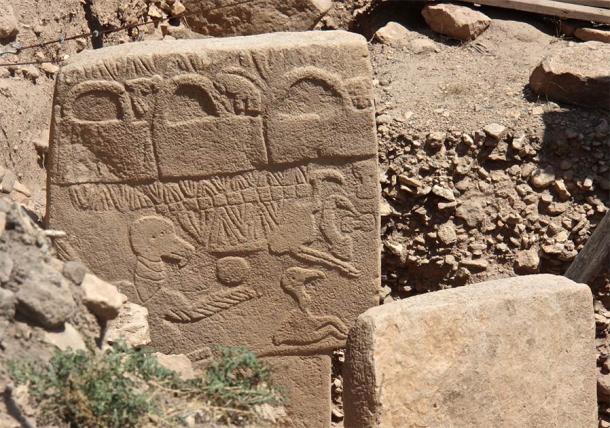
Archaeologists have already found animal carvings at Karahan Tepe similar to the well-known Vulture Stone and others at Göbekli Tepe. 
(Sue Fleckney / CC BY-SA 2.0 )

Head of excavations at Karahan Tepe, Professor Dr. Necmi Karul, told Hurriyet that “12 spots estimated to be in the same period as Göbekli Tepe are known in the region, one of which is Karahan Tepe.”

Speaking at the 10th International Resort Tourism Congress , Culture and Tourism Minister Mehmet Nuri Ersoy said that an “intensive and rapid excavation program” continues in Karahan Tepe, which to date has yielded “250 obelisks featuring animal figures.” Ersoy claims the planned excavations will prove the settlement at Karahan Tepe “will be much older that the 12,000 year old Göbekli Tepe.”


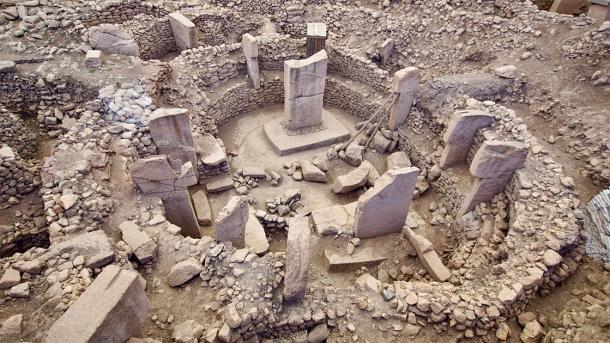
The ongoing excavations at Karahan Tepe will likely reveal more T-shaped obelisks at the center of the site like these at Göbekli Tepe. 
( Joaquin / Adobe Stock)

Karahan Tepe May Reset “The Zero Point Of World History”

The mayor of Haliliye, Mehmet Canpolat, told Hurriyet that there are many similarities between Karahan Tepe and Göbekli Tepe, which he said “shed light on world history ,” representing the first known temple ever built.

A 2016 National Geographic article recounted the fascinating story of the discovery and preservation of Göbekli Tepe. Professor Klaus Schmidt, a German archaeologist who led excavations at the site, argued before he died in 2014 that “a vast labor force needed to build the enclosures” and that this construction project “pushed people to develop agriculture as a way of providing predictable food—and perhaps drink—for workers.”

At the 2015 World Economic Forum in Davos, Switzerland, Turkey’s Doğuş Group announced that they planned to spend “$15 million over the next 20 years” in partnership with the National Geographic Society on the Göbekli Tepe site. And Doğuş Group chairman, Ferit F. Şahenk, said in a press release that the reason so much cash was being spent on Göbekli Tepe was because this prehistoric temple was the “zero point in time.”

Karahan Tepe May Well Be Göbekli Tepe’s Older Sister!

While Göbekli Tepe holds the world record in media headlines and elsewhere as the earliest temple of its type ever discovered, there are several other contenders for this crown in Turkey. According to Jens Notroff , an archaeologist at the German Archaeological Institute who is working on Göbekli Tepe site, “smaller versions of the pillars, symbols and architecture carved into stone at Göbekli Tepe have been found in settlements up to 125 miles away,” including Karahan Tepe.

Post continues at:  https://www.ancient-origins.net/news-history-archaeology/karahan-tepe-0014605


Recommend this post and follow The birth of 
Modern Man
https://disqus.com/home/forum/lifeofearth/

Sunday, 29 November 2020

Gut microbes: The key to normal sleep

NOVEMBER 27, 2020, by University of Tsukuba
https://medicalxpress.com/news/2020-11-gut-microbes-key.html

Credit: CC0 Public Domain


With fall and winter holidays coming up, many will be pondering the relationship between food and sleep. Researchers led by Professor Masashi Yanagisawa at the University of Tsukuba in Japan hope they can focus people on the important middlemen in the equation: bacterial microbes in the gut. Their detailed study in mice revealed the extent to which bacteria can change the environment and contents of the intestines, which ultimately impacts behaviors like sleep.

The experiment itself was fairly simple. The researchers gave a group of mice a powerful cocktail of antibiotics for four weeks, which depleted them of intestinal microorganisms. Then, they compared intestinal contents between these mice and control mice who had the same diet. Digestion breaks food down into bits and pieces called metabolites. The research team found significant differences between metabolites in the microbiota-depleted mice and the control mice. As Professor Yanagisawa explains, "we found more than 200 metabolite differences between mouse groups. About 60 normal metabolites were missing in the microbiota-depleted mice, and the others differed in the amount, some more and some less than in the control mice."

The team next set out to determine what these metabolites normally do. Using metabolome set enrichment analysis, they found that the biological pathways most affected by the antibiotic treatment were those involved in making neurotransmitters, the molecules that cells in the brain use to communicate with each other. For example, the tryptophan–serotonin pathway was almost totally shut down; the microbiota-depleted mice had more tryptophan than controls, but almost zero serotonin. This shows that without important gut microbes, the mice could not make any serotonin from the tryptophan they were eating. The team also found that the mice were deficient in vitamin B6 metabolites, which accelerate production of the neurotransmitters serotonin and dopamine.

The team also analyzed how the mice slept by looking at brain activity in EEGs. They found that compared with the control mice, the microbiota-depleted mice had more REM and non-REM sleep at night—when mice are supposed to be active—and less non-REM sleep during the day—when mice should be mostly sleeping. The number of REM sleep episodes was higher both during the day and at night, whereas the number of non-REM episodes was higher during the day. In other words, the microbiota-depleted mice switched between sleep/wake stages more frequently than the controls.

Professor Yanagisawa speculates that the lack of serotonin was responsible for the sleep abnormalities; however, the exact mechanism still needs to be worked out. "We found that microbe depletion eliminated serotonin in the gut, and we know that serotonin levels in the brain can affect sleep/wake cycles," he says. "Thus, changing which microbes are in the gut by altering diet has the potential to help those who have trouble sleeping."

So, this holiday season, when you're feeling sleepy after eating tryptophan-stuffed turkey, please don't forget to thank your gut microbes!


Recommend this post and follow The Life of Earth
https://disqus.com/home/forum/lifeofearth/

Scientists Have Located The Physical Source of Anxiety in The Brains of Mice

PETER DOCKRILL, 28 NOVEMBER 2020
https://www.sciencealert.com/scientists-have-located-the-physical-source-of-anxiety-in-the-brains-of-mice

(muzon/iStock)

We're not wired to feel safe all the time, but maybe one day we could be.

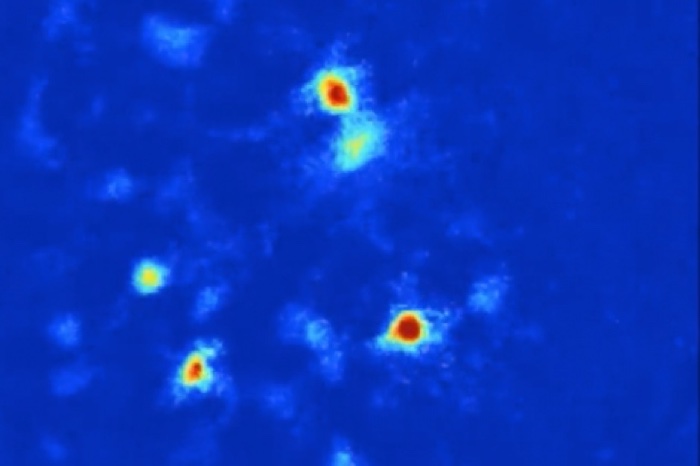
A 2018 study investigating the neurological basis of anxiety in the brain has identified 'anxiety cells' located in the hippocampus of mice – which not only regulate anxious behaviour but can be controlled by a beam of light.

The findings, so far demonstrated in experiments with lab mice, could offer a ray of hope for the millions of people worldwide who experience anxiety disorders (including almost one in five adults in the US), by leading to new drugs that silence these anxiety-controlling neurons.

"We wanted to understand where the emotional information that goes into the feeling of anxiety is encoded within the brain," says one of the researchers, neuroscientist Mazen Kheirbek from the University of California, San Francisco.

To find out, the team used a technique called calcium imaging, inserting miniature microscopes into the brains of lab mice to record the activity of cells in the hippocampus as the animals made their way around their enclosures.


Anxiety cells (Hen Lab/Columbia University)


These weren't just any ordinary cages, either.

The team built special mazes where some paths led to open spaces and elevated platforms – exposed environments known to induce anxiety in mice, due to increased vulnerability to predators.

Away from the safety of walls, something went off in the mice's heads – with the researchers observing cells in a part of the hippocampus called ventral CA1 (vCA1) firing up, and the more anxious the mice behaved, the greater the neuron activity became.

"We call these anxiety cells because they only fire when the animals are in places that are innately frightening to them," explains senior researcher Rene Hen from Columbia University.

The output of these cells was traced to the hypothalamus, a region of the brain that – among other things – regulates the hormones that controls emotions.

Because this same regulation process operates in people, too – not just lab mice exposed to anxiety-inducing labyrinths – the researchers hypothesise that the anxiety neurons themselves could be a part of human biology, too.

"Now that we've found these cells in the hippocampus, it opens up new areas for exploring treatment ideas that we didn't know existed before," says one of the team, Jessica Jimenez from Columbia University's Vagelos College of Physicians & Surgeons.

Even more exciting is that we've already figured out a way of controlling these anxiety cells – in mice at least – to the extent it actually changes the animals' observable behaviour.

Using a technique called optogenetics to shine a beam of light onto the cells in the vCA1 region, the researchers were able to effectively silence the anxiety cells and prompt confident, anxiety-free activity in the mice.

"If we turn down this activity, will the animals become less anxious?" Kheirbek told NPR.

"What we found was that they did become less anxious. They actually tended to want to explore the open arms of the maze even more."

This control switch didn't just work one way.

By changing the light settings, the researchers were also able to enhance the activity of the anxiety cells, making the animals quiver even when safely ensconced in enclosed, walled surroundings – not that the team necessarily thinks vCA1 is the only brain region involved here.

"These cells are probably just one part of an extended circuit by which the animal learns about anxiety-related information," Kheirbek told NPR, highlighting other neural cells justify additional study too.

In any case, the next steps will be to find out whether the same control switch is what regulates human anxiety – and based on what we know about the brain similarities with mice, it seems plausible.

If that pans out, these results could open a big new research lead into ways to treat various anxiety conditions.

And that's something we should all be grateful for.

"We have a target," Kheirbek explained to The Mercury News. "A very early way to think about new drugs."


Recommend this post and follow The birth of 
modern Man
https://disqus.com/home/forum/lifeofearth/

These Medicinal Plants Have Evolved an Ingenious Way to Hide From Their Predators: Us

CARLY CASSELLA, 29 NOVEMBER 2020
https://www.sciencealert.com/these-mountain-plants-have-evolved-to-be-less-visible-to-humans

(Niu et al., Current Biology, 2020)

On the wide open slopes of China's Hengduan Mountains, there are perks to being a wallflower. After thousands of years of human harvesting, a rare alpine flower - prized in Chinese medicine - is trying its hardest not to stand out.

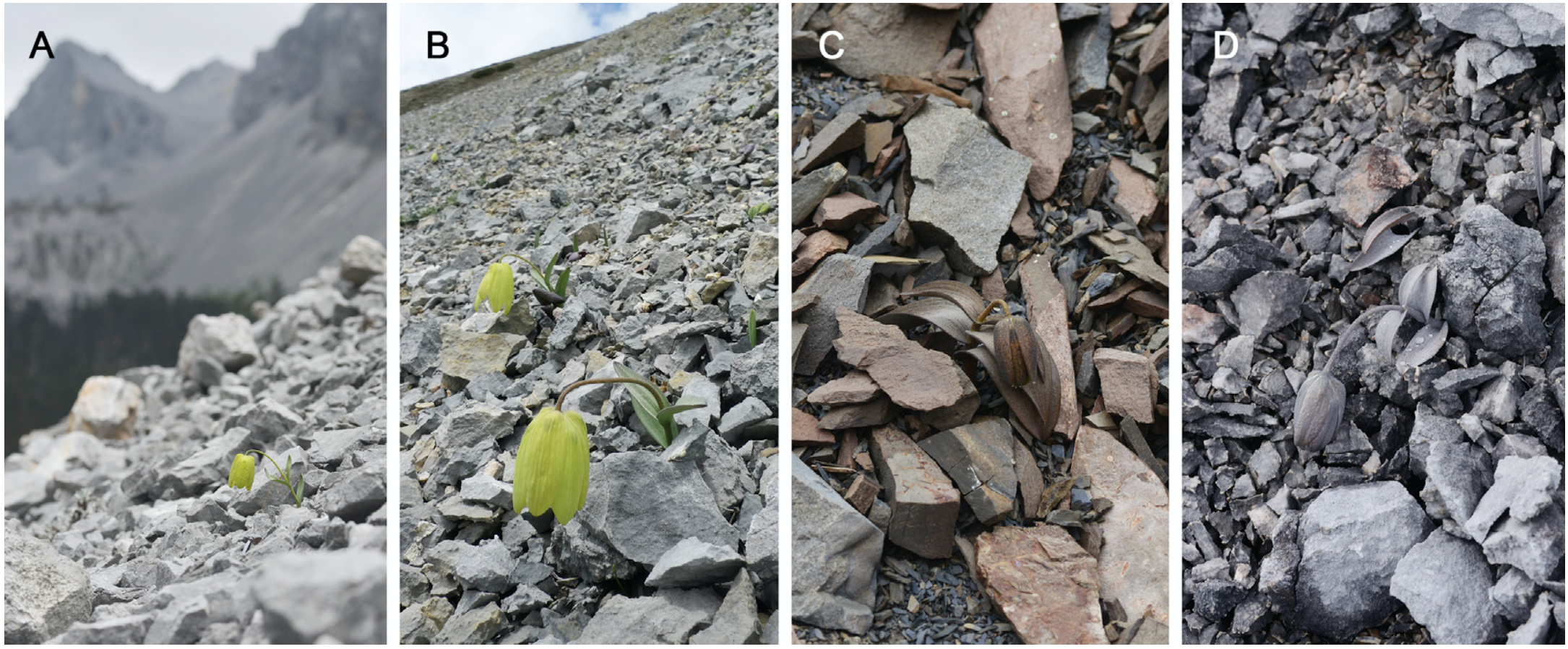
In the alpine meadows where humans pluck the Fritillaria delavayi plant the most, scientists have noticed the perennial herb blends in better with the rocky background.

Avoiding the limelight in a drab environment is no easy feat when your leaves and bulbs are normally a bright green, so some populations of F. delavayi have turned more of a brown or grey to better match their surroundings.

Many plants are capable of such camouflage, usually as an attempt to hide from hungry hunters, but up here, the only real predators are us.

"Like other camouflaged plants we have studied, we thought the evolution of camouflage of this fritillary had been driven by herbivores, but we didn't find such animals," explains botanist Yang Niu from the Kunming Institute of Botany.

"Then we realised humans could be the reason."

Normal green plants with low harvest pressure (A and B) and camouflaged individuals with high harvest pressure (C and D). (Niu et al., Current Biology, 2020)

Speaking to locals in the area, researchers estimated how each accessible population of alpine herb had been harvested over the past five years.

Using a model for human vision, researchers found significant colour diversity among herb populations - especially those that existed in areas with high levels of human harvesting.

This suggests human behavior is somehow shaping the evolution of these famous herbs, which are the most commonly used treatment in China for coughs and phlegm.

F. delavayi plants sport a set of leaves that vary in colour from grey to brown, but it's only after their fifth year of life that they begin to produce annual bulbs of similar shades. Over 3,500 individual bulbs are needed to make just a kilogram of medicine.

This slow and minimal growth is part of what makes the rare herb so cherished, but it's also what makes it vulnerable to overharvesting.

Changing colour is probably one of the only defences this plant has got against increased harvesting from humans. And so, it seems, the more we want it, the harder it is to find.

To further test the plant's camouflage on real human vision, researchers set up a computer experiment in which participants were asked to locate various colours of the herb in 14 slides of its natural environment.

As expected, the more-camouflaged and less green plants were harder to locate as quickly.

"It's remarkable to see how humans can have such a direct and dramatic impact on the colouration of wild organisms, not just on their survival but on their evolution itself," says botanist and ecologist Martin Stevens from the University of Exeter.

"It's possible that humans have driven evolution of defensive strategies in other plant species, but surprisingly little research has examined this."

The rare snow lotus is one of the few examples we have. Historically collected by humans, studies have shown this coveted plant has grown significantly smaller in the past hundred years.

There's even a theory that humans unconsciously drove the evolution of weeds from a pest to something more similar to wheat as plants tried to avoid being torn out of the ground.

That's a fascinating idea, and further research on harvested wild plants like F. delavayi might help us better understand what aspects of plant biology humans are truly capable of influencing.

The study was published in Current Biology.


Recommend this post and follow The Life of Earth
https://disqus.com/home/forum/lifeofearth/
Saturday, 28 November 2020

New breakthrough in the treatment of rheumatoid arthritis

NOVEMBER 25, 2020, by University of Oxford
https://medicalxpress.com/news/2020-11-breakthrough-treatment-rheumatoid-arthritis.html

Credit: University of Oxford

People with Rheumatoid Arthritis (RA) could soon benefit from a new drug treatment that not only suppresses inflammation but also significantly reduces patient reported pain scores. Otilimab is a monoclonal antibody, biologic drug, which targets and suppresses the inflammatory cytokine GM-CSF.

note: monoclonal antibody, Monoclonal antibodies are laboratory-made proteins that mimic the immune system's ability to fight off harmful antigens such as viruses. added by CC

In a multicentre, dose-ranging trial, led by Professor Chris Buckley at the Universities of Oxford and Birmingham, and sponsored by the Pharmaceutical company GSK, researchers explored the clinical effects of otilimab to prevent inflammation, tissue damage and pain in people with RA.

The study evaluated the effects of five doses of otilimab (22·5 mg, 45 mg, 90 mg, 135 mg, or 180 mg) versus a placebo. 222 patients with active RA received weekly subcutaneous injections for 5 weeks, which was reduced to every other week for one year. A range of patient reported outcomes for function and pain were measured. Otilimab treatment led to a rapid reduction in tender and swollen joints but patients also reported very significant improvements in pain scores.

Professor Buckley, Kennedy Professor of Translational Rheumatology at the Universities of Oxford and Birmingham said: "The assumption has always been that if drugs suppress inflammation, they will also help suppress pain, but this hasn't always been the case. Now, for the first time we are seeing a biologic therapy, the first in the rheumatoid space, that offers two for the price of one. It's suppressing inflammation, but it's also helping pain, and that's very important to the patient."

note: biologic treatment, A type of treatment that uses substances made from living organisms to treat disease. These substances may occur naturally in the body or may be made in the laboratory. added by CC

The trial was novel in that it offered an escape arm for patients receiving the placebo or in whom the drug dose to which they were randomized did not achieve a reduction in their disease activity. "One of the problems with placebo arms is it's hard to get people to go into the study if they know they might get a dummy drug," said Prof. Buckley. "In this trial, if a patient wasn't seeing improvements after 12 weeks they were automatically transferred to the highest dose of otilimab at 180 mg and we were able to then see the improvements."


Recommend this post and follow The birth of 
modern Man
https://disqus.com/home/forum/lifeofearth/

The Swiss Alps continue to rise: Evidence from cosmic rays show lift outpaces erosion

NOVEMBER 27, 2020, by University of Bern
https://phys.org/news/2020-11-swiss-alps-evidence-cosmic-rays.html

An international team, headed by members of the University of Bern, has shown for the first time that the Swiss Alps continue to rise. In the picture: Eiger Mönch and Jungfrau. 
Credit: Pixabay

An international team of geologists, headed by members of the University of Bern, has shown for the first time that the Swiss Alps are being lifted faster than they are being lowered through erosionand are thus growing even higher. To do this, the researchers quantified the erosion of the Alps with the help of isotopes measured in the sand of more than 350 rivers throughout the European Alps. These isotopes are formed by cosmic rays and bear information on the Earth's surface erosion.

How quickly are the Alps eroded? Has erosion been faster than crustal uplift, and is erosion dependent on precipitation? An international team of geologists, headed by members of the University of Bern, was able to solve these questions. The researchers were able to illustrate that the erosion occurs more slowly than the uplift, especially in the Swiss Alps. They were also able to show that the erosion mainly depends on the relief and the slope of the terrain, while precipitation and water runoff have no clearly recognizable influence. The study was published in the journal Earth-Science Reviews.

Measurement of surface erosion in the Alps with cosmic rays

As cosmic rays hit Earth's surface, oxygen atoms that constitute quartz minerals experience a nuclear reaction. As a result, a new isotope, namely beryllium-10 (10Be) is formed. Because 10Be is only formed on Earth's uppermost surface, the surface age can be determined with this isotope. If the 10Be concentration in the quartz grains is high, then the surface has been exposed to cosmic rays for a relatively long time and is therefore relatively old. If, on the other hand, the 10Be concentration in the quartz is low, then the exposure time was short and the surface is younger.

"This principle can also be used to quantify the rate of erosion in the Alps, averaged over a few thousand years," explains Professor Fritz Schlunegger, who initiated the study together with his colleague, Dr. Romain Delunel from the Institute of Geological Sciences at the University of Bern. Mountain streams and rivers collect material removed from the surface and transport it as sand and pebbles into the plains. The European team headed by the Bern researchers analyzed the 10Be concentrations within the quartz grains from more than 350 rivers from all over the Alpine regions. "With this strategy we can for the first time draw a picture of the erosion across the entire European Alps and explore its driving mechanisms," says Romain Delunel.

The Central Alps continue to rise
note 100mm is about 4" CC

The erosion rates show a large spread across the Alpine regions and fluctuate around 400 mm in a thousand years. The fastest erosion is measured in the Valais, and especially in the Illgraben (basin of the Illbach near Leuk), where the erosion is approx. 7500 mm per millennium. The area with the slowest erosion is also in Switzerland: the landscape in eastern Switzerland around the Thur was eroded by only 14 mm per thousand years. "This erosion rate is very low, almost boring," says Schlunegger. Interestingly, the average uplift in the Central Alps, caused by forces in Earth's interior, occurs faster than the erosion. "This is a big surprise, because until now we have assumed that uplift and erosion were in equilibrium," says Fritz Schlunegger. In the Central Alps, the difference between uplift and erosion is as much as 800 mm in a thousand years. "This means that the Central Alps are still growing, and surprisingly quickly," Schlunegger notes. In the western Alps, erosion and uplift are in balance; In the Eastern Alps, the erosion occurs even faster than the uplift.

Erosion depends on the shape of the Alpine landscape

Thanks to their investigations, the team was also able to show that precipitation and water runoff have no measurable influence on erosion, whereas the slope and relief of the terrain do. "However, this does not apply to very steep landscapes," says Romain Delunel. There the bedrock such as granites and limestones is exposed over a large area and the erosion is slower than expected. "That was another surprise because we thought that very steep terrain would be eroded very quickly. We don't yet fully know why this is not the case and therefore see a need for further research," says Romain Delunel. Finally, the study shows that the current rate and mechanism of erosion can be traced back to the effects of the large ice masses during the glaciation periods, because the current shape of the terrain was formed during the last major glaciations. "It was a big surprise for us to realize that the landscape shape of the Alps can mainly be explained by the carving of the large glaciers during major glaciations and the ongoing collision of the Alps, which in turn, has a major impact on modern erosion," said the study authors.


Recommend this post and follow The Life of Earth
https://disqus.com/home/forum/lifeofearth/
A cold-health watch and warning system for cold waves in Quebec

NOVEMBER 27, 2020, by Institut national de la recherche scientifique - INRS
https://phys.org/news/2020-11-cold-health-cold-quebec.html

A visual comparison with the Quebec climate map based on the average temperature for the winter period of 1981-2010. 
Credit: INRS

A team from the Institut national de la recherche scientifique (INRS) and the Institut national de santé publique du Québec (INSPQ), led by Professor Fateh Chebana, has recently developed a cold-health watch and warning system for cold waves, a first in the world. Their results were published in November 2020 in the journal Science of the Total Environment.

"Cold waves, which are particularly severe in Quebec, can affect everyone, but especially people with chronic diseases. Data provided by the INSPQ indicates an increase in hospitalizations and mortality in cold weather. Therefore, designing an alert system similar to the one we developed for heat waves in 2010 seemed essential to us," says Professor Chebana, who led the study.

Based on past data, researchers were able to determine two temperature thresholds that would trigger an alert to warn healthcare professionals. Depending on the region, the temperature thresholds for a two-day cold wave causing an alert and related to excess mortality observed in the population vary between -15°C and -23°C during the day, and between -20°C and -29°C at night. The thresholds causing an alert and related to an excess of hospitalization in the population vary between -13°C and -23°C during the day, and between -17°C and -30°C at night.

 0 degrees F is about -18C note added by CC

Once the system is operational, it will use Environment Canada's forecasts and will take into account the reliability of these forecasts. The alert system also considers the effect of delays between exposure and observed health impacts. "Just because it was cold today doesn't mean that people die or go to the hospital on the same day. It takes several days to see the impact, longer than with high temperatures," he says.

A promising alert system

For now, these thresholds are the same throughout the winter period. The team is planning to improve the tool by adjusting thresholds according to the month. "A temperature of -15°C in December will not have the same effect on health as in February because the body has not yet adapted," says Professor Chebana.

The alert system currently considers the general population, but it could specifically look at higher-risk groups such as the elderly or those with respiratory problems. Researchers are also considering a specific feature applicable to tourism or the education sector, during school closures for example.

Currently managed by the INSPQ, the model will be integrated into its Système de surveillance et de prévention des impacts sanitaires des événements météorologiques extrêmes (SUPREME), a source of information on the impacts of extreme weather events on the health.

"Excessive mortality or hospitalizations caused by cold waves are not as well-known as for heat waves, even though their impact is high during the winter. This work, in collaboration with INRS hydrometeorological data modeling experts, will enable public health stakeholders to better monitor cold waves and implement appropriate interventions to prevent avoidable deaths or hospitalizations."


Recommend this post and follow The Life of Earth
https://disqus.com/home/forum/lifeofearth/

Friday, 27 November 2020

Archaeology: 2,900-year-old Urartu archeological park to be opened to public

 2,900-year-old Urartu archeological park to be opened to public


Three sarcophagi containing the sole specimens from the Urartu Kingdom were found at the site.

By Jerusalem Post Staff, November 27, 2020

https://www.jpost.com/international/2900-year-old-urartu-archeological-park-to-be-opened-to-public-650449

AN AMPHITHEATER at the archaeological ruins of the Ionian city of Ephesus, in western Turkey. (photo credit: NATI SHOHAT/FLASH90)


Turkey will open the ruins of Altintepe Fortress to tourists and visitors, according to Turkish news outlet Anadolu Agency.
The 2,900-year-old fortress is located in the Erzincan province on the Silk Road. It was a center of the Byzantine Empire and an important Urartu settlement built between 850 and 890 BC.


Turkey's Culture and Tourism Ministry began archeological excavations at the site in 2003, according to Anadolu Agency. The dig was completed in 2019, meaning that the site can now be opened to the public as an archeological park.
The site has hundreds of historical artifacts and ruins of structures. Three sarcophagi containing the sole specimens from the Urartu Kingdom were found at the site, Mehmet Karaosmanoglu, head of the Archeology Department at Ataturk University, told Anadolu Agency.
"The reception hall in the castle, belonging to the Urartu period, is the largest and only example of those found in Anatolia so far," Karaosmanoglu said of other points of interest at the site.


I wonder if they will one day find my old cave and explore it and find my collection of Sabre Tooth Tiger jaw bones, Pterodactyl & Dinosaur murals on the walls 

Neander-Troll says :Be sure to recommend and follow Chucks " Life of Earth " Blog at:
https://disqus.com/home/forum/lifeofearth/

The Sanctuary Of Thoth May Be The Original ‘Sanctuary of Thought’

26 NOVEMBER, 2020 - IGOR OAKWOOD
https://www.ancient-origins.net/unexplained-phenomena/sanctuary-thoth-0014592

The Great Pyramid of Giza stands south of Cairo today but in the beginning it may well have been the Egyptian physical representation of the Sanctuary of Thought or The Sanctuary of Thoth.

The pretentious title “Sanctuary of Thought” might ring a bell for some if you are familiar with ancient Egyptian history. In the famous Westcar Papyrus , we find an interesting story about how Pharaoh Khufu obtained the sophisticated information necessary to build the Great Pyramid of Giza from the Heliopolitan Sanctuary of Thoth. If we examine this story, it becomes obvious that it contains a lot of useful information concealed as metaphor. No matter what you think, the Sanctuary of Thoth is a gateway to understanding a lot more about the incredible feats of the ancient Egyptians.

The intention of this article is to share this information because it confirms once more that the ancient gods were originally mathematical principles that were used by the megalith builders to induce hyperdimensional communication and for the building of “stargates.” The basic metaphor of these principles is found in the Heliopolitan Ennead or the Nine Creator Gods. (In my previous article as well as in my book Hallu-Cygns, you can read how these Nine Gods reflect the Nine Principles which, when synthesized in a sacred geometrical structure, open up the 1/10 th or 9-11 Gate of Consciousness.)

Merged photos depicting a copy of the ancient Egyptian papyrus commonly known as "The Westcar Papyrus," written in hieratic text. 
(Keith Schengili-Roberts / CC BY-SA 3.0 )

The Westcar Papyrus And The Sanctuary Of Thoth

The Westcar Papyrus , in essence, is the story about how Pharaoh Khufu tries to find the secret chambers in the Sanctuary of Thoth. In the story, Khufu asks one of his sons to bring him an old magician known as Djehudi, who is 110-years old and knows the secret chambers in the Sanctuary of Thoth. When Djehudi arrives at court, Khufu interrogates him about the secret chambers. The old magician answers thus: “Please, I do not know their number, O King my Lord, but I know where it is. There is a chest made of firestone [often wrongly translated as “flint”] in a room called the “inventory” in Heliopolis. It is in this chest.”

The Egyptian pronunciation of Thoth is not fully known (neither is the name of the old magician) but can be reconstructed as Djhauti. Other forms of this name using older transcriptions include Djedi, Jehuti, Jehuty, Tahuti, and Tehuti. Therefore, it is obvious that the name of the old magician, Djedi or Djehudi refers to the Egyptian name of Thoth! And here’s why.

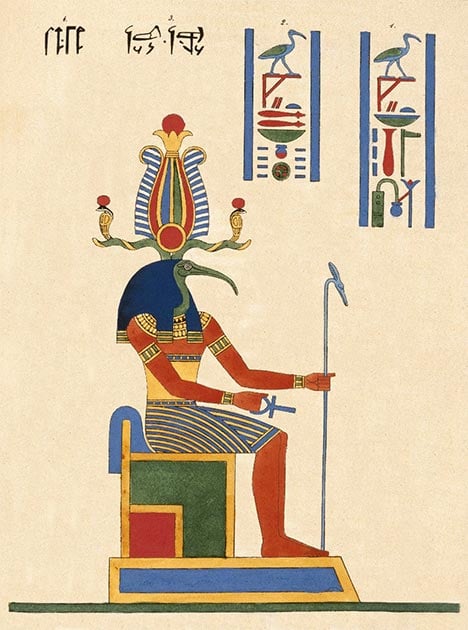
Thoth, the ancient Egyptian deity. (Jean-François Champollion / No restrictions )

The name of the Egyptian deity Thoth was written in ancient Egyptian as “dhwty.” According to Wikipedia, “The Egyptian pronunciation of ḏḥwty is not fully known, but may be reconstructed as *ḏiḥautī, perhaps pronounced *[t͡ʃʼi.ˈħau.tʰiː] or *[ci.ˈħau.tʰiː]. This reconstruction is based on the Ancient Greek borrowing Thōth (Θώθ [tʰɔːtʰ]) or Theut and the fact that the name was transliterated into Sahidic Coptic variously as Thoout, Thōth, Thoot, Thaut, Taautos (Τααυτος), Thoor (Θωωρ), as well as Bohairic Coptic Thōout. These spellings reflect known sound changes from earlier Egyptian such as the loss of ḏ palatalization and merger of ḥ with h i.e. initial ḏḥ > th > tʰ. The loss of pre-Coptic final y/j is also common. Following Egyptological convention, which eschews vowel reconstruction, the consonant skeleton ḏḥwty would be rendered "Djehuti" and the god is sometimes found under this name, although “Thoth” is more common…. Other forms of the name ḏḥwty using older transcriptions include Jehuti, Jehuty, Tahuti, Tehuti, Zehuti, Techu, or Tetu.”

In fact, there are three other historical figures whose name was Djehuti but none of these men lived early enough to be a potential candidate for being the “Djehudi” from the Westcar Papyrus . These are:
Djehuty: a general under Thutmose III in the 18th Dynasty;
Sekhemre Sementawy Djehuti: possibly the second king of the 16th Theban Dynasty;
Thuty (High Priest of Amun): Djehuty during the 18th Theban Dynasty.

So, can we conclude that the name of the old magician Djedi or Djehudi refers to the Egyptian name of Thoth? We know that Thoth was the inventor of the Egyptian script and the creator of hermetic science or Hellenistic mysticism. In essence, Thoth was the man who shaped Egyptian thought.

Although there seems to be no direct indication in the etymology of the word “thought” that connects it to the ancient Egyptian name Thoth, the meanings of both words are so related that it could not be a coincidence. Of course, this is a bold statement because it would imply that the creators of the Egyptian language and thought are somehow related to modern-day English language and thought. Is it therefore crazy or just coincidental to believe that the name Thoth is the root of the word “thought”?

In other words, the Sanctuary of Thoth becomes the Sanctuary of Thought. Therefore, I am suggesting that the secret chambers must be a metaphor for the hidden chambers or glands in the brain. Does this seem farfetched? Maybe, but the following certainly lends credence to my theory.


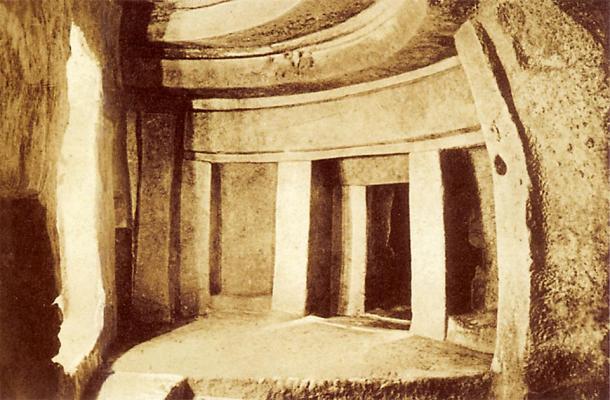
Photograph of the megalithic Hypogeum temple’s inner chamber in Malta, taken before 1910 AD. (Richard Ellis / Public domain )

The Sancutary of Thoth or Thought And The Number 110

When we continue to decode Khufu’s story in the Westcar Papyrus , we see that Djehudi (Thoth?) is 110 years old. The number 110 is a key length in the sacred geometry of the Great Pyramid (110 cubits is a fourth of its base length) and in many other megalithic structures like the Hypogeum in Malta. Indeed, researchers have found that the whole Hypogeum temple is designed to resonate at a frequency of 110 Hertz.

In 2008, a report was published by Dr Ian Cook of UCLA in which he describes his findings of an experiment in which he monitored regional brain activity in a number of healthy volunteers through exposure to different resonance frequencies. His findings indicated that, at 110 Hz, the patterns of activity over the prefrontal cortex abruptly shifted, resulting in a relative deactivation of the language center and a temporary shifting from left to right-sided dominance, related to emotional processing. This shift did not occur at other frequencies. This means that the Hypogeum’s oracle chamber was constructed in such a way as to induce mystical experiences and hyperdimensional consciousness. And please note that the Hypogeum was built 1500 years before the Egyptian pyramids!!!

Then there is the “chest made of firestone in the room called the Inventory in Heliopolis.” Reading this phrase, I immediately think of a “King’s Chamber” containing a sarcophagus, made of piezo-electric (firestone) granite and calcite, respectively. Only, here the chest of firestone inside the building called the Inventory is in Heliopolis, the religious heart of Egypt prior to the age of the pyramids.


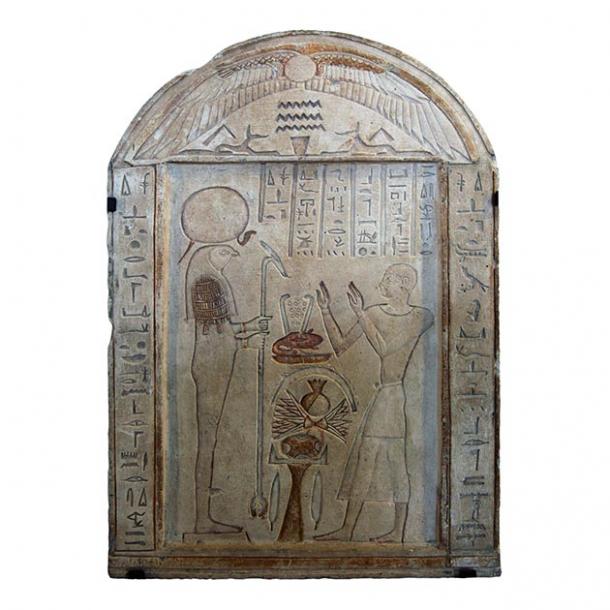
Imenirdis worshiping Ra-Atum, a god said to be the repository of sacred knowledge. (Rama / CC BY-SA 3.0 )

What The Sacred Knowledge In Heliopolis Refers To

We know that the most important temple in Heliopolis was the Temple of Ra-Atum or the Temple of the Phoenix, in which the sacred knowledge of the priesthood of Ra-Atum was stored (in its architecture and cosmic alignments). Therefore, the temple functioned as an “inventory of knowledge.”

In the center of this temple stood a granite (firestone) obelisk upon which rested an even more sacred object known as the Benben Stone . The Benben Stone is a mysterious conical stone (resembling a pinecone or a honeycomb) that symbolized the egg of the cosmic bird of creation or the Phoenix. The Phoenix was usually depicted as a grey heron, a migratory bird just like the ibis or the swan. It was believed that the first coming of the Phoenix marked the birth of a new age and the Benben Stone was its egg or divine seed.

Interestingly, the conical shape of the Benben Stone has been linked more than once with the conical shape of the pineal gland (just like the pine cone statue in the Vatican!), which is considered to be the “Seed of Thought,” or the divine seed of reality.

post continues at:  https://www.ancient-origins.net/unexplained-phenomena/sanctuary-thoth-0014592


Recommend this post and follow The birth of 
modern Man
https://disqus.com/home/forum/lifeofearth/