Sunday, 28 February 2021

Archaeology News: Pompeii: Ceremonial chariot discovered in ruins of settlement outside walls of ancient city


Pompeii: Ceremonial chariot discovered in ruins of settlement outside walls of ancient city

The chariot was spared when the walls and roof of the structure it was in collapsed after the eruption of Mount Vesuvius in 79 AD.

By Tom Gilespie, Sky News, Saturday 27 February 2021

https://news.sky.com/story/pompeii-ceremonial-chariot-discovered-in-ruins-of-settlement-outside-walls-of-ancient-city-12231186

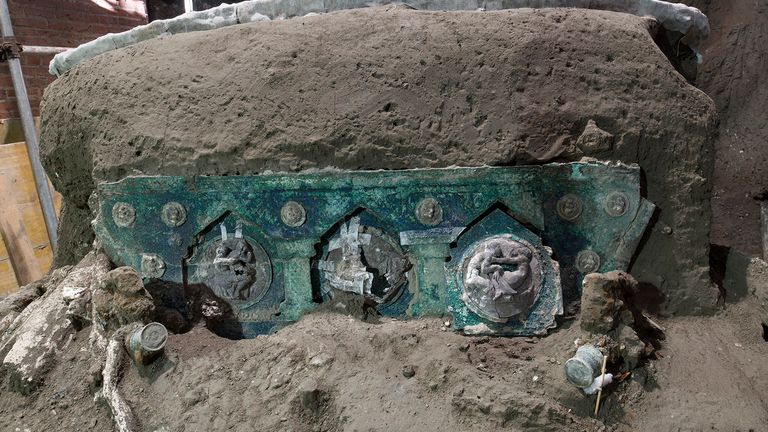
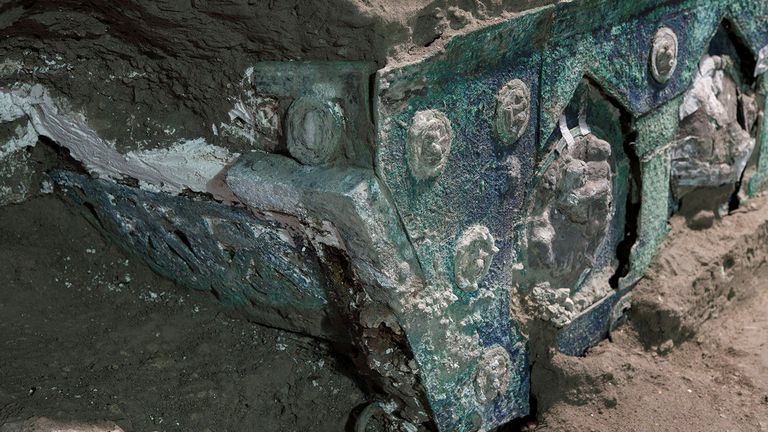
The ceremonial chariot, which is largely made of iron, has been hailed as an 'exceptional discovery'
Image: The ceremonial chariot, which has iron elements, has been hailed as an 'exceptional discovery' 

A ceremonial chariot, complete with bronze decorations and mineralised wood remains, has been discovered in the ruins of a settlement north of Pompeii.

The chariot is one of several important discoveries to be made in an area called Civita Giulian outside the walls of the ancient city near Naples in Italy.

The discoveries were made after an investigation into an illegal dig, officials at the archaeological site have said.

The chariot, which has elements, was parked in the portico of a stable where the remains of three horses were previously found.

The Archaeological Park of Pompeii called the chariot "an exceptional discovery" and said "it represents a unique find - which has no parallel in Italy thus far - in an excellent state of preservation".

The chariot has survived looting by modern day antiquity thieves

Image: The chariot has survived looting by modern day antiquity thieves

Pompeii was destroyed by the eruption of Mount Vesuvius in 79 AD.

The chariot was spared when the walls and roof of the structure it was in collapsed.

It also survived looting by modern-day antiquities thieves, who had dug tunnels through to the site, grazing but not damaging the four-wheeled cart, according to park officials.

The chariot was found on the grounds of what is one of the most significant ancient villas in the area around Vesuvius, with a panoramic view of the Mediterranean Sea, on the outskirts of the ancient Roman city.

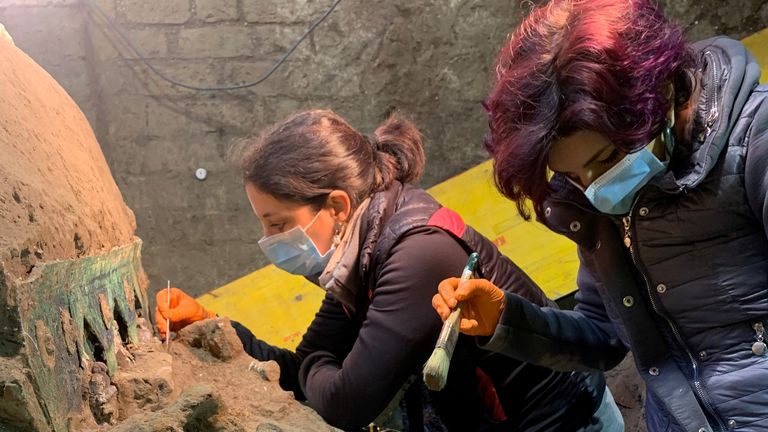
Archaeologists have uncovered the chariot in area outside of the walled city
Image: Archaeologists have uncovered the chariot in area outside of the walled city

The skeletal remains of what are believed to have been a wealthy man and his male slave attempting to escape death were found in Civita Giulian last year.

The chariot's first iron element emerged from the blanket of volcanic material filling the two-storey portico on 7 January.

Archaeologists believe the cart was used for festivities and parades, perhaps also to carry brides to their new homes.

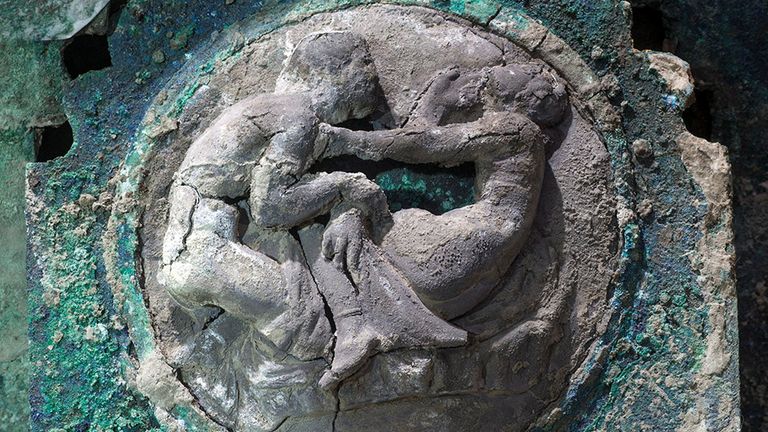
The chariot includes a decoration which appears to show two people interacting
Image: The chariot includes a decoration which appears to show two people interacting

While chariots for daily life or the transport of agricultural products have been previously found at Pompeii, officials said the new find is the first ceremonial chariot unearthed in its entirety.

The villa was discovered after police came across the illegal tunnels in 2017, officials said.

Two people who live in the houses atop the site are currently on trial for allegedly digging more than 80 metres of tunnels at the site.

A partial view of the ancient archaeological site of Pompeii is pictured in front of Mount Vesuvius April 17, 2014 (photo credit: REUTERS/CIRO DE LUCA)


It looks like a Tesla family salon chariot 

Neander-Troll says :Be sure to recommend and follow Chucks " Life of Earth " Blog at:


LinkedIn Removes Diversity Lesson Telling Employees to 'Be Less White'

Paul Bond Feb. 23, 2021
https://www.msn.com/en-us/news/technology/linkedin-removes-diversity-lesson-telling-employees-to-be-less-white/ar-BB1dVWWK

 A Coca-Cola sign hangs over a vending machine at the Woodbury Common Premium Outlets shopping mall on November 24, 2020 in Central Valley, New York.
© Gary Hershorn/Getty

After a whistleblower complained that Coca-Cola was asking its employees to engage in diversity training offered by LinkedIn Education that encouraged them to "try to be less white," the social media firm has removed the program.

"The Confronting Racism course featuring Robin DiAngelo is no longer available in our course library, at the request of the 3rd party content provider we licensed this content from," LinkedIn vice president of corporate communications Nicole Leverich told Newsweek in an email on Monday.

"We provide a wide variety of learning content, including more than 270 courses on the topics of diversity, inclusion and belonging," Leverich said. "We will continue to add new courses to help people learn the skills they need to be more successful in their career, including the foundational skills we all need to be effective allies and help build a more equitable future."

Coca-Cola has been criticized on social media since Friday when Karlyn Borysenko, who is an organizational psychologist and YouTube commentator, tweeted screenshots of the LinkedIn course.

Borysenko received the tip from whistleblowers at Coca-Cola who said employees were "required" to take the online course, though other companies were similarly asking their staff to engage in the course, as well.

"The real story is that Coca-Cola is one of probably thousands of companies that are having their employees do these courses," Borysenko told Newsweek. "Why did LinkedIn produce content asking people to be less white? Why are they still hosting this? Coca-Cola is a drop in the bucket."

Late Monday, LinkedIn said the course is no longer on its platform. LinkedIn did not say how many companies were using the lesson or how many times the controversial video had been viewed.

In four days, Borysenko's tweet had been viewed by 23 million people while a follow-up YouTube video had more than 100,000 views.

The now-removed Confronting Racism course included a slide that instructed students to be "less white, less arrogant, less certain, less defensive, less ignorant and more humble."

The lesson also informed viewers that "in the U.S. and other Western nations, white people are socialized to feel that they are inherently superior because they are white," and it cites vague "research" claiming that children as young as 3 "understand that it is better to be white."

While Coca-Cola told Newsweek that the lesson wasn't mandatory for employees, Borysenko said multiple employees at the company say that it indeed had been—at least until Friday, and at least one employee provided her an email she says backs up the assertion.

"I can understand sometimes there's miscommunication between management and employees ... but the messaging I've seen does use the word 'required.' Everything I've seen says it was part of the coursework, but then it was removed over the weekend once the news broke," Borysenko told Newsweek.

Coca-Cola told Newsweek that the video and images "are not part of the company's learning curriculum." Coca-Cola said it has a "Better Together" training initiative that includes access to the LinkedIn diversity lesson but that it "was not part of the company's curriculum. We will continue to listen to our employees and refine our learning programs as appropriate."


Recommend this post and follow The birth of Modern Man
https://disqus.com/home/forum/lifeofearth/

Scientists Use Weather Radar Tech to Watch Storms of Microbes Brew Inside Cells

CARLY CASSELLA, 28 FEBRUARY 2021
https://www.sciencealert.com/scientists-use-weather-radar-tech-to-watch-storms-of-microbes-inside-cells

Living immortalised cells in multi-well plates. 
(Rebecca McElhoe/Purdue University)

Scientists are using a radar-like weather system to watch as a storm of pathogens brew inside living tissue.

The strategy is entirely novel, according to the authors, and relies on a technique very similar to Doppler radars, which can detect the motion of precipitation and predict upcoming weather patterns.

Doppler ultrasounds, which use sound waves to create images of blood flow, are already used in the medical sphere, but this new technique can allow scientists to peek inside individual cells to see how they respond to pathogens like salmonella and E. coli.

Such knowledge could one day allow us to quickly figure out whether living tissue contains microbes or not and successfully treat that infection.

In 2020, the team used similar biodynamic imaging to identify cancerous cells and test how effective chemotherapy truly is at beating them back.

"First we did biodynamic imaging applied to cancer, and now we're applying it to other kinds of cells," says David Nolte, who specialises in biomedical imaging at Purdue University.

"This research is unique. No one else is doing anything like it. That's why it's so intriguing."

Scattering light across living tissues results in a range of Doppler frequency shifts, which can tell scientists something about what is going on inside a living tissue's cells.

This Doppler 'fingerprint' as it is known is extremely sensitive to even subtle changes in intracellular processes, including bacterial invasion.


When bacteria infect a living host, it can alter the dynamics of the tissue's cells, allowing some to act as "sentinels", reporting on the pathogen's effects and its responses to antibiotic treatments.

These different frequency ranges can then be interpreted by scientists to better understand an infection's true character and how best to fight it.

To show how this technique works, researchers used a standard colon cancer cell line and introduced it to several food-borne pathogens to see how its first line of cells – the "sentinels" – responded to the different infections.

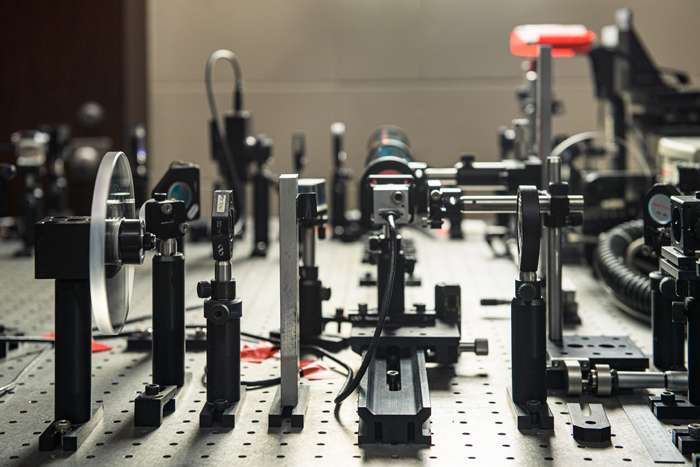
The Doppler machine used to look inside cells. (Rebecca McElhoe/Purdue University)

Invasive Salmonella was found to penetrate through the cancer tumours, while non-invasive strains of E. coli remained isolated outside the cells. Both scenarios ultimately generated different Doppler signatures.

"This directly measures whether a cell is pathogenic," says biological engineer Michael Ladisch.

"If the cells are not pathogenic, the Doppler signal doesn't change. If they are, the Doppler signal changes quite significantly."

Using additional methods, researchers can figure out what pathogen is actually present within the living tissue. As Ladisch explains, it's "a quick way to tell friend from foe."

Once that work is done, antibiotics can be applied to the cell line, and responses can be tracked using a fluorescent dye. Doppler shifts can then reveal which infections are resistant to drugs and which respond well to them.

Using current techniques, where a patient's tissues are cultured in the lab, it takes between 8 and 10 hours to figure out whether an antibiotic will work or not.

In roughly half that time, this new 'biodynamic process' can test multiple different medicines in tiny Petri dishes to see whether there have been any metabolic changes.

Those samples that do show changes are the ones that have reacted well to the antibiotic, the authors say, meaning "the bacteria are dying, being defeated and beaten back by antibiotics."

"When we treat with antibiotics, the bacteria don't have to multiply much before they start to affect the tissue sentinels," explains Nolte.

"There are still too few bacteria to see or to measure directly, but they start to affect how the tissues behaves, which we can detect with Doppler."

The authors hope their new technique will allow doctors to prescribe personalised antibiotics, instead of broad-spectrum ones, which can leave some bacteria living, cause antibiotic resistance and make the infection harder to fight in the future.

The experiments were done outside normal biological context on artificially grown tissue, and because the equipment is sensitive to vibrations and movement, it's not clear whether this technique will translate to living and breathing patients.

That said, the authors hope they can figure out a way to counter their equipment's sensitivity, allowing infected tissue to be scanned on the outside of a patient's body and maybe even one day on the inside, too.

The study was published in Communications Biology.

Recommend this post and follow The birth of modern Man

https://disqus.com/home/forum/lifeofearth/

Alligators in Oklahoma turn into 'popsicles' sticking out of the frozen water

By Laura Geggel - Editor Feb. 27, 2021
https://www.livescience.com/snorkeling-alligators-oklahoma.html

This alligator 'popsicle' is making sure it can breathe in its frozen lake.
 (Image credit: David Arbor, courtesy of U.S. Forest Service)

What are these alligators doing in this frozen lake?

Oklahomans came face-to-face with popsicle-like alligators — reptiles whose snouts were sticking straight out of the icy water — when the cold snap hit the American South this month.

But why were these alligators "snorkeling" in such cold weather? Why weren't they sunning on the banks or hiding in their burrows?

And who knew Oklahoma even had alligators? The news of the snorkeling alligators sparked a debate on Facebook over whether alligators (Alligator mississippiensis) were a native or introduced species to the state. According to an 1866 description of an alligator written in an Oklahoman man's diary, it appears that they are native, although other alligators have been introduced to wetlands in the state's southeastern corner since then, said Jena Donnell, the Wildlife Diversity Communication Specialist with the Oklahoma Department of Wildlife Conservation.

As for the alligator's weird snorkeling behavior, it's completely normal, Donnell told Live Science. "Whenever it ices over, this is a natural response [seen in alligators]," she said. "Since the water they were in froze over, they had to create a 'snorkel,' so they tipped their nose out of the water to keep some ice-free water, so they're still able to breathe."

Alligators are cold-blooded, or ectothermic creatures, which means their body temperature fluctuates with the ambient temperature. That's why alligators are often found basking in the sun or camping out in burrows with air pockets that they've dug into the banks of lakes and waterways.

When freezing temperatures hit their habitats, gators don't bask on the bank, as cold air can be colder than the water. Instead of hanging out in their burrows, where they might become trapped underwater if the water freezes over, alligators often swim to the surface to go snorkeling, ensuring that they'll have enough oxygen. 

If the water is cold, but not yet frozen, alligators will often swim to deeper waters, which are warmer than the shallows, Donnell said.

'Snorkeling' alligators stick out their snouts in the Red Slough Wildlife Management Area of Oklahoma.
 (Image credit: David Arbor, courtesy of U.S. Forest Service)

Unfortunately, not all of the alligators survived the cold snap at the Red Slough Wildlife Management Area, a 5,800-acre (2,300 hectares) refuge in southeastern Oklahoma that's managed by the Oklahoma Department of Wildlife Conservation, U.S. Forest Service and the Natural Resources Conservation Service. 

Not all of the alligators made it through the cold snap.
 (Image credit: David Arbor, courtesy of U.S. Forest Service)

Donnell didn't immediately know how many alligators had died during the cold snap, but those that did were young. "Most of the adults were able to survive the cold-weather event," she said. "It's always fascinating how animals will adapt and how they can bring out different survival techniques."

Freezing temperatures and icy conditions aren't uncommon in southeastern Oklahoma; on average, McCurtain County, where Red Slough is located, has about 60 days a year with temperatures below 32 degrees Fahrenheit (0 degrees Celsius), according to a 2017 study in the journal Herpetological Review. 

Nor are snorkeling alligators unique to Oklahoma; they've also been spotted in North Carolina in 2018 and 2019, Live Science previously reported. 

Originally published on Live Science.


Recommend this post and follow The Life of Earth


https://disqus.com/home/forum/lifeofearth/

Saturday, 27 February 2021

Health & Science News: What if life figured out how to use oxygen before it was freely available?


What if life figured out how to use oxygen before it was freely available?


Did the production of oxygen coincide with the "Great Oxygenation Event", or did living organisms have access to oxygen even before that event?


By Sarah Chemla,  Jerusalem Post,  February 26, 2021

Moon and Earth’s Atmosphere (photo credit: NASA)
Moon and Earth’s Atmosphere  (photo credit: NASA)

Around 2.5 billion years ago, our planet experienced what was possibly the greatest change in its history: molecular oxygen suddenly went from nonexistent to becoming freely available everywhere. 

While it is a fact that the “great oxygenation event” (GOE) occurred, allowing oxygen-using organisms – also called the "respirators" – to evolve, one question still remains. This is what  Prof. Dan Tawfik of the Weizmann Institute of Science’s Biomolecular Sciences Department set out resolve. 

The question being whether this event actually radically changed the way oxygen-using organisms breathed - or were they using oxygen at the time already using free oxygen, just at lower levels? Did the production of oxygen coincide with the GOE, or did living organisms have access to oxygen even before that event? 

On one hand, according to the study, molecular oxygen would not have been available before the GOE, as the chemistry of the atmosphere and oceans prior to that time would have ensured that any oxygen released by photosynthesis would have immediately reacted chemically. 

But on another hand, however, some of the oxygen produced by the photosynthetic microorganisms may have remained free long enough for non-photosynthetic organisms to snap it up for their own use, even before the GOE. 

Part of Tawfik’s research team, Jagoda JabÅ‚oÅ„ska thought that focusing on the protein evolution could help resolve the issueThat is, using methods of tracing how and when various proteins have evolved, she and Tawfik might find out when living organisms began to process oxygen.

Such phylogenetic trees are widely used to unravel the history of species, or human families, but also of protein families, and Jabłońska decided to use a similar approach to unearth the evolution of oxygen-based enzymes.

“Of course, it was far from simple,” said Tawfik. “Genes can be lost in some organisms, giving the impression they evolved later in members in which they held on. And microorganisms share genes horizontally, messing up the phylogenetic trees and leading to an overestimation of the enzyme’s age. We had to correct for the latter, especially.”

The phylogenetic trees the researchers ultimately obtained showed a burst of oxygen-based enzyme evolution about 3 billion years ago – something around half a billion years before the GOE. 

Examining this time frame further, the scientists found that rather than coinciding with the takeover of atmospheric oxygen, this burst dated to the time that bacteria left the oceans and began to colonize the land. A few oxygen-using enzymes could be traced back even farther. 

"This confirms the hypothesis that oxygen appeared and persisted in the biosphere well before the GOE," said Tawfik. "It took time to achieve the higher GOE level, but by then oxygen was widely known in the biosphere.”

If oxygen use had coincided with the GOE, the enzymes that use it would have evolved later, so the findings supported the scenario in which oxygen was already known to many life forms by the time the GOE took place.

“Our research presents a completely new means of dating oxygen emergence, and one that helps us understand how life as we know it now evolved.”

😇😇😇😇😇😇😇😇😇😇😇😇😇😇😇😇😇😇😇😇😇😇😇😇😇😇

At least in my day they did not tax us for breathing fresh air !

Neander-Troll says :Be sure to recommend and follow Chucks 
" Life of Earth " Blog at:

Experts call for home battery storage to protect vulnerable during outages

FEBRUARY 24, 2021, by Columbia University's Mailman School of Public Health
https://techxplore.com/news/2021-02-experts-home-battery-storage-vulnerable.html

Credit: CC0 Public Domain

Extreme weather driven by climate change is making power outages more commonplace even as the need for electricity-dependent home health equipment grows. In this context, battery storage can help protect medically vulnerable households, according to researchers at Columbia University Mailman School of Public Health. The article is published in the journal Futures.

For the millions reliant on electricity for home medical equipment, even short-term power outages can lead to a potentially life-threatening situation. Society's most vulnerable populations—elders, the ill, and the poor—face the greatest risks. Only a fraction of individuals who rely on medical equipment like oxygen concentrators, nebulizers, ventilators, dialysis, and sleep apnea machines has an alternative source of power to use in the event of an outage. During outages related to the 2019 Camp Fire in Northern California, vulnerable residents reported complications, including one man who awoke when his sleep apnea breathing machine failed in the middle of the night and he couldn't breathe. One woman had to spend the night in her wheelchair because her special mattress required electricity to remain inflated.

The researchers call for policies to support resilient power systems—ideally, battery storage paired with solar photovoltaics—that provide clean, reliable emergency backup power by storing electricity for use when grid power is unavailable. One model is the California Self-Generation Incentive Program, which provides incentives for residential battery storage, and includes energy storage incentives for low-income residents. Additional lessons come from a study in Puerto Rico after Hurricane Maria, which found that residents preferred solar-powered battery backups to diesel generators due to ease of use, low cost, and an elimination of fumes that exacerbate asthma and other lung conditions.

Community facilities like senior centers, public schools, and health centers often lack backup power, too. During an emergency, vulnerable residents typically turn to these facilities for heating/cooling, refrigeration to store perishable items and temperature-regulated medicines, lighting, and outlets to charge cell phones and medical equipment. Without backup power, critical facilities ultimately must limit operations or close entirely.

"Climate change coupled with an aging energy infrastructure is driving extreme weather-related power outages, as we've seen recently in Texas," says co-author Diana Hernández, Ph.D., associate professor of sociomedical sciences. "The technology to improve resiliency and energy independence exists, and it needs to be made more accessible to those who could most benefit. Battery storage units, particularly those powered by the sun, are a critical tool to help vulnerable individuals and communities survive the climate crisis."

In a separate review of scientific literature published in Current Environmental Health Reports, researchers found that power outages have important health consequences ranging from carbon monoxide poisoning, temperature-related illness, gastrointestinal illness, and mortality to cardiovascular, respiratory, and renal disease hospitalizations, especially for individuals relying on electricity-dependent medical equipment. Evidence from the U.S. suggests older adults, poorer families, and individuals of non-Hispanic Black and Hispanic race/ethnicity are least likely to have a three-day supply of food, drinking water, and medication, a preparedness measure for power outages.

Overall, the researchers found that more work is needed to better define and capture the relevant exposures and outcomes. "There is urgent need for data to inform disaster mitigation, preparedness, and response policies (and budgets) in an increasingly energy-reliant world," said first author Joan Casey, Ph.D., assistant professor of environmental health sciences at Columbia Mailman School.

Recommend this post and follow The birth of modern Man
https://disqus.com/home/forum/lifeofearth/

How did dogs get to the Americas? An ancient bone fragment holds clues

FEBRUARY 23, 2021, by Charlotte Hsu, University at Buffalo
https://phys.org/news/2021-02-dogs-americas-ancient-bone-fragment.html

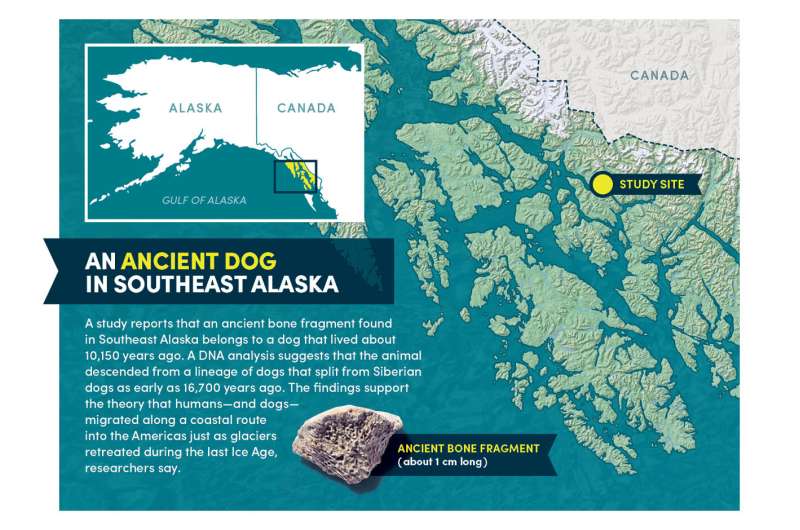
This bone fragment, found in Southeast Alaska, belongs to a dog that lived about 10,150 years ago, a study concludes. Scientists say the remains, a piece of a femur, provide insight into the question of when dogs and humans first entered the Americas, and what route they took to get there.
 Credit: Douglas Levere / University at Buffalo

The history of dogs has been intertwined, since ancient times, with that of the humans who domesticated them.

But how far back does that history go in the Americas, and which route did dogs use to enter this part of the world?

A new study led by the University at Buffalo provides insight into these questions. The research reports that a bone fragment found in Southeast Alaska belongs to a dog that lived in the region about 10,150 years ago. Scientists say the remains—a piece of a femur—represent the oldest confirmed remains of a domestic dog in the Americas.

DNA from the bone fragment holds clues about early canine history in this part of the world.

Researchers analyzed the dog's mitochondrial genome, and concluded that the animal belonged to a lineage of dogs whose evolutionary history diverged from that of Siberian dogs as early as 16,700 years ago. The timing of that split coincides with a period when humans may have been migrating into North America along a coastal route that included Southeast Alaska.

The research will be published on Feb. 24 in the Proceedings of the Royal Society B. Charlotte Lindqvist, an evolutionary biologist from UB, was senior author of the study, which included scientists from UB and the University of South Dakota. The findings add to a growing body of knowledge about the migration of dogs into the Americas.
A map showing the study area. Credit: Bob Wilder / University at Buffalo

"We now have genetic evidence from an ancient dog found along the Alaskan coast. Because dogs are a proxy for human occupation, our data help provide not only a timing but also a location for the entry of dogs and people into the Americas. Our study supports the theory that this migration occurred just as coastal glaciers retreated during the last Ice Age," says Lindqvist, Ph.D., associate professor of biological sciences in the UB College of Arts and Sciences. "There have been multiple waves of dogs migrating into the Americas, but one question has been, when did the first dogs arrive? And did they follow an interior ice-free corridor between the massive ice sheets that covered the North American continent, or was their first migration along the coast?"

"The fossil record of ancient dogs in the Americas is incomplete, so any new remains that are found provide important clues," says Flavio Augusto da Silva Coelho, a UB Ph.D. student in biological sciences, and one of the paper's first authors. "Before our study, the earliest ancient American dog bones that had their DNA sequenced were found in the U.S. Midwest."

A surprise finding from a large collection of bones

Lindqvist's team did not set out to study dogs. The scientists came across the femur fragment while sequencing DNA from a collection of hundreds of bones excavated years before in Southeast Alaska by researchers including Timothy Heaton, Ph.D., professor of earth sciences at the University of South Dakota.

"This all started out with our interest in how Ice Age climatic changes impacted animals' survival and movements in this region," Lindqvist says. "Southeast Alaska might have served as an ice-free stopping point of sorts, and now—with our dog—we think that early human migration through the region might be much more important than some previously suspected."

The bone fragment, originally thought to come from a bear, was quite small, but when the DNA was studied, the team realized it was from a dog, Lindqvist says.


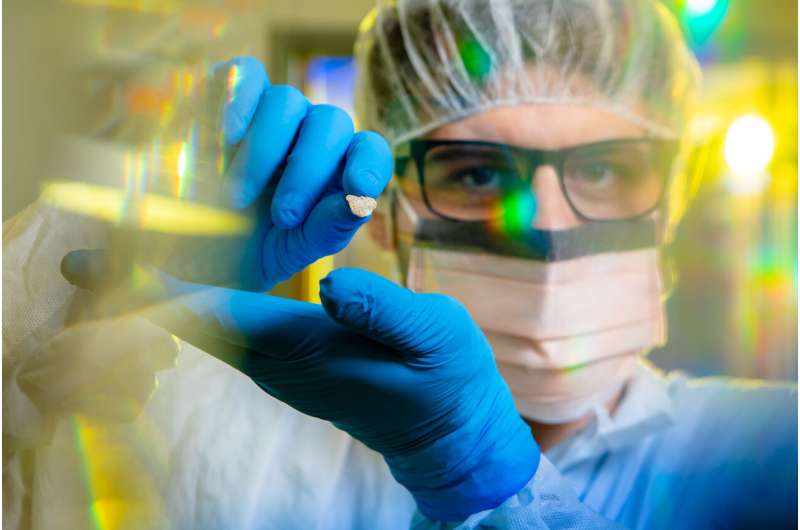
Flavio Augusto da Silva Coelho, a University at Buffalo PhD student in biological sciences, holds the ancient dog bone fragment that was found in Southeast Alaska. Credit: Douglas Levere / University at Buffalo


After this surprise discovery, the scientists compared the bone's mitochondrial genome to those of other ancient and modern dogs. This analysis showed that the Southeast Alaskan dog shared a common ancestor about 16,000 years ago with American canines that lived before the arrival of European colonizers, Lindqvist says. (Mitochondrial DNA, inherited from the mother, represents a small fraction of an organism's complete DNA, so sequencing a complete nuclear genome could provide further details if that material can be extracted.)

Of interest, carbon isotope analysis on the bone fragment indicates that the ancient Southeast Alaskan dog likely had a marine diet, which may have consisted of foods such as fish and scraps from seals and whales.

The research adds depth to the layered history of how dogs came to populate the Americas. As Lindqvist notes, canines did not arrive all at once. For example, some Arctic dogs arrived later from East Asia with the Thule culture, while Siberian huskies were imported to Alaska during the Gold Rush. Other dogs were brought to the Americas by European colonizers.

The new study sharpens the debate on dog and human migration into the Americas.

"Our early dog from Southeast Alaska supports the hypothesis that the first dog and human migration occurred through the Northwest Pacific coastal route instead of the central continental corridor, which is thought to have become viable only about 13,000 years ago," Coelho notes.

Recommend this post and follow The Life of Earth
https://disqus.com/home/forum/lifeofearth/

Mushrooms add important nutrients when included in the typical diet

FEBRUARY 24, 2021, by The Mushroom Council
https://medicalxpress.com/news/2021-02-mushrooms-important-nutrients-typical-diet.html

First dietary modeling analysis of all three USDA Food Patterns investigates the effects of adding a serving of mushrooms
 Credit: Mushroom Council

The second study published in as many months has identified another reason to add more mushrooms to the recommended American diet. The new research , published in Food & Nutrition Research (February 2021), examined the addition of mushrooms to U.S. Department of Agriculture (USDA) Food Patterns resulting in the increase of several micronutrients including shortfall nutrients, while having a minimal to zero impact on overall calories, sodium or saturated fat.

Dr. Victor L. Fulgoni III and Dr. Sanjiv Agarwal looked at the nutritional effect of substituting a serving of various foods recommended to be moderated in the diet by the 2015-2020 U.S. Dietary Guidelines with an 84-gram serving of mushrooms on nutrient profiles in USDA's Healthy US style, Mediterranean-style and Vegetarian Eating Patterns. This is a similar approach that the USDA used for determining its Dietary Guidelines . For the mushroom serving, researchers looked at a composite of white, crimini and portabella mushrooms at a 1:1:1 ratio; one scenario including UV-light exposed mushrooms; and one scenario including oyster mushrooms.

"Simply adding an 84-gram serving, or what would be the equivalent of 5 medium white mushrooms, to USDA Food Patterns increased several shortfall nutrients including potassium as well as other B vitamins and minerals and had minimal to no impact on overall calories, sodium or saturated fat," said Dr. Fulgoni.

Depending on the pattern type and calorie level, key findings include:
The addition of a serving (84 g) of mushrooms to the diet resulted in an increase in potassium (8%-12%), copper (16%-26%), selenium (11%-23%), riboflavin (12%-18%) and niacin (11%-26%), but had no impact on calories, carbohydrate, fat or sodium.
The addition of a serving (84 g) of oyster mushrooms increased vitamin D (8%-11%) and choline (10%-16%) in USDA Food Patterns.
Mushrooms exposed to UV-light to increase vitamin D levels to 200 IU/serving also increased vitamin D by 67%-90% in USDA Food Patterns.
A composite of white, crimini and portabella mushrooms at a 1:1:1 ratio would be expected to add 2.24 mg ergothioneine and 3.53 mg glutathione, while oyster mushrooms would provide 24.0 mg ergothioneine and 12.3 mg glutathione. (Note: the USDA Food Patterns as well as USDA FoodData Central do not include analytical data either of these antioxidants at this time).

Results Mirror Similar Modeling Study

Drs. Fulgoni and Agarwal also modeled the addition of mushrooms to National Health and Nutrition Examination Survey (NHANES) 2011-2016 dietary data looking at a composite of white, crimini and portabella mushrooms at a 1:1:1 ratio; one scenario including UV-light exposed mushrooms; and one scenario including oyster mushrooms for both 9-18 years and 19+ years of age based on an 84g or ½ cup equivalent serving . Similar to the USDA Food Patterns, the NHANES data found the addition of a serving (84 g) of mushrooms to the diet resulted in an increase in dietary fiber (5%-6%), copper (24%-32%), phosphorus (6%), potassium (12%-14%), selenium (13%-14%), zinc (5%-6%), riboflavin (13%-15%), niacin (13%-14%), and choline (5%-6%) in both adolescents and adults; but had no impact on calories, carbohydrate, fat or sodium.

Looking specifically at vitamin D, the study shows that when commonly consumed mushrooms are exposed to UV-light to provide 5 mcg vitamin D per serving, vitamin D intake could meet and slightly exceed the recommended daily value (98% - 104%) for both the 9 -18 year and 19+ year groups as well as decrease inadequacy of this shortfall nutrient in the population. In addition, a serving of UV-light exposed commonly consumed mushrooms decreased population inadequacy for vitamin D from 95.3% to 52.8% for age group 9-18 years and from 94.9% to 63.6% for age group 19+ years.

Mushrooms Role in the Dietary Guidelines

Mushrooms are fungi—a member of the third food kingdom—biologically distinct from plant and animal-derived foods that comprise the USDA food patterns yet have a unique nutrient profile that provides nutrients common to both plant and animal foods. Although classified into food grouping systems by their use as a vegetable, mushrooms' increasing use in main entrees in plant-based diets is growing, supporting consumers' efforts to follow food-based dietary guidance recommendations to lower intake of calories, saturated fatty acids, and sodium while increasing intake of under-consumed nutrients including fiber, potassium and vitamin D.

When considering mushrooms' role in diet quality and helping consumers achieve healthy eating patterns, a previous analysis of NHANES 2001-2010 data discovered that mushroom intake was associated with higher intakes of several key nutrients and thus better diet quality . However, intake was low—about 21g per day among mushroom consumers. Because of mushrooms' culinary versatility and unique nutrient profile, greater recognition of mushrooms in dietary guidance is an opportunity to improve diet quality, particularly to increase consumption of vegetables.

"Results from this current research on modeling the nutritional impact of mushrooms on USDA healthy eating patterns are now available for consideration by the 2025-2030 Dietary Guidelines Advisory Committee," said Mary Jo Feeney, MS, RD, FADA and nutrition research coordinator to the Mushroom Council.

Mushrooms: A Nutrient Powerhouse

Often grouped with vegetables, mushrooms provide many of the nutrient attributes of produce, as well as attributes more commonly found in meat, beans or grains. According to the USDA's FoodData Central , one serving (5 medium/90g) of white, raw mushrooms contains 20 calories, 0g fat, 3g protein and is very low in sodium (0mg/<1% recommended daily value). Few foods naturally contain vitamin D, and mushrooms are unique in that they are the only food in the produce aisle that contain vitamin D. Specifically, one serving of raw, UV-exposed, white (90g) and crimini (80g) mushrooms contains 23.6mcg (118% RDA) and 25.52mcg (128% RDA) of vitamin D, respectively.

More Research from the Mushroom Council Still to Come

With mushrooms growing in awareness and consideration among consumers nationwide, in 2019, the Mushroom Council made a $1.5 million multi-year investment in research to help broaden understanding of the food's nutritional qualities and overall health benefits.

In addition to the analysis of mushrooms for bioactives/ergothioneine for inclusion in USDA FoodData Central database, additional research projects approved include:
Health promoting effects of including mushrooms as part of a healthy eating pattern.
Mushrooms' relationship with cognitive health in older adults.
Mushrooms' impact on brain health in an animal model.

Since 2002, the Council has conducted research that supports greater mushroom demand by discovering nutrient and health benefits of mushrooms. Published results from these projects form the basis for communicating these benefits to consumers and health influencers.


Recommend this post and follow The Life of Earth

https://disqus.com/home/forum/lifeofearth/
Friday, 26 February 2021

Health & Science News: Israeli tech turns animal waste into odorless, powdered fertilizer


Israeli tech turns animal waste into odorless, powdered fertilizer


A pilot project for the solution is currently being implemented at a kibbutz dairy farm in Israel.


By Jerusalem Post Staff,  February 25, 2021

farm animals (photo credit: Wikimedia Commons)
farm animals  (photo credit: Wikimedia Commons)

An Israeli company developed a low-cost way to convert animal waste into organic potassium-rich fertilizer, free of pathogens and odor.

Tel Aviv-based Paulee CleanTec's recently patented technology allows for the ecofriendly management of human and animal waste.

A pilot project for the solution is currently being implemented at a kibbutz dairy farm in Israel.

“We can convert half a ton of fresh animal manure into odorless organic fertilizer in one hour,” said Paulee CleanTec CEO Ilan Levy. “If you have 300 dairy cows, they generate a ton of liquid waste every hour."

 
"This is equivalent to wastewater from a town populated with 40,000 people,” Levy explained.
In the United States, farms annually generate around 100 times more manure than human sewage processed at municipal wastewater plants, a company statement added.

Across the globe, hundreds of millions of tons of improperly treated animal waste is discharged into waterways or absorbed in ground soil, contaminating crops and drinking water with salmonella, E. coli and fecal coliform.

“When huge amounts of waste are produced in one concentrated area, there is no safe and cost-effective way to use it efficiently or get rid of it," Levy said. "The problem will never end as long as agriculture, meat, egg and milk production continue to rely on animal confinement.”

Through Paulee CleanTec's process, the fertilizer is converted into powdered form and can be stored safely for later use, or can be sold and traded.

“In the near future, we can eliminate the current practice of on-farm storage of fresh animal manure that is required on livestock farms,” Levy said.

“Animals drop manure all year, but it can only be applied on fields during certain seasons," Levy explained. "So every farm – whether raising pigs, cows or chickens – must store manure. In certain European countries, up to nine months of onsite manure storage capacity must be installed."

The solution could be geared not only towards farms, but also high-rise apartments, airplanes, cruise ships and more, to convert all that smelly waste built up and held in tanks over long flights, through long pipes and multi-day voyages.

“When we mix our strong oxidizer with the feces, it generates energy and heat," Prof. Oded Shoseyov of the Hebrew University explained. "That immediately neutralizes the smell – and in addition, sterilizes the feces because of the high temperature.”

😇😇😇😇😇😇😇😇😇😇😇😇😇😇😇😇😇😇😇😇😇😇😇😇😇😇

In my days it was Mammoth poop that we used to fertilise our field with & it was called Mammoth for a reason!  

Neander-Troll says :Be sure to recommend and follow Chucks 
" Life of Earth " Blog at:


Study finds changes in gut microbiome connected to Alzheimer's-like behavior

FEBRUARY 25, 2021by Oregon Health & Science University
https://medicalxpress.com/news/2021-02-gut-microbiome-alzheimer-like-behavior.html

Credit: CC0 Public Domain


New research in mice published today in the journal Scientific Reports strengthens the growing scientific consensus regarding the role of the gut microbiome in neurodegenerative disorders including Alzheimer's disease.

The study, led by researchers at Oregon Health & Science University, found a correlation between the composition of the gut microbiome and the behavioral and cognitive performance of mice carrying genes associated with Alzheimer's. The mice carried the human amyloid precursor protein gene with dominant Alzheimer's mutations generated by scientists in Japan.

The study further suggests a relationship between microbes in the digestive tract and the expression of genes that trigger Alzheimer-like symptoms in mice.

"You know the expression, 'You are what you eat?'" said senior author Jacob Raber, Ph.D., professor of behavioral neuroscience in the OHSU School of Medicine. "This may be part of that. While all mice were fed the same diet, the gut microbiome is affected in a genotype-dependent fashion and this in turn might affect your brain."

The findings are the first to demonstrate a direct connection between the gut microbiome and cognitive and behavioral changes in an Alzheimer's disease animal model, and they are consistent with a recently published observational study in people newly diagnosed with Alzheimer's. In fact, a U.S. clinical trial for the treatment of mild to moderate Alzheimer's disease is currently underway involving a compound that targets microbes in the gut.

The research published today breaks new ground.

In addition to the cognitive and behavioral changes that were measured, the study is the first to demonstrate a relationship between changes in the gut microbiome and epigenetic changes in neural tissue in the hippocampus, an area of the brain affected in Alzheimer's. This type of research is not possible in people.

The microbiome is a complex assemblage of microorganisms such as bacteria that play a critical role in a wide range of functions in the body. In this case, researchers wanted to see if the gut microbiome affected cognitive and behavioral measures in specially bred mice at 6 months of age. So they compared wild-type mice with those genetically engineered to carry the human amyloid precursor protein gene with dominant Alzheimer's mutations.

They found changes in the gut microbiome—measured in fecal pellets—corresponded with epigenetic regulation of the apolipoprotein E and Tomm40 genes, both associated with Alzheimer's. They found a clear correlation, but they still can't say whether one causes the other.

"Microbes may elicit an impact on behavioral and cognitive measures relevant to Alzheimer's disease via epigenetic changes in the hippocampus," Raber said. "Or, alternatively, it might be that the epigenetic changes in the hippocampus affect changes in the gut microbiome."

The next phase of research will determine whether it's possible to reduce Alzheimer's-like symptoms in genetically predisposed mice by altering their diet.

"The exciting part of this is that you can manipulate the gut microbiome," Raber said. "We can use probiotics and see what the effect is."

Recommend this post and follow The Life of Earth
https://disqus.com/home/forum/lifeofearth/