Tuesday, 31 May 2022

Archaeology News: Egyptian archaeological mission unearths largest-ever bronze statues cachette in Saqqara


Egyptian archaeological mission unearths largest-ever bronze statues cachette in Saqqara


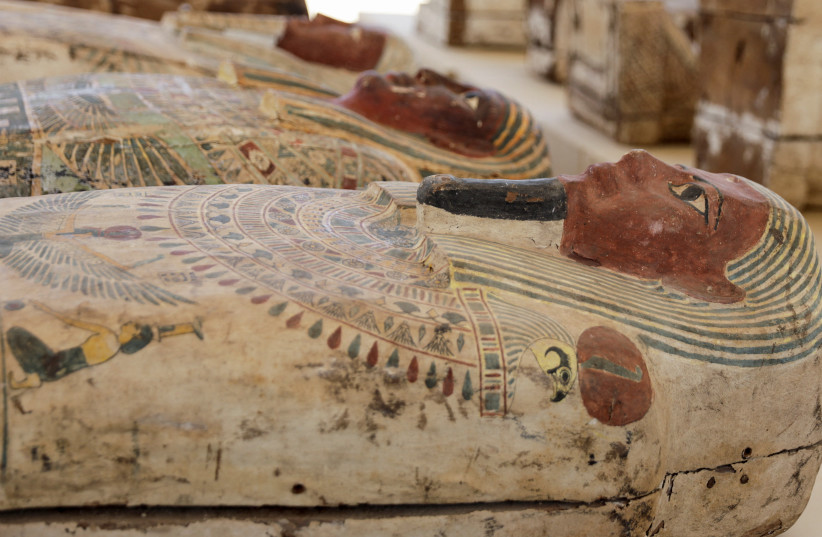
The collection also included over 200 painted wooden sarcophagi, and a variety of other antiquities.


Archeologists in Saqqara, Egypt announced on Monday that they have uncovered a collection of 250 wooden painted coffins and 150 bronze statues of ancient Egyptian deities.

The team has been working on the site for over four years. 

“I'm very proud that the discovery was made by Egyptians, and this will not be the last discovery here.”

Mostafa Waziri, secretary-general of Egypts Supreme Council of Antiquities

A collection of cosmetics was also found, including combs, kohl eyeliners, bracelets, earrings, and necklaces, among other curios.

Waziri confirmed that the sarcophagi will be transferred to the soon-to-open Grand Egyptian Museum, where they will be displayed in the main halls. He also revealed that a papyrus written in hieroglyphs was found inside one of the coffins, and may contain verses from the Book of the Dead. It was sent to the laboratory of the Egyptian Museum in Tahrir for further study. 


 Figurines that are around 2500 years old, from the newly discovered burial site near Egypt's Saqqara necropolis, are displayed during a presentation in Giza, Egypt May 30, 2022. (credit: REUTERS/MOHAMED ABD EL GHANY)

Figurines that are around 2500 years old, from the newly discovered burial site near Egypt's Saqqara necropolis, are displayed during a presentation in Giza, Egypt May 30, 2022. (credit: REUTERS/MOHAMED ABD EL GHANY)
Previous discoveries at Saqqara

The discovery is one of several made at Saqqara, the necropolis of the ancient capital of Memphis, in recent years.

In March, Egyptian archaeologists discovered five ancient painted tombs at a cemetery in Saqqara.

The tombs date back 4,000 years to the Old Kingdom and First Intermediate period and belong to senior officials and regional rulers, the Egyptian Ministry of Tourism and Antiquities said.

Large wooden and stone coffins and other artifacts, including small statues of people and pottery, were discovered inside the tombs.

In November, the tomb of Ptah-M-Wia, the treasurer of Pharaoh Ramesses II, was unearthed by researchers from the Cairo University

Ramesses II was the third pharaoh of the Nineteenth Dynasty of Egypt. Ptah-M-Wia served in a number of key roles during his rule, including royal scribe, head of the treasury, chief overseer of livestock and head of ritual offerings at the temple of Ramesses II at Thebes.

Archaeologists uncover trove of ancient Egyptian mummies


A sprawling Necropolis

Saqqara is a part of a sprawling necropolis, or large ancient cemetery for the ancient Egyptian capital of Memphis, which includes the Giza pyramids.

It is a UNESCO world heritage site that is also home to the Step Pyramid.

Judith Sudilovsky contributed to this report.  

"If you don't up vote this page I'll tell my Mummy "


THIS PAGE WAS POSTED BY SPUTNIK ONE OF THE SPUTNIKS ORBIT BLOG

New Research Shows ADHD Medication Doesn’t Help Kids Learn

By R. CASTRO, FLORIDA INTERNATIONAL U. MAY 30, 2022


According to new research, stimulant medication has no detectable impact on how much children with ADHD learn in the classroom.

For decades, most doctors, parents, and teachers have believed that stimulant medications help children with attention deficit hyperactivity disorder (ADHD) learn. However, in the first study of its kind, scientists at the Center for Children and Families at Florida International University (FIU) found medication has no detectable impact on how much children with ADHD learn in the school classroom.

Approximately 10 percent of children in the U.S. are diagnosed with ADHD. Of those, more than 90 percent are prescribed stimulant medication as the main form of treatment in school settings because most doctors believe that medication will result in better academic achievement.

“Physicians and educators have held the belief that medication helps children with ADHD learn because they complete more seatwork and spend more time on-task when medicated,” said William E. Pelham, Jr., senior author of the study and director at the Center for Children and Families. “Unfortunately, we found that medication had no impact on learning of actual curriculum content.”

https://youtu.be/b1wX46I7MJE

Researchers evaluated 173 children between the ages of 7 and 12 with ADHD participating in the center’s Summer Treatment Program, a comprehensive eight-week summer camp program for children with ADHD and related behavioral, emotional, and learning challenges.

Children completed two consecutive phases of daily, 25-minute instruction in vocabulary and subject-area content in science and social studies. The instruction provided to each student during the three-week phases was at their determined grade level. Certified teachers and aides taught the material to groups of 10-14 children in a classroom setting.

Each child was randomized to be medicated with a sustained-release stimulant medication during either the first or second of the instructional phases, receiving a placebo during the other.

Contrary to expectations, researchers found that children learned the same amount of science, social studies, and vocabulary content whether they were taking the medication or the placebo.

While medication did not improve learning, the study showed that medication helped children complete more seatwork and improve their classroom behavior, as expected. When taking medication, children completed 37 percent more arithmetic problems per minute and committed 53 percent fewer classroom rule violations per hour.

Additionally, consistent with previous studies, researchers found that medication slightly helped to improve test scores when medication is taken on the day of a test, but not enough to boost most children’s grades. For example, medication helped children increase on average 1.7 percentage points out of 100 on science and social studies tests.

Improving academic achievement is important for children with ADHD because compared to their peers, children with ADHD exhibit more off-task classroom behavior, receive lower grades, and obtain lower scores on tests. They also are more likely to receive special education services, be retained for a grade and drop out before graduation. Poor academic achievement is one of the most debilitating impairments associated with ADHD, often leading to the long-term vocational and financial difficulties that characterize ADHD in adulthood.

Previous research conducted by Pelham, an ADHD research and treatment pioneer, has found that behavioral therapy — when used first — is less expensive and more effective in treating children with ADHD than medication. Stimulants are most effective as a supplemental, second-line treatment option for those who need it and at lower doses than typically prescribed. Additionally, the Society for Developmental and Behavioral Pediatrics (SDBP) has published new clinical guidelines that strongly recommend behavioral intervention as the first-line treatment for youth with ADHD.

“Our research has found time and time again that behavioral intervention is best for children with ADHD because they, their teachers, and their parents learn skills and strategies that will help them succeed at school, at home and in relationships long-term,” said Pelham. “Medicating our children doesn’t solve the problem—it only takes away the symptoms temporarily. Instead, families should focus on behavioral interventions first and add medication only if needed.”

Behavioral and academic interventions that meaningfully improve functional impairment long-term for youth with ADHD include parent training and classroom-based management tools like a daily report card, and school services specific to academic achievement such as 504 plans [accommodations provided under Section 504 of the Rehabilitation Act of 1973] and special education individualized education plans (IEPs).

Researchers note that the study was conducted in a controlled summer school-like environment and results may be different in a regular classroom setting. They would like to replicate this study in a natural classroom environment using academic curricula over the duration of a school year to further evaluate the impact of medication on learning.


Recommend this post and follow
The birth of modern Man

Herbal supplement shows promise against lung cancer

MAY 30, 2022, by University of Technology, Sydney


Berberine is found in plants such as barberry. 
Credit: Pixabay / _Alicja_ / 2704

Berberine, a natural compound found in plants such as barberry and goldenseal, suppresses the proliferation of lung cancer cells in the lab, new research shows. It also reduces airway inflammation and damage to healthy lung cells exposed to chemicals from cigarette smoke.

Lung cancer is the leading cause of cancer related deaths globally, with around 1.8 million deaths reported annually. Chronic inflammation is a risk factor for lung cancer and other diseases such as chronic obstructive pulmonary disease (COPD) and asthma.

"Berberine has shown therapeutic benefits for diabetes and cardiovascular disease. We were keen to explore its potential in suppressing lung cancer and reducing inflammation," says lead researcher Dr. Kamal Dua, a senior lecturer in Pharmacy at the University of Technology Sydney (UTS).

The evaluation of berberine's effect on non-small cell lung cancer has just been published in the journal Pharmaceutics. It shows that berberine exhibits potent anticancer activity, suppressing cancer cell growth in vitro.

The potential mechanism of action for anti-cancer activity was determined by measuring the mRNA levels of tumor-associated genes and protein expression levels. It showed that berberine upregulates tumor suppressor genes, and downregulates proteins involved in cancer cell migration and proliferation.

The study follows research recently published in Antioxidants, also led by Dr. Dua, showing berberine can inhibit oxidative stress, and reduce inflammation and cellular senescence induced by cigarette smoke extract in lab-grown human healthy lung cells.

The research team includes Professor Phil Hansbro, Professor Brian Oliver, Dr. Bikash Manandhar and Dr. Keshav Raj Paudel along with international collaborators from the International Medical University in Malaysia and Qassim University in Saudi Arabia.

Dr. Dua's focus is on exploring the curative potential of traditional medicinal plants and how their active compounds work at the cellular level. He has a multi-faceted research background with experience in drug delivery technology, biomedical sciences, immunology and microbiology.

Berberine has long been used in traditional Chinese and Ayruvedic medicine; however, its therapeutic benefits have been limited by its lack of water solubility and absorption in the gut, as well as toxicity at higher doses.

To overcome these challenges Dr. Dua has developed the use of liquid crystalline nanoparticles, an advanced drug delivery system that encapsulates berberine in tiny soluble and biodegradable polymer balls to enhance safety and effectiveness.

Decades of research has shown that cigarette smoke is toxic to lung cells, causing inflammation of the airways and hastening diseases such as cancer, chronic obstructive pulmonary disease (COPD) and asthma.

The researchers found that berberine supressed the generation of inflammatory chemicals, called reactive oxygen species, which cause damaging effects to cells. It also modulated genes involved in inflammation, oxidative stress, and reduced premature cell senescence.

Dr. Dua is now in discussion and working closely with Sydney based companies to take this research to the next level and identify the best formulation and delivery system for these nanoparticles, so that it can be translated to the bedside.


Recommend this post and follow
The Life of Earth

A 3,400-year-old city emerges from the Tigris River

MAY 30, 2022, by University of Tübingen

Aerial view of the excavations at Kemune with Bronze Age architecture partly submerged in the lake. 
Credit: University of Tübingen

A team of German and Kurdish archaeologists have uncovered a 3,400-year-old Mittani Empire-era city once located on the Tigris River. The settlement emerged from the waters of the Mosul reservoir early this year as water levels fell rapidly due to extreme drought in Iraq. The extensive city with a palace and several large buildings could be ancient Zakhiku—believed to have been an important center in the Mittani Empire (ca. 1550–1350 BC).

Iraq is one of the countries in the world most affected by climate change. The south of the country in particular has been suffering from extreme drought for months. To prevent crops from drying out, large amounts of water have been drawn down from the Mosul reservoir—Iraq's most important water storage—since December. This led to the reappearance of a Bronze Age city that had been submerged decades ago without any prior archaeological investigations. It is located at Kemune in the Kurdistan Region of Iraq.

This unforeseen event put archaeologists under sudden pressure to excavate and document at least parts of this large, important city as quickly as possible before it was resubmerged. The Kurdish archaeologist Dr. Hasan Ahmed Qasim, chairman of the Kurdistan Archaeology Organization, and the German archaeologists Jun.-Prof. Dr. Ivana Puljiz (University of Freiburg) and Prof. Dr. Peter Pfälzner (University of Tübingen) spontaneously decided to undertake joint rescue excavations at Kemune. These took place in January and February 2022 in collaboration with the Directorate of Antiquities and Heritage in Duhok (Kurdistan Region of Iraq).

The excavated large buildings from the Mittani period are measured and archaeologically documented. Credit: University of Tübingen

A team for the rescue excavations was put together within days. Funding for the work was obtained at short notice from the Fritz Thyssen Foundation through the University of Freiburg. The German-Kurdish archaeological team was under immense time pressure because it was not clear when the water in the reservoir would rise again.

Within a short time, the researchers succeeded in largely mapping the city. In addition to a palace, which had already been documented during a short campaign in 2018, several other large buildings were uncovered—a massive fortification with wall and towers, a monumental, multi-story storage building and an industrial complex. The extensive urban complex dates to the time of the Empire of Mittani (approx. 1550–1350 BC), which controlled large parts of northern Mesopotamia and Syria.

"The huge magazine building is of particular importance because enormous quantities of goods must have been stored in it, probably brought from all over the region," says Ivana Puljiz. Hasan Qasim concludes, "The excavation results show that the site was an important center in the Mittani Empire."


One of the vessels with cuneiform tablets is inspected before being recovered. 
Credit: University of Tübingen


The research team was stunned by the well-preserved state of the walls—sometimes to a height of several meters—despite the fact that the walls are made of sun-dried mud bricks and were under water for more than 40 years. This good preservation is due to the fact that the city was destroyed in an earthquake around 1350 BC, during which the collapsing upper parts of the walls buried the buildings.

Of particular interest is the discovery of five ceramic vessels that contained an archive of over 100 cuneiform tablets. They date to the Middle Assyrian period, shortly after the earthquake disaster struck the city. Some clay tablets, which may be letters, are even still in their clay envelopes. The researchers hope this discovery will provide important information about the end of the Mittani-period city and the beginning of Assyrian rule in the region. "It is close to a miracle that cuneiform tablets made of unfired clay survived so many decades under water," Peter Pfälzner says.


View into one of the pottery vessels with cuneiform tablets, including one tablet which is still in its original clay envelope. 
Credit: University of Tübingen


To avert further damage to the important site by the rising water, the excavated buildings were completely covered with tight-fitting plastic sheeting and covered with gravel fill as part of an extensive conservation project funded by the Gerda Henkel Foundation. This is intended to protect the walls of unbaked clay and any other finds still hidden in the ruins during times of flooding. The site is now once more completely submerged.


Recommend this post and follow
The birth of modern Man

Monday, 30 May 2022

Race to save undersea Stone Age cave art masterpieces

MAY 30, 2022, by Pierre Rochiccioli

Workers in Marseille, France build an almost life-sized recreation of undersea Stone Age cave paintings found off the coast nearby.

To reach the only place in the world where cave paintings of prehistoric marine life have been found, archaeologists have to dive to the bottom of the Mediterranean off southern France.

Then they have to negotiate a 137-meter (yard) natural tunnel into the rock, passing through the mouth of the cave until they emerge into a huge cavern, much of it now submerged.

Three men died trying to discover this "underwater Lascaux" as rumors spread of a cave to match the one in southwestern France that completely changed the way we see our Stone Age ancestors.

Lascaux—which Picasso visited in 1940—proved the urge to make art is as old as humanity itself.

Archaeologist Luc Vanrell's life changed the second he surfaced inside the Cosquer cavern and saw its staggering images. Even now, 30 years on, he remembers the "aesthetic shock".

But the cave and its treasures, some dating back more than 30,000 years, are in grave danger. Climate change and water and plastic pollution are threatening to wash away the art prehistoric men and women created over 15 millennia.

Since a sudden 12-centimeter (near-five-inch) rise in the sea level there in 2011, Vanrell and his colleagues have been in a race against time to record everything they can.

Every year the high water mark rises a few more millimeters, eating away a little more of the ancient paintings and carvings.

Prehistoric wonders

Vanrell and the diver-archaeologists he leads are having to work faster and faster to explore the last corners of the 2,500 square meter (27,000 square feet) grotto to preserve a trace of its neolithic wonders before they are lost.

An almost life-sized recreation of the Cosquer cavern will open this week a few kilometers (miles) away in Marseille.

AFP joined the dive team earlier this year as they raced to finish the digital mapping for a 3D reconstruction of the cave.

Around 600 signs, images and carvings—some of aquatic life never before seen in cave paintings—have been found on the walls of the immense cave 37 meters below the azure waters of the breathtaking Calanques inlets east of Marseille.

"We fantasized about bringing the cave to the surface," said diver Bertrand Chazaly, who is in charge of the operation to digitalise the cave.

"When it is finished, our virtual Cosquer cavern—which is accurate to within millimeters—will be indispensable for researchers and archaeologists who will not be able to physically get inside."

Children's hands

The cave was some "10 kilometers from the coast" when it was in use, archaeologist Michel Olive told AFP. "At the time we were in the middle of an ice age and the sea was 135 meters lower" than it is today.

From the dive boat, Olive, who is in charge of studying the cave, draws with his finger a vast plain where the Mediterranean now is. "The entrance to the cave was on a little promontory facing south over grassland protected by cliffs. It was an extremely good place for prehistoric man," he said.

The walls of the cave show the coastal plain was teeming with wildlife—horses, deer, bison, ibex, prehistoric auroch cows, saiga antelopes but also seals, penguins, fish and a cat and a bear.

The 229 figures depicted on the walls cover 13 different species.

But neolithic men and women also left a mark of themselves on the walls, with 69 red or black hand prints as well as three left by mistake, including by children.

And that does not count the hundreds of geometric signs and the eight sexual depictions of male and female body parts.

What also stands out about the cave is the length of time it was occupied, said Vanrell, "from 33,000 to 18,500 years ago".

The sheer density of its graphics puts "Cosquer among the four biggest cave art sites in the world alongside Lascaux, Altamira in Spain and Chauvet," which is also in southern France.

"And because the cave walls that are today underwater were probably also once decorated, nothing else in Europe compares to its size," he added.

Exploring Cosquer is also "addictive", the 62-year-old insisted, with a twinkle in his eye. "Some people who have been working on the site get depressed if they haven't been down in a while. They miss their favorite bison," he smiled.

For Vanrell, diving down is like a "journey into oneself". The spirit "of the place seeps into you".

Henri Cosquer, the diver who found the cave, photographed on a boat above the entrance in 1991.


Discovery and death

Henri Cosquer, a professional deep sea diver running a diving school, said he found the cave by chance in 1985, just 15 meters off the bare limestone cliffs.

Little by little he dared to venture further and further into 137-meter-long breach in the cliff until one day he came out through a cavity cut out by the sea.

"I came up in a pitch-dark cave. You are soaking, you come out of the mud and you slide around... It took me a few trips to go right around it," he told AFP.

"At the start, I saw nothing with my lamp and then I came across a hand print," the diver said.

While the law dictates that such discoveries must be declared immediately to the authorities so they can be preserved, Cosquer kept the news to himself and a few close friends.

"Nobody owned the cave. When you find a good spot for mushrooms, you don't tell everyone about it, do you?" he said.

But rumors of this aquatic Lascaux drew other divers and three died in the tunnel leading to the cave. Marked by the tragedies, Cosquer owned up to his discovery in 1991. The cave which bears his name is now sealed off by a railing. Only scientific teams are allowed inside.

Dozens of archeological research missions have been carried out since to study and preserve the site and make an inventory of the paintings and carvings. But resources began to drain away when Chauvet, which is much easier to access, was discovered in the Ardeche region in 1994.

Climate change damage

Only in 2011 did things begin to change when Olive and Vanrell raised the alarm after the rapid rise in the sea level led to irreparable damage to some images.

"It was a catastrophe, and it really shook us psychologically," Vanrell recalled, particularly the enormous damage to the horse drawings.

"All the data shows that the sea level is rising faster and faster," said geologist Stephanie Touron, a specialist in prehistoric painted caves at France's historic monuments research laboratory.

"The sea rises and falls in the cavity with variations in climate, washing the walls and leeching out soil and materials that are rich in information," she said.

Microplastic pollution is making the damage to the paintings even worse.

In the face of such an existential threat, the French government has launched a major push to record everything about the cavern, with archaeologist Cyril Montoya tasked with trying to better understand the prehistoric communities who used it.

Mysteries

One of the mysteries he and his team will try to solve will be the trace of cloth on the cave wall, which might confirm a theory that hunter gatherers were making clothes at the time when the cave was occupied.

Images of the horses with long manes also raises another major question. Vanrell suspects this might indicate that they may have been already domesticated, at least partly, since wild horses have shorter manes, shorn down by galloping through bushes and vegetation. A drawing of what might be a harness may back up his theory.

Areas preserved under a layer of translucent calcite also show the "remains of coal", Montoya believes, which could have been used for painting or for heating or lighting. They may even have burned the coal on top of stalagmites, turning them into "lamps to light the cavern".

But the central question of what the cave was used for remains an enigma, Olive admitted.

While archaeologists agree that people did not live there, Olive said some believe it was a "sanctuary, or a meeting place, or somewhere they mined moonmilk, the white substance on (limestone) cave walls that was used for body paint and for the background for paintings and carving."

Replica

The idea of making a replica of the site was first mooted soon after the cave was discovered. But it wasn't until 2016 that the regional government decided that it would be in a renovated modern building in Marseille next to Mucem, the museum of European and Mediterranean civilisations at the mouth of the city's Old Port.

Using the 3D data gathered by the archaeological teams, the 23-million-euro ($24-million) replica is slightly smaller than the original cave but includes copies of all the paintings and 90 percent of the carvings, said Laurent Delbos from Klebert Rossillon, the company which copied the Chauvet cave in 2015.

Artist Gilles Tosello is one of the craftspeople who has been copying the paintings using the same charcoal and tools that his Stone Age forerunners used.

"The prehistoric artists wrote the score long ago and now I am playing it," he said sitting in the dark in his studio, a detail of a horse lit up before him on the recreated cave wall.

Clearly moved, he hailed the great mastery and "spontaneity" of his prehistoric predecessors, whose confident brush strokes clearly came from "great knowledge and experience. That liberty of gesture and sureness never ceases to amaze me," he said.


Recommend this post and follow
The birth of modern Man
Multiple days of rain expected in parts of southern Manitoba: Environment Canada

Devon McKendrick, CTVNewsWinnipeg.ca , May 29, 2022


Parts of southern Manitoba are once again bracing for several days of a rain as Environment Canada has issued a special weather statement.

The statement is for the Whiteshell – Lac du Bonnet – Pinawa, Bissett - Victoria Beach - Nopiming Provincial Park - Pine Falls, Sprague - Northwest Angle Provincial Forest, and Steinbach - St. Adolphe - Emerson - Vita - Richer area and says a multiple day rainfall event is expected.

Environment Canada says showers and thunderstorms will hit southeast Manitoba Sunday and taper off overnight. Around 10 to 20 millimetres is expected.

More rain will come on Monday and it will continue into Tuesday, with up to 30 mm expected over the two days.

Environment Canada said heavy rain can cause flash floods and water pooling on roads.

Manitoba Transportation and Infrastructure said in its latest flood bulletin Sunday the storm could bring over 60 mm of rain in localized areas and an overland flood warning has been issued for the southeast corner of the province.

It is also issuing a high to severe wind effect warning for Tuesday for the south basins of Lake Winnipeg, Lake Manitoba, Lake Winnipegosis and Dauphin Lake.

"The winds will cause water levels to rise by over five feet along shorelines and cause powerful wave action that will further add to the temporary increase in water levels," the province said in the bulletin.

The province also expects the wind to hit the Whiteshell area and increase water levels by one to two feet on those lakes.

Parts of the Whiteshell Provincial Park have already been under evacuation orders as flooding impacted hundreds of properties.

Government officials, including Premier Heather Stefanson, took an aerial tour of the area last week, calling the situation overwhelming.

OTHER PARTS OF SOUTHERN MANITOBA ALSO UNDER TORNADO WATCHES

On top of the rain in southeastern Manitoba, there is also tornado watches in place for other parts of the province.

Environment Canada currently has a tornado watch out for the Killarney – Pilot Mound – Manitou area, as well as the Morden – Winkler – Altona – Morris area.

The warning means an airmass will cause some thunderstorms to develop, which have the capability of becoming more severe weather, such as a tornado.

The main concerns from these storms is a tornado, loonie-sized hail, rainfall of more than 75 mm and wind gusts over 100 kilometres an hour.

People are told to take cover immediately if severe weather happens.

If a tornado develops or a tornado warning is issued, Environment Canada said people should go indoors and go to the lowest flood away from outside walls and windows. People are also told to leave mobile homes, vehicles, tents or other temporary shelters and find a string building. If a building is available, people are told to lie in a low spot and protect their heads from flying debris.

A severe thunderstorm warning is also in effect for the Melita – Boissevain – Turtle Mountain provincial Park area.


Recommend this post and follow
The Life of Earth

Why Virgin Male Mice Are So Scared by The Smell of This Common Fruit

JENNIFER NALEWICKI, LIVE SCIENCE, 28 MAY 2022

(Jeffrey Coolidge/Stone/Getty Images)

Scientists recently discovered something about male mice that's utterly bananas: The distinctive scent of a banana stresses them out.

Researchers from McGill University in Montreal, Quebec, learned about this unusual fruit aversion while analyzing spiking stress hormones in male mice when the males were close to pregnant or lactating females.

The scientists reported in a new study that the males' hormonal shifts were triggered by the presence of a compound called n-pentyl acetate in the females' urine.

It also happens to be the compound that gives bananas their distinctive smell.

"The whole thing came as a surprise, since we were not looking for this in particular and found it by accident," said Jeffrey Mogil, the study's senior author and a professor in the department of psychology at McGill University.

"The pregnant females were in our lab for another experiment, and one of our grad students realized that the males began acting weird," Mogil told Live Science.

In the paper, researchers wrote that "male mice, especially virgin males, are well known to engage in infanticidal aggression to advance their genetic fitness."

As a way to keep these potential predators at bay, pregnant and lactating females rely on chemosignaling, or emitting chemical responses through their bodies, to send messages to the males to stay away from their offspring.

"Rodents and a lot of mammals other than humans are reliant on their olfactory senses," or sense of smell, Mogil said. "Urine scent-marking is well known, but what we've found here is a new message that has never been described before in mammals. We've seen a lot of olfactory messages being sent from males to females, but there are fewer examples of females sending them to males.

"Most of these messages have to do with sexual behavior, but in this case, sex has nothing to do with it at all. The females are telling the males to stay away, otherwise, be prepared for me to beat the crap out of you if you touch my pups."

After observing that stress levels in males rose in response to the chemicals in females' urine, Mogil and his team wondered if n-pentyl acetate from a different source would trigger a similar response.

They purchased banana oil from a local supermarket and added the liquid to cotton balls, which they then placed inside the cages of male mice.

The presence of the scent measurably increased the stress levels of the males – just like the urine had done in prior experiments – and the researchers suspect that this hormonal spike directly relates to the stress one feels when facing a possible fight.

Exposure to either urine or banana oil also had an analgesic, or pain-relieving, effect, decreasing the males' sensitivity to pain, the study authors reported.

Measured over time, the researchers learned that pain resistance in the male mice developed as quickly as five minutes after they smelled n-pentyl acetate, and abated 60 minutes after smelling it.

The study authors also discovered that the levels of stress-induced analgesia were significantly higher in virgin male mice, suggesting that unrelated males were bigger threats to the pups' survival than the fathers were.

The findings offer a glimpse into the invisible communication channels animals use to talk to each other, Mogil told Live Science.

"Mammals are signaling messages to one another more than we originally thought," he said. "We're finding that their communications are a lot richer than we give them credit for."


Recommend this post and follow
The Life of Earth

High cost of cancer care in the U.S. doesn't reduce mortality rates

MAY 27, 2022, by Yale University


Credit: Pixabay/CC0 Public Domain


While the U.S. spends twice as much on cancer care as the average high-income country, its cancer mortality rates are only slightly better than average, according to a new analysis by researchers at Yale University and Vassar College.

The results were published May 27 in JAMA Health Forum.

"There is a common perception that the U.S. offers the most advanced cancer care in the world," said lead author Ryan Chow, an M.D./Ph.D. student at Yale. "Our system is touted for developing new treatments and getting them to patients more quickly than other countries. We were curious whether the substantial U.S. investment on cancer care is indeed associated with better cancer outcomes."

Out of the 22 high-income countries included in the study, the United States had the highest spending rate.

"The U.S. is spending over $200 billion per year on cancer care—roughly $600 per person, in comparison to the average of $300 per person across other high-income countries," said senior author Cary Gross, professor of medicine and director of the National Clinician Scholars Program at Yale. "This raises the key question: Are we getting our money's worth?"

The researchers found that national cancer care spending showed no relationship to population-level cancer mortality rates. "In other words, countries that spend more on cancer care do not necessarily have better cancer outcomes," said Chow.

In fact, six countries—Australia, Finland, Iceland, Japan, Korea, and Switzerland—had both lower cancer mortality and lower spending than the United States.

Smoking is the strongest risk factor for cancer mortality, and smoking rates have historically been lower in the United States, compared to other countries. When the researchers controlled for international variations in smoking rates, U.S. cancer mortality rates became no different than the average high-income country, with nine countries—Australia, Finland, Iceland, Japan, Korea, Luxembourg, Norway, Spain, and Switzerland—having lower smoking-adjusted cancer mortality than the United States.

"Adjusting for smoking shows the United States in an even less favorable light, because the low smoking rates in the U.S. had been protective against cancer mortality," said Chow.

More research is needed to identify specific policy interventions that could meaningfully reform the United States cancer care system, the authors say. However, they point to lax regulation of cancer drug approvals and drug pricing as two key factors contributing to the high cost of U.S. cancer care.

"The pattern of spending more and getting less is well-documented in the U.S. healthcare system; now we see it in cancer care, too," said co-author Elizabeth Bradley, president of Vassar College and professor of science, technology, and society. "Other countries and systems have much to teach the U.S. if we could be open to change."


Recommend this post and follow
The birth of modern Man

Sunday, 29 May 2022

Health & Welfare News: How much does sex really contribute to health, and what’s the most dangerous position?


How much does sex really contribute to health, and what’s the most dangerous position?


Data collected from 1956 to the present shows how sex affects fitness, what common injuries to look for, and how the "doggy style" position affects the spine. The findings might surprise you.


Sex is considered one of the simplest and most enjoyable ways to move the body. It's likely that most people would prefer it over lifting weights at the gym or sweating outside, and for many, it doesn’t feel like hard work that requires effort. The question of how much sex really contributes to fitness fascinates many people, which is probably why it’s been studied extensively in diverse academic institutions worldwide.

Now, a new and first-of-its-kind study conducted by Spanish researchers from the University of Almeria tries to sort out all the data collected on the subject to explain in a nuanced manner when the act is done and how much it really affects our physical fitness. The study in question is a systematic review that examined 18 previous studies conducted between 1956 and 2020. It included data on 349 people: 264 men and 85 women.

Everyone has sex differently and many factors affect its contribution to health: duration, intensity, positions and more. In general, Spanish researchers have seen that in many cases sex is considered to be moderate-intensity exercise like jogging, swimming, or cycling at a leisurely pace.

In the studies examined, people from different backgrounds and with diverse sex habits participated, although more men than women joined. Studies were conducted using different methods, but the common factor was that they weren’t satisfied with questionnaires, and instead asked people to have sex while physical traits were monitored including pulse, blood pressure and blood oxygen level. This might explain the low response among women. Researchers also examined pressure on the muscles and joints during and after sex.

How many calories are actually burned

Before we know the conclusions of the study, it’s important to dwell on a statistic that greatly affects the contribution of sex to health, which is duration. Everyone has different sex habits and another study on the subject shows how wide this range is. The study included data on 500 couples who measured act time, with the figure ranging from 33 seconds to 44 minutes, with an average duration of 5.4 minutes.

Of course, the logic is that the longer you "hold on" the more calories will be burned, but researchers from the University of Almeria emphasize that on average, couples burn only about 100 calories during sex. To compare, a slice of bread has about 264 calories.


 HER TOUCH in Jerusalem apartments:  master bedroom. (credit: Renen Dizdar) 
HER TOUCH in Jerusalem apartments: master bedroom. (credit: Renen Dizdar)

The researchers also found that the heart rate increases on average from 90 to 130 beats per minute during intercourse, while during orgasm a record of 170 beats per minute can be recorded. To compare, at rest the heart rate of healthy people ranges from 60 to 100 beats per minute.

Dangerous and safe positions: Not what you thought

Sex is for pleasure, not to burn calories or get buff. Along with pleasure, sex has many significant health benefits, yet injuries are possible. Besides sexually transmitted diseases or unwanted pregnancies, there can be orthopedic problems.

Spinal and lower back injuries were the most common in intercourse, as a result of increased and repeated use of the leg muscles. Missionary is the most dangerous pose for both parties involved because it causes significant pressure on the spine and lower back.

So what’s the most "healthy" position for your body? Academics actually recommend "doggy style" to avoid injuries and strain on the skeletal system. Also, shoulder injuries are common during sex, as both partners often try to adjust to their partner, so shoulders might lock. This is also true of the "big spoon" if you cuddle with your partner at the end.

Researchers also cautioned and stressed that not many studies have been conducted in an orderly and thorough manner on this important topic. Many focused on the effect of sex on men, and no one examined homosexual relationships, for example. Also, most research is outdated; very little has been conducted in the last decade. Researchers stressed that this is an opportunity for more scientists to use the latest technologies to accurately measure how one of the most important and enjoyable actions in our lives actually affects our health.


" I'll Have what she's having " 


THIS PAGE WAS POSTED BY SPUTNIK ONE OF THE SPUTNIKS ORBIT BLOG

Weather's unwanted guest: Nasty La Nina keeps popping up

MAY 28, 2022, by Seth Borenstein

The Manayunk neighborhood in Philadelphia is flooded Thursday, Sept. 2, 2021, in the aftermath of downpours and high winds from the remnants of Hurricane Ida.
 La Nina, the natural but potent weather event linked to more drought and wildfires in the western United States and more Atlantic hurricanes, is becoming the nation’s unwanted weather guest and meteorologists said the West’s megadrought won’t go away until La Nina does. 
Credit: AP Photo/Matt Rourke, File

Something weird is up with La Nina, the natural but potent weather event linked to more drought and wildfires in the western United States and more Atlantic hurricanes. It's becoming the nation's unwanted weather guest and meteorologists said the West's megadrought won't go away until La Nina does.

The current double-dip La Nina set a record for strength last month and is forecast to likely be around for a rare but not quite unprecedented third straight winter. And it's not just this one. Scientists are noticing that in the past 25 years the world seems to be getting more La Ninas than it used to and that is just the opposite of what their best computer model simulations say should be happening with human-caused climate change.

"They (La Ninas) don't know when to leave," said Michelle L'Heureux, head of the National Oceanic and Atmospheric Administration forecast office for La Nina and its more famous flip side, El Nino.

An Associated Press statistical analysis of winter La Ninas show that they used to happen about 28% of the time from 1950 to 1999, but in the past 25 winters, they've been brewing nearly half the time. There's a small chance that this effect could be random, but if the La Nina sticks around this winter, as forecast, that would push the trend over the statistically significant line, which is key in science, said L'Heureux. Her own analysis shows that La Nina-like conditions are occurring more often in the last 40 years. Other new studies are showing similar patterns.

What's bothering many scientists is that their go-to climate simulation models that tend to get conditions right over the rest of the globe predict more El Ninos, not La Ninas, and that's causing contention in the climate community about what to believe, according to Columbia University climate scientist Richard Seager and MIT hurricane scientist Kerry Emanuel.

What Seager and other scientists said is happening is that the eastern equatorial Atlantic is not warming as fast as the western equatorial Atlantic or even the rest of the world with climate change. And it's not the amount of warming that matters but the difference between the west and east. The more the difference, the more likely a La Nina, the less the difference, the more likely an El Nino. Scientists speculate it could be related to another natural cycle, called the Pacific Decadal Oscillation, or it could be caused by human-caused climate change or both.

"At this point we just don't know," L'Heureux said. "Scientists are watching and I know, are actively studying. But it's really important because of regional conditions. We need to get this right."

La Nina is a natural and cyclical cooling of parts of the equatorial Pacific that changes weather patterns worldwide, as opposed to El Nino's warming. Often leading to more Atlantic hurricanes, less rain and more wildfires in the West and agricultural losses in the middle of the country, studies have shown La Nina is more expensive to the United States than the El Nino. Together El Nino, La Nina and the neutral condition are called ENSO, which stands for El Nino Southern Oscillation, and they have one of the largest natural effects on climate, at times augmenting and other times dampening the big effects of human-caused climate change from the burning of coal, oil and gas, scientists said.

"They really have a very, very strong" effect, said research scientist Azhar Ehsan, who heads Columbia University's El Nino/La Nina forecasting. "So a third consecutive La Nina is not at all a welcome thing."

He said the dangerous heat in India and Pakistan this month and in April is connected to La Nina.

The current La Nina formed in the late summer of 2020 when the Atlantic set a record for the number of named storms. It strengthened in the winter when the West's drought worsened and in the early summer of 2021 it weakened enough that NOAA said conditions were neutral. But that pause only lasted a few months and by early fall 2021 La Nina was back, making it a double dip.

Normally second years of La Nina tend to be weaker, but in April this La Nina surprised meteorologists by setting a record for intensity in April, which is based on sea surface temperatures, Ehsan said.

Flames lick up a tree as the Windy Fire burns in the Trail of 100 Giants grove in Sequoia National Forest, Calif., on Sunday, Sept. 19, 2021. La Nina, the natural but potent weather event linked to more drought and wildfires in the western United States and more Atlantic hurricanes, is becoming the nation’s unwanted weather guest and meteorologists said the West’s megadrought won’t go away until La Nina does. 
Credit: AP Photo/Noah Berger, File

"These are very impressive values for April," L'Heureux said. Still, because La Ninas historically weaken over summer and there are slight signs that this one may be easing a bit, there's the small but increasing chance that this La Nina could warm just enough to be considered neutral in late summer.

La Nina has its biggest effect in the winter and that's when it is a problem for the West because it's the rainy season that is supposed to recharge areas reservoirs. But the West is in a 22-year megadrought, about the same time period of increasing La Nina frequency.

Three factors—ENSO, climate change and randomness—are biggest when it comes to the drought, which is itself a huge trigger for massive wildfires, said UCLA climate scientist Daniel Swain. Without climate change, La Nina and bad luck could have made the drought the worst in 300 years but with climate change it's the worst in at least 1,200 years, said UCLA climate hydrologist Park Williams.

La Nina "is a pretty important player; it may be the dominant player," said Swain, who has a blog on Western weather. "It could be responsible for one-third, maybe one-half of the given conditions if it is pronounced enough."

"It's much less likely that the Southwest will see at least even a partial recovery from the megadrought during La Nina," Swain said.

La Nina "amps up your Atlantic storms" but decreases them in the Pacific, said Colorado State University hurricane researcher Phil Klotzbach.

It's all about winds 6 to 7 miles (10 to 12 kilometers) above the water surface. One of the key factors in storm development is whether there is wind shear, which are changes in wind from high to low elevations. Wind shear can decapitate or tip over hurricanes, making them hard to strengthen and at times even stick around. Wind shear can also let dry air into hurricanes that chokes them.

When there's an El Nino, there's lots of Atlantic wind shear and it's hard for hurricanes to get going. But La Nina means little wind shear in the Atlantic, making it easier for storms to intensify and do it quickly, said University of Albany hurricane researcher Kristen Corbosiero.

"That's a really huge factor," Corbosiero said.

"Whatever is the cause, the increasing incidence of La Ninas may be behind the increasing hurricanes," MIT's Emanuel said.

Some areas like eastern Australia and the arid Sahel region of Africa do better with more rain during La Nina. India and Pakistan, even though they get extra spring heat, also receive more needed rain in La Ninas, Columbia's Ehsan said.

A 1999 economic study found that drought from La Nina cost the United States agriculture between $2.2 billion to $6.5 billion, which is far more than the $1.5 billion cost of El Nino. A neutral ENSO is best for agriculture.

Columbia's Seager said even though there may be some chance and some natural cycles behind the changes in La Nina, because there's likely a climate change factor he thinks there will probably be more of them.


Recommend this post and follow
The Life of Earth

Severe water shortages strain wheat harvest in Iraq

MAY 29, 2022

A combine harvester at the middle of a wheat field harvesting crops in Yousifiyah, Iraq Tuesday, May. 24, 2022. At a time when worldwide prices for wheat have soared due to Russia's invasion of Ukraine, Iraqi farmers say they are paying the price for a government decision to cut irrigation for agricultural areas by 50% due to severe water shortages arising from high temperatures, drought, climate change and ongoing water extraction by neighboring countries from the Tigris and Euphrates rivers - all factors that have heavily strained wheat production. 
Credit: AP Photo/Hadi Mizban

Salah Chelab crushed a husk of wheat plucked from his sprawling farmland south of Baghdad and inspected its seeds in the palm of one hand. They were several grams lighter than he hoped.

"It's because of the water shortages," he said, the farm machine roaring behind him, cutting and gathering his year's wheat harvest.

Chelab had planted most of his 10 acres (4 hectares) of land, but he was only able to irrigate a quarter of it after the Agriculture Ministry introduced strict water quotas during the growing season, he said. The produce he was growing on the rest of it, he fears, "will die without water."

At a time when worldwide prices for wheat have soared due to Russia's invasion of Ukraine, Iraqi farmers say they are paying the price for a government decision to cut irrigation for agricultural areas by 50%.

The government took the step in the face of severe water shortages arising from high temperatures and drought—believed to be fueled by climate change—and ongoing water extraction by neighboring countries from the Tigris and Euphrates rivers. All those factors have heavily strained wheat production.

Wrestling with the water shortage, Iraq's government has been unable to tackle other long-neglected issues.

A combine harvester at the middle of a wheat field harvesting crops in Yousifiyah, Iraq Tuesday, May. 24, 2022. 
Credit: AP Photo/Hadi Mizban

Desertification has been blamed as a factor behind this year's relentless spate of sandstorms. At least 10 have hit the country in the past few months, covering cities with a thick blanket of orange dust, grounding flights and sending thousands to hospitals.

"We need water to solve the problem of desertification, but we also need water to secure our food supplies," said Essa Fayadh, a senior official at the Environment Ministry. "We don't have enough for both."

Iraq relies on the Tigris and Euphrates rivers for nearly all of its water needs. Both flow into Iraq from Turkey and Iran. Those countries have constructed dams that have either blocked or diverted water, creating major shortages in Iraq.

Water Resources Minister Mahdi Rasheed told The Associated Press that river levels were down 60% compared to last year.

Significantly lower water levels are seen on the Tigris River, in Baghdad, Iraq, Saturday, May 28, 2022. 
Credit: AP Photo/Hadi Mizban

For Chelab, less water has meant a smaller grain size and lower crop yields.

In 2021, Chelab produced 30,000 tons of wheat, the year before that 32,000, receipts from Trade Ministry silos show. This year, he expects no more than 10,000.

His crops are both rain-fed and irrigated via a channel from the Euphrates. Due to low precipitation levels, he has had to rely on the river water during the growing season, he said.

Government officials say change is necessary.

The current system has been inefficient and unsustainable for decades. Water scarcity is leaving them no choice but to push to modernize antiquated and wasteful farming techniques.

"We have a strategic plan to face drought considering the lack of rain, global warming, and the lack of irrigation coming from neighboring countries as we did not get our share of water entitlements," said Hamid al-Naif, spokesman at the Agriculture Ministry.


A combine harvester at the middle of a wheat field harvesting crops in Yousifiyah, Iraq Tuesday, May. 24, 2022. 
Credit: AP Photo/Hadi Mizban


The ministry took measures to devise new types of drought-resistant wheat and introduce methods to increase crop yields.

"We are still dealing with irrigation systems of the 1950s. It has nothing to do with the farmers," he said. "The state must make it efficient, we must force the farmer to accept it."

Iraqi farmers have historically been heavily dependent on the state in the production of food, a reliance that policymakers and experts said drains government funds.

The Agriculture Ministry supports farmers by providing everything from harvesting tools, seeds, fertilizers and pesticides at a subsidized rate or for free. Water diverted from rivers for irrigation is given at no cost. The Trade Ministry then stores or buys produce from farmers and distributes it to markets.

Wheat is a key strategic crop, accounting for 70% of total cereal production in the country.


A combine harvester at the middle of a wheat field harvesting crops in Yousifiyah, Iraq Tuesday, May. 24, 2022.  
Credit: AP Photo/Hadi Mizban


Planting starts in October and harvest typically begins in April and extends to June in some areas. Last year, the Agriculture Ministry slashed subsidies for fertilizers, seeds and pesticides, a move that has angered farmers.

Local demand for the staple is between 5-6 million tons a year. But local production is shrinking with each passing year. In 2021, Iraq produced 4.2 million tons of wheat, according to the Agriculture Ministry. In 2020, it was 6.2 million tons.

"Today we might get 2.5 million tons at best," said al-Naif. That would require Iraq to drive up imports.

Most of the wheat harvest is usually sold to the Trade Ministry. In a sign of the low harvest, so far there are currently only 373,000 tons of wheat available in Trade Ministry storehouses, al-Naif said.

To meet demands amid the recent global crisis in the grain market, the government recently changed a policy to allow all Iraqi farmers to sell their produce to the Trade Ministry silos. Previously, this was limited to farmers who operated within the government plan.


Farmer Salah Chelab standing in his field in Yousifiyah, Iraq Tuesday, May. 24, 2022.
 Credit: AP Photo/Hadi Mizban


Back in Chelab's farm, the wheat is ready to be transported to the silo.

"It's true we need to develop ourselves," he said. "But the change should be gradual, not immediate."


Recommend this post and follow
The birth of modern Man