White blood cells can help destroy cancer cells - Israeli study
Eosinophil cells produce destructive proteins on their own, while at the same time summoning the immune system's cancer-fighting T-cells, according to the researchers.
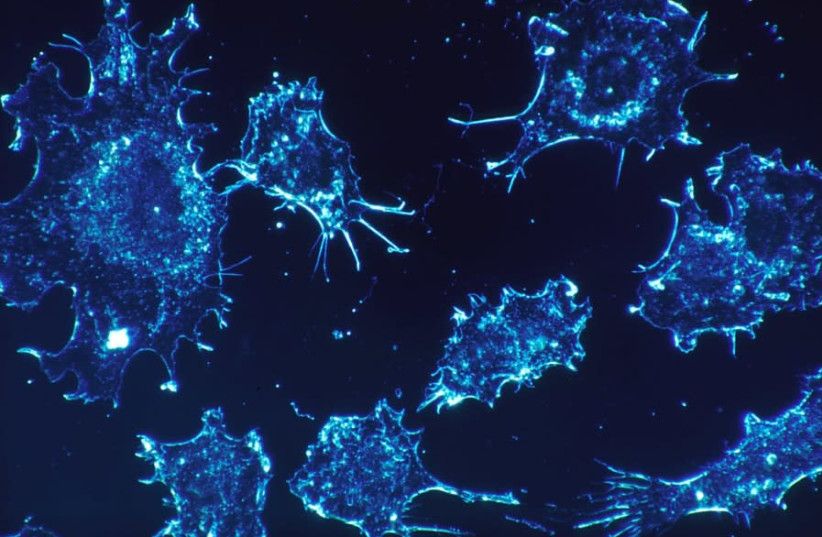
Cancer (Illustrative) (photo credit: PIXABAY)
A type of white blood cells known as eosinophils can help the body
fight cancer, and are used to fight cancer metastasis (cancer cells
breaking away from the original infection) in the lungs, a new study
study from Tel Aviv University has revealed.
Prof.
Ariel Munitz and doctoral student Sharon Grisauri of the Department of
Microbiology and Clinical IImmunology at the Sackler Faculty of Medicine
led the research, which was published in the academic journal Cancer Research.
Eosinophils
are white blood cells in the immune system that produce destructive
proteins, originally intended to fight parasites.
The team examined biopsies of the lung metastases from breast
cancer patients. They discovered that eosinophils reach the lungs and
enter the cancer tissues, often releasing the destructive proteins they
carry.

TEL AVIV UNIVERSITY, home of the Boris Mints Institute for Strategic Policy Solutions to Global Challenges (credit: CHEN GALILI)
High
levels of hygiene, especially in the Western world, have significantly
reduced parasites but eosinophils often react negatively to humans, as
they introduce problems such as allergies and asthma.
"We chose to focus on lung metastases of many types of cancer," Munitz explained in a statement.
"First,
metastases, and not the primary tumors, are often the main problem in
treating cancer, and the lungs are a major target for the metastasis of
many types of cancer. Second, in a preliminary study, we demonstrated
that eosinophils gather in tumors developing in mucous tissues like the
lungs, and therefore assumed that they would be found in lung metastases
as well."
For the
testing, the researchers used animal models. The results showed that
lung metastases developed in the absence of eosinophils that were much
larger than those exposed to eosinophils. The conclusion was that
eosinophils fight cancer effectively.
But, how can eosinophils fight cancer effectively?
"We observed that when eosinophils are missing, the tissue also lacks T-cells – white blood cells known for fighting cancer," Munitz explained.
"Consequently,
we assumed that eosinophils combat cancer through T-cells. Our next
task was to understand the mechanism underlying this process."
In
essence, the eosinophils release chemokines, which summons T-cells,
whenever they come into contact with cancer. This, essentially allows
for the eosinophils to call for reinforcements, backing them up to
better fight the cancer.
These findings could help pave the way for improved cancer treatments in the future.

Please Recommend this page and follow us at:

No comments:
Post a Comment
Stick to the subject, NO religion, or Party politics